Screen Time vs Smart Time: Teaching Kids to Use AI Productively

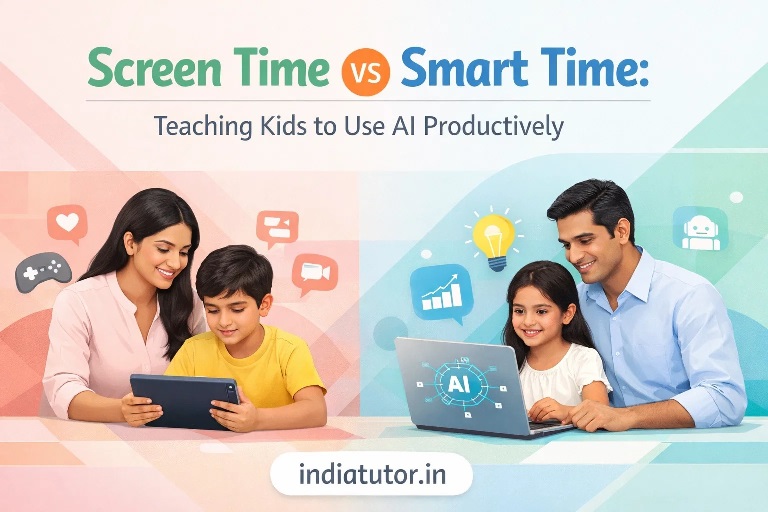
Screen Time vs Smart Time - Teaching Kids to Use AI Productively

For years, parents and teachers have worried about one thing: screen time. From mobile phones to tablets and laptops, children today spend more time in front of screens than any previous generation. But in 2026, the conversation is changing. It is no longer just about how much time children spend on screens. It is about how they use that time. The real question is: are they wasting time, or are they building skills?

Welcome to the era of smart time.

Artificial Intelligence tools such as ChatGPT, Google Gemini, and Microsoft Copilot are now easily accessible to students. Many Indian parents feel confused. Should children be allowed to use AI? Will it make them lazy? Will it reduce their thinking ability? Or can it actually help them learn better?

For online tutors in India, especially those teaching CBSE, ICSE, IB, IGCSE and NRI students, this is not a future issue. It is happening right now.

Understanding the Difference Between Screen Time and Smart Time

Screen time becomes a problem when it is passive. Endless scrolling, gaming without learning, watching random videos, and copying homework answers without understanding the concept are examples of unhealthy screen habits.

Smart time, on the other hand, is intentional. It is when a student uses technology to solve problems, understand concepts, explore creativity, practice communication, or improve skills. The device remains the same. The difference lies in the purpose.

If a Class 6 student uses AI to understand fractions better with examples, that is smart time. If the same student uses AI to copy homework answers without reading them, that is screen time.

The shift is not about removing devices. It is about teaching responsible and productive usage.

Why AI Is Not the Enemy

Many parents and tutors initially resist AI because they fear it will replace thinking. However, calculators did not destroy mathematics. The internet did not destroy reading. Similarly, AI will not destroy learning. It will change how we learn.

AI can act as a personal assistant for students. It can explain difficult topics in simple language, generate practice questions, summarize chapters, help with essay structure, and even improve vocabulary. For Indian students preparing for competitive exams or studying abroad, AI tools can offer instant doubt solving, which saves time.

The problem arises only when students depend on AI blindly. If they use it without understanding, they miss the learning process. That is where tutors play a crucial role.

The Role of Online Tutors in the AI Age

Online tutors in India are in a powerful position. Instead of banning AI, tutors can teach students how to use it intelligently.

First, tutors can show students how to ask better questions. AI gives better answers when questions are clear and detailed. Teaching students how to frame questions improves their thinking ability.

Second, tutors can encourage AI-assisted learning instead of AI-dependent learning. For example, ask students to attempt a question first. Then allow them to use AI to check their answer or explore alternative methods.

Third, tutors can focus more on conceptual clarity. If a student submits an AI-generated answer, a good tutor can ask follow-up questions to test real understanding.

This approach builds critical thinking rather than reducing it.

Teaching Digital Responsibility Alongside AI Skills

Smart time is not only about productivity. It is also about ethics and responsibility.

Students must understand that copying AI answers and presenting them as their own is not honest learning. Tutors and parents should clearly explain academic integrity. AI should be used as a guide, not as a shortcut.

It is also important to teach students about data privacy. They should avoid sharing personal information, school details, or sensitive data on public AI platforms.

Digital literacy is becoming as important as reading and writing. Indian tutors who integrate AI awareness into their teaching will stay ahead in the competitive online tutoring market.

Turning AI Into a Learning Partner

AI can be especially powerful in the Indian education context where class sizes are large and personalized attention is limited.

For primary students, AI can generate extra practice worksheets in maths or grammar. For middle school students, it can help with science experiments explanations or history timelines. For senior students, it can assist in research, essay drafting, coding practice, and interview preparation.

For NRI families who hire Indian online tutors, AI can bridge time gaps. Students can revise concepts using AI between live sessions. This makes online tutoring more effective and result-oriented.

Tutors can also use AI to create lesson plans, quizzes, and revision material quickly. This saves preparation time and allows them to focus more on student interaction.

Addressing Common Concerns of Parents

Indian parents often worry that AI will reduce writing skills. The solution is not to stop AI but to design tasks wisely. Tutors can ask students to first write answers in their own words and then compare them with AI suggestions. This improves editing skills and language awareness.

Another concern is reduced memory power. However, modern education is shifting from memorization to application. AI can actually help students practice more questions in less time, strengthening understanding.

Parents should also set clear time limits. A structured study schedule that includes AI learning, offline reading, physical activity, and family time ensures balance.

Preparing Students for the Future

The future job market will require AI familiarity. Whether a student becomes a doctor, engineer, designer, entrepreneur, or teacher, AI tools will be part of daily work.

Teaching children to avoid AI completely may leave them unprepared. Teaching them to use AI wisely prepares them for leadership.

For IndiaTutor.in and its community of online tutors, this is a huge opportunity. Tutors who guide students in productive AI usage will build trust with parents. They will stand out in search results as modern, forward-thinking educators.

Smart time is not about more technology. It is about better use of technology.

Practical Tips for Tutors to Promote Smart Time

Start every session by clarifying learning goals. Encourage students to think first, then use AI as support. Review AI-generated content together and identify mistakes or improvements. Teach students how to verify information from textbooks and reliable sources. Promote discussion instead of blind acceptance.

When tutors combine human mentorship with AI assistance, learning becomes deeper and more interactive.

Transform Screen Time into Smart Time

Screen time is unavoidable in today’s digital world. But it does not have to be harmful. The real power lies in transforming screen time into smart time.

AI is not replacing teachers. It is reshaping education. Indian online tutors who understand this shift can create smarter learners, confident parents, and stronger academic results.

The goal is simple. Do not fear the screen. Teach students to use it wisely.
Should Your Child Use AI for Studies? What Every Parent Must Know

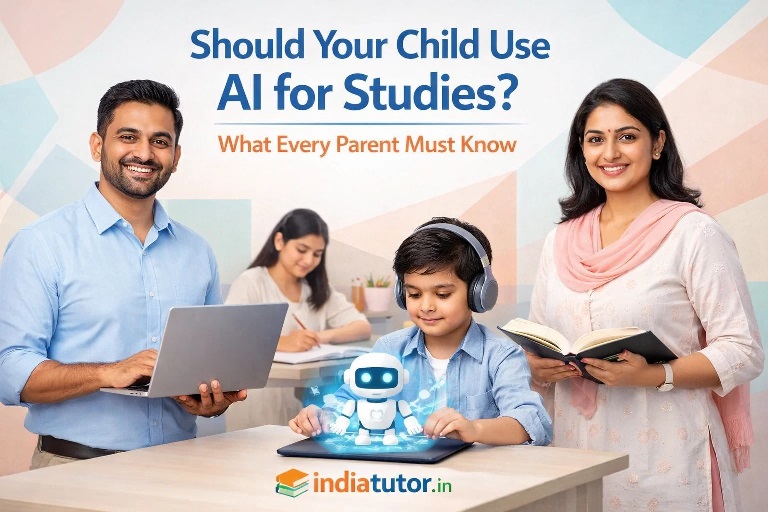
Should Your Child Use AI for Studies - What Every Parent Must Know

Artificial Intelligence is no longer a futuristic concept. It is already part of your child’s daily life. From voice assistants to smart search results, AI tools are shaping how children learn, think, and complete assignments. Many students are now using tools like ChatGPT and other AI-based learning apps to solve math problems, write essays, prepare notes, and even revise before exams. As a parent, it is natural to wonder: Is this good or harmful? Should your child use AI for studies?

The answer is not a simple yes or no. AI can be a powerful learning companion when used correctly. But without guidance, it can also reduce real learning. Let us understand both sides clearly so you can make an informed decision.

What Exactly Is AI in Education?

Artificial Intelligence in education refers to smart software that can answer questions, explain concepts, generate summaries, create quizzes, and personalize learning. Platforms such as ChatGPT, Google search tools, and adaptive learning apps are becoming common among students in India and abroad.

Unlike traditional search engines, AI tools can provide direct answers in simple language. They can explain difficult topics in multiple ways. They can also adjust responses based on the student’s level of understanding. This is why many children find AI easier and faster than textbooks.

The Benefits of AI for Students

When used wisely, AI can support your child’s academic growth in many ways.

AI makes learning accessible. If your child is stuck on a math problem at 10 pm and the tutor is not available, AI can provide step-by-step explanations instantly. This builds confidence and reduces frustration.

AI encourages independent learning. Instead of waiting for answers, students can explore concepts on their own. They can ask follow-up questions and deepen their understanding.

AI helps in revision and summarization. Long chapters can be converted into short notes. Difficult paragraphs can be simplified. This is especially useful during exam preparation.

AI supports different learning speeds. Every child learns differently. Some grasp concepts quickly, others need repeated explanations. AI tools allow children to revisit topics without feeling embarrassed.

For Indian families living abroad, AI combined with online tutoring can help children stay aligned with CBSE, ICSE, IGCSE, or IB curriculum standards. It can fill small gaps between school lessons and personalized tutoring sessions.

The Risks Parents Should Not Ignore

While AI offers benefits, there are genuine concerns that parents must consider.

The biggest risk is overdependence. If a child simply copies answers generated by AI without understanding them, learning stops. Homework may get completed, but concepts remain unclear.

Another concern is reduced critical thinking. Education is not just about getting correct answers. It is about developing reasoning, creativity, and problem-solving skills. If AI does all the thinking, children may not develop these abilities fully.

There is also the issue of accuracy. AI tools are intelligent but not perfect. Sometimes they may provide incorrect or outdated information. Younger students may not be able to identify mistakes.

Academic honesty is another factor. Schools are increasingly concerned about AI-generated assignments. Children must understand the difference between using AI as a helper and using it to cheat.

Screen time is an additional worry. If AI usage increases digital exposure, it may affect concentration and overall health.

How Parents Can Guide AI Usage the Right Way

The key is not to ban AI but to supervise it smartly.

Set clear rules. AI should be used to understand concepts, not to directly copy assignments. Encourage your child to first attempt homework independently and then use AI to check or improve answers.

Ask your child to explain what they learned from the AI tool. If they can teach the concept back to you in simple words, it means real learning has happened.

Combine AI with human tutoring. AI cannot replace experienced teachers. A qualified online tutor can identify weak areas, correct misunderstandings, and build deeper conceptual clarity. AI can support revision, but a tutor provides structured learning and mentorship.

Encourage critical thinking. Teach your child to question AI responses. Ask them to verify information from textbooks or trusted academic sources.

Limit usage time. AI should be a learning assistant, not a constant companion.

AI and Online Tutors: A Powerful Combination

For Indian parents who rely on online tutors, AI can actually enhance tutoring sessions. Students can use AI to prepare doubts before class. They can generate practice questions for revision. Tutors can also use AI tools to create worksheets or explain topics in different formats.

However, the emotional and motivational support that a human tutor provides cannot be replaced. A tutor understands a child’s personality, strengths, and weaknesses. They encourage discipline, accountability, and consistency.

On platforms like IndiaTutor.in, verified Indian tutors help students build strong fundamentals while using modern teaching methods. When AI is used alongside guided tutoring, students benefit from both technology and human expertise.

At What Age Should Children Start Using AI?

Younger children in primary classes should use AI only under parental supervision. At this stage, focus should be on reading, writing, mental math, and conceptual clarity through interaction.

Middle school students can begin using AI for research, explanations, and doubt-solving, but with clear boundaries.

Senior students can use AI for brainstorming, essay structuring, coding practice, and competitive exam preparation. Even then, ethical usage must be emphasized.

Final Thoughts for Indian Parents

Artificial Intelligence is not the enemy of education. It is a tool. Like any tool, its impact depends on how it is used. If guided properly, AI can make learning faster, smarter, and more personalized. If misused, it can weaken real understanding.

As a parent, your role is crucial. Stay involved. Ask questions. Monitor usage. Encourage discipline. Combine AI learning with structured online tutoring and regular revision.

The future of education will definitely include AI. Instead of fearing it, help your child learn how to use it responsibly. When technology and human teaching work together, students can achieve their full potential.

Why Smart Parents Choose Verified Tutors Instead of Random Ads

IndiaTutor

Why Smart Parents Choose Verified Tutors Instead of Random Ads

Finding the right tutor for a child is one of the most important decisions a parent can make. Today, learning is no longer limited to classrooms. Online tuition has become common across India and among Indian families living abroad. With so many options available on Google, WhatsApp groups, Facebook posts, and random advertisements, parents often feel confused about where to start. A quick search shows hundreds of tutors claiming to be “experienced” or “top-rated.” But can you really trust a random ad with your child’s education?

This is exactly why smart parents are moving away from unverified tutors and choosing verified tutors through trusted platforms. The difference is not just convenience. It is about safety, quality, reliability, and long-term results.

The Problem With Random Tutor Ads

Random ads may look attractive. A post might say “Best Maths Teacher – 10 Years Experience – Call Now.” But there is usually no proof behind these claims. Anyone can write anything online. There is no background check, no qualification verification, and no accountability.

Parents often face common issues when hiring tutors through random sources. Some tutors stop classes suddenly without notice. Some lack proper subject knowledge. Others are inconsistent with timings. In worst cases, parents may even worry about safety and authenticity.

When a child’s academic future is involved, guesswork is risky. Education is not something you can experiment with every few months. A bad tutor not only wastes money but also damages a child’s confidence and interest in studies.

Why Verification Matters More Than Ever

A verified tutor is someone whose identity, qualifications, and teaching experience are checked before being listed. This simple step creates a huge difference in trust and quality.

When tutors are verified, parents know who they are dealing with. Certificates, degrees, experience details, and contact information are validated. This reduces the chances of fraud or false claims. It also means the tutor is serious about teaching professionally, not just trying something casually.

Verification brings accountability. Tutors listed on trusted platforms care about their reputation. They know that reviews, ratings, and feedback matter. As a result, they put more effort into teaching and maintaining professionalism.

For parents, this peace of mind is priceless.

Better Learning Outcomes for Children

The goal of hiring a tutor is not just to complete homework. It is to improve understanding, confidence, and results. Verified tutors usually bring structured teaching methods. They follow proper lesson plans, track progress, and communicate regularly with parents.

They understand different boards like CBSE, ICSE, IGCSE, and State Boards. They know exam patterns and syllabus requirements. This focused approach helps children score better and develop strong basics.

Random tutors may teach without planning or clear goals. Verified tutors treat teaching like a responsibility. That difference directly affects a child’s performance.

Safety and Professionalism at Home and Online

Safety is a major concern, especially for younger students. When classes happen at home or online, parents want to be sure the tutor is trustworthy. Verified tutors reduce this risk because their identity is already checked by the platform.

Professional behavior also improves the learning environment. Verified tutors are usually punctual, respectful, and organized. They follow fixed schedules, share updates, and maintain clear communication.

This professionalism creates a comfortable space where children feel secure and motivated to learn.

Easy Comparison and Smart Choice

Another advantage of choosing verified tutors through a platform is the ability to compare options easily. Instead of calling random numbers from ads, parents can view multiple profiles in one place.

They can check qualifications, subjects taught, experience, fees, availability, and reviews. This helps them choose the right tutor based on their child’s specific needs. For example, a Class 3 student may need a patient primary teacher, while a Class 10 student may need an exam-focused Maths expert.

Having all information in one place saves time and avoids confusion. It makes the decision smarter and more informed.

Reviews and Real Feedback Build Trust

Word of mouth has always been powerful. Today, reviews play the same role online. Verified platforms allow parents to read genuine feedback from other families. This gives a clear idea about a tutor’s teaching style and reliability.

Random ads rarely provide honest reviews. You only see what the tutor wants you to see. But real feedback from other parents helps you understand the truth.

This transparency builds trust and reduces the risk of making the wrong choice.

Long Term Relationship, Not Short Term Fix

Good tutoring is not about a few classes before exams. It is about building a long-term relationship where the tutor understands the child’s strengths and weaknesses over time. Verified tutors are more likely to stay committed because they are serious professionals.

They focus on consistent progress rather than quick results. This stability helps children grow academically and emotionally. Parents also feel comfortable knowing they have someone dependable to guide their child year after year.

Why Smart Parents Prefer Trusted Platforms

As online education grows, smart parents are thinking beyond convenience. They are looking for reliability, quality, and safety. Instead of responding to random social media posts or unknown numbers, they prefer structured platforms that verify tutors and maintain standards.

One such trusted platform is IndiaTutor.in. It connects parents with verified and experienced Indian tutors across subjects and classes. Each tutor profile includes proper details, making it easier to choose confidently. Parents can find qualified teachers for CBSE, ICSE, IGCSE, and other boards, both in India and abroad.

By choosing a verified tutor through a reliable platform like IndiaTutor.in, parents save time, avoid risks, and ensure their child receives the best possible guidance.

In the end, education is an investment, not an expense. When it comes to your child’s future, it is always smarter to choose verified professionals instead of random ads.

Online Tutor Vs Tuition Center – Which is Better for Your Child and Why?

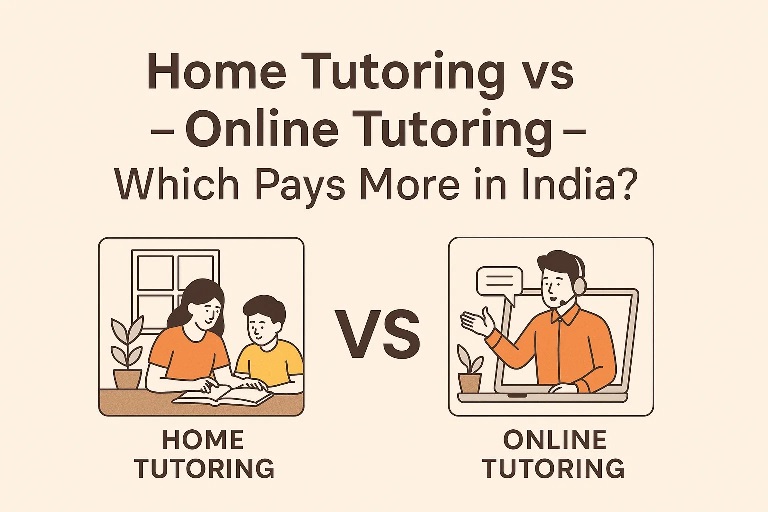
Home Tutoring vs Online Tutoring – Which Pays More in India

As a parent, one of the most important decisions you make is about your child’s education. And when it comes to academic support outside school, the choice often comes down to this: should I hire an online tutor or send my child to a nearby tuition center?

Both options aim to help children improve their academic performance, build confidence, and fill learning gaps. However, the way they deliver these outcomes can be very different. In this article, I’ll break down the pros and cons of both methods, supported by real-world examples and insights from the latest educational trends.

1. Flexibility and Convenience

One of the biggest advantages of online tutoring is the flexibility it offers. With just a laptop or tablet and a stable internet connection, your child can attend classes from the comfort of home. No travel, no time lost in traffic, and no rush.

Compare this with traditional tuition centers, which usually follow fixed class timings. Parents often have to rearrange their work schedules or arrange transport to make it happen.

According to a 2023 survey by Kantar India, nearly 68% of parents in metro cities preferred online tuition due to convenience and safety concerns, especially post-pandemic.

2. Personalized Attention

Online tutoring often allows for one-on-one or small group instruction. This means the tutor can focus entirely on your child’s strengths, weaknesses, and learning pace.

In contrast, tuition centers typically run with 8 to 20 students in a batch. Even with the best intentions, teachers may not be able to give equal attention to every child. This often leads to weaker students falling behind or faster learners feeling unchallenged.

At IndiaTutor.in, we’ve found that students who switched from group tuition to individual online classes showed a 20% improvement in academic performance within 3 months.

3. Quality of Tutors

Online platforms give you access to a wider pool of tutors across India. If you’re in a smaller town, this can be a huge advantage. You’re no longer limited by geography.

For example, a student in Kanpur preparing for Class 10 CBSE board exams can now study math with an IIT graduate based in Delhi, or practice spoken English with a Cambridge-certified tutor from Mumbai.

Tuition centers usually rely on locally available teachers, and parents may not always have full information about their qualifications or teaching style.

4. Monitoring and Feedback

Many online tutoring platforms offer recorded sessions, attendance reports, and performance updates. Some tutors even allow parents to sit in on classes or review what was taught through lesson summaries.

In tuition centers, such transparency is harder to achieve. While some teachers may give periodic feedback, there is often little formal tracking of progress.

5. Cost Effectiveness

While online tuition may seem expensive at first glance, it often delivers better value per session, especially for one-on-one learning. You also save on commuting costs, time, and in many cases, printed materials.

Group tuition in centers may seem more affordable, but the trade-off in personalized attention and learning speed can make it less effective in the long run.

6. Comfort and Confidence

Children often feel more relaxed at home. This environment can lead to better concentration and more willingness to ask questions. Many shy students have shared with us that they felt more confident speaking up during online sessions than in a packed tuition class.

Additionally, recorded lessons help students revise at their own pace — something tuition centers cannot offer.

7. Technology and Engagement

Online tutors use digital whiteboards, interactive quizzes, videos, and games to make learning engaging. These tools not only help explain difficult concepts but also make the learning process enjoyable.

While some modern tuition centers have started using smart classrooms, most still rely on traditional methods of chalk-and-talk or textbook-led teaching.

My Thoughts

There’s no one-size-fits-all answer. But based on current trends, student feedback, and academic outcomes, online tutoring is proving to be a better option for most students in India today, especially when it comes to personalized learning, flexibility, and access to top-quality tutors.

That said, tuition centers may still work well for students who thrive in peer group environments or need in-person supervision.

As a parent, consider your child’s personality, academic goals, and your family’s schedule. If you value flexibility, focused learning, and expert guidance from the comfort of home, online tutoring is definitely worth exploring.

At IndiaTutor.in, we connect you directly with verified Indian tutors who are experienced, passionate, and trusted by thousands of families. Whether your child needs help with Math, English, Science, or languages like French or Hindi — we’re here to help.

Feel free to explore our tutor listings and book a free demo class to see what works best for your child.

By Nidhi Mehta, Founder – IndiaTutor.in

10 Things Parents Must Ask Before Hiring an Online Tutor

10 Things Indian Parents Must Ask Before Hiring an Online Tutor

The shift towards online tuition in India has been rapid in the past few years. More and more parents are now choosing online tutors for their children, not just in metros but in Tier 2 and Tier 3 cities as well. A report by KPMG and Google projected that the online education market in India would reach $1.96 billion by 2025, and a large part of that is being driven by K-12 online tutoring.

But with the rise in demand, the number of online tutors and platforms has grown exponentially too, making it overwhelming for parents to choose the right tutor for their child. At IndiaTutor.in, we believe parents must make informed choices. Here are ten important questions you should always ask before hiring an online tutor.

1. What are the tutor’s qualifications and teaching experience?

Start by checking if the tutor has relevant academic qualifications in the subject they teach. For example, if you’re hiring a math tutor for Class 9, make sure they have at least a B.Sc. or M.Sc. in Mathematics. Also, ask about their teaching experience. Many experienced school teachers now offer online tuition and bring proven classroom methods to digital learning.

2. Is the tutor familiar with the curriculum (CBSE, ICSE, State Board)?

This is especially important in India, where each board has different syllabi and exam patterns. Ask if the tutor is comfortable with your child’s board and class level. A tutor who regularly teaches Class 10 CBSE Science will know the exam weightage, practical questions, and internal marking system, making them more effective.

3. What is the tutor’s approach to weak students?

Not every child learns at the same pace. Ask the tutor how they identify weak areas and whether they customize lessons accordingly. A good tutor should have a structured approach to improving performance, not just finishing the syllabus.

4. Can I attend a demo class before committing?

Most professional tutors or platforms like IndiaTutor.in offer free or low-cost demo classes. This helps you and your child assess the tutor’s teaching style, interaction, and communication. Watch how your child responds—do they feel engaged or confused?

5. How are the classes conducted—live or recorded?

Live online classes allow for real-time interaction, doubt-solving, and personalized learning. Some tutors might offer recorded sessions, but these may not be suitable for younger children who need constant supervision. Ask if the tutor shares recordings after class for revision.

6. What tools and resources does the tutor use?

An effective online class goes beyond video calls. Does the tutor use visual aids, digital whiteboards, interactive quizzes, or shared notes? For example, tools like Google Jamboard, Zoom annotations, and PDF worksheets can greatly enhance the learning experience.

7. How does the tutor track the child’s progress?

This is a crucial factor. Ask how often assessments are conducted. Does the tutor give monthly feedback reports or parent-teacher meetings? Some tutors may offer weekly quizzes or periodic mock tests, which are helpful for board exam students.

8. What is the tutor’s availability and flexibility?

Indian parents often juggle school timings, extracurricular activities, and even tuition slots for multiple subjects. Check if the tutor is flexible with class timings. Also ask how they handle missed classes, cancellations, or rescheduling.

9. Is the tutor verified and background-checked?

Safety is non-negotiable, especially when hiring someone online. Platforms like IndiaTutor.in verify tutors through government issued ID checks. If hiring independently, ask for proof of identity, academic documents, and references from past students or parents.

10. What is the fee structure and payment policy?

Some tutors charge per class, while others offer monthly packages. Clarify what is included—homework help, test prep, extra sessions? Also, ask about payment terms, refund policy after demo class, and discounts for longer commitments.

My Thoughts

Choosing the right online tutor can have a big impact on your child’s academic journey. A great tutor not only improves marks but also builds confidence, discipline, and a love for learning.

At IndiaTutor.in, we help parents connect with verified and experienced Indian tutors across subjects, grades, and locations. Whether you’re looking for a tutor for Class 3 English or Class 12 Physics, our platform lets you compare profiles, contact tutors directly, and book demo classes with ease.

Remember, the right tutor is not the one with the longest resume, but the one who connects with your child and brings out their best.

If you’re looking for an online tutor, explore our listings and take the first step towards better learning.

By Nidhi Mehta, Founder of IndiaTutor.in

Best Online Teacher Platforms in India – What Every Parent Should Know

Best Online Teacher Platforms in India – What Every Parent Should Know

The shift toward online learning has changed the way students study and how parents choose teachers for their children. With rising academic competition, busy schedules, and growing access to digital tools, many parents across India are now turning to online tutor platforms to find trusted, experienced teachers for their children.

But with so many platforms available, how can a parent know which one is right? In this article, I’ll help you understand what online teacher platforms really offer, what to look for, and how to make the best decision for your child’s education.

Why Are Online Teacher Platforms Growing in India?

Online tutoring is no longer a temporary trend—it’s becoming a permanent part of India’s education system.

According to a report by RedSeer, India’s online education market is expected to grow to USD 4 billion by 2025. This growth is driven by increased smartphone usage, improved internet access, and the growing demand for flexible learning options.

Here are a few reasons why parents are choosing online teachers:

  • Access to experienced tutors from across India

  • Personalized learning based on the child’s pace and style

  • Convenience of home-based learning

  • Cost-effective compared to traditional coaching centers

  • Safety and supervision from home

What Makes a Good Online Teacher Platform?

Not all online tutor websites are the same. Some focus on recorded content or group classes, while others offer live, 1-on-1 sessions with real teachers. As a parent, it’s important to choose a platform that suits your child’s needs, age group, and learning goals.

Here are some features you should look for:

1. Verified and Qualified Tutors

A good platform should only list verified, experienced tutors. Always check the teacher’s profile, teaching experience, subject specialization, and student reviews. IndiaTutor.in, for example, manually screens tutor applications to ensure quality.

2. Demo Classes

Demo sessions allow you to judge the teacher’s communication style, subject knowledge, and how well they connect with your child. Platforms that allow direct contact with tutors and demo bookings are often more transparent.

3. Subject and Grade Coverage

Make sure the platform offers teachers for your child’s specific board (CBSE, ICSE, IGCSE, IB, or State Boards) and grade. Some websites specialize in Class 1 to 6, others in high school, and some even in competitive exams or languages.

4. Parent Support and Feedback Options

Reliable platforms offer progress tracking, parent-teacher interaction, and regular feedback. This helps ensure accountability and ongoing improvement.

5. Flexible Scheduling and Pricing

Every family has different schedules and budgets. A platform that offers flexible slots, packages, or pay-per-session options works best for most parents.

Top Online Teacher Platforms in India (2025 Overview)

Here is a look at some of the most popular and trusted platforms that Indian parents are using today:

1. IndiaTutor.in

A growing platform focused on verified Indian tutors offering live online and offline classes for school subjects, languages, exam prep, and hobbies. Parents can contact tutors directly, view their profiles, and book demo classes without middlemen.

Ideal for: 1-on-1 learning, CBSE/ICSE students, Indian families abroad, and subject-specific tutoring.

2. Vedantu

Offers live group classes and some 1-on-1 options. Popular for school curriculum and exam coaching. The app also has recorded classes.

Ideal for: Grades 6–12 and competitive exams like JEE/NEET.

3. BYJU’S

Well-known for its recorded video content and learning app. Some live class options available in premium plans. Focuses more on self-paced learning than direct tutoring.

Ideal for: Independent learners who enjoy tech-driven lessons.

4. Superprof India

A global platform that allows tutors to list services, but it doesn’t verify or screen teachers strictly. Useful for exploring a wide range of tutors, but parents need to do their own background checks.

Ideal for: Advanced learners looking for niche subjects or foreign languages.

5. UrbanPro

Offers tutor listings for both online and offline classes. Some tutors are verified, while others may not be. The platform charges commissions, which sometimes increases the cost for parents.

Ideal for: Local in-person classes or online options in metro cities.

Questions Parents Should Ask Before Choosing a Platform

  • Is the tutor experienced in the subject and grade level?

  • Can I talk to the tutor or attend a demo class first?

  • What are the fees and cancellation policies?

  • How will the platform track and share my child’s progress?

  • Is there flexibility to change tutors if needed?

My Thoughts

Every child learns differently. Some need help with specific subjects, others need regular guidance, and some may need support for competitive exams. As a parent, your job is not just to find a tutor—but the right tutor.

Platforms like IndiaTutor.in aim to simplify this process by giving parents access to a pool of qualified, verified Indian teachers who can help students not just score better—but also grow in confidence and curiosity.

Whether you’re in India or living abroad, a trusted online tutor platform can become your partner in helping your child succeed.

If you’re looking for a tutor for your child, explore available profiles. Book a free demo class and see the difference for yourself.

By Nidhi Mehta, Founder of IndiaTutor.in

How to Help your Child with Board Exam Preparation?

How to Help your Child with Board Exam Preparation

Board exams are a major milestone in every student’s academic journey in India. For students in Classes 10 and 12, these exams can be a source of both pressure and opportunity. As a parent, your role during this phase is not just about setting routines or enforcing study hours. It’s about offering emotional support, creating the right environment, and connecting your child with the right academic help when needed.

Having worked closely with students and tutors through IndiaTutor.in, I’ve seen what really works. Here’s a practical guide to help you support your child through their board exam preparation journey.

1. Understand the Pressure Is Real

Board exams are often treated as life-defining moments, especially in India. According to a 2023 NCERT survey, over 65% of students in Class 10 and 12 reported exam stress. As a parent, it’s important to acknowledge that the pressure is real, but it doesn’t have to be overwhelming.

Children need a calm and supportive home environment. Criticism or comparison only adds to the pressure. Your child isn’t just preparing for an exam—they’re developing resilience, time management, and focus. Encourage effort over outcomes.

2. Set Realistic Expectations

Every child learns differently. Some are naturally quick with numbers, others are better with languages or theoretical subjects. Expecting top scores in every subject can be unrealistic and discouraging.

Talk openly with your child about their strengths and weaknesses. Sit together and create a balanced study plan. Encourage them to aim for improvement and understanding, not just marks.

3. Create a Distraction-Free Study Zone

A good study space can make a big difference. Make sure your child has a quiet, well-lit area to study, preferably away from distractions like TV, mobile phones, or noisy family members.

Research from Stanford University shows that multitasking or frequent distractions reduce information retention by up to 40%. Even a simple study desk with a clock, water bottle, and proper seating can help build focus.

4. Help Them Make a Realistic Study Schedule

Instead of cramming long hours, students perform better when they study in focused, consistent blocks. The Pomodoro technique—25 minutes of study followed by a 5-minute break—is scientifically proven to improve concentration.

Divide the syllabus week by week. Prioritize difficult subjects or topics earlier in the day when the mind is fresh. Include short breaks, family time, and at least 7 hours of sleep.

5. Encourage Mock Tests and Timed Practice

One of the most effective ways to prepare for board exams is through regular mock tests. It helps students manage time, identify weak areas, and reduce exam-day anxiety.

Ask your child to take weekly mock tests in real exam conditions. Many CBSE and ICSE toppers attribute their success to solving previous years’ question papers.

6. Use Online Tutors for Extra Support

Sometimes, children hesitate to ask questions in school or need personalized attention for certain topics. This is where online tuition can help.

Platforms like IndiaTutor.in connect students with verified and experienced Indian tutors who specialize in board exam preparation for CBSE, ICSE, and state boards. One-on-one guidance helps clarify doubts, strengthen weak subjects, and boost confidence.

7. Focus on Mental Health and Confidence

A calm mind remembers better. Encourage your child to engage in light physical activity, meditation, or even a 15-minute evening walk. Avoid excessive screen time and discourage last-minute late-night study marathons.

According to a 2022 report by India’s Ministry of Education, students who maintained a balanced routine with sleep, physical activity, and regular study scored on average 8–12% higher in board exams compared to those who crammed or studied erratically.

8. Stay Involved Without Taking Over

Ask your child how their preparation is going, but avoid micromanaging. Offer help, such as printing notes, finding resources, or arranging online demo classes. Let them feel in control.

Being available and non-judgmental builds trust. Let them know you are proud of their hard work, not just the marks they’ll receive.

My Thoughts

Helping your child prepare for board exams is about balance—between support and independence, discipline and empathy, study and rest. With the right environment, encouragement, and academic support, your child can not only do well but emerge more confident and self-reliant.

At IndiaTutor.in, we’re proud to partner with parents and students across India and abroad. Our network of trusted Indian tutors is here to guide your child every step of the way—from concept clarity to confidence building.

Let’s work together to make exam preparation less stressful and more meaningful for every child.

By Nidhi Mehta, Founder – IndiaTutor.in

How Online Tuition Helps Kids Build Confidence and Score Better

How Online Tuition Helps Kids Build Confidence and Score Better

As a parent and educator, one of the most common concerns I hear is this: “My child is losing confidence because they are not doing well in studies.” This is something many families across India face today. The good news is, we are living in a time where help is just a click away. Online tuition is no longer just a convenience — it’s a powerful tool that’s helping students not only improve academically, but also rebuild their self-esteem.

At IndiaTutor.in, we’ve seen many a students transform with the right online guidance. Let me share how and why this works.

A Safe, Supportive Learning Environment

Children often hesitate to ask questions in crowded classrooms. They fear judgment from peers, or they may simply not get enough attention in a room full of 30 to 40 students. In contrast, online tuition gives students the privacy and comfort of learning from their own home. They feel more at ease to express doubts, speak freely, and take their time to understand concepts. This builds confidence naturally.

In one case, a Class 6 student from Delhi, who was shy and introverted, started learning Math online with one of our tutors. Within a few weeks, she began asking more questions, sharing answers confidently, and even started enjoying a subject she once feared. Today, her class performance has improved by 25%, and more importantly, she believes in her own ability.

Personalized Attention Makes All the Difference

Every child learns differently. Some grasp quickly through visuals, others need repetition. In schools, teachers don’t always have the time to customize lessons. But in a one-on-one or small group online setting, the tutor adapts to the child’s pace and learning style.

According to a 2023 study by the National Education Alliance for Technology (NEAT) under the Ministry of Education, students who received personalized online tutoring for 3 to 6 months showed up to 35% improvement in their test scores, particularly in Math and Science.

This kind of progress boosts not just marks, but self-confidence. Students begin to realize, “I can do this.”

Flexible Learning Helps Students Feel in Control

Unlike fixed school hours, online tuition allows flexibility. Students can choose a time when they are fresh and focused. They can even revisit recorded lessons (if available), practice more through shared resources, and learn at their own pace. This sense of control reduces stress and helps students feel more responsible for their learning.

Immediate Feedback and Encouragement

In a school setup, students often wait for days to get test papers corrected. Online tutors provide instant feedback. Whether it’s solving a tricky problem or reading a paragraph aloud, the response is immediate, specific, and encouraging.

Timely positive reinforcement is key to building confidence. A child who hears, “That’s a great effort, just correct this one part,” instead of “You’re wrong,” develops a growth mindset. They become more open to learning from mistakes.

Builds Discipline and Study Habits

Online tuition follows a set schedule, and tutors often set small goals like weekly revisions or monthly assessments. These structured practices help students build a habit of regular study, which translates to improved scores over time.

In fact, a 2022 report by KPMG on digital education in India revealed that students engaged in online tutoring showed better time management and consistency in study hours than those without any additional support.

Boosting Confidence Beyond Academics

Many parents think tuition is only about better marks. But the right tutor becomes a mentor too. They help kids develop communication skills, emotional strength, and resilience. One of our Class 9 students from Bangalore, who once feared speaking in class, now gives short presentations during online lessons. Her school teacher recently complimented her improved participation in class discussions.

When a child feels heard, guided, and encouraged, it reflects in every area of life.

My Thoughts

Online tuition is more than just a solution for academic help — it’s a confidence-building journey for students. As a parent, investing in the right tutor can make a lifelong difference in your child’s attitude towards learning and self-belief.

At IndiaTutor.in, we work hard to connect families with experienced, verified Indian tutors who care deeply about each student’s progress. Whether your child needs help catching up, preparing for exams, or exploring a new subject, we’re here to support that journey — with care, consistency, and commitment.

If you’re considering online tuition for your child, start with a trial class. Often, that one class is enough to light a spark of confidence in your child.

By Nidhi Mehta, Founder – IndiaTutor.in

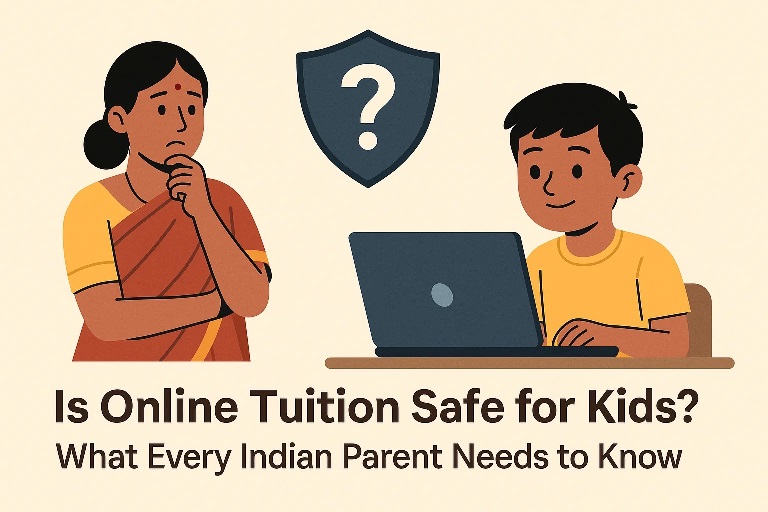
Is Online Tuition Safe for Kids? What Every Indian Parent Needs to Know

Is Online Tuition Safe for Kids - What Every Indian Parent Needs to Know

As a parent, nothing matters more than the safety and well-being of your child. In recent years, the rise of online education and tuition classes has given students access to learning from the comfort of their homes. But with this growing trend, many parents are asking the same question — is online tuition truly safe for kids?

In this article, I want to share honest, practical insights to help Indian parents make informed decisions about online tuition. We’ll explore both the safety aspects and the real benefits that this mode of learning offers.

The Rise of Online Tuition in India

Online tuition is no longer a new trend. According to a 2023 report by Redseer Strategy Consultants, over 120 million Indian students are now part of the digital learning ecosystem. Platforms like IndiaTutor.in have made it possible for parents to directly connect with verified Indian tutors across the country and even abroad.

The demand for online tuition has grown due to:

  • Convenience and time-saving

  • Access to expert tutors beyond local boundaries

  • Customized one-on-one learning

  • Flexibility for working parents and students

But with all these benefits, the question of safety is still a valid and important one.

Understanding Safety in Online Tuition

There are two types of safety that most parents are concerned about:

  1. Physical Safety – Is the child protected from physical harm since they’re learning from home?

  2. Digital and Emotional Safety – Is the child protected from online abuse, inappropriate behavior, or mental stress caused by overuse of screens?

Let’s take a closer look at both.

1. Physical Safety at Home

Online tuition offers an obvious advantage here. Your child is not traveling to a tuition center or someone else’s home. This reduces the risks associated with commuting, especially during evenings or in crowded urban areas.

Learning from home also allows parents to be nearby and monitor the environment. You can hear the teacher, see how your child is responding, and feel confident that the session is happening in a safe space.

2. Digital and Emotional Safety

This is where online tuition platforms need to be responsible. At IndiaTutor.in, we take this very seriously. Every tutor who joins our platform goes through:

  • Profile verification and background checks

  • Detailed screening for qualifications and experience

  • Strict policies against inappropriate content or conduct

  • Regular reviews based on student and parent feedback

We also encourage parents to attend the first few classes, keep webcams on during sessions, and communicate openly with tutors.

A 2022 survey by Norton India found that 76% of Indian parents are worried about screen time and online interactions. That’s understandable. But the same report also highlighted that structured, educational screen time (like learning) is considered safe and even beneficial — as long as it’s monitored and balanced with breaks.

Tips for Parents to Ensure Safe Online Tuition

Here are some simple yet effective ways you can keep your child safe while benefiting from online tuition:

  • Use trusted platforms only. Avoid random tutor listings or unverified contacts.

  • Attend the demo class with your child. Observe the teaching style and how the tutor interacts.

  • Keep webcams and microphones on, especially in one-on-one sessions.

  • Set screen time rules. Balance tuition time with offline activities and rest.

  • Talk to your child regularly about how they feel about the tutor and the sessions.

  • Check tutor reviews on the platform and ask for references if needed.

The Psychological Comfort of Online Learning

Many children, especially younger ones or those who are shy, feel more confident in an online class. They’re learning from the comfort of home, without peer pressure or the fear of being judged. This emotional comfort often leads to better academic performance and improved self-esteem.

We’ve seen real examples of students at IndiaTutor.in who were struggling in traditional tuition centers but began performing better with one-on-one online attention. One parent from Pune shared that her 10-year-old son finally started enjoying maths after switching to online classes, simply because he felt more relaxed and open with his tutor.

My Thoughts

Yes, online tuition is safe — when done right. With proper checks, trusted platforms, and involved parenting, it can be a wonderful tool to support your child’s academic growth.

At IndiaTutor.in, we are committed to making online learning a safe, personalized, and rewarding experience for every student. Parents across India and abroad trust us to connect them with the right tutors for their child’s needs.

If you’re considering online tuition and have questions, I encourage you to explore our platform, book a demo class, and speak to a few tutors yourself. Your child’s future deserves a learning environment that is both safe and effective.

By Nidhi Mehta, Founder, IndiaTutor.in

error: Content is protected !!