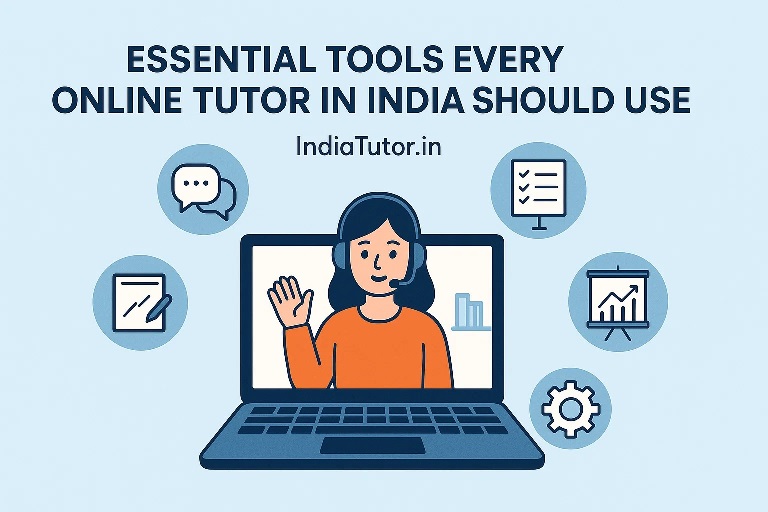
Essential Tools Every Online Tutor in India Should Use

Essential Tools Every Online Tutor in India Should Use

Online tutoring in India has grown significantly in the past few years. With rising internet access, affordable smartphones, and increased demand for academic support, more and more teachers are choosing to go digital. According to a report by Research and Markets, India’s online education market is expected to reach $11.6 billion by 2026. For tutors, this is a huge opportunity — but to truly succeed online, having the right tools is essential.

Whether you are just starting out or looking to upgrade your teaching setup, here is a list of must-have tools that can make your online tutoring effective, engaging, and professional. I’ve included both free and paid options to suit all budgets.

1. Video Conferencing Platforms

The core of online tutoring is communication. A reliable video platform is the first thing you need.

Free Options:

  • Google Meet – Easy to use, no time limit for 1-on-1 sessions, integrates well with Gmail.

  • Zoom (Free Plan) – Offers up to 40 minutes per session for groups. Great audio and screen-sharing tools.

Paid Options:

  • Zoom Pro – Costs around ₹13,000/year. Removes time limits, allows cloud recording, breakout rooms, and more.

  • Microsoft Teams – Useful for tutors working with schools or institutions.

Tip: For solo tutors, Google Meet is usually more than enough. If you’re handling groups, Zoom Pro is worth the investment.

2. Digital Whiteboards

Whiteboards help explain concepts visually, especially for subjects like math and science.

Free Options:

  • Whiteboard.fi – Real-time whiteboard for teachers and students, great for quick quizzes.

  • Google Jamboard – Simple and effective for visual teaching, part of Google Workspace.

Paid Options:

  • Explain Everything – A powerful interactive whiteboard, excellent for recorded lessons. Starts at around ₹500/month.

  • Ziteboard – Lightweight and easy to use, good for collaborative teaching.

Use a stylus and tablet for better accuracy if you’re teaching numericals or diagrams.

3. Screen Recording & Presentation Tools

Recorded lessons help students revise and also allow tutors to reuse their content.

Free Options:

  • Loom – Records screen and face simultaneously. Free plan allows up to 5-minute videos.

  • OBS Studio – Advanced tool for free video recording and live streaming.

Paid Options:

  • Camtasia – Professional-grade screen recording and editing tool. Costs around ₹20,000 one-time.

  • Screencast-O-Matic – Affordable option with editing features. Plans start at ₹700/month.

4. Learning Management Tools

As you grow, managing assignments, notes, and tracking becomes important.

Free Options:

  • Google Classroom – Lets you assign work, share files, and track student performance.

  • Edmodo – A social learning platform with easy parent and student communication.

Paid Options:

  • Teachable or Thinkific – Ideal for tutors building structured courses and selling them online.

  • Classplus – Popular in India for running tuition businesses. Offers your own branded app, fee collection, and student management.

5. Payment Collection Tools

Handling fees online is now easier and more transparent.

Free Tools:

  • Google Pay / PhonePe / Paytm – Widely used in India. Easy and free for small-scale tutors.

  • Razorpay – Offers payment links, supports UPI, cards, and net banking.

Paid Tools:

  • Instamojo Premium – Lets you build a small store, offer digital downloads, and collect payments.

Always maintain records for income tracking, especially if your tutoring becomes a steady source of income.

6. Scheduling and Calendar Tools

Avoid confusion and missed classes with proper scheduling.

Free Options:

  • Google Calendar – Syncs with Gmail, sends reminders, and can be shared with students.

  • Calendly (Free Plan) – Allows students to book available slots directly.

Paid Options:

  • Calendly Pro – Adds features like automated reminders, payment collection while booking, etc.

7. Communication Tools

Staying in touch with students and parents helps in maintaining engagement and trust.

Free Tools:

  • WhatsApp – Still the most commonly used messaging app in India.

  • Telegram – Good for creating channels and groups without revealing your personal number.

Paid Options:

  • Slack – More structured communication. Useful for managing large student groups or teams of teachers.

8. Notes and Document Sharing

You’ll often need to share notes, PDFs, homework, and worksheets.

Free Tools:

  • Google Docs and Google Drive – Great for real-time collaboration and cloud storage.

  • Canva – Free version is perfect for creating visually appealing notes, worksheets, and even lesson slides.

Paid Tools:

  • Notion – Combines notes, tasks, and databases. Pro plans unlock advanced features.

  • Canva Pro – Adds premium templates and storage. Around ₹3,999/year.

My Thoughts

Online tutoring is no longer just a temporary trend — it’s a long-term opportunity. With the right tools, even individual tutors can run classes as professionally as large coaching institutes. Start simple with free tools, and as your student base grows, consider investing in paid versions for better features and time savings.

At IndiaTutor.in, we support and guide tutors across India to grow, earn, and succeed in the online space. Use the tools that suit your needs, stay consistent, and keep learning — your growth as a tutor will follow.

By Nidhi Mehta, Founder, IndiaTutor.in
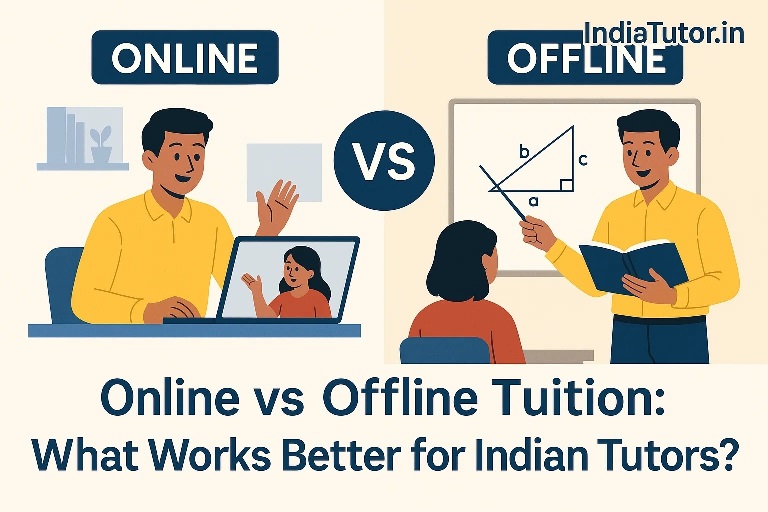
Online vs Offline Tuition: What Works Better for Indian Tutors?

Online vs Offline Tuition What Works Better for Indian Tutors

Over the past few years, the world of education in India has changed dramatically. One of the biggest shifts has been the rise of online tuition alongside the traditional offline model. Many parents, students, and tutors often ask me: which is better — online or offline tuition?

The short answer is: it depends on your teaching style, the student’s needs, and the subject. But let’s break it down with facts, examples, and real insights to help you decide what might work best for you as a tutor.

The Rise of Online Tuition in India

Online tutoring gained massive popularity during the pandemic, but even now, it continues to grow rapidly. According to a 2024 report by RedSeer, the Indian online education market is expected to reach $5 billion by 2025. More than 30 million students now prefer online learning for convenience and accessibility.

Platforms like Zoom, Google Meet, Microsoft Teams, and tools like digital whiteboards, screen sharing, and recorded sessions have made teaching online simpler and more effective than ever before.

Advantages of Online Tuition

  1. Wider Reach: With online tuition, tutors can reach students across cities, states, or even countries. A teacher based in Jaipur can now teach a student in Mumbai, Dubai, or Singapore without any travel.

  2. Flexibility and Comfort: Both students and teachers can schedule classes more flexibly. You save travel time, reduce costs, and can teach from the comfort of your home.

  3. Use of Technology: Tutors can use visuals, PDFs, presentations, and videos to make learning more interactive. This is especially useful for subjects like Science, Math, and Coding.

  4. Recorded Classes: Students can revise recorded sessions, which helps reinforce learning. For tutors, it’s a chance to review and improve their teaching.

Limitations of Online Tuition

  1. Internet and Device Dependency: Not all students have access to high-speed internet or personal laptops. This can affect the learning experience, especially in rural or remote areas.

  2. Lack of Physical Interaction: Some tutors find it harder to maintain student discipline or focus in an online environment. Body language, eye contact, and physical cues are limited.

  3. Technical Issues: Power cuts, dropped calls, and software glitches can interrupt classes and cause frustration.

Why Offline Tuition Still Works

Despite the rise of digital learning, offline tuition continues to hold strong in India. Many parents still prefer in-person classes for better supervision and a more traditional approach.

Here’s why offline still works well:

  1. Personal Connection: Meeting a student face-to-face helps build trust and rapport. It’s easier to understand their learning style, confidence level, and emotional state.

  2. Fewer Distractions: Offline environments like homes or tuition centers are often more controlled, helping students concentrate better.

  3. Hands-On Learning: Subjects like drawing, handwriting, music, or early math benefit greatly from physical interaction. Young learners especially grasp better with tactile methods.

Challenges of Offline Tuition

  1. Limited Reach: You can only teach students in your local area, which restricts your potential growth as a tutor.

  2. Time and Cost: Travelling to students’ homes or managing a center can be time-consuming and expensive.

  3. Fixed Schedules: Compared to online teaching, there’s less flexibility in terms of timing and availability.

What Are Indian Tutors Choosing Today?

At IndiaTutor.in, we see a rising number of tutors offering both online and offline options. Many tutors start with offline classes and gradually shift online to expand their reach. Some tutors even blend the two — offering theory online and practice sessions offline.

Based on a 2024 internal survey of tutors on our platform:

  • 47 percent prefer online-only tuition

  • 38 percent offer both online and offline

  • 15 percent still focus only on offline teaching

This shows a growing comfort with digital teaching methods, especially among younger tutors and those in urban areas.

Final Thoughts: Which One Should You Choose?

If you are comfortable using digital tools, enjoy flexible schedules, and want to reach more students, online tuition is a great option. It opens up opportunities across India and even abroad.

If you are better at building personal connections in person, prefer structured environments, or teach younger kids who need personal attention, offline tuition might suit you better.

Ultimately, the best approach is one that fits your teaching style, time availability, and the learning needs of your students. Many successful tutors now combine the best of both worlds — online for reach, offline for personal touch.

If you’re a tutor looking to grow in either model, IndiaTutor.in is here to support you with tools, visibility, and a growing student base.

By Nidhi Mehta, Founder – IndiaTutor.in

Top In-Demand Subjects for Private Online Tuition in India

Online private tuition in India has grown rapidly over the past few years. With better internet access, rising competition, and a shift in learning preferences, students and parents across the country are increasingly turning to online tutoring to boost academic performance. At IndiaTutor.in, we closely observe the trends and patterns among students, parents, and tutors—and one of the most common questions we get is:

Which subjects are most in demand for private online tuition in India?

Here’s a detailed look at the top subjects that Indian students are actively seeking help with—and why.

1. Mathematics

Math continues to be the most sought-after subject for private tuition in India. From primary school to competitive exam levels, students often struggle with problem-solving, concepts, and time management.

According to a 2024 survey by the National Sample Survey Office (NSSO), over 65% of students receiving private tuition in urban areas listed Mathematics as their top subject.

Why the demand:

  • It’s a core subject for all school boards and competitive exams.

  • Many students need conceptual clarity and extra practice beyond school hours.

  • Parents are keen to ensure their children build strong foundations from an early age.

2. Science (Physics, Chemistry, Biology)

Science subjects, especially from Class 6 onwards, become more technical and often need detailed explanation and real-life examples to grasp.

  • Physics is highly sought after by Class 11-12 students, particularly those preparing for NEET and JEE.

  • Chemistry is often seen as difficult due to equations and formulas.

  • Biology has gained more attention with the increasing interest in medical careers.

Online tutors who use visuals, animations, and interactive teaching methods tend to be more effective in teaching science.

3. English

English has always been important, but demand for English tuition has gone up significantly in recent years—not just for academics, but also for overall communication skills.

Who needs it:

  • School students who struggle with grammar, reading comprehension, and writing skills.

  • Non-English medium students aiming to transition to English-medium or apply abroad.

  • Competitive exam aspirants who need to prepare for English sections.

A 2023 report by the British Council showed that more than 30% of Indian students between the ages of 10 and 18 take some form of English language coaching every year.

4. Coding and Computer Science

With India becoming a global tech hub, demand for online coding and computer science tuition has grown tremendously. Parents are encouraging students as young as 8 to start learning programming.

Popular topics:

  • Basics of computers (for CBSE/ICSE students)

  • Python, Java, and C++ (for higher classes)

  • Web development and app development (for hobby learners and tech enthusiasts)

The National Education Policy (NEP) 2020 has also emphasized digital literacy, making this subject even more relevant.

5. Accountancy and Economics

Commerce stream students, especially those in Class 11 and 12, seek help with Accountancy and Economics due to their analytical and theoretical nature.

Common struggles:

  • Journal entries, ledgers, and financial statements in Accountancy.

  • Macroeconomic and microeconomic concepts that require real-world examples.

Many tutors who are CA aspirants or commerce graduates now offer specialized online tuition for these subjects.

6. Hindi and Regional Languages

While often overlooked, there’s growing demand for tuition in Hindi and regional languages, particularly in multilingual households or for students from non-native backgrounds.

Also, with state-level board exams conducted in regional languages, many students need extra support in understanding grammar and essay writing.

7. Test Preparation Subjects

Online coaching for competitive exams has become a massive segment of private tuition. Students preparing for:

  • JEE (Maths, Physics, Chemistry)

  • NEET (Biology, Chemistry, Physics)

  • CUET (Common University Entrance Test)

  • Olympiads and NTSE

  • UPSC or other government exams

…often require focused, subject-specific coaching through private online classes.

Many students now prefer customized one-on-one test prep rather than joining large coaching centers.

8. Foreign Languages

With global exposure and international education on the rise, learning foreign languages like German, French, and Spanish is gaining popularity.

German, in particular, is in demand due to scholarships and opportunities in German universities. CBSE schools offering German or French as third languages have also contributed to this trend.

My Thoughts

The demand for private online tuition is no longer limited to just core academic subjects. It now includes a wide range of learning needs—from foundational subjects like Math and English to modern skills like coding and foreign languages.

As online education becomes more accessible, students from small towns to metro cities are benefiting from personalized learning at their own pace.

At IndiaTutor.in, we are proud to support both students and tutors across all these subjects. Whether you’re a student looking for the right teacher, or a tutor looking to reach more learners—our platform is here to help you succeed.

Let learning begin, wherever you are.

By Nidhi Mehta, Founder – IndiaTutor.in

How Much Should You Charge as a Private Online Tutor in India?

How Much Should You Charge as a Private Online Tutor in India

One of the most common questions new tutors ask is: “How much should I charge for online tutoring in India?” It’s a fair and important question. Setting the right price is not just about earning well; it’s also about attracting and retaining students in a highly competitive market.

In this article, I’ll help you understand how to decide your hourly or monthly tuition fee, based on current trends, qualifications, experience, subject demand, and other real-world factors.

Why Fee Matters

Your tuition fee reflects your experience, expertise, and the value you bring to students. At the same time, it should be competitive and reasonable for parents and learners.

Pricing too low can undervalue your work and affect motivation. Pricing too high can make it difficult to attract students, especially if you’re just starting out. So finding the right balance is key.

What Tutors in India Typically Earn

Private online tuition fees in India vary depending on factors like subject, class level, city, board (CBSE/ICSE/State/IB), experience, and teaching style.

Here’s a general fee range based on current trends (as of 2025):

Class LevelAverage Hourly Fee (INR)Monthly Fee (3-4 Classes/Week)
Classes 1 to 5₹150 – ₹400₹2,000 – ₹4,000
Classes 6 to 8₹200 – ₹500₹2,500 – ₹5,000
Classes 9 and 10₹300 – ₹600₹3,500 – ₹6,000
Classes 11 and 12₹400 – ₹800₹4,000 – ₹8,000+
Foreign Languages₹500 – ₹1,000₹5,000 – ₹10,000+
Competitive Exams₹600 – ₹1,500₹7,000 – ₹15,000+

These are just average estimates. Some tutors in metro cities or specialized subjects like coding, German, or SAT preparation charge much higher—₹1,500 to ₹2,500 per hour.

Factors That Influence How Much You Can Charge

  1. Your Experience
    Beginners should start with modest rates (₹200-₹300/hour) and increase gradually as they gain experience and build a reputation.

  2. Subject & Class
    Subjects like Mathematics, Science, Accountancy, Physics, and Computer Science for Classes 9 to 12 are in high demand and can command higher fees. Teaching young kids (Class 1-5) generally pays less but may require less preparation time.

  3. Board and Curriculum
    International boards like IB or IGCSE often require specialized knowledge and experience, so fees for those can be significantly higher.

  4. Location of Students
    If you’re teaching students in metro cities or overseas (like Indian families based in the US, UAE, or UK), you can usually charge more.

  5. Group vs. One-on-One Sessions
    One-on-one tuition allows you to charge a higher fee. Group sessions are priced lower per student but can generate more income overall.

  6. Credentials and Qualifications
    If you have a B.Ed., M.Ed., or advanced degrees, or are certified in a specific subject or teaching method, you can use this to justify higher pricing.

  7. Teaching Tools and Resources
    If you provide additional value such as worksheets, recorded sessions, or learning apps, your services are seen as more professional and can support a higher fee.

How to Increase Your Rates Over Time

Once you build a reputation and get good reviews, you can gradually raise your rates. Some of the most successful tutors on IndiaTutor.in started at ₹250 per hour and are now earning ₹1,000+ per hour within a year, thanks to strong word-of-mouth and consistent student results.

Remember, students and parents are willing to pay more for quality, results, and a positive learning experience.

Tips to Decide Your Fee

  • Check what other tutors with similar experience are charging on platforms like IndiaTutor.in

  • Offer demo classes to show your value before quoting your full price

  • Avoid underpricing to get more students; focus on providing better results

  • Be transparent with your pricing structure—hourly, weekly, or monthly

  • Consider offering discounts for group classes or long-term commitments

My Thoughts

There is no single “right” amount to charge as a tutor. It depends on what you offer and how well you teach. The good news is that online tutoring in India is growing rapidly. According to a 2024 report by RedSeer Consulting, India’s online tutoring market is projected to cross $4 billion by 2026. That means there’s room for every tutor to grow, earn well, and make a meaningful impact.

If you’re just starting out or looking to expand your reach, platforms like IndiaTutor.in can help you connect with students across India and abroad. Build a strong profile, teach with passion, and let your results speak for themselves.

By Nidhi Mehta – Founder, IndiaTutor.in

How to Start Your Online Tutoring Career in India

How to Start Your Online Tutoring Career in India

In recent years, online tutoring has emerged as one of the most flexible and rewarding career options in India. With millions of students shifting to digital learning, the demand for quality tutors has never been higher. Whether you’re a college student, a homemaker, a retired professional, or a full-time teacher looking to earn extra income, online tutoring offers a real opportunity.

Why Online Tutoring?

India is home to over 250 million school-going students, and the private tutoring industry is growing rapidly. According to a report by Technavio, the Indian online tutoring market is projected to grow by USD 14.76 billion from 2021 to 2026. The rise in internet penetration, mobile device usage, and preference for personalized learning has created a huge demand for online tutors across subjects and grades.

Students today prefer learning at their own pace and from the comfort of home. This has created an opportunity for tutors to connect with learners not just in their city, but across India—and even abroad.

Who Can Become an Online Tutor?

You don’t need to be a school teacher to become a tutor. If you’re passionate about a subject and can explain concepts clearly, you’re already a potential tutor. Many successful tutors today are:

  • Engineering or medical students teaching school-level science or math

  • Homemakers teaching English or regional languages

  • Retired teachers mentoring high school students

  • Professionals teaching coding, finance, or communication skills

What matters most is your knowledge, your teaching style, and your ability to connect with students.

Step-by-Step Guide to Start Your Tutoring Career Online

1. Choose Your Subject and Class Level

Start by selecting a subject you are confident in. For example:

  • Maths for Class 6–10

  • Spoken English for beginners

  • Accountancy for Class 11–12

  • Coding for school students

Choose the board or curriculum too—CBSE, ICSE, IB, or state board.

2. Decide Your Teaching Mode

You can start by offering:

  • One-on-one online classes

  • Small group sessions

  • Homework help or doubt-solving sessions

  • Recorded video courses

Live classes via Zoom, Google Meet, or Skype are most common.

3. Set Up Your Teaching Space

You don’t need a fancy studio. A quiet room, a laptop or tablet, and a stable internet connection are enough. Use a whiteboard or digital tools like Google Jamboard or Microsoft Whiteboard to make lessons interactive.

4. Fix Your Pricing

Start with competitive rates and increase as your demand grows. On average:

  • Tutors charge ₹200–₹600 per hour for school-level subjects

  • Specialized subjects like coding or languages may go higher

  • Group sessions can help you earn more per hour

You can also offer monthly packages for consistent earnings.

5. Build a Strong Tutor Profile

Your profile is your digital resume. On platforms like IndiaTutor.in, include:

  • A short bio

  • Subjects and grades you teach

  • Teaching experience

  • Your teaching approach

  • Demo class availability

  • Languages spoken
    A good profile with a smiling photo gets more attention.

6. Register on Online Tutoring Platforms

Join trusted platforms like:

  • IndiaTutor.in (ideal for Indian tutors)

  • UrbanPro

  • Superprof

  • LearnPick

Listing your services here gives you visibility and credibility. IndiaTutor.in is designed specifically to connect Indian tutors with parents and students directly, with no commission cuts.

7. Promote Yourself Online

Word-of-mouth is powerful, but so is digital presence. You can:

  • Share your tutoring services on WhatsApp groups

  • Use LinkedIn and Facebook to post updates

  • Offer free demo sessions

  • Collect reviews and testimonials

Many tutors also create short videos on Instagram or YouTube to showcase their teaching skills.

8. Keep Learning and Adapting

Great tutors are great learners. Take free courses on:

  • Online teaching strategies (Coursera, Udemy)

  • Child psychology or pedagogy

  • Tools like Canva for notes or Kahoot for quizzes

Stay updated with curriculum changes and tech tools.

Challenges and How to Overcome Them

Like any job, online tutoring comes with challenges:

  • Internet issues: Keep a backup data connection or dongle.

  • Student attention: Use visual aids, quizzes, and interaction.

  • Parent expectations: Maintain regular updates and progress reports.

Patience, preparation, and feedback will go a long way.

My Thoughts

Starting your online tutoring career is easier today than ever before. You can begin with just your skills and a laptop. With the right mindset and approach, tutoring can not only become a steady income stream but also a fulfilling career that impacts lives.

At IndiaTutor.in, our goal is to empower Indian tutors by giving them a reliable platform to showcase their expertise and reach students across the country. If you’ve ever thought about teaching, now is the time.

List yourself on IndiaTutor.in and take your first step towards becoming a successful online tutor.

A Smarter Way for Tutors to Get Students Without Big Spending

By Nidhi Mehta, Founder – IndiaTutor.in

error: Content is protected !!