

How Biology Is Used in Healthcare, Agriculture and Research

How Biology Is Used in Healthcare, Agriculture and Research

Biology is much more than a school subject filled with diagrams, scientific names, and definitions. It is the science of life itself. From the medicines we take and the food we eat to groundbreaking discoveries that improve human lives, biology plays a vital role in shaping the modern world.

Understanding biology helps students appreciate how living organisms function, interact, grow, and evolve. It also opens doors to exciting careers in healthcare, agriculture, biotechnology, environmental science, and scientific research.

In this article, we will explore how biology is applied in healthcare, agriculture, and research, along with real-world examples that demonstrate its importance.

Career Options in Biology Beyond Medicine

What Is Biology?

Biology is the branch of science that studies living organisms and their interactions with the environment. It covers a wide range of topics including cells, genetics, plants, animals, microorganisms, ecosystems, and human anatomy.

The knowledge gained through biological studies helps scientists solve real-world problems related to health, food production, disease prevention, environmental conservation, and technological advancement.

Biology in Healthcare

Healthcare is one of the most visible and important applications of biology. Nearly every medical advancement is based on biological knowledge.

Understanding the Human Body

Doctors, nurses, physiotherapists, and medical researchers rely on biology to understand how the human body functions.

Biology helps explain:

    • How organs work
    • How diseases develop
    • How infections spread
    • How the immune system protects us
    • How medicines affect different body systems

Without biology, modern medicine would not exist.

Development of Medicines and Vaccines

Biological research has led to the creation of life-saving drugs and vaccines.

One of the most remarkable examples is the rapid development of COVID-19 vaccines. Scientists used decades of biological research involving genetics, immunology, and molecular biology to develop effective vaccines within a short period.

According to the World Health Organization (WHO), vaccines prevent approximately 3.5 to 5 million deaths worldwide every year from diseases such as measles, influenza, tetanus, and diphtheria.

Disease Diagnosis

Biology plays a critical role in identifying illnesses.

Laboratory tests such as:

    • Blood tests
    • DNA testing
    • Biopsies
    • Microbial cultures

are all based on biological principles.

These diagnostic methods help healthcare professionals detect diseases early and provide appropriate treatment.

Genetic Medicine

Advances in genetics have transformed healthcare.

Scientists can now identify inherited disorders, predict certain health risks, and develop personalized treatment plans based on a person’s genetic profile.

For example, genetic testing helps identify conditions such as cystic fibrosis, sickle cell anemia, and certain hereditary cancers.

Organ Transplants and Regenerative Medicine

Biological knowledge has made organ transplantation possible.

Today, patients can receive heart, kidney, liver, and lung transplants, giving them a second chance at life.

Researchers are also exploring stem cell therapies and tissue engineering to repair damaged organs and tissues.

How to Memorize Biological Terms Without Forgetting Them  

Biology in Agriculture

Agriculture feeds billions of people worldwide, and biology plays a major role in improving food production, crop quality, and sustainability.

Improving Crop Yields

Farmers use biological knowledge to grow healthier crops and increase productivity.

Plant biologists study:

    • Plant growth
    • Soil health
    • Nutrient requirements
    • Pest resistance
    • Water efficiency

These studies help farmers produce more food while using fewer resources.

According to the United Nations, the world’s population is expected to reach nearly 10 billion by 2050, making efficient agricultural practices more important than ever.

Development of Disease-Resistant Crops

Crop diseases can destroy large portions of harvests.

Biologists work to develop varieties that can resist common diseases and pests.

Examples include:

    • Disease-resistant rice varieties
    • Pest-resistant cotton
    • Rust-resistant wheat

These innovations help farmers reduce losses and improve food security.

Genetic Engineering in Agriculture

Modern biology has introduced genetic modification techniques that improve crop performance.

Some genetically modified crops are designed to:

    • Resist insects
    • Tolerate drought conditions
    • Improve nutritional content
    • Increase productivity

A well-known example is Golden Rice, which was developed to contain higher levels of Vitamin A to help combat nutritional deficiencies.

Livestock Health and Breeding

Biology also supports animal farming.

Veterinarians and animal scientists use biological principles to:

    • Improve animal health
    • Prevent diseases
    • Enhance breeding programs
    • Increase milk and meat production

Healthy livestock contribute significantly to global food supplies.

Sustainable Farming Practices

Environmental concerns have increased the need for sustainable agriculture.

Biologists study natural ecosystems to develop farming methods that protect soil, water, and biodiversity.

Examples include:

    • Organic farming
    • Biological pest control
    • Crop rotation
    • Soil conservation techniques

These practices help maintain long-term agricultural productivity while reducing environmental impact.

How to Learn Biology Diagrams Quickly and Accurately

Biology in Scientific Research

Research is one of the most exciting areas where biology contributes to society.

Scientific discoveries often begin in laboratories before transforming industries and improving lives.

Understanding Diseases

Biological research helps scientists understand how diseases originate and spread.

Researchers investigate:

    • Cancer cells
    • Viral infections
    • Bacterial diseases
    • Genetic disorders

This knowledge leads to improved treatments and prevention strategies.

For example, decades of biological research have significantly increased cancer survival rates through better screening, diagnosis, and targeted therapies.

Studying Genetics and DNA

The discovery of DNA structure in 1953 revolutionized biology.

Today, scientists use advanced genetic technologies to study inheritance, evolution, and disease mechanisms.

The Human Genome Project, completed in 2003, successfully mapped approximately 20,000 to 25,000 human genes, providing valuable insights into human health and disease.

Biotechnology and Innovation

Biotechnology combines biology with technology to develop practical solutions.

Applications include:

    • Vaccine production
    • Biofuels
    • Diagnostic tools
    • Pharmaceutical manufacturing
    • Agricultural improvements

The global biotechnology industry continues to grow rapidly and contributes billions of dollars to economies worldwide.

Environmental Research

Biologists play an important role in protecting ecosystems.

They study:

    • Climate change
    • Wildlife conservation
    • Pollution effects
    • Biodiversity loss

Research findings help governments and organizations make informed decisions about environmental protection.

Marine and Wildlife Studies

Many species remain poorly understood.

Biologists conduct field research to learn about animal behavior, habitats, migration patterns, and population changes.

These studies support conservation efforts and help preserve endangered species for future generations.

How Parents Can Help Children Improve Biology Grades

Careers That Use Biology

Students often associate biology only with becoming a doctor, but the field offers a wide variety of career opportunities.

Healthcare Careers

    • Doctor
    • Nurse
    • Pharmacist
    • Physiotherapist
    • Medical Laboratory Scientist
    • Genetic Counselor

Agriculture Careers

    • Agricultural Scientist
    • Agronomist
    • Plant Breeder
    • Soil Scientist
    • Horticulturist
    • Veterinary Professional

Research Careers

    • Biologist
    • Microbiologist
    • Biotechnologist
    • Environmental Scientist
    • Marine Biologist
    • Research Associate

Many of these professions are expected to remain in demand as healthcare needs grow and scientific innovation continues.

Why Biology Matters for Students

Biology helps students develop scientific thinking, observation skills, analytical abilities, and problem-solving techniques.

It encourages curiosity about the natural world and helps learners understand important topics such as health, nutrition, genetics, disease prevention, and environmental sustainability.

Even students who do not pursue biology-related careers benefit from understanding how living systems work and how scientific discoveries impact daily life.

How to Choose the Right Biology Tutor for Your Child

My Thoughts

Biology is one of the most practical and influential sciences. Its applications in healthcare, agriculture, and research improve quality of life, support global food production, advance medical treatments, and drive scientific innovation.

For students, building a strong foundation in biology can open doors to rewarding academic and career opportunities. If certain concepts feel challenging, working with a private biology tutor can provide personalized guidance, targeted practice, and clearer explanations. One-to-one support often helps students strengthen weak areas, improve confidence, and achieve better results in school examinations and competitive tests.

Looking for expert Biology tutors?

Find Biology Tutors on IndiaTutor.in

About the Author

Nidhi Mehta is the founder of IndiaTutor.in and a professional online educator with over 11 years of teaching experience. She specializes in tutoring Classes 1 to 6 across core academic subjects, with a strong focus on concept clarity and foundational skill-building. Her teaching approach is based on personalized, one-to-one learning that helps students develop long-term academic confidence and understanding.
Visit her profile    Visit About Us Page

Career Options in Biology Beyond Medicine

Career Options in Biology Beyond Medicine

For many students, Biology is closely associated with becoming a doctor. While medicine remains one of the most respected and rewarding professions, it is far from the only career path available to Biology students. Advances in healthcare, biotechnology, environmental science, genetics, agriculture, and research have created numerous opportunities for individuals who enjoy studying living organisms and understanding how life works.

According to industry reports, the global biotechnology market is expected to exceed $3 trillion by the early 2030s, while healthcare, environmental management, and life sciences continue to generate new employment opportunities worldwide. This means students who study Biology today can build successful careers in many fields without pursuing an MBBS degree.

If you enjoy Biology but are unsure about becoming a doctor, this guide explores several exciting alternatives that can help you make informed career decisions.

How Biology Is Used in Healthcare, Agriculture and Research

Why Biology Offers Diverse Career Opportunities

Biology is the study of life. It helps us understand humans, animals, plants, microorganisms, ecosystems, genetics, and diseases. Because living systems are connected to many industries, Biology graduates can work in healthcare, agriculture, pharmaceuticals, research laboratories, conservation projects, food production, and technology companies.

Modern employers increasingly seek professionals who understand biological processes and can apply scientific knowledge to solve real-world problems.

Biotechnology: Combining Biology and Technology

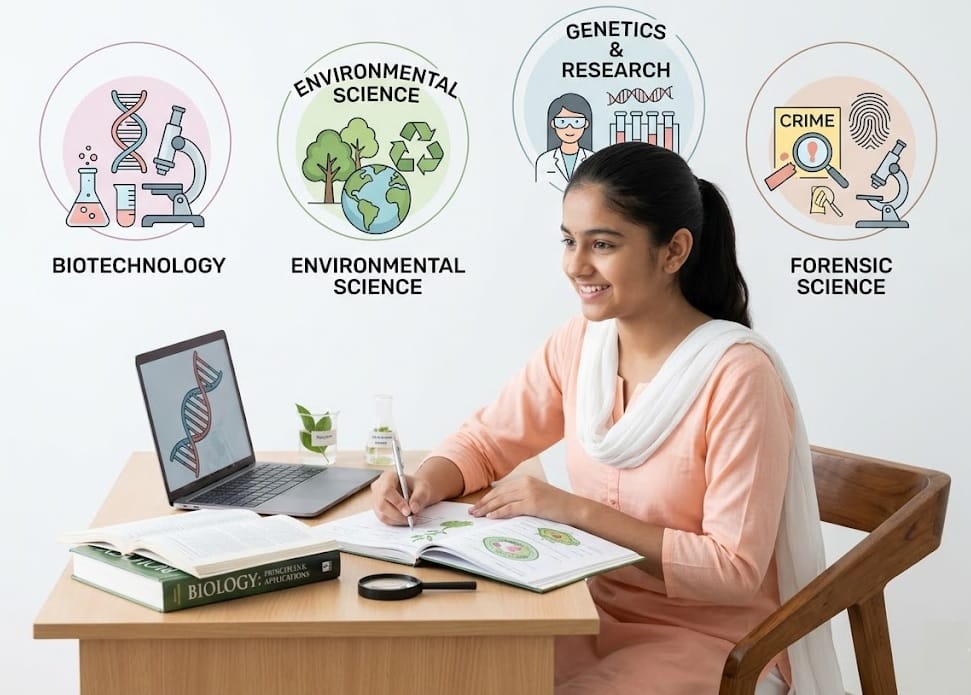
Biotechnology is one of the fastest-growing career sectors for Biology students. It involves using living organisms, cells, and biological systems to develop products and technologies that improve human life.

Career Roles in Biotechnology

    • Biotechnology Research Scientist
    • Bioprocess Engineer
    • Quality Control Analyst
    • Clinical Research Associate
    • Product Development Specialist

Biotechnology professionals contribute to vaccine development, genetic testing, medical devices, disease diagnosis, and agricultural improvements.

Skills Required

    • Laboratory techniques
    • Data analysis
    • Research methodology
    • Problem-solving abilities
    • Scientific communication

Many biotechnology companies actively recruit graduates with strong Biology foundations and specialized training.

Genetics and Genomics

The field of genetics has expanded rapidly due to advancements in DNA sequencing technologies. Genetic professionals help identify inherited disorders, support medical research, and contribute to personalized healthcare solutions.

Career Opportunities

    • Genetic Counselor
    • Genomics Researcher
    • Molecular Biologist
    • DNA Analyst
    • Genetic Laboratory Technician

The completion of the Human Genome Project transformed the understanding of human genetics and opened countless opportunities in healthcare and research.

How to Memorize Biological Terms Without Forgetting Them  

Environmental Science and Conservation

Climate change, pollution, and biodiversity loss have increased the demand for environmental professionals worldwide. Biology students interested in nature and sustainability may find this field particularly rewarding.

Career Paths

    • Environmental Scientist
    • Wildlife Biologist
    • Conservation Officer
    • Ecological Consultant
    • Marine Biologist

Real-World Impact

Environmental experts help protect endangered species, restore ecosystems, monitor pollution levels, and develop sustainable resource management strategies.

Governments, non-profit organizations, research institutions, and private companies frequently hire professionals with biological science backgrounds.

Microbiology

Microbiology focuses on bacteria, viruses, fungi, and other microscopic organisms. Although these organisms are invisible to the naked eye, they play critical roles in health, agriculture, food production, and industry.

Career Options

    • Microbiologist
    • Food Safety Specialist
    • Pharmaceutical Research Associate
    • Quality Assurance Officer
    • Infection Control Specialist

Microbiologists contributed significantly to vaccine development and infectious disease research during recent global health challenges.

Pharmaceutical Industry

The pharmaceutical sector relies heavily on Biology professionals for research, testing, manufacturing, and quality assurance.

Popular Roles

    • Drug Safety Associate
    • Clinical Trial Coordinator
    • Regulatory Affairs Specialist
    • Medical Science Liaison
    • Pharmaceutical Researcher

According to industry estimates, the global pharmaceutical market exceeds one trillion dollars annually, creating substantial career opportunities for science graduates.

Why Students Choose This Field

    • Strong growth potential
    • Research-oriented work
    • Competitive salaries
    • Opportunities for specialization

Agriculture and Food Science

Modern agriculture depends on scientific innovation to increase productivity, improve crop quality, and ensure food security.

Career Choices

    • Agricultural Scientist
    • Plant Biologist
    • Food Technologist
    • Seed Research Specialist
    • Crop Consultant

Biology professionals help develop disease-resistant crops, improve farming methods, and create safer food products.

Growing Importance

The United Nations estimates that global food production must continue increasing to support future population growth, making agricultural science an important career area.

How to Learn Biology Diagrams Quickly and Accurately

Bioinformatics

Bioinformatics combines Biology, computer science, and statistics. As biological research generates enormous amounts of data, experts are needed to analyze and interpret information.

Job Roles

    • Bioinformatics Analyst
    • Computational Biologist
    • Data Scientist in Life Sciences
    • Genomic Data Specialist

Who Should Consider This Field?

Students who enjoy Biology as well as technology, coding, mathematics, and data analysis often thrive in bioinformatics careers.

The demand for professionals who can bridge biology and technology continues to grow rapidly.

Forensic Science

Forensic science applies biological and scientific principles to criminal investigations.

Career Opportunities

    • Forensic Biologist
    • DNA Analyst
    • Crime Laboratory Technician
    • Forensic Scientist

Biological evidence such as blood samples, hair, tissue, and DNA often plays a crucial role in solving criminal cases.

This field can be an excellent option for students who enjoy analytical thinking and scientific investigation.

Public Health

Public health focuses on improving the health and well-being of communities rather than treating individual patients.

Career Paths

    • Public Health Officer
    • Epidemiologist
    • Health Program Coordinator
    • Community Health Specialist

Public health professionals work on disease prevention, vaccination programs, health education, and policy development.

Why It Matters

The World Health Organization highlights the importance of public health initiatives in reducing disease burden and improving life expectancy across populations.

How Parents Can Help Children Improve Biology Grades

Teaching and Education

Students passionate about Biology and communication can build rewarding careers in education.

Opportunities Include

    • School Biology Teacher
    • Online Biology Tutor
    • Academic Content Creator
    • Curriculum Developer
    • Educational Consultant

Teaching allows individuals to inspire future scientists while contributing directly to student success.

With the growth of online learning platforms, educational careers have become more flexible and accessible than ever before.

Scientific Research

Research remains one of the most respected career options for Biology students.

Research Areas

    • Cancer Biology
    • Neuroscience
    • Immunology
    • Cell Biology
    • Plant Science
    • Marine Science

Researchers contribute to discoveries that improve healthcare, agriculture, environmental protection, and technological innovation.

Many breakthroughs that benefit society begin in research laboratories.

Healthcare Careers Beyond Becoming a Doctor

Not every healthcare professional is a physician. Biology students can support patient care through various specialized roles.

Examples

    • Physiotherapist
    • Occupational Therapist
    • Nutritionist
    • Medical Laboratory Technologist
    • Radiology Professional
    • Clinical Research Coordinator

These careers offer opportunities to work directly with patients while pursuing specialized areas of healthcare.

How to Choose the Right Biology Tutor for Your Child

How to Choose the Right Biology Career

Selecting a career should involve more than salary considerations alone.

Ask Yourself

What topics in Biology interest me most?

Do you enjoy genetics, ecology, human anatomy, microorganisms, or research?

Do I prefer laboratory work or field work?

Some careers involve research facilities, while others require outdoor environmental studies.

Am I interested in technology?

Fields such as bioinformatics and biotechnology combine science with digital tools.

Do I enjoy helping people directly?

Healthcare and education careers may be a better fit if personal interaction motivates you.

Understanding your interests, strengths, and long-term goals can help narrow down suitable career paths.

My Thoughts

Biology is far more versatile than many students realize. While medicine remains a prestigious profession, numerous alternative careers offer intellectual challenges, meaningful work, and strong growth potential. From biotechnology and genetics to environmental science, pharmaceuticals, research, public health, and education, Biology provides pathways into some of the world’s most important industries.

Students who develop a strong understanding of biological concepts often have greater flexibility when exploring future opportunities. A private Biology tutor can help strengthen foundational knowledge, improve academic performance, clarify complex topics, and build confidence. Personalized guidance also allows students to identify their strengths early and make better-informed decisions about future educational and career choices.

Looking for expert Biology tutors?

Find Biology Tutors on IndiaTutor.in

About the Author

Nidhi Mehta is the founder of IndiaTutor.in and a professional online educator with over 11 years of teaching experience. She specializes in tutoring Classes 1 to 6 across core academic subjects, with a strong focus on concept clarity and foundational skill-building. Her teaching approach is based on personalized, one-to-one learning that helps students develop long-term academic confidence and understanding.

Visit her profile    Visit About Us Page

error: Content is protected !!

Found this helpful? Share it in 2 seconds!

Link copied to clipboard