

How to Build Critical Thinking Skills Through Psychology

How to Build Critical Thinking Skills Through Psychology

In a world filled with information, opinions, advertisements, and social media content, the ability to think clearly has become more important than ever. Students are no longer expected to simply memorize facts. Schools, colleges, employers, and competitive examinations increasingly value critical thinking skills.

Psychology offers a powerful way to develop these abilities. By understanding how people think, learn, make decisions, and solve problems, students can become more thoughtful, analytical, and independent learners.

For parents, helping children develop critical thinking is one of the most valuable investments in their future. It improves academic performance, strengthens decision-making, and prepares students for real-life challenges.

What Is Critical Thinking?

Critical thinking is the ability to evaluate information objectively, analyze evidence, identify assumptions, and make reasoned judgments.

A student with strong critical thinking skills does not automatically accept information as true. Instead, they ask questions such as:

    • Is this information reliable?
    • What evidence supports this claim?
    • Are there alternative explanations?
    • What factors might influence the outcome?

Critical thinking encourages curiosity, logical reasoning, and problem-solving rather than passive acceptance.

Why Is Critical Thinking Important for Students?

Students use critical thinking every day, often without realizing it.

They evaluate information while studying, compare different viewpoints in essays, solve mathematical problems, conduct experiments, and make choices about friendships, activities, and future careers.

According to the World Economic Forum, analytical thinking consistently ranks among the most important skills needed for future careers. Employers increasingly seek individuals who can assess situations, solve problems, and make informed decisions.

Students who develop these abilities often perform better academically because they understand concepts more deeply instead of relying solely on memorization.

The Role of Psychology in Everyday Life

How Psychology Helps Develop Critical Thinking

Psychology is the scientific study of behavior and mental processes. Unlike subjects that focus primarily on facts and formulas, psychology encourages students to explore why people think and behave in certain ways.

Understanding Different Perspectives

One of the most valuable lessons psychology teaches is that human behavior can often be explained in multiple ways.

For example, if a student performs poorly in an examination, psychology encourages looking beyond simple conclusions.

Possible explanations might include:

    • Lack of preparation
    • Test anxiety
    • Poor sleep
    • Family stress
    • Learning difficulties
    • Health issues

This approach helps students avoid jumping to conclusions and encourages balanced analysis.

Evaluating Evidence

Psychology relies heavily on research and scientific investigation.

Students learn how researchers collect data, test theories, and analyze findings before drawing conclusions.

For example, when reading about memory improvement techniques, psychology students are encouraged to ask:

    • How was the study conducted?
    • How many participants were involved?
    • Were the results consistent?
    • Can the findings be applied to everyone?

These habits help students become careful consumers of information.

Recognizing Cognitive Biases

Human thinking is not always rational. Psychology helps students identify common mental shortcuts and biases that can influence judgment.

Confirmation Bias

People often seek information that supports their existing beliefs while ignoring evidence that challenges them.

For instance, a student who believes they are “bad at mathematics” may focus only on mistakes and overlook improvements.

Recognizing confirmation bias helps students become more objective thinkers.

Availability Bias

People sometimes judge situations based on information that comes easily to mind rather than considering all available evidence.

For example, hearing about one negative experience with online learning may lead someone to assume all online education is ineffective.

Psychology teaches students to examine broader evidence before making decisions.

Is Psychology a Good Career Choice in India?

The Science Behind Critical Thinking

Research suggests that critical thinking can be developed through practice and education.

A study published in the journal Educational Research Review found that structured teaching methods focused on reasoning and analysis can significantly improve critical thinking abilities.

Psychological research also shows that metacognition—thinking about one’s own thinking—plays an important role in learning success.

Students who regularly reflect on questions such as:

    • What do I already know?
    • What am I missing?
    • Why did I make this mistake?
    • How can I improve next time?

often become stronger learners and problem-solvers.

Practical Ways Parents Can Build Critical Thinking Skills

Parents play a major role in helping children become independent thinkers.

Encourage Questions

Many children are naturally curious. Instead of providing immediate answers to every question, encourage discussion.

When a child asks why something happens, respond with questions such as:

    • What do you think?
    • Why might that be?
    • What evidence supports your idea?

This helps children learn how to reason through problems.

Discuss Real-Life Situations

Daily events provide excellent opportunities for critical thinking.

For example:

    • Why do companies advertise products in certain ways?
    • How do news headlines influence opinions?
    • Why do people disagree on important issues?

These conversations help children analyze information more carefully.

Teach Children to Examine Sources

Students are exposed to enormous amounts of information online.

Parents can encourage children to evaluate:

    • Who created the content?
    • Is the source trustworthy?
    • Is evidence provided?
    • Are there alternative viewpoints?

These skills are increasingly important in the digital age.

How to Improve Memory Retention for Psychology Subjects

Psychology Activities That Improve Thinking Skills

Analyze Human Behavior

Ask children to observe everyday situations and discuss possible explanations.

For example:

    • Why do people form habits?
    • Why do some students stay motivated while others struggle?
    • Why do people experience stage fright?

There may be multiple valid answers, encouraging flexible thinking.

Explore Famous Psychological Experiments

Learning about well-known psychology studies introduces students to scientific reasoning.

Examples include research on memory, learning, obedience, motivation, and social behavior.

Discussing these studies helps students evaluate methods, evidence, and conclusions.

Keep a Reflection Journal

A reflection journal encourages students to analyze their own thoughts and decisions.

Questions might include:

    • What was the most important thing I learned today?
    • What challenge did I face?
    • How did I solve it?
    • What would I do differently next time?

Reflection strengthens self-awareness and decision-making abilities.

Effective Psychology Study Techniques for Better Results

Common Mistakes That Limit Critical Thinking

Focusing Only on Memorization

Many students spend hours memorizing information without understanding underlying concepts.

While memory remains important, true learning requires analysis, application, and interpretation.

Accepting Information Without Verification

Not everything found online is accurate.

Students should learn to verify information using reliable sources before accepting claims as fact.

Avoiding Different Opinions

Exposure to different viewpoints helps students develop balanced perspectives.

Listening respectfully to alternative opinions strengthens reasoning abilities.

Fear of Making Mistakes

Critical thinking often involves testing ideas and revising conclusions.

Students who view mistakes as learning opportunities tend to develop stronger problem-solving skills.

How to Score Full Marks in Psychology

Long-Term Benefits of Critical Thinking

The advantages of critical thinking extend far beyond academics.

Students with strong analytical skills often:

    • Make better decisions
    • Solve problems more effectively
    • Communicate ideas clearly
    • Adapt to new situations
    • Become independent learners
    • Perform better in higher education
    • Succeed in professional environments

These skills remain valuable throughout life.

How Psychology Education Supports Future Success

Psychology encourages students to examine evidence, understand human behavior, evaluate arguments, and think logically.

Whether a student plans to pursue psychology, business, law, medicine, engineering, education, or any other field, critical thinking remains an essential skill.

By helping children understand how people think and make decisions, psychology provides practical tools that can improve learning, relationships, and future career opportunities.

For students who find psychological concepts challenging or want to strengthen analytical skills, a private tutor can provide structured guidance and personalized support. One-to-one tutoring allows students to explore ideas in greater depth, ask questions freely, and receive immediate feedback. A skilled psychology tutor can also help students connect theory with real-world examples, improve examination performance, and build confidence in independent thinking.

Looking for expert Psychology tutors?

Find Psychology Tutors on IndiaTutor.in

About the Author

Nidhi Mehta is the founder of IndiaTutor.in and a professional online educator with over 11 years of teaching experience. She specializes in tutoring Classes 1 to 6 across core academic subjects, with a strong focus on concept clarity and foundational skill-building. Her teaching approach is based on personalized, one-to-one learning that helps students develop long-term academic confidence and understanding.

Visit her profile    Visit About Us Page

Is Psychology a Good Career Choice in India?

Is Psychology a Good Career Choice in India

Psychology has emerged as one of the most discussed and sought-after subjects among students in recent years. Growing awareness about mental health, human behavior, workplace well-being, and emotional intelligence has created new opportunities for psychology graduates across multiple industries.

Many students and parents often ask, “Is Psychology a good career choice in India?” The answer depends on your interests, career goals, and willingness to pursue specialized education. However, one thing is certain: psychology is no longer limited to counseling clinics and hospitals. Today, psychologists contribute to education, healthcare, business, sports, technology, research, and public policy.

This article explores the scope, career opportunities, salary prospects, challenges, and future growth of psychology in India.

What Is Psychology?

Psychology is the scientific study of human behavior, emotions, thoughts, learning, memory, personality, and mental processes. It helps us understand why people think, feel, and act in certain ways.

Students who study psychology learn about topics such as:

    • Human development
    • Learning and memory
    • Social behavior
    • Personality
    • Mental health
    • Motivation
    • Emotional intelligence
    • Psychological disorders
    • Research methods

The subject combines theory, observation, analysis, and practical application.

The Role of Psychology in Everyday Life

Why Is Psychology Becoming Popular in India?

India has witnessed a significant increase in awareness regarding mental health over the past decade. Educational institutions, corporations, healthcare organizations, and government bodies are increasingly recognizing the importance of psychological well-being.

According to the World Health Organization, mental health conditions affect millions of people globally, creating a growing need for trained professionals who can provide support, research, and intervention.

The COVID-19 pandemic further highlighted the importance of mental wellness. Anxiety, stress, burnout, and emotional challenges became major concerns for students, employees, and families. As a result, demand for qualified psychology professionals has increased substantially.

Key Reasons Behind Growing Demand

    • Increased awareness of mental health
    • Rising workplace stress
    • Expansion of counseling services
    • Greater focus on student well-being
    • Growing acceptance of therapy
    • Demand for behavioral experts in organizations
    • Increased research opportunities

Is Psychology a Good Subject for Students?

Psychology is an excellent choice for students who enjoy understanding people, solving problems, observing behavior, and helping others.

The subject develops valuable skills such as:

    • Critical thinking
    • Communication
    • Research and analysis
    • Problem-solving
    • Observation
    • Empathy
    • Decision-making

These skills remain useful regardless of the career path students eventually choose.

Who Should Consider Psychology?

Psychology may be a good fit if you:

    • Enjoy studying human behavior
    • Like reading and analyzing situations
    • Have strong listening skills
    • Want to work with people
    • Are interested in mental health
    • Enjoy research and learning

Students from Arts, Humanities, Science, and even Commerce backgrounds can pursue psychology at higher levels.

How to Build Critical Thinking Skills Through Psychology  

Career Opportunities in Psychology

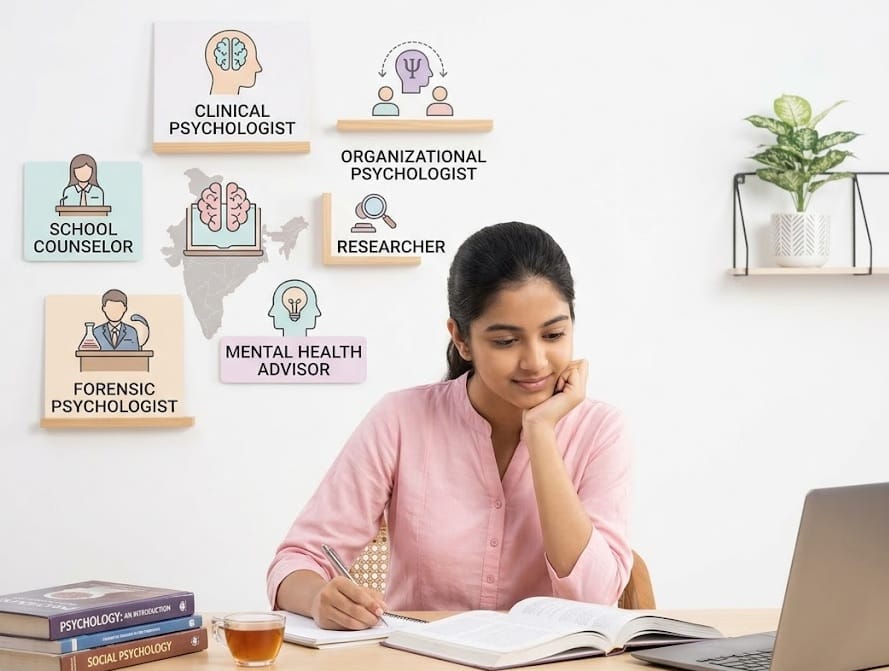
One of the biggest misconceptions is that psychology only leads to counseling careers. In reality, psychology graduates work across a wide range of industries.

Clinical Psychologist

Clinical psychologists assess, diagnose, and help individuals dealing with emotional, behavioral, and psychological difficulties.

They often work in:

    • Hospitals
    • Mental health centers
    • Rehabilitation facilities
    • Private practice

Counseling Psychologist

Counseling psychologists help people manage everyday challenges such as stress, anxiety, relationships, academic pressure, and career concerns.

They commonly work in:

    • Schools
    • Colleges
    • Universities
    • Community organizations
    • Private counseling centers

Educational Psychologist

Educational psychologists focus on learning, development, and student performance.

Their work may involve:

    • Learning difficulties
    • Academic interventions
    • Student assessments
    • Educational research

Industrial and Organizational Psychologist

Businesses increasingly rely on psychology professionals to improve workplace performance.

Responsibilities include:

    • Employee engagement
    • Leadership development
    • Recruitment
    • Workplace well-being
    • Organizational behavior analysis

Sports Psychologist

Athletes often work with sports psychologists to improve focus, confidence, motivation, and performance under pressure.

As sports participation grows in India, opportunities in this field continue to expand.

Research Psychologist

Research psychologists study behavior and mental processes through scientific investigation.

They work in:

    • Universities
    • Research institutions
    • Government projects
    • Private organizations

Human Resources Professional

Many psychology graduates build successful careers in human resource management because they understand motivation, behavior, communication, and workplace dynamics.

How to Improve Memory Retention for Psychology Subjects

What Is the Educational Pathway?

Students interested in psychology typically follow this route:

Bachelor’s Degree

A Bachelor of Arts (BA) or Bachelor of Science (BSc) in Psychology is the first step.

Master’s Degree

Specialization generally begins at the postgraduate level.

Popular options include:

    • Clinical Psychology
    • Counseling Psychology
    • Applied Psychology
    • Industrial Psychology
    • Educational Psychology

Advanced Qualifications

Certain professional roles require additional training, internships, supervised practice, or doctoral-level qualifications.

Students should carefully research the educational requirements of their preferred career path.

Effective Psychology Study Techniques for Better Results

What Is the Salary Potential?

Salary depends on qualifications, specialization, location, skills, and experience.

Entry-Level Professionals

Fresh graduates may start with modest salaries while gaining experience.

Experienced Specialists

Professionals with advanced qualifications and expertise can earn significantly higher compensation.

Fields such as organizational psychology, corporate training, behavioral consulting, and specialized mental health services often provide attractive earning opportunities.

Private practice also allows experienced professionals to build independent careers.

Challenges Students Should Know About

Like every profession, psychology comes with challenges.

Higher Education Is Often Necessary

Many specialized positions require postgraduate education and practical training.

Continuous Learning Is Important

Psychology is an evolving discipline. Professionals must stay updated with new research, techniques, and developments.

Emotional Demands

Those working directly with clients may encounter emotionally challenging situations and must maintain professional boundaries.

Despite these challenges, many psychologists find the profession deeply meaningful and rewarding.

How to Score Full Marks in Psychology

Future Scope of Psychology in India

The future of psychology in India appears promising.

Several factors support long-term growth:

Mental Health Awareness

More individuals are seeking professional support than ever before.

Expansion of Educational Services

Schools and universities increasingly recognize the importance of student counseling and psychological support.

Corporate Wellness Programs

Organizations are investing in employee well-being, resilience, and productivity initiatives.

Digital Counseling Platforms

Online counseling and teletherapy have made psychological services more accessible across the country.

Research and Data-Driven Decision Making

Governments, institutions, and businesses are increasingly using behavioral science to improve outcomes.

These trends indicate growing opportunities for psychology graduates in the coming years.

Is Psychology a Good Career Choice in India?

For students interested in human behavior, mental health, communication, research, and helping others, psychology can be an excellent career choice.

The subject offers intellectual challenge, diverse career paths, meaningful work, and growing employment opportunities. While advanced education is often necessary for specialized roles, the long-term prospects remain encouraging.

Rather than focusing only on salary, students should consider whether they genuinely enjoy understanding people and solving real-world problems. Those with passion, dedication, and the right qualifications can build successful and fulfilling careers in psychology.

How Can a Private Psychology Tutor Help?

Many students find psychology interesting but struggle with theories, research methods, case studies, and answer writing. A private psychology tutor can simplify difficult concepts, explain topics using real-life examples, and provide personalized guidance based on the student’s learning style.

Individual attention often helps students improve confidence, strengthen conceptual understanding, and perform better in school, college, and competitive examinations. A qualified psychology tutor can also assist with assignment preparation, exam strategies, revision planning, and career guidance, helping students achieve their academic goals more effectively.

Looking for expert Psychology tutors?

Find Psychology Tutors on IndiaTutor.in

About the Author

Nidhi Mehta is the founder of IndiaTutor.in and a professional online educator with over 11 years of teaching experience. She specializes in tutoring Classes 1 to 6 across core academic subjects, with a strong focus on concept clarity and foundational skill-building. Her teaching approach is based on personalized, one-to-one learning that helps students develop long-term academic confidence and understanding.

Visit her profile    Visit About Us Page

The Role of Psychology in Everyday Life

The Role of Psychology in Everyday Life

Psychology is often associated with therapists, researchers, and university classrooms. However, its influence extends far beyond academic settings. Psychology plays a significant role in everyday life, helping people understand thoughts, emotions, decisions, relationships, habits, and behavior.

Whether you are a student preparing for exams, a parent raising children, a professional managing workplace challenges, or simply someone trying to make better decisions, psychological principles affect your daily experiences. Understanding these concepts can improve communication, enhance productivity, strengthen relationships, and support overall well-being.

What Is Psychology?

Psychology is the scientific study of the mind and behavior. It examines how people think, feel, learn, remember, interact, and respond to different situations.

Modern psychology covers many areas, including:

    • Cognitive psychology
    • Developmental psychology
    • Social psychology
    • Educational psychology
    • Clinical psychology
    • Industrial and organizational psychology

Researchers use scientific methods to understand human behavior and identify patterns that can improve individual and societal outcomes.

Why Psychology Matters in Daily Life

Many people unknowingly apply psychological principles every day. From setting goals to making purchases, from managing stress to building friendships, psychology influences countless decisions and actions.

A study published by the American Psychological Association found that understanding human behavior can significantly improve problem-solving abilities, decision-making skills, and emotional regulation.

By learning psychology, individuals become more aware of their own actions and the factors that influence others.

Is Psychology a Good Career Choice in India?

How Psychology Helps Us Make Decisions

Every day, people make hundreds of decisions, ranging from simple choices such as selecting a meal to complex decisions involving education, careers, and finances.

Understanding Cognitive Biases

Psychologists have identified several cognitive biases that influence judgment.

For example:

    • Confirmation bias causes people to seek information that supports existing beliefs.
    • Availability bias leads individuals to rely on recent or memorable information.
    • Anchoring bias causes people to depend heavily on the first piece of information they receive.

Recognizing these patterns helps people make more rational and informed choices.

Real-Life Example

A student choosing a college may initially focus on one institution because of a friend’s recommendation. By understanding cognitive biases, the student can evaluate multiple options objectively before making a final decision.

How to Build Critical Thinking Skills Through Psychology  

Psychology and Learning

Learning is one of the most important areas where psychology has practical applications.

How Memory Works

Research suggests that spaced repetition and active recall improve long-term memory retention far more effectively than cramming.

According to studies by cognitive psychologists, reviewing information at regular intervals strengthens neural connections and improves recall during examinations.

Improving Academic Performance

Students can use psychological principles to:

    • Develop effective study habits
    • Improve concentration
    • Manage distractions
    • Increase motivation
    • Enhance memory retention

Understanding how the brain learns can make studying more efficient and less stressful.

The Role of Psychology in Relationships

Healthy relationships depend on communication, empathy, trust, and emotional understanding.

Understanding Emotions

Psychology helps people identify emotional triggers and respond appropriately during conflicts.

Instead of reacting impulsively, individuals can learn to:

    • Listen actively
    • Express feelings clearly
    • Resolve disagreements constructively
    • Build stronger interpersonal connections

Empathy and Social Skills

Empathy allows people to understand another person’s perspective.

Research consistently shows that individuals with strong emotional intelligence often experience better relationships, improved teamwork, and greater social success.

How to Improve Memory Retention for Psychology Subjects

Psychology and Mental Well-Being

Mental health has become an increasingly important topic worldwide.

According to the World Health Organization, mental health conditions affect hundreds of millions of people globally and contribute significantly to reduced quality of life.

Psychology provides tools that help individuals:

    • Manage stress
    • Build resilience
    • Develop coping strategies
    • Improve self-awareness
    • Maintain emotional balance

Stress Management Techniques

Psychologists often recommend evidence-based approaches such as:

Mindfulness

Mindfulness encourages individuals to focus on the present moment rather than worrying about the future or dwelling on the past.

Positive Self-Talk

Replacing negative thoughts with constructive ones can improve confidence and emotional stability.

Goal Setting

Breaking large tasks into smaller achievable steps reduces anxiety and increases motivation.

Psychology in the Workplace

Psychology plays a vital role in professional environments.

Organizations use psychological principles to improve employee satisfaction, teamwork, leadership, and productivity.

Motivation and Performance

One of the most influential theories in psychology is Abraham Maslow’s hierarchy of needs, which suggests that people are motivated by different levels of needs ranging from basic survival to personal growth.

Employers who understand these motivations often create better work environments and achieve higher employee engagement.

Leadership and Communication

Effective leaders use psychological insights to:

    • Understand team dynamics
    • Resolve conflicts
    • Encourage collaboration
    • Improve workplace morale

These skills contribute to stronger organizational performance.

Effective Psychology Study Techniques for Better Results

Psychology and Consumer Behavior

Have you ever wondered why certain advertisements capture attention while others do not?

The answer often lies in psychology.

The Psychology of Buying Decisions

Businesses study consumer behavior to understand how people make purchasing decisions.

Factors that influence buying choices include:

    • Social proof
    • Scarcity
    • Trust
    • Emotional appeal
    • Brand perception

For example, online reviews influence consumer confidence because people tend to trust the experiences of others.

Everyday Example

A person may choose a product with thousands of positive reviews over a similar product with no ratings, even when both have comparable features.

Psychology and Habit Formation

Habits shape much of daily life.

Researchers estimate that a large percentage of daily actions occur automatically rather than through conscious decision-making.

Building Positive Habits

Psychological research suggests that habits develop through a loop involving:

    1. A cue
    2. A routine
    3. A reward

Understanding this process helps individuals create productive behaviors such as:

    • Daily exercise
    • Regular study sessions
    • Reading habits
    • Time management routines

Breaking Unwanted Habits

The same principles can be used to identify triggers and replace undesirable behaviors with healthier alternatives.

How to Score Full Marks in Psychology

Psychology and Child Development

Parents frequently benefit from psychological knowledge when supporting children’s growth and education.

Understanding Developmental Stages

Children’s thinking abilities change as they grow.

Psychologists such as Jean Piaget demonstrated that cognitive development occurs through distinct stages, each involving new ways of understanding the world.

This knowledge helps parents set realistic expectations and provide appropriate support.

Encouraging Positive Learning

Psychological principles can help parents:

    • Improve communication
    • Build confidence
    • Encourage curiosity
    • Support emotional development
    • Foster independent thinking

Psychology and Social Media

Social media has become a major part of modern life.

Psychologists study how digital platforms affect attention, self-esteem, relationships, and behavior.

Positive Effects

    • Staying connected with friends and family
    • Access to educational resources
    • Building professional networks

Potential Challenges

    • Comparison with others
    • Reduced attention span
    • Excessive screen time
    • Increased stress and anxiety

Understanding these effects helps individuals use technology more responsibly.

Why Students Should Study Psychology

Psychology is valuable not only as an academic subject but also as a life skill.

Students who study psychology often gain:

    • Better communication skills
    • Improved critical thinking
    • Greater self-awareness
    • Enhanced problem-solving abilities
    • Stronger understanding of human behavior

These skills remain useful throughout education, careers, and personal life.

My Thoughts

Psychology is deeply connected to everyday experiences. It helps people understand how they think, learn, communicate, make decisions, manage emotions, and interact with others. From improving academic performance and workplace productivity to strengthening relationships and developing healthy habits, psychological knowledge provides practical tools that can benefit people of all ages.

For students studying psychology, a strong understanding of concepts and theories can make a significant difference in academic success. A private psychology tutor can provide personalized guidance, clarify difficult topics, improve answer-writing skills, and build confidence before examinations. One-to-one support also allows students to learn at their own pace and receive focused attention based on their individual learning needs.

Looking for expert Psychology tutors?

Find Psychology Tutors on IndiaTutor.in

About the Author

Nidhi Mehta is the founder of IndiaTutor.in and a professional online educator with over 11 years of teaching experience. She specializes in tutoring Classes 1 to 6 across core academic subjects, with a strong focus on concept clarity and foundational skill-building. Her teaching approach is based on personalized, one-to-one learning that helps students develop long-term academic confidence and understanding.

Visit her profile    Visit About Us Page

error: Content is protected !!

Found this helpful? Share it in 2 seconds!

Link copied to clipboard