
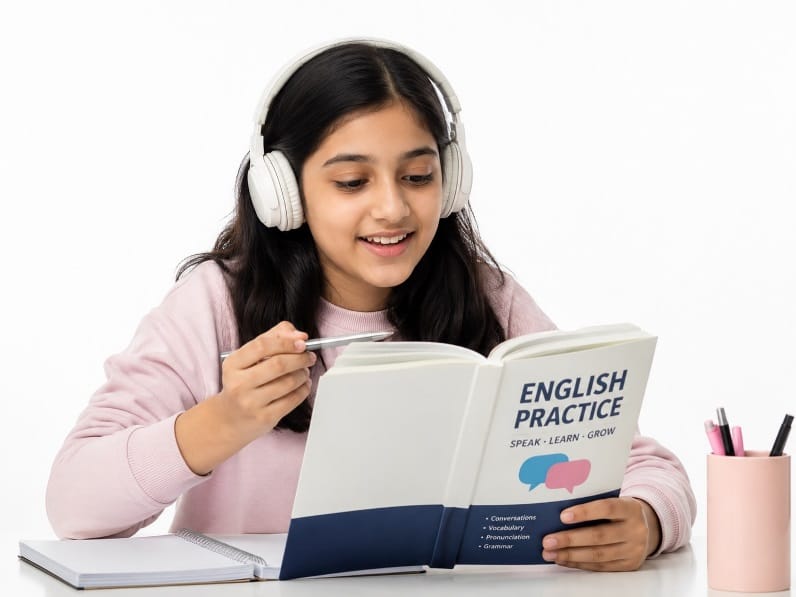
English speaking skills play an important role in academic success, career growth, and everyday communication. Many students study English for years, yet hesitate when it comes to speaking confidently. This is a common challenge faced by learners across different age groups.
The good news is that strong speaking ability is not something people are born with. It is a skill that develops through regular practice, proper guidance, and consistent exposure to the language. Whether you are a school student, college learner, or someone preparing for competitive exams, improving spoken English can open many opportunities.
According to the Education First (EF) English Proficiency Index, English remains one of the most widely used languages in business, education, and international communication. Research also shows that regular speaking practice significantly improves language fluency and confidence over time.
Why English Speaking Skills Matter
Good communication helps students express ideas clearly, participate in classroom discussions, deliver presentations, and perform better in interviews. Strong speaking skills also improve listening, vocabulary, pronunciation, and overall language development.
Students who communicate effectively often feel more confident in social and academic situations. This confidence can positively impact performance in many other subjects as well.
How English Skills Impact Future Career Opportunities
Common Reasons Students Struggle with Spoken English
Before exploring solutions, it is important to understand the obstacles that prevent improvement.
Fear of Making Mistakes
Many learners worry about incorrect grammar or pronunciation. This fear often stops them from speaking at all.
Limited Vocabulary
Students sometimes know what they want to say but cannot find the right words.
Lack of Practice
Language is a practical skill. Reading and writing alone cannot develop speaking fluency.
Translating from the Native Language
Many learners first think in their mother tongue and then translate into English, which slows down conversations.
Low Confidence
Some students avoid speaking because they feel others may judge them.
Understanding these challenges helps learners focus on the right solutions.
How English Proficiency Improves Overall Academic Performance
Build a Daily English Speaking Habit
Consistency is one of the most important factors in language learning.
Speak for at Least 15 Minutes Daily
Research on language acquisition shows that regular short practice sessions are often more effective than occasional long sessions.
Choose a topic and speak about it for 10 to 15 minutes every day. Describe your day, discuss a news story, explain a hobby, or talk about your future goals.
The objective is not perfection. The goal is regular communication.
Use English During Daily Activities
Try speaking English while performing simple tasks such as:
-
- Describing what you are cooking
- Explaining your study plan
- Talking about a movie you watched
- Discussing your favorite sport
These small activities gradually increase fluency.
Improve Your Vocabulary Naturally
A strong vocabulary makes conversations easier and more interesting.
Learn Useful Words Instead of Memorizing Lists
Many students memorize hundreds of words but rarely use them.
Focus on learning practical vocabulary that can be used in daily conversations.
For example:
Instead of learning rare words, master commonly used words related to school, hobbies, travel, technology, and social interactions.
Learn Words in Context
Reading stories, articles, and news reports helps students understand how words are used naturally.
Studies show that vocabulary retention improves significantly when learners encounter words in meaningful contexts rather than isolated lists.
Maintain a Vocabulary Journal
Write down:
-
- New words
- Their meanings
- Example sentences
- Synonyms
Review these notes regularly and try using the words during conversations.
How to Learn and Remember New English Words Faster
Improve Pronunciation Step by Step
Clear pronunciation helps listeners understand you better.
Listen to Native and Fluent Speakers
Watch educational videos, podcasts, interviews, and documentaries.
Pay attention to:
-
- Word stress
- Sentence rhythm
- Intonation
- Pronunciation patterns
Use Shadowing Technique
Shadowing involves listening to a sentence and immediately repeating it.
Language experts often recommend this method because it improves pronunciation, listening ability, and speaking speed simultaneously.
Start with short clips and gradually move to longer conversations.
Record Your Voice
Many students are surprised when they hear their own recordings.
Recording helps identify:
-
- Pronunciation mistakes
- Repeated filler words
- Speaking speed issues
Comparing recordings over time allows learners to track progress.
Best English Learning Activities Parents Can Do at Home
Develop Confidence Through Small Conversations
Confidence grows through action.
Start with Familiar Topics
Speak about subjects you already know well.
Examples include:
-
- Your school
- Your favorite book
- Sports
- Family activities
- Career goals
Familiar topics reduce anxiety and help conversations flow naturally.
Join Group Discussions
Participating in discussions improves communication skills and teaches students how to express opinions clearly.
Even simple conversations with classmates can provide valuable practice.
Accept Mistakes as Part of Learning
Every language learner makes mistakes.
Studies on language acquisition consistently show that learners who actively communicate improve faster than those who wait until they become perfect.
Progress comes from practice, not perfection.
Improve Listening Skills to Speak Better
Speaking and listening are closely connected.
Watch English Content Daily
Choose educational content suitable for your level.
Examples include:
-
- News programs
- Educational YouTube channels
- Interviews
- Documentaries
Listening regularly helps students understand natural speech patterns.
Listen Actively
Do not simply hear the words.
Pay attention to:
-
- Pronunciation
- Sentence structure
- Vocabulary usage
- Expressions
This approach helps learners use similar patterns in their own conversations.
Think in English Instead of Translating
One of the biggest barriers to fluency is constant translation.
Train Your Mind Gradually
Start by naming objects around you in English.
For example:
-
- Chair
- Window
- Computer
- Notebook
Then move to complete thoughts such as:
“I need to finish my homework.”
“I will study mathematics this evening.”
Over time, thinking directly in English becomes more natural.
How to Develop a Reading Habit in Children
Read Aloud Every Day
Reading aloud combines multiple language skills.
Benefits of Reading Aloud
This practice improves:
-
- Pronunciation
- Speaking confidence
- Vocabulary recognition
- Fluency
Spend 10 minutes daily reading articles, stories, or textbooks aloud.
Research has shown that oral reading strengthens language processing and verbal expression.
Use Technology to Practice Speaking
Technology provides many opportunities for language improvement.
Language Learning Apps
Several apps offer pronunciation exercises, speaking challenges, and interactive conversations.
Speech Recognition Tools
Many modern applications provide instant feedback on pronunciation and clarity.
Online Conversation Platforms
Students can practice with other learners and develop communication skills in a supportive environment.
Technology should complement regular speaking practice rather than replace it.
Set Realistic Speaking Goals
Improvement becomes easier when goals are measurable.
Weekly Goals
Examples include:
-
- Learn 20 new useful words
- Speak English for 15 minutes daily
- Watch three educational videos
- Record one speaking practice session
Small achievements create momentum and motivation.
Track Your Progress
Keep a journal of:
-
- New vocabulary
- Speaking activities
- Areas of improvement
Visible progress encourages consistency.
Build Fluency Through Storytelling
Storytelling is one of the most effective speaking exercises.
Retell Stories in Your Own Words
After reading a story or watching a video, summarize it aloud.
This activity improves:
-
- Vocabulary usage
- Sentence construction
- Confidence
- Speaking flow
Students who regularly practice storytelling often become more comfortable expressing complex ideas.
Surround Yourself with English
Language learning becomes easier when English is part of everyday life.
Create an English-Friendly Environment
Try the following:
-
- Change device settings to English
- Follow educational English channels
- Read English articles regularly
- Write short daily notes in English
Frequent exposure strengthens familiarity with the language.
Stay Patient and Consistent
Building strong English speaking skills takes time. Most language experts agree that consistent practice over several months produces noticeable improvements in fluency and confidence.
Do not compare yourself with others. Focus on your own progress and celebrate small improvements along the way.
Every conversation, every new word, and every practice session contributes to long-term success.
How a Private English Tutor Can Help
While self-study is valuable, a private English tutor can accelerate improvement by providing personalized guidance based on a student’s strengths and weaknesses. Tutors identify pronunciation errors, improve grammar usage, expand vocabulary, and create structured speaking exercises.
One-on-one lessons also provide regular opportunities to practice conversations in a supportive environment. Immediate feedback helps students correct mistakes quickly and build confidence faster. For learners who struggle with fluency, communication anxiety, or exam preparation, personalized English tuition can make a significant difference in achieving their goals.
Looking for expert English tutors?
Find English Tutors on IndiaTutor.in
About the Author
Nidhi Mehta is the founder of IndiaTutor.in and a professional online educator with over 11 years of teaching experience. She specializes in tutoring Classes 1 to 6 across core academic subjects, with a strong focus on concept clarity and foundational skill-building. Her teaching approach is based on personalized, one-to-one learning that helps students develop long-term academic confidence and understanding.