

How Parents Can Support French Learning at Home

How Parents Can Support French Learning at Home

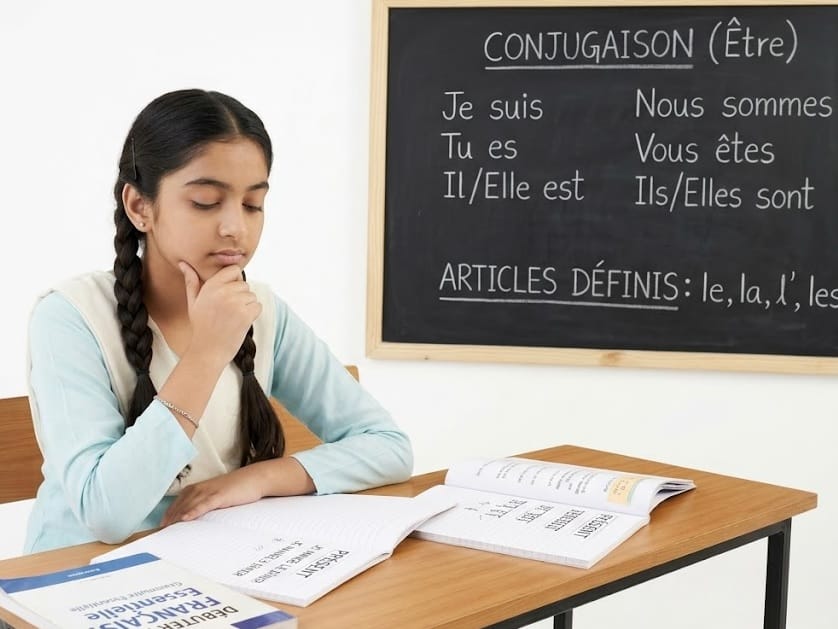
Learning French at school can feel exciting at first, but many students struggle when grammar, vocabulary, and pronunciation start becoming complex. Parents often assume they need to know French themselves to help their child, but that is not true. With the right approach, home support can significantly improve fluency, confidence, and exam performance.

Research in language acquisition consistently shows that consistent exposure outside the classroom improves retention. A study published in second language learning journals suggests that students who practice a language for at least 20–30 minutes daily outside school perform significantly better in reading and speaking assessments compared to those who only rely on classroom teaching.

Why Home Support Matters in French Learning

The role of environment in language absorption

Children learn languages faster when they are exposed to them regularly in daily life. French, like any foreign language, requires repeated exposure to vocabulary and sentence patterns. When parents create a supportive environment at home, even without speaking French fluently, the brain begins to recognize patterns more easily.

According to the European Centre for Modern Languages, consistent informal exposure can improve language retention by nearly 40% compared to classroom-only learning.

Reducing learning pressure

Many students fear making mistakes in French, especially in speaking and writing. Home support reduces this pressure. When parents encourage practice without judgment, students become more willing to experiment with sentences, which is essential for fluency development.

Top Benefits of Learning French Alongside School Studies

Building a Simple French Learning Routine at Home

Daily micro learning sessions

Instead of long study hours, short and consistent practice works better.

Suggested structure:

    • 10 minutes vocabulary revision
    • 10 minutes reading simple French sentences
    • 10 minutes listening practice

Educational psychology studies show that spaced repetition improves memory retention by up to 80% compared to last-minute revision.

Linking French with daily life

Parents can connect French words with everyday objects at home. For example:

    • Label items like “table”, “door”, “window” with French translations
    • Encourage children to say simple phrases like “Je mange” (I eat) during meals
    • Use greetings such as “Bonjour” and “Bonne nuit” regularly

This method is based on contextual learning theory, which suggests that learners remember information better when it is connected to real-life situations.

How French Can Improve Career Opportunities in India and Abroad

Improving Vocabulary Without Memorization Pressure

Using visual and audio tools

Children often struggle with rote memorization of French vocabulary. Instead, combining visuals and audio improves retention.

Apps, flashcards, and YouTube educational videos can help reinforce word association. Studies on multimedia learning show that combining audio and visuals improves comprehension by nearly 50% compared to text-only learning.

Word grouping technique

Rather than learning isolated words, parents can help children learn grouped vocabulary.

Example groups:

    • School: école, professeur, classe
    • Food: pain, lait, fromage
    • Family: mère, père, frère

Grouping helps the brain store information in clusters, making recall faster during exams.

Supporting French Grammar Without Teaching Expertise

Understanding basic grammar patterns

Parents do not need advanced French knowledge. Instead, understanding simple patterns helps guide children.

French sentence structure typically follows:
Subject + Verb + Object

Example:
Je mange une pomme (I eat an apple)

Even if parents cannot translate complex grammar rules, they can still ask children to identify structure in sentences, which strengthens analytical thinking.

Encouraging error-friendly learning

One of the biggest barriers in language learning is fear of mistakes. Research from Cambridge language studies indicates that learners who are corrected gently and consistently improve 30% faster in speaking accuracy.

Parents should avoid immediate correction in a strict manner. Instead, repeating the correct sentence helps more.

How to Memorize French Vocabulary Faster

Developing Listening and Speaking Skills at Home

Passive listening method

French listening skills improve when students are exposed to the language regularly, even without full understanding.

Parents can encourage:

    • French cartoons
    • Simple French songs
    • Beginner-level podcasts

The “input hypothesis” in language learning suggests that learners acquire language naturally when exposed to slightly advanced content repeatedly.

Daily speaking practice

Even 5–10 minutes of speaking practice can significantly improve fluency.

Simple activities:

    • Describe the day in basic French sentences
    • Ask basic questions like “Comment ça va?”
    • Encourage short dialogues at home

Speaking practice reduces hesitation and builds confidence, especially for oral exams.

French Grammar Basics Every Student Should Know

Helping with School Homework Effectively

Structured homework approach

Instead of completing homework quickly, parents can guide children to break tasks into steps:

    • Read the question carefully
    • Identify keywords
    • Construct simple answers first
    • Improve grammar in second attempt

This method improves analytical thinking and reduces careless mistakes.

Checking without correcting everything

Parents should focus on guiding rather than rewriting answers. Over-correction often leads to dependency and reduces independent thinking.

Preparing for Exams Strategically

Revision cycles instead of last-minute study

French exam performance improves when revision is spread across weeks. Studies on learning curves show that students retain up to 70% more information when revision is spaced rather than crammed.

Focus areas for exams:

    • Vocabulary recall
    • Verb conjugation accuracy
    • Reading comprehension speed
    • Writing sentence structure

Practice with sample papers

Solving previous year papers improves familiarity with exam patterns and reduces stress. It also helps students manage time effectively during exams.

Common Mistakes Parents Make When Helping Children Learn French

Encouraging Motivation and Confidence

Setting realistic goals

Instead of expecting fluency quickly, parents should set small milestones:

    • Learn 10 new words per day
    • Write 5 sentences correctly
    • Speak 2–3 simple dialogues daily

Achieving small targets builds long-term confidence.

Reward-based encouragement

Positive reinforcement is more effective than pressure. Acknowledging progress, even small improvements, increases motivation and consistency.

Common Challenges Students Face in French Learning

Difficulty in pronunciation

French pronunciation differs significantly from English and Hindi, which can create confusion. Regular listening practice helps overcome this barrier.

Grammar confusion

Verb conjugations and gender rules are often challenging. Consistent practice and exposure reduce confusion over time.

Lack of practice environment

Since French is not commonly spoken at home, students lack real-life usage opportunities. This makes structured practice essential.

Creating a Long-Term Learning Mindset

Consistency over intensity

Language learning is not about studying hard for a few days. It is about regular exposure over months. Even 20 minutes daily practice can lead to strong improvement within 3–6 months.

Building curiosity

Parents should encourage curiosity about French culture, food, music, and films. This makes learning more engaging and less mechanical.

When Additional Support Becomes Important

Even with strong home support, some students struggle with grammar clarity, exam pressure, or speaking confidence. This is common and does not reflect lack of ability. It often indicates the need for structured guidance.

A trained tutor provides:

    • Personalized explanations based on student level
    • Regular speaking practice sessions
    • Exam-focused strategies
    • Immediate doubt resolution

For many students, professional guidance helps convert confusion into clarity and improves scores significantly within a short period.

Private tutoring also ensures consistent discipline, structured learning plans, and targeted improvement in weak areas. Over time, this reduces stress for both students and parents while building strong academic performance in French.

Looking for expert French tutors?

Find French Tutors on IndiaTutor.in

About the Author

Nidhi Mehta is the founder of IndiaTutor.in and a professional online educator with over 11 years of teaching experience. She specializes in tutoring Classes 1 to 6 across core academic subjects, with a strong focus on concept clarity and foundational skill-building. Her teaching approach is based on personalized, one-to-one learning that helps students develop long-term academic confidence and understanding.

Visit her profile    Visit About Us Page

French Grammar Basics Every Student Should Know

French Grammar Basics Every Student Should Know

French is one of the most widely studied foreign languages in the world, with more than 300 million speakers across continents. According to the Organisation Internationale de la Francophonie, French is expected to be spoken by over 700 million people by 2050 due to population growth in Africa. For students in India, French is commonly introduced as a third language in CBSE and ICSE schools, often starting from middle grades.

Understanding grammar is the foundation of mastering French. Unlike English, French follows stricter rules for gender, verb endings, and sentence structure. Students who build a strong grammar base early tend to perform better in exams and communication tasks. The Common European Framework of Reference for Languages (CEFR) categorizes beginner proficiency as A1 and A2 levels, where grammar accuracy plays a major role in scoring well.

This article breaks down essential French grammar basics in a simple and practical way so students can improve step by step.

Sentence Structure in French

French sentence formation is logical but different from English in subtle ways. Most basic sentences follow Subject-Verb-Object order, but placement can shift in questions and negative sentences.

Basic sentence pattern

A simple structure looks like:
Subject + Verb + Object

Example:
Je mange une pomme (I eat an apple)

Here:
Je = I
mange = eat
une pomme = an apple

Questions in French

Questions can be formed in three main ways:

    1. Rising intonation: Tu parles français?
    2. Est-ce que form: Est-ce que tu parles français?
    3. Inversion: Parles-tu français?

Negative sentences

Negation uses two parts: ne + verb + pas

Example:
Je ne comprends pas (I do not understand)

In spoken French, ne is often dropped, but in exams it is mandatory.

Top Benefits of Learning French Alongside School Studies

Nouns and Articles in French

French nouns are always gendered. Every noun is either masculine or feminine, which affects articles and adjectives.

Gender of nouns

There is no strict rule for all words, but common patterns help:

    • Words ending in -tion are usually feminine (la nation)
    • Words ending in -age are usually masculine (le garage)

Articles in French

Articles change depending on gender and number.

Definite articles

    • le (masculine singular)
    • la (feminine singular)
    • les (plural for both genders)

Example:
le livre (the book)
la table (the table)
les livres (the books)

Indefinite articles

    • un (masculine singular)
    • une (feminine singular)
    • des (plural)

Example:
un stylo (a pen)
une chaise (a chair)

Research from language learning studies published in applied linguistics journals shows that gender agreement errors are among the most common mistakes for beginner French learners, especially those whose native languages do not use grammatical gender, such as English or Hindi.

How French Can Improve Career Opportunities in India and Abroad

Verbs and Conjugation Rules

French verbs change based on subject, tense, and group classification. This is one of the most important grammar areas for students.

Three verb groups

French verbs are divided into:

    • -ER verbs (parler, aimer)
    • -IR verbs (finir, choisir)
    • -RE verbs (vendre, prendre)

Present tense example

Parler (to speak):

    • Je parle
    • Tu parles
    • Il/elle parle
    • Nous parlons
    • Vous parlez
    • Ils/elles parlent

Notice how endings change depending on subject. This pattern is consistent in regular verbs, making it easier to predict once learned.

Importance of verb accuracy

Educational assessments across European language programs indicate that verb conjugation errors account for nearly 40 percent of total grammar mistakes in beginner-level writing tests. This shows why consistent practice is essential.

How to Memorize French Vocabulary Faster

Adjectives and Agreement Rules

In French, adjectives must agree with the noun they describe in gender and number.

Basic rule

Masculine singular: petit garçon (small boy)
Feminine singular: petite fille (small girl)
Plural: petits garçons / petites filles

Placement of adjectives

Most adjectives come after the noun:
une voiture rouge (a red car)

However, common adjectives like beau, petit, grand often come before:
un petit chien (a small dog)

This shift in placement is a frequent confusion point for students transitioning from English.

Pronouns in French Grammar

Pronouns help avoid repetition and make sentences smoother.

Subject pronouns

    • je (I)
    • tu (you informal)
    • il/elle (he/she)
    • nous (we)
    • vous (you formal or plural)
    • ils/elles (they)

Object pronouns

Object pronouns replace nouns:

    • me
    • te
    • le/la
    • nous
    • vous
    • les

Example:
Je vois Marie → Je la vois (I see her)

Mastering pronouns improves both writing quality and spoken fluency.

How Parents Can Support French Learning at Home

Tenses Overview in School French

French uses multiple tenses, but students typically focus on a few key ones in school exams.

Present tense (Présent)

Used for current actions:
Je vais à l’école (I go to school)

Past tense (Passé composé)

Used for completed actions:
J’ai mangé (I ate)

Future tense (Futur proche)

Used for near future:
Je vais étudier (I am going to study)

A study on language acquisition patterns shows that learners who practice all three basic tenses together develop stronger communication skills than those who focus only on memorization.

Common Mistakes Students Make in French Grammar

Mixing gender articles

Many students incorrectly say le table instead of la table.

Forgetting verb endings

Dropping correct endings like -s, -ent affects marks in exams.

Direct translation from English

Word-for-word translation leads to unnatural sentences.

Incorrect pronoun usage

Using full nouns repeatedly instead of replacing them with pronouns reduces fluency.

Negation errors

Missing either ne or pas in written exams leads to loss of marks.

Common Mistakes Parents Make When Helping Children Learn French

Effective Ways to Practice French Grammar

Daily short practice

Even 15 to 20 minutes daily improves retention more than long weekly sessions.

Reading simple French texts

Children’s books and graded readers help reinforce sentence structure.

Writing small paragraphs

Writing about daily routine helps apply grammar in real context.

Listening practice

French songs, podcasts, and beginner dialogues improve understanding of sentence flow.

Speaking practice

Speaking aloud improves confidence and reduces hesitation.

Language learning research consistently shows that active recall methods, such as speaking and writing without looking at notes, improve grammar retention significantly compared to passive reading.

Why French Grammar Matters for Academic Success

In CBSE and ICSE examinations, grammar accuracy directly affects marks in writing, reading comprehension, and translation sections. Even small errors in agreement or conjugation can reduce overall scores. Students who build a strong grammar foundation early tend to perform better in higher classes where complexity increases.

French grammar is not about memorization alone. It is about recognizing patterns and applying them correctly in real situations. Once students understand these patterns, learning becomes easier and more enjoyable.

My Thoughts

French grammar forms the backbone of language learning. From sentence structure to verb conjugation, each concept builds toward clearer communication and better exam performance. Students who practice consistently and understand rules instead of memorizing blindly gain a long-term advantage.

For beginners, starting with small daily steps is more effective than trying to learn everything at once. Over time, grammar becomes intuitive and natural.

Private tutoring can further strengthen this journey by offering personalized attention, correcting mistakes in real time, and providing structured practice plans based on individual learning speed. A tutor can simplify difficult grammar topics, improve confidence in speaking and writing, and help students prepare effectively for school exams. One-to-one guidance ensures that doubts are cleared immediately, which accelerates progress and builds a strong foundation in French.

Looking for expert French tutors?

Find French Tutors on IndiaTutor.in

About the Author

Nidhi Mehta is the founder of IndiaTutor.in and a professional online educator with over 11 years of teaching experience. She specializes in tutoring Classes 1 to 6 across core academic subjects, with a strong focus on concept clarity and foundational skill-building. Her teaching approach is based on personalized, one-to-one learning that helps students develop long-term academic confidence and understanding.

Visit her profile    Visit About Us Page

How to Memorize French Vocabulary Faster

How to Memorize French Vocabulary Faster

Learning French vocabulary becomes much easier when students use the right memory techniques instead of repeated rote learning. Many learners feel stuck because words seem to disappear quickly after revision. This happens due to how human memory works, not due to lack of ability. With structured methods, vocabulary can be retained for much longer and recalled faster during exams and conversations.

Why French Vocabulary Is Hard to Retain

The forgetting pattern in human memory

Psychologist Hermann Ebbinghaus discovered the forgetting curve, which shows that people forget nearly 50% of new information within one hour and up to 70% within 24 hours if there is no revision. This is why French words learned in one session often fade quickly.

Language exposure gap

Most students in India do not hear French regularly outside the classroom. Research in second-language acquisition suggests that a new word needs multiple exposures, usually between 6 to 10 encounters, before it becomes part of long-term memory. Without repetition, retention drops sharply.

Pronunciation and spelling mismatch

French words often look different from how they sound. For example, “beaucoup” is pronounced quite differently from its spelling. This mismatch increases cognitive load and makes memorization slower for beginners.

How Memory Actually Stores French Words

Short-term and long-term memory

New vocabulary first enters short-term memory. If it is not revised or used, it disappears. Long-term memory develops only when information is repeatedly recalled and used in context.

A study published in cognitive psychology research shows that spaced repetition improves long-term retention significantly compared to one-time study sessions.

Active recall strengthens memory

Active recall means retrieving information without looking at notes. Studies in learning science show that students using active recall can improve retention by nearly 50% compared to passive reading methods.

For example, instead of repeatedly reading “chien = dog,” students should try recalling the meaning without looking at the answer.

Top Benefits of Learning French Alongside School Studies

Effective Techniques to Memorize French Vocabulary Faster

Spaced Repetition System

How spaced repetition works

Spaced repetition involves revising words at increasing time intervals such as Day 1, Day 2, Day 4, Day 7, and Day 15. Each revision strengthens memory connections.

Why it is scientifically proven

Memory research shows that spaced repetition can improve retention by 30% to 200% depending on consistency. Digital tools like Anki are built on this principle and are widely used by language learners globally.

Association Method for Strong Memory Links

Visual connection technique

The brain processes images faster than text. According to dual coding theory, combining words with visuals improves recall.

For example, for the word “pomme,” imagining a bright red apple falling helps create a strong mental link.

Personal connection strategy

Words connected to personal life are easier to remember. For example:
“école” can be linked to your classroom
“ami” can be linked to your best friend

Studies show contextual and personal associations improve recall accuracy by up to 40%.

How French Can Improve Career Opportunities in India and Abroad

Grouping Words into Categories

Thematic learning approach

Instead of learning random vocabulary, grouping words improves memory:
Food group: pain, fromage, lait
School group: professeur, élève, classe
Travel group: train, billet, gare

Why clustering works

The brain stores information in semantic networks. When one word is recalled, related words become easier to access, reducing effort during revision.

Learning Vocabulary in Sentences

Context-based learning

Learning isolated words is less effective than learning them in sentences. For example:
Word: parler
Sentence: Je parle français avec mon ami

Research-backed benefit

Applied linguistics studies show contextual learning improves vocabulary retention by 25% to 35% compared to memorizing word lists alone.

French Grammar Basics Every Student Should Know

Listening and Speaking Practice

Audio exposure method

Listening helps the brain connect sound with meaning. Even 10 to 15 minutes of daily French audio can significantly improve retention.

Speaking activation

Speaking engages multiple brain areas including auditory and motor functions. This multi-sensory involvement improves recall speed and fluency over time.

Writing Practice for Strong Retention

Handwriting advantage

Writing vocabulary by hand improves memory because it activates motor memory. Educational studies show handwritten learning improves retention by 20% to 30% compared to typing.

Practical method

Students should write 10 new words daily and use each in a sentence. Revision of previous words should be included before adding new ones.

Memory Tricks for Faster Recall

Mnemonics Technique

Creating funny associations

Mnemonics help students remember difficult words by linking them to familiar ideas.

Example:
“chat” (cat) can be remembered as a cat wearing a hat

Why it works

Unusual or humorous associations are stored more strongly in memory, making recall faster during exams.

How Parents Can Support French Learning at Home

Flashcard Learning System

How flashcards help

Flashcards combine active recall and spaced repetition. One side contains the French word and the other side contains meaning and example.

Effectiveness

Research shows flashcard-based learning improves vocabulary retention significantly faster than passive reading because it forces repeated retrieval.

Daily Study Plan for Faster Learning

Structured 30-minute routine

10 minutes learning new words
10 minutes revision of old vocabulary
10 minutes sentence formation or speaking practice

Weekly revision cycle

At the end of each week, students should revise all learned vocabulary without looking at answers. This strengthens long-term memory pathways.

Common Mistakes Parents Make When Helping Children Learn French

Common Mistakes Students Make

Overloading vocabulary

Learning too many words at once reduces retention. Research shows that 10 to 20 words per day is optimal for long-term memory formation.

Ignoring revision cycles

Without repetition, vocabulary disappears quickly due to the forgetting curve.

Passive reading only

Simply reading word lists does not activate memory pathways. Active recall and usage are necessary for retention.

Why Consistency Improves Results

Language learning studies consistently show that short daily practice is more effective than long irregular sessions. Even 15 minutes of daily vocabulary practice can produce noticeable improvement within 2 to 4 weeks if done consistently.

My Thoughts

Memorizing French vocabulary faster depends on using scientifically proven learning methods rather than repetition alone. Techniques such as spaced repetition, association, grouping, active recall, and sentence usage align with how the brain naturally stores information. Students who apply these methods consistently develop stronger recall speed, better exam performance, and improved confidence in speaking.

Private tutoring can further enhance this process by providing structured learning plans, correcting pronunciation in real time, and testing vocabulary regularly. A tutor also ensures that students revise at the right intervals and avoid common mistakes, which leads to faster progress and more stable long-term retention.

Looking for expert French tutors?

Find French Tutors on IndiaTutor.in

About the Author

Nidhi Mehta is the founder of IndiaTutor.in and a professional online educator with over 11 years of teaching experience. She specializes in tutoring Classes 1 to 6 across core academic subjects, with a strong focus on concept clarity and foundational skill-building. Her teaching approach is based on personalized, one-to-one learning that helps students develop long-term academic confidence and understanding.

Visit her profile    Visit About Us Page

Top Benefits of Learning French Alongside School Studies

Top Benefits of Learning French Alongside School Studies

Learning a new language while continuing regular school education is no longer unusual. Among global languages, French stands out as one of the most widely taught and useful second languages for students. It is spoken across more than 29 countries and by over 320 million people worldwide, making it one of the most influential international languages in education, travel, and career development.

For school students, learning French is not just an extra subject. It is a skill that supports academic growth, improves cognitive ability, and opens global opportunities.

Why French Is Becoming a Popular School Subject

Global reach and academic value

French is an official language in organizations such as the United Nations, European Union, UNESCO, and International Olympic Committee. According to reports from the Organisation internationale de la Francophonie, French is expected to be spoken by over 700 million people by 2050 due to population growth in Africa.

This global relevance is one reason schools across India and other countries include French as a second or third language option.

Academic advantage in school curriculum

In CBSE, ICSE, and various international boards, French is often considered scoring when students build strong basics. Many students choose it as an alternative to regional or additional language subjects due to its structured grammar system and predictable patterns.

How French Can Improve Career Opportunities in India and Abroad

Cognitive Benefits of Learning French for Students

Improved memory and brain development

Research from the American Academy of Neurology suggests that students who learn a second language show better memory retention and stronger attention control compared to monolingual learners. Learning French requires memorizing vocabulary, verb forms, and sentence structures, which actively trains the brain.

Better multitasking and problem-solving

A study published in the journal Psychological Science found that bilingual students perform better in tasks requiring switching between activities. Learning French while managing school subjects like mathematics and science improves mental flexibility.

Stronger concentration in academics

French learning requires focus on grammar rules, pronunciation, and listening skills. This helps students develop sustained attention, which indirectly improves performance in other school subjects.

How to Memorize French Vocabulary Faster

Academic Advantages in School Performance

Better understanding of grammar concepts

French grammar introduces students to structured sentence building. Concepts like verb conjugation, gender rules, and tense usage help students understand grammar in a more logical way, which also supports English learning.

Improved English language skills

Many English words have French origins. Around 30% of English vocabulary is derived from French. For example, words like “restaurant,” “information,” “balance,” and “culture” come from French influence. Learning French often strengthens English vocabulary and comprehension skills.

Higher scoring potential in exams

French is considered a relatively structured subject in school boards. Students who practice regularly can score well in reading comprehension, writing tasks, and grammar sections. Schools often report higher average marks in French compared to other foreign language options when students receive proper guidance.

French Grammar Basics Every Student Should Know

Career and Future Opportunities

Growing demand for French speakers

French is the fifth most spoken language globally. It is widely used in international business, tourism, fashion, aviation, and diplomacy. Companies like Airbus, L’Oréal, Renault, and BNP Paribas actively require employees with French language skills.

Study abroad advantages

French universities offer affordable or low-cost education compared to many English-speaking countries. Knowledge of French can help students apply for programs in France, Canada (Quebec), Belgium, and Switzerland.

Better job opportunities in India

In India, French speakers are in demand in IT companies, BPOs, embassies, and multinational corporations. Entry-level salaries for French-speaking professionals are often higher compared to non-language roles in similar domains.

Ease of Learning Compared to Other Foreign Languages

Structured and rule-based language

French follows consistent grammatical rules. While pronunciation may initially seem challenging, the language structure becomes predictable with practice.

Shared vocabulary with English

Many French words are similar to English words, which helps students recognize and remember vocabulary faster.

Availability of learning resources

Students now have access to online classes, mobile apps, school curriculum books, and private tutors, making learning more flexible than before.

How Parents Can Support French Learning at Home

Challenges Students Face While Learning French

Difficulty in pronunciation

French pronunciation includes silent letters and nasal sounds, which can confuse beginners.

Grammar complexity at higher levels

As students progress, verb conjugations and sentence structures become more advanced, requiring consistent practice.

Lack of practice environment

Unlike English, students rarely get real-life exposure to French outside the classroom. This slows down fluency development.

How Learning French Supports Overall Personality Development

Builds confidence in communication

Students who learn French gradually become more confident in speaking and expressing ideas in public.

Enhances cultural awareness

French introduces students to global cultures, literature, and history. This broadens thinking and improves general awareness.

Encourages discipline and consistency

Regular practice in language learning builds study habits that benefit other academic subjects.

Common Mistakes Parents Make When Helping Children Learn French

Real-Life Examples of Benefits

A student who learns French in school can:

    • Understand exam passages faster due to vocabulary familiarity
    • Improve English essay writing through better grammar understanding
    • Perform well in competitive exams where language skills are tested
    • Communicate basic French while traveling or studying abroad

Schools in metro cities like Delhi, Mumbai, and Bangalore often report that students who take French seriously tend to develop stronger overall academic performance due to improved cognitive discipline.

Why French Is a Smart Long-Term Investment

French is not just a school subject; it is a skill that grows in value over time. Unlike some academic topics that are limited to exams, language skills remain useful throughout life.

With increasing globalization, companies prefer candidates who can communicate in more than one international language. French remains one of the most respected and widely used languages in this context

How Private Tutoring Can Help Students Excel in French

Many students struggle with pronunciation, grammar rules, and exam writing formats when learning French only in school classrooms. A private tutor provides focused attention that helps identify weak areas early and correct mistakes before they become habits.

Personalized tutoring also ensures consistent practice in speaking, writing, and comprehension, which is often missing in group learning environments. Students receive structured learning plans based on their school syllabus and exam requirements. This improves confidence, strengthens fundamentals, and leads to better academic performance in a shorter time.

For parents, hiring a private French tutor ensures that their child gets guided support, regular feedback, and a clear learning path that aligns with school expectations and future goals.

My Thoughts

Learning French alongside school studies offers academic, cognitive, and career benefits. It strengthens memory, improves language skills, enhances exam performance, and opens global opportunities for students. With the right guidance and consistent practice, French can become one of the most valuable skills in a student’s academic journey.

Looking for expert French tutors?

Find French Tutors on IndiaTutor.in

About the Author

Nidhi Mehta is the founder of IndiaTutor.in and a professional online educator with over 11 years of teaching experience. She specializes in tutoring Classes 1 to 6 across core academic subjects, with a strong focus on concept clarity and foundational skill-building. Her teaching approach is based on personalized, one-to-one learning that helps students develop long-term academic confidence and understanding.

Visit her profile    Visit About Us Page

French Tutors

French Tutors

Learning French opens the door to global opportunities, better academic scores, and strong communication skills. Whether your child is studying French in school, preparing for exams, or learning it as a new language, finding the right tutor makes all the difference. At IndiaTutor.in, parents can easily connect with experienced, verified, and friendly French tutors who provide personalized online classes from the comfort of home.

Below, you’ll find our Featured Tutors so you can quickly explore profiles, compare experience, and contact the right teacher without scrolling too much. Our goal is simple – help you find the perfect French tutor fast.

Featured Tutors

Sudha Srinivasan

Online French Tuition Classes by Sudha Srinivasan

Sudha Srinivasan is an experienced online French tutor based in Chennai, with DELF B2 certification in French and a strong ...
Ritika Chawla

Online French Tuition Classes 3 to 8 by Ritika Chawla

Ritika Chawla is a dedicated and experienced online French language tutor with a strong academic background and a passion for ...

Why Choose Online French Tuition for Your Child

Online French classes are flexible, safe, and highly effective. Students get one-to-one attention, customized lessons, and the freedom to learn at their own pace. Unlike crowded classrooms, private tutoring allows children to ask questions freely and build strong basics in grammar, vocabulary, pronunciation, and conversation.

With online tuition, you also save travel time and can schedule classes around school, homework, and activities. This makes learning consistent and stress-free.

Learn French for School, Exams, and Spoken Communication

Our tutors support students across different needs and levels. Whether your child is a beginner or already studying French in school, you can find the right guidance here.

School Curriculum Support

Tutors help students from CBSE, ICSE, IB, IGCSE, and State Boards with homework, syllabus completion, grammar practice, and exam preparation. Regular tests and revisions help improve marks and confidence.

Spoken French and Communication Skills

Students learn correct pronunciation, sentence formation, and everyday conversations. This is ideal for those planning to travel abroad or develop practical speaking skills.

DELF and International Exam Preparation

Experienced tutors prepare students for DELF, DALF, and other international French certifications with structured practice and mock tests.

Beginners and Hobby Learners

Even if your child or you want to learn French for fun or personal growth, tutors provide step-by-step lessons starting from the basics.

Why Parents Trust IndiaTutor.in for French Tutors

IndiaTutor.in is designed to make tutor discovery simple, quick, and reliable. Instead of searching randomly online, you can view multiple tutor profiles in one place and choose confidently.

Verified Tutor Profiles

Each tutor shares qualifications, experience, subjects taught, and teaching methods so you know exactly who you are contacting.

Direct Contact with Tutors

No middlemen. Parents can directly message or call tutors to discuss fees, timings, and demo classes.

One-to-One Personalized Learning

Private sessions ensure your child receives full attention and faster improvement.

Flexible Timings

Morning, evening, or weekend classes available to match your child’s routine.

Affordable Fees

Compare multiple tutors and select one that fits your budget without compromising quality.

How to Choose the Right French Tutor

Selecting the right teacher is important for better results. Keep these tips in mind while browsing tutor profiles:

Check Experience and Qualifications

Look for tutors with French language certifications or teaching experience in schools and online platforms.

Ask for a Demo Class

A short trial class helps you understand the tutor’s teaching style and your child’s comfort level.

Set Clear Goals

Whether it’s exam preparation or spoken French, discuss expectations before starting.

Read Reviews or Profile Details Carefully

Tutor descriptions often highlight strengths, teaching methods, and past results.

Start Learning French Today

French is one of the most widely spoken languages in the world and a valuable skill for academics and careers. With the right guidance, your child can build strong language skills and gain confidence quickly. Explore our Featured Tutors above, compare profiles, and contact the best French tutor today on IndiaTutor.in.

Finding the perfect French teacher has never been easier. Visit IndiaTutor.in now and start your child’s learning journey.

Related Topics

Top Benefits of Learning French Alongside School Studies

How French Can Improve Career Opportunities in India and Abroad

How to Memorize French Vocabulary Faster

French Grammar Basics Every Student Should Know

How Parents Can Support French Learning at Home

Common Mistakes Parents Make When Helping Children Learn French

error: Content is protected !!

Found this helpful? Share it in 2 seconds!

Link copied to clipboard