
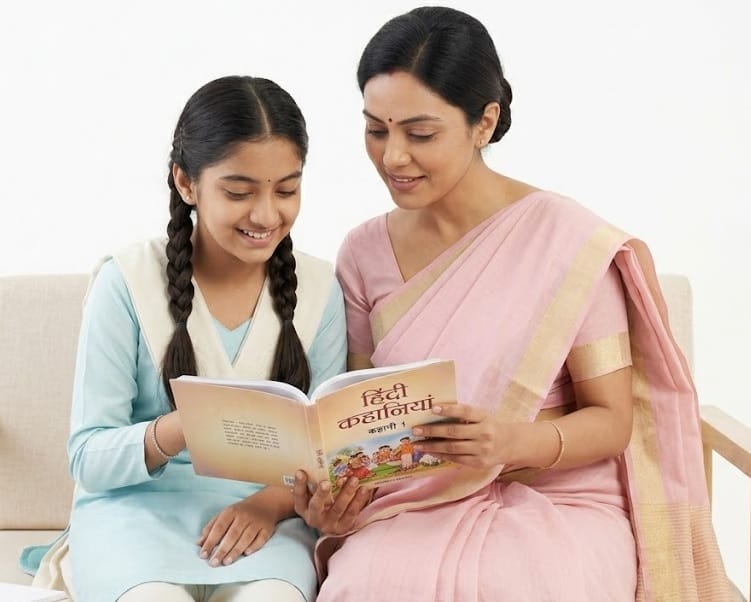
Hindi is one of the most widely spoken languages in the world and an important subject in many Indian schools. Yet, many parents notice that their children can speak Hindi comfortably but hesitate when it comes to reading books, stories, poems, or passages. Developing strong Hindi reading habits at an early age can improve vocabulary, comprehension, writing skills, academic performance, and overall language confidence.
Reading regularly is one of the most effective ways to strengthen language skills. Research from various literacy studies has consistently shown that children who read frequently perform better in language subjects than those who read only for examinations. A report by the National Literacy Trust found that children who enjoy reading are significantly more likely to achieve higher academic outcomes compared to those who do not read for pleasure.
The good news is that building a reading habit does not require expensive resources or complicated methods. Small daily efforts can create lifelong learners.
Why Hindi Reading Matters for Children
Many families focus heavily on English reading and unintentionally overlook Hindi. However, proficiency in Hindi offers several advantages.
Children who read Hindi regularly often:
-
- Develop stronger vocabulary.
- Improve sentence construction.
- Understand grammar naturally.
- Perform better in school assessments.
- Gain confidence in speaking and writing.
- Connect with Indian literature and culture.
- Improve overall comprehension skills.
Studies on bilingual education suggest that strengthening a child’s first or familiar language can positively influence learning in additional languages as well.
Hindi vs English – Why Students Should Be Strong in Both Languages
Understanding Why Children Avoid Hindi Reading
Before solving the problem, it is important to identify the reasons behind it.
Limited Exposure Outside School
Many children encounter Hindi only during classroom lessons. Once school ends, most entertainment, books, videos, and conversations shift to English or regional languages.
Difficulty Recognizing Words
Some students struggle to identify letters, matras, or unfamiliar vocabulary. Reading becomes slow and frustrating.
Lack of Interesting Material
Children may find textbooks boring. Without engaging content, motivation declines quickly.
Fear of Making Mistakes
Many young learners worry about incorrect pronunciation. This anxiety often prevents them from reading aloud.
Excessive Screen Time
According to several child development studies, increased screen usage has reduced time spent on recreational reading. When digital entertainment becomes the primary activity, books often take a back seat.
Start With Age-Appropriate Hindi Books
One of the most effective ways to encourage reading is selecting material that matches the child’s current ability.
A beginner should not be expected to read lengthy stories filled with difficult words.
For Younger Children
Choose:
-
- Picture books
- Short stories
- Rhyming poems
- Alphabet books
- Illustrated folk tales
For Middle School Students
Consider:
-
- Adventure stories
- Humorous books
- Biography collections
- Children’s magazines
- Mythological tales
For Older Students
Introduce:
-
- Novels
- Historical narratives
- Science-based reading material
- Contemporary Hindi literature
- Inspiring real-life stories
When children understand most of what they read, they are more likely to continue reading independently.
How Hindi Vocabulary Affects Writing and Speaking Skills
Create a Daily Hindi Reading Routine
Habits develop through consistency rather than intensity.
Instead of asking children to read for an hour, start with just 10 to 15 minutes daily.
A simple schedule may look like:
-
- 10 minutes before bedtime
- 15 minutes after homework
- Reading together after dinner
Research suggests that regular short reading sessions are often more effective than occasional long sessions.
The goal is to make reading a natural part of everyday life.
Read Together as a Family
Children often imitate adult behavior.
If parents read books, newspapers, magazines, or stories, children are more likely to develop similar interests.
Family Reading Time
Set aside a specific period when everyone reads.
This activity helps create a positive reading environment without making it feel like additional homework.
Shared Story Sessions
Read one paragraph and ask your child to read the next. This approach improves fluency and keeps children engaged.
Make Hindi Reading Enjoyable
Children are more willing to read when the experience feels entertaining.
Use Funny Stories
Humorous content often attracts reluctant readers.
Explore Folk Tales
Traditional stories contain memorable characters and valuable lessons.
Include Comics
Illustrated books reduce reading pressure while improving language exposure.
Allow Personal Choice
Let children choose what they want to read. Ownership increases motivation significantly.
How to Build a Strong Hindi Vocabulary at Home
Build a Small Hindi Library at Home
You do not need dozens of books to begin.
Even a collection of 10 to 15 carefully selected titles can make a difference.
Keep books:
-
- Easily accessible
- Visible
- Organized by reading level
Children are more likely to pick up books when they can see them regularly.
Consider rotating books every few weeks to maintain interest.
Encourage Reading Aloud
Reading aloud strengthens pronunciation, fluency, and confidence.
Benefits of Reading Out Loud
Children learn:
-
- Correct pronunciation
- Sentence rhythm
- Expression
- New vocabulary
Listening to their own voice also helps identify mistakes naturally.
Keep Corrections Positive
Avoid interrupting constantly.
Instead, allow the child to complete a sentence before gently correcting errors.
Positive reinforcement encourages continued effort.
Discuss What They Read
Reading is not only about recognizing words.
Understanding the content is equally important.
After reading, ask simple questions such as:
-
- Who was the main character?
- What happened in the story?
- Which part did you enjoy most?
- What lesson did you learn?
These conversations improve comprehension and critical thinking.
Use Real-Life Reading Opportunities
Hindi reading should not be limited to books.
Children can read:
-
- Signboards
- Newspapers
- Menus
- Festival invitations
- Product labels
- Advertisements
- Children’s magazines
Real-world reading shows that language is useful beyond school examinations.
Hindi Writing Skills Every Student Should Develop
Introduce Hindi Newspapers and Magazines
Older children can benefit from age-appropriate publications.
Reading current events helps students:
-
- Expand vocabulary
- Learn formal language
- Improve general knowledge
- Develop analytical thinking
Start with short articles and gradually increase complexity.
Celebrate Reading Progress
Recognition can significantly boost motivation.
Set Small Goals
Examples include:
-
- Completing one story every week
- Reading for 15 minutes daily
- Learning five new words each day
Reward Effort
Rewards do not have to be expensive.
Simple encouragement, praise, or selecting a new book can be highly effective.
Children who feel appreciated are more likely to continue reading.
Reduce Pressure and Focus on Enjoyment
Many parents unintentionally turn reading into a test.
Avoid asking children to memorize every detail.
Instead:
-
- Appreciate effort
- Encourage curiosity
- Allow mistakes
- Focus on improvement
When reading becomes enjoyable, children naturally spend more time with books.
Use Technology Wisely
Digital tools can support language development when used carefully.
Helpful options include:
-
- Hindi story apps
- Audiobooks
- Educational reading platforms
- Interactive language games
Audiobooks are particularly useful for improving pronunciation and listening skills.
However, screen-based learning should complement physical reading rather than replace it entirely.
Introduce New Hindi Words Naturally
Vocabulary growth plays a major role in reading confidence.
Create a Word Journal
Ask children to record:
-
- New words
- Meanings
- Example sentences
Use Words in Conversation
When children hear and use newly learned vocabulary regularly, retention improves considerably.
Even learning three to five new words weekly can produce noticeable progress over time.
How to Help Children Prepare for Hindi Exams at Home
Be Patient With Slow Readers
Every child develops language skills at a different pace.
Some children become fluent readers quickly, while others require additional practice and support.
Avoid comparisons with siblings, classmates, or friends.
Instead, focus on personal growth and consistent effort.
Confidence often grows gradually through regular exposure and encouragement.
Common Mistakes Parents Should Avoid
Forcing Difficult Books Too Early
Complex material can discourage beginners.
Criticizing Every Error
Excessive correction creates anxiety.
Expecting Immediate Results
Reading habits take time to develop.
Using Reading Only as Exam Preparation
Children should view books as sources of enjoyment and learning, not merely test preparation tools.
Ignoring Personal Interests
A child interested in animals may enjoy wildlife stories more than traditional textbooks.
Matching content to interests increases engagement significantly.
My Thoughts
Building Hindi reading habits in children is a gradual process that requires patience, consistency, and encouragement. By creating a reading-friendly environment, choosing suitable books, establishing daily routines, and making the experience enjoyable, parents can help children develop strong language skills that benefit them throughout life.
For children who struggle with pronunciation, comprehension, grammar, or reading fluency, personalized guidance can make a significant difference. A private Hindi tutor can identify learning gaps, provide structured practice, and adapt lessons according to the child’s pace. One-to-one support often helps students gain confidence faster, improve academic performance, and develop a genuine interest in reading Hindi beyond the classroom.
Looking for expert Hindi tutors?
Find Hindi Tutors on IndiaTutor.in
About the Author
Nidhi Mehta is the founder of IndiaTutor.in and a professional online educator with over 11 years of teaching experience. She specializes in tutoring Classes 1 to 6 across core academic subjects, with a strong focus on concept clarity and foundational skill-building. Her teaching approach is based on personalized, one-to-one learning that helps students develop long-term academic confidence and understanding.


