
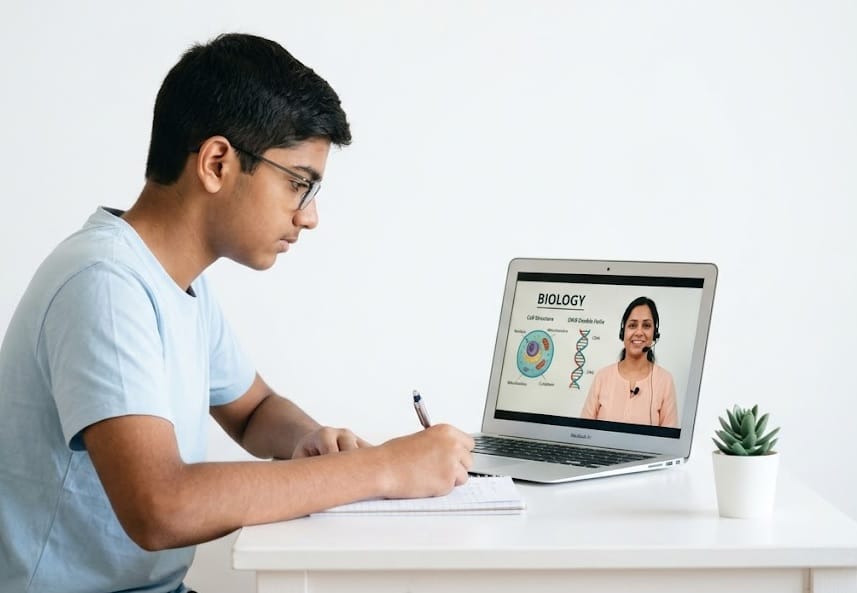
How to Choose the Right Biology Tutor for Your Child

How to Choose the Right Biology Tutor for Your Child

Biology is one of the most important subjects for students, especially those preparing for board examinations, medical entrance tests, and science-related careers. While many students enjoy learning about living organisms, genetics, ecosystems, and human anatomy, others find the subject overwhelming because of its extensive syllabus, scientific terminology, and detailed diagrams.

Parents often notice that their child spends hours studying Biology but still struggles to retain information or score well in examinations. In such situations, a qualified Biology tutor can provide the guidance and support needed to build confidence and improve academic performance.

However, not every tutor is the right fit for every student. Choosing the right Biology tutor requires careful consideration of several factors. This guide will help parents make an informed decision and find the best learning support for their child.

Why Biology Can Be Challenging for Students

Biology is often misunderstood as a subject based entirely on memorization. While remembering terms and processes is important, true success depends on understanding concepts and applying them correctly.

Students commonly face difficulties with:

    • Scientific vocabulary
    • Biological classifications
    • Genetics and heredity
    • Human physiology
    • Plant physiology
    • Diagram-based questions
    • Long descriptive answers

According to various educational studies, students retain information more effectively when concepts are explained through examples, visuals, and active discussion rather than rote memorization alone. This is one reason why personalized instruction can be highly beneficial.

Career Options in Biology Beyond Medicine

Signs Your Child May Need a Biology Tutor

Before searching for a tutor, it is important to identify whether additional academic support is necessary.

Consistently Low Test Scores

If marks remain below expectations despite regular effort, there may be gaps in understanding that classroom teaching has not addressed.

Difficulty Remembering Concepts

Many students study repeatedly but struggle to recall information during exams. This often indicates ineffective study techniques rather than lack of effort.

Fear of Biology Exams

Anxiety before assessments can reduce performance even when students know the material.

Lack of Interest in the Subject

When students find Biology boring or confusing, their motivation to learn decreases significantly.

Preparing for Competitive Examinations

Students aiming for medical entrance examinations such as NEET often require structured guidance beyond regular school lessons.

Understand Your Child’s Learning Needs First

Every student learns differently. Before selecting a tutor, determine what kind of support your child actually needs.

Concept Clarity

Some students require help understanding topics such as cell biology, genetics, or ecology.

Exam Preparation

Others may understand concepts but need assistance with answer-writing strategies and time management.

Advanced Learning

High-performing students may seek enrichment and preparation for competitive examinations.

A tutor who specializes in your child’s specific requirement will usually deliver better results.

How Biology Is Used in Healthcare, Agriculture and Research

Look for Strong Subject Knowledge

A Biology tutor should have a solid academic background in life sciences or related fields.

Relevant Qualifications

Look for tutors with degrees in:

    • Biology
    • Biotechnology
    • Zoology
    • Botany
    • Life Sciences
    • Medicine
    • Related scientific disciplines

While qualifications matter, teaching ability is equally important.

Updated Knowledge

Biology continues to evolve through new discoveries and research. A good tutor stays informed about curriculum updates and examination patterns.

Evaluate Teaching Experience

Experience helps tutors identify common student difficulties and adapt lessons accordingly.

School Curriculum Experience

The tutor should be familiar with your child’s board, whether CBSE, ICSE, State Board, IGCSE, or IB.

Age-Specific Teaching Skills

Teaching a Class 6 student requires a very different approach from preparing a Class 12 student for board exams.

Ask questions such as:

    • How many years have you taught Biology?
    • Which grades do you specialize in?
    • Have you prepared students for board examinations or entrance tests?

Assess Communication Skills

An excellent Biology tutor can explain complex topics in simple language.

Ability to Simplify Concepts

Subjects such as DNA replication, photosynthesis, and cellular respiration can seem complicated. Effective tutors use real-life examples to make learning easier.

Encouraging Questions

Students learn better when they feel comfortable asking questions without fear of judgment.

A tutor should create an environment where curiosity is welcomed.

How to Memorize Biological Terms Without Forgetting Them  

Check Teaching Methods

Modern learning goes beyond textbooks.

Visual Learning Techniques

Research shows that visual aids improve understanding and retention. Biology, in particular, benefits from diagrams, animations, charts, and illustrations.

Interactive Sessions

Rather than delivering long lectures, successful tutors involve students through discussions, quizzes, and problem-solving activities.

Regular Practice

Consistent revision and testing help strengthen long-term memory and improve exam readiness.

Consider Online and In-Person Options

Parents today can choose between online Biology tuition and face-to-face instruction.

Benefits of Online Biology Tuition

    • Flexible scheduling
    • Access to experienced tutors across locations
    • Recorded sessions for revision
    • Use of digital learning tools

Benefits of Home Tuition

    • Personal interaction
    • Fewer online distractions
    • Direct supervision

The best choice depends on your child’s learning preferences and schedule.

How to Learn Biology Diagrams Quickly and Accurately

Request a Trial Session

A trial lesson can reveal more than qualifications on paper.

Observe Student Engagement

Notice whether your child remains attentive and interested throughout the session.

Evaluate Teaching Style

A tutor may be knowledgeable but may not match your child’s learning style.

Check Comfort Level

Students perform better when they feel comfortable communicating with their instructor.

A trial class allows both parents and students to make a confident decision.

Ask About Progress Tracking

One of the biggest advantages of private tutoring is personalized monitoring.

Regular Assessments

A good tutor should conduct periodic evaluations to measure improvement.

Performance Reports

Parents should receive updates regarding:

    • Strengths
    • Weak areas
    • Attendance
    • Progress toward goals

Goal-Oriented Learning

Students benefit when lessons are structured around specific academic objectives.

Read Reviews and Testimonials

Feedback from other parents and students can provide valuable insights.

Look for comments regarding:

    • Reliability
    • Communication
    • Punctuality
    • Teaching effectiveness
    • Student improvement

While reviews should not be the only deciding factor, they can help identify patterns and establish credibility.

Understand Fees Without Focusing Only on Cost

Many parents naturally compare tutoring fees. However, the cheapest option is not always the most effective.

A highly skilled tutor who improves understanding and results may offer greater value than a lower-cost alternative that provides limited academic support.

Focus on overall quality, expertise, and outcomes rather than price alone.

How Parents Can Help Children Improve Biology Grades

Questions Parents Should Ask Before Hiring a Biology Tutor

What grades and boards do you teach?

Ensure alignment with your child’s curriculum.

How do you explain difficult Biology concepts?

The answer can reveal teaching effectiveness.

How do you assess progress?

Structured evaluation is essential for long-term improvement.

How often do you communicate with parents?

Regular updates help maintain academic accountability.

What resources do you use?

Strong tutors often supplement textbooks with worksheets, diagrams, mock tests, and additional learning materials.

Common Mistakes Parents Should Avoid

Choosing Based Only on Qualifications

A highly qualified professional may not necessarily be an effective teacher.

Ignoring Student Feedback

Your child’s comfort and engagement are important indicators of success.

Expecting Immediate Results

Academic improvement often takes time and consistent effort.

Overloading the Schedule

Too many tuition sessions can lead to burnout and reduced motivation.

My Thoughts

Finding the right Biology tutor is not simply about improving marks. It is about helping your child develop confidence, curiosity, and a deeper understanding of the subject. The ideal tutor combines strong subject expertise, effective communication skills, structured teaching methods, and genuine commitment to student success.

Private Biology tutoring offers personalized attention that is difficult to achieve in crowded classrooms. Tutors can identify learning gaps, adapt lessons to individual needs, and provide targeted exam preparation. Students often gain greater confidence, improved study habits, and stronger conceptual understanding. With the right guidance, Biology can become an engaging subject that opens doors to exciting academic and career opportunities.

Find Biology Tutors on IndiaTutor.in

About the Author

Nidhi Mehta is the founder of IndiaTutor.in and a professional online educator with over 11 years of teaching experience. She specializes in tutoring Classes 1 to 6 across core academic subjects, with a strong focus on concept clarity and foundational skill-building. Her teaching approach is based on personalized, one-to-one learning that helps students develop long-term academic confidence and understanding.

Visit her profile    Visit About Us Page

How Biology Is Used in Healthcare, Agriculture and Research

How Biology Is Used in Healthcare, Agriculture and Research

Biology is much more than a school subject filled with diagrams, scientific names, and definitions. It is the science of life itself. From the medicines we take and the food we eat to groundbreaking discoveries that improve human lives, biology plays a vital role in shaping the modern world.

Understanding biology helps students appreciate how living organisms function, interact, grow, and evolve. It also opens doors to exciting careers in healthcare, agriculture, biotechnology, environmental science, and scientific research.

In this article, we will explore how biology is applied in healthcare, agriculture, and research, along with real-world examples that demonstrate its importance.

Career Options in Biology Beyond Medicine

What Is Biology?

Biology is the branch of science that studies living organisms and their interactions with the environment. It covers a wide range of topics including cells, genetics, plants, animals, microorganisms, ecosystems, and human anatomy.

The knowledge gained through biological studies helps scientists solve real-world problems related to health, food production, disease prevention, environmental conservation, and technological advancement.

Biology in Healthcare

Healthcare is one of the most visible and important applications of biology. Nearly every medical advancement is based on biological knowledge.

Understanding the Human Body

Doctors, nurses, physiotherapists, and medical researchers rely on biology to understand how the human body functions.

Biology helps explain:

    • How organs work
    • How diseases develop
    • How infections spread
    • How the immune system protects us
    • How medicines affect different body systems

Without biology, modern medicine would not exist.

Development of Medicines and Vaccines

Biological research has led to the creation of life-saving drugs and vaccines.

One of the most remarkable examples is the rapid development of COVID-19 vaccines. Scientists used decades of biological research involving genetics, immunology, and molecular biology to develop effective vaccines within a short period.

According to the World Health Organization (WHO), vaccines prevent approximately 3.5 to 5 million deaths worldwide every year from diseases such as measles, influenza, tetanus, and diphtheria.

Disease Diagnosis

Biology plays a critical role in identifying illnesses.

Laboratory tests such as:

    • Blood tests
    • DNA testing
    • Biopsies
    • Microbial cultures

are all based on biological principles.

These diagnostic methods help healthcare professionals detect diseases early and provide appropriate treatment.

Genetic Medicine

Advances in genetics have transformed healthcare.

Scientists can now identify inherited disorders, predict certain health risks, and develop personalized treatment plans based on a person’s genetic profile.

For example, genetic testing helps identify conditions such as cystic fibrosis, sickle cell anemia, and certain hereditary cancers.

Organ Transplants and Regenerative Medicine

Biological knowledge has made organ transplantation possible.

Today, patients can receive heart, kidney, liver, and lung transplants, giving them a second chance at life.

Researchers are also exploring stem cell therapies and tissue engineering to repair damaged organs and tissues.

How to Memorize Biological Terms Without Forgetting Them  

Biology in Agriculture

Agriculture feeds billions of people worldwide, and biology plays a major role in improving food production, crop quality, and sustainability.

Improving Crop Yields

Farmers use biological knowledge to grow healthier crops and increase productivity.

Plant biologists study:

    • Plant growth
    • Soil health
    • Nutrient requirements
    • Pest resistance
    • Water efficiency

These studies help farmers produce more food while using fewer resources.

According to the United Nations, the world’s population is expected to reach nearly 10 billion by 2050, making efficient agricultural practices more important than ever.

Development of Disease-Resistant Crops

Crop diseases can destroy large portions of harvests.

Biologists work to develop varieties that can resist common diseases and pests.

Examples include:

    • Disease-resistant rice varieties
    • Pest-resistant cotton
    • Rust-resistant wheat

These innovations help farmers reduce losses and improve food security.

Genetic Engineering in Agriculture

Modern biology has introduced genetic modification techniques that improve crop performance.

Some genetically modified crops are designed to:

    • Resist insects
    • Tolerate drought conditions
    • Improve nutritional content
    • Increase productivity

A well-known example is Golden Rice, which was developed to contain higher levels of Vitamin A to help combat nutritional deficiencies.

Livestock Health and Breeding

Biology also supports animal farming.

Veterinarians and animal scientists use biological principles to:

    • Improve animal health
    • Prevent diseases
    • Enhance breeding programs
    • Increase milk and meat production

Healthy livestock contribute significantly to global food supplies.

Sustainable Farming Practices

Environmental concerns have increased the need for sustainable agriculture.

Biologists study natural ecosystems to develop farming methods that protect soil, water, and biodiversity.

Examples include:

    • Organic farming
    • Biological pest control
    • Crop rotation
    • Soil conservation techniques

These practices help maintain long-term agricultural productivity while reducing environmental impact.

How to Learn Biology Diagrams Quickly and Accurately

Biology in Scientific Research

Research is one of the most exciting areas where biology contributes to society.

Scientific discoveries often begin in laboratories before transforming industries and improving lives.

Understanding Diseases

Biological research helps scientists understand how diseases originate and spread.

Researchers investigate:

    • Cancer cells
    • Viral infections
    • Bacterial diseases
    • Genetic disorders

This knowledge leads to improved treatments and prevention strategies.

For example, decades of biological research have significantly increased cancer survival rates through better screening, diagnosis, and targeted therapies.

Studying Genetics and DNA

The discovery of DNA structure in 1953 revolutionized biology.

Today, scientists use advanced genetic technologies to study inheritance, evolution, and disease mechanisms.

The Human Genome Project, completed in 2003, successfully mapped approximately 20,000 to 25,000 human genes, providing valuable insights into human health and disease.

Biotechnology and Innovation

Biotechnology combines biology with technology to develop practical solutions.

Applications include:

    • Vaccine production
    • Biofuels
    • Diagnostic tools
    • Pharmaceutical manufacturing
    • Agricultural improvements

The global biotechnology industry continues to grow rapidly and contributes billions of dollars to economies worldwide.

Environmental Research

Biologists play an important role in protecting ecosystems.

They study:

    • Climate change
    • Wildlife conservation
    • Pollution effects
    • Biodiversity loss

Research findings help governments and organizations make informed decisions about environmental protection.

Marine and Wildlife Studies

Many species remain poorly understood.

Biologists conduct field research to learn about animal behavior, habitats, migration patterns, and population changes.

These studies support conservation efforts and help preserve endangered species for future generations.

How Parents Can Help Children Improve Biology Grades

Careers That Use Biology

Students often associate biology only with becoming a doctor, but the field offers a wide variety of career opportunities.

Healthcare Careers

    • Doctor
    • Nurse
    • Pharmacist
    • Physiotherapist
    • Medical Laboratory Scientist
    • Genetic Counselor

Agriculture Careers

    • Agricultural Scientist
    • Agronomist
    • Plant Breeder
    • Soil Scientist
    • Horticulturist
    • Veterinary Professional

Research Careers

    • Biologist
    • Microbiologist
    • Biotechnologist
    • Environmental Scientist
    • Marine Biologist
    • Research Associate

Many of these professions are expected to remain in demand as healthcare needs grow and scientific innovation continues.

Why Biology Matters for Students

Biology helps students develop scientific thinking, observation skills, analytical abilities, and problem-solving techniques.

It encourages curiosity about the natural world and helps learners understand important topics such as health, nutrition, genetics, disease prevention, and environmental sustainability.

Even students who do not pursue biology-related careers benefit from understanding how living systems work and how scientific discoveries impact daily life.

How to Choose the Right Biology Tutor for Your Child

My Thoughts

Biology is one of the most practical and influential sciences. Its applications in healthcare, agriculture, and research improve quality of life, support global food production, advance medical treatments, and drive scientific innovation.

For students, building a strong foundation in biology can open doors to rewarding academic and career opportunities. If certain concepts feel challenging, working with a private biology tutor can provide personalized guidance, targeted practice, and clearer explanations. One-to-one support often helps students strengthen weak areas, improve confidence, and achieve better results in school examinations and competitive tests.

Looking for expert Biology tutors?

Find Biology Tutors on IndiaTutor.in

About the Author

Nidhi Mehta is the founder of IndiaTutor.in and a professional online educator with over 11 years of teaching experience. She specializes in tutoring Classes 1 to 6 across core academic subjects, with a strong focus on concept clarity and foundational skill-building. Her teaching approach is based on personalized, one-to-one learning that helps students develop long-term academic confidence and understanding.

Visit her profile    Visit About Us Page

error: Content is protected !!

Found this helpful? Share it in 2 seconds!

Link copied to clipboard