
How to Remember Important Maps and Locations in Social Studies

How to Remember Important Maps and Locations in Social Studies

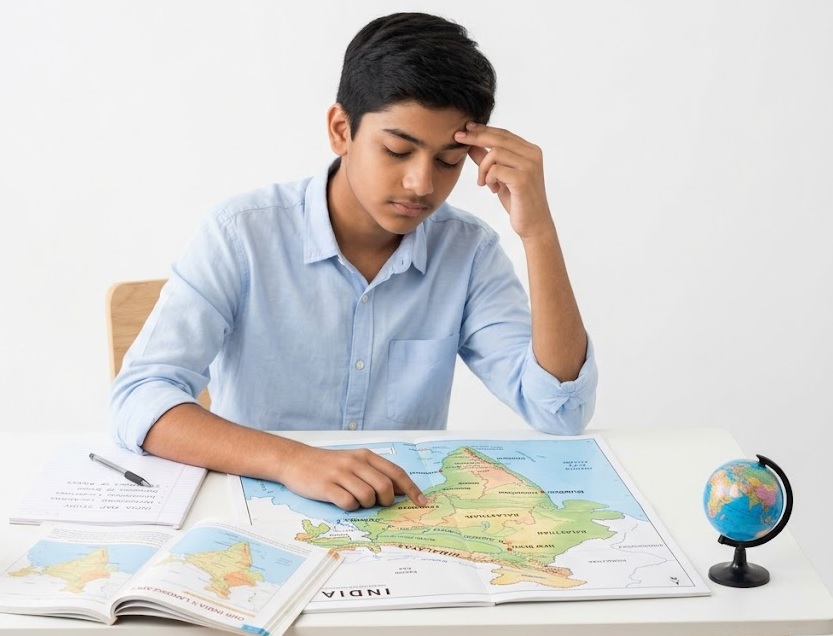
Social Studies is one of the most interesting school subjects because it helps students understand countries, continents, rivers, mountains, trade routes, civilizations, and historical events. However, many students find map-based questions challenging. Remembering locations, directions, borders, capitals, rivers, and physical features can seem difficult, especially before exams.

The good news is that map learning is not about memorizing everything repeatedly. It is about understanding patterns, building visual memory, and using smart learning techniques. With the right approach, students can quickly identify important places and score better in Geography, History, and Social Science examinations.

Why Maps Are Important in Social Studies

Maps help students visualize information that would otherwise be difficult to understand through text alone. Whether studying climate, population, natural resources, transportation, or historical events, maps provide a clear picture of how places are connected.

Research published in educational psychology journals has shown that visual learning can improve information retention by up to 65% compared to text-only learning. Since maps are highly visual, they help students remember information more effectively.

In CBSE, ICSE, and various state board examinations, map-based questions frequently appear in Social Studies assessments. Knowing how to identify locations accurately can help students secure valuable marks.

Best Study Techniques for Social Studies That Actually Work

Understanding Before Memorizing

One common mistake students make is trying to memorize locations without understanding their significance.

For example, instead of simply remembering that the Ganga River flows through northern India, understand why major cities developed along its banks. When students connect locations with real-world importance, memory becomes stronger.

Ask Simple Questions

Whenever studying a map, ask yourself:

    • Why is this place important?
    • What happened here?
    • What resources are found here?
    • Why do people live in this region?
    • How does this location affect trade or transportation?

These questions create meaningful connections that improve recall.

Start With Large Areas First

Trying to remember dozens of places at once can be overwhelming.

Begin with major geographical divisions before moving to smaller details.

Learn Continents and Oceans

Students should first become familiar with:

    • Asia
    • Africa
    • Europe
    • North America
    • South America
    • Australia
    • Antarctica

Similarly, learn the major oceans:

    • Pacific Ocean
    • Atlantic Ocean
    • Indian Ocean
    • Arctic Ocean
    • Southern Ocean

Once these are clear, locating countries and cities becomes much easier.

Move From Big to Small

A useful sequence is:

    1. Continents
    2. Countries
    3. States
    4. Cities
    5. Rivers
    6. Mountains
    7. Historical locations

This step-by-step method reduces confusion.

Common Social Studies Learning Problems and How to Address Them

Use Blank Maps for Practice

One of the most effective techniques is repeated practice using blank maps.

Print or photocopy outline maps and label them regularly. Educational studies suggest that active recall strengthens memory significantly more than passive reading.

How to Practice

Day 1:
Mark 10 locations.

Day 2:
Mark the same locations without looking at your notes.

Day 3:
Add 5 new locations.

Continue this process until you can identify all important places confidently.

Students often notice major improvement after just one week of consistent practice.

Create Memory Associations

The human brain remembers stories and associations better than isolated facts.

Example 1

To remember that Mumbai is located on India’s western coast, connect it with its role as a major port city and financial center.

Example 2

To remember that the Himalayas are in northern India, imagine them acting as a giant wall protecting the country.

Such mental images make learning easier and more enjoyable.

How to Memorize Important Historical Dates and Events in Social Studies

Learn Through Colors

Color coding is an excellent way to organize geographical information.

Suggested Color System

Rivers

Use blue.

Mountains

Use brown.

Plains

Use green.

Deserts

Use yellow.

Important Cities

Use red dots.

This method helps the brain identify patterns quickly.

Divide Maps Into Regions

Instead of learning an entire country at once, divide it into sections.

North India

Focus on:

    • Jammu and Kashmir
    • Himachal Pradesh
    • Punjab
    • Haryana
    • Uttarakhand

South India

Focus on:

    • Tamil Nadu
    • Kerala
    • Karnataka
    • Andhra Pradesh
    • Telangana

East and West India

Study each region separately before combining them.

Smaller sections feel more manageable and improve accuracy.

How Parents Can Help Children Prepare for Social Studies Exams  

Use Mnemonics for Better Recall

Mnemonics are memory aids that simplify learning.

Example

To remember countries bordering India:

Create memorable phrases using the first letters of neighboring countries.

Students can also create their own mnemonics for rivers, mountain ranges, capitals, and states.

Personalized memory tricks often work better than ready-made ones.

Study Historical Locations Through Stories

Many students struggle with History map work because locations seem unrelated.

Instead of memorizing places mechanically, connect them with historical events.

Example

When studying the Indian Independence Movement:

    • Dandi is linked to the Salt March.
    • Amritsar is associated with the Jallianwala Bagh tragedy.
    • Champaran is connected to Gandhi’s early movements.

Stories make places meaningful and easier to remember.

Use Digital Maps and Interactive Tools

Technology has made map learning more engaging than ever.

Students can use online maps and educational applications to explore locations virtually.

Benefits of Interactive Learning

    • Better visual understanding
    • Immediate feedback
    • Improved engagement
    • Faster revision

Many students find interactive maps easier to remember than textbook diagrams.

Practice Map-Based Questions Regularly

Knowing locations is only one part of exam preparation.

Students should also practice answering map-related questions.

Common Question Types

Identification Questions

Locate a place on the map.

Labeling Questions

Mark rivers, mountains, states, or cities.

Explanation Questions

Describe the importance of a specific location.

Matching Questions

Match locations with events or features.

Regular practice helps students become familiar with exam patterns.

How to Choose the Right Social Studies Tuition Classes for Your Child

Build a Map Revision Schedule

Consistency matters more than long study sessions.

Weekly Plan

Monday

States and capitals.

Tuesday

Major rivers.

Wednesday

Mountain ranges and plateaus.

Thursday

Important cities and ports.

Friday

Historical locations.

Saturday

Practice maps.

Sunday

Full revision.

Studying maps for just 15 to 20 minutes daily is often more effective than several hours of last-minute preparation.

Common Mistakes Students Should Avoid

Memorizing Without Understanding

Learning locations without knowing their significance leads to quick forgetting.

Ignoring Direction

Always identify north, south, east, and west before studying a map.

Studying Too Many Places Together

Focus on small groups of locations.

Lack of Revision

Even well-learned locations can be forgotten without regular review.

Avoiding Practice Maps

Reading maps is not enough. Students must actively label and mark locations themselves.

Exam-Day Tips for Map Questions

Before the exam:

    • Revise major locations.
    • Review frequently asked map work.
    • Practice blank maps.
    • Focus on accuracy rather than speed.

During the exam:

    • Read instructions carefully.
    • Label clearly.
    • Avoid overcrowding the map.
    • Double-check markings before submission.

Small mistakes in labeling can cost marks even when students know the correct answer.

My Thoughts

Learning maps and locations in Social Studies does not have to be difficult. By understanding geographical concepts, using visual memory techniques, practicing with blank maps, creating associations, and revising regularly, students can improve both confidence and exam performance. Consistent practice turns map work into a skill that becomes easier over time.

Students who continue facing difficulties with map reading, geographical concepts, or Social Studies preparation may benefit from individual academic support. A private tutor can identify weak areas, provide personalized explanations, and create targeted practice plans. One-to-one guidance often helps students learn faster, build confidence, and perform better in school examinations. With the right support and regular effort, mastering maps can become much easier and more enjoyable.

Looking for expert Social Studies tutors?

Find Social Studies Tutors on IndiaTutor.in

About the Author

Nidhi Mehta is the founder of IndiaTutor.in and a professional online educator with over 11 years of teaching experience. She specializes in tutoring Classes 1 to 6 across core academic subjects, with a strong focus on concept clarity and foundational skill-building. Her teaching approach is based on personalized, one-to-one learning that helps students develop long-term academic confidence and understanding.

Visit her profile    Visit About Us Page

How to Memorize Important Historical Dates and Events in Social Studies

How to Memorize Important Historical Dates and Events in Social Studies

Social Studies is one of the most interesting subjects because it tells the story of civilizations, empires, revolutions, freedom movements, and important global developments. However, many students find History challenging because of the large number of dates, events, and names they need to remember.

The good news is that memorizing historical dates does not have to be difficult. With the right techniques, students can learn important timelines more efficiently and retain information for longer periods. Understanding the story behind an event is often more effective than simply trying to memorize numbers.

Why Historical Dates Matter in Social Studies

Historical dates help students understand the sequence of events and how one event influenced another. They provide a timeline that makes history meaningful and easier to analyze.

For example:

    • 1857 marks the First War of Independence in India.
    • 1885 marks the formation of the Indian National Congress.
    • 1947 marks India’s Independence.

Knowing these dates helps students understand the progression of India’s freedom struggle rather than viewing each event separately.

Many school examinations also include questions related to chronology, timelines, matching events with years, and historical analysis. Strong knowledge of dates can therefore improve exam performance significantly.

Why Students Forget Historical Dates

Before learning memorization techniques, it is important to understand why students forget.

Memorizing Without Understanding

Many students attempt to learn dates by repeating them multiple times without understanding the event itself. This creates weak memory connections.

Learning Too Many Dates at Once

Trying to memorize an entire chapter in one sitting can overwhelm the brain and reduce retention.

Lack of Revision

Research by German psychologist Hermann Ebbinghaus found that people can forget a large portion of newly learned information within days if they do not review it regularly.

Not Connecting Information

Dates become difficult to remember when they are treated as isolated numbers rather than parts of a larger story.

Best Study Techniques for Social Studies That Actually Work

Start With the Story, Not the Date

One of the most effective ways to remember historical information is to understand the narrative first.

Example

Instead of memorizing:

    • 1919 – Jallianwala Bagh Massacre
    • 1920 – Non-Cooperation Movement
    • 1930 – Salt March

Learn the sequence of events and understand how each event influenced the next stage of India’s freedom struggle.

When students understand the cause-and-effect relationship between events, remembering dates becomes much easier.

Create Timelines

Timelines are powerful visual learning tools.

How to Make a Timeline

Choose a chapter and place important events in chronological order.

Example:

    • 1757 – Battle of Plassey
    • 1857 – Revolt of 1857
    • 1885 – Indian National Congress Founded
    • 1919 – Jallianwala Bagh Massacre
    • 1947 – Independence

A visual timeline allows the brain to organize information more effectively.

Benefits of Timelines

    • Improve chronological understanding
    • Reduce confusion between events
    • Make revision faster
    • Strengthen long-term memory

Use Memory Associations

The brain remembers meaningful information more easily than random numbers.

Connect Dates With Familiar Numbers

Students can associate years with birthdays, memorable events, or patterns.

For example:

1947 can be remembered as the year India gained independence and became a sovereign nation.

The stronger the association, the easier it becomes to recall the date during exams.

Create Mental Images

Visual memory is extremely powerful.

Imagine Mahatma Gandhi leading thousands of people during the Salt March in 1930. Creating a vivid picture in your mind helps connect the event with its year.

Common Social Studies Learning Problems and How to Address Them

Group Similar Events Together

Studying related events as a group improves understanding and retention.

Example: Freedom Movement

Group these events together:

    • 1905 – Partition of Bengal
    • 1906 – Formation of Muslim League
    • 1919 – Jallianwala Bagh Massacre
    • 1920 – Non-Cooperation Movement
    • 1930 – Civil Disobedience Movement
    • 1942 – Quit India Movement
    • 1947 – Independence

Learning them as a sequence helps create a clear historical framework.

Use Mnemonics

Mnemonics are memory techniques that help students remember information through patterns or abbreviations.

Example

For remembering major freedom movement events:

J – Jallianwala Bagh (1919)

N – Non-Cooperation Movement (1920)

C – Civil Disobedience Movement (1930)

Q – Quit India Movement (1942)

Creating simple memory cues can significantly improve recall.

How to Remember Important Maps and Locations in Social Studies

Practice Active Recall

Many students repeatedly read their textbooks, believing that reading equals learning.

Research shows that testing yourself is often more effective than simply rereading information.

Active Recall Method

    1. Read the chapter.
    2. Close the book.
    3. Write down all dates you remember.
    4. Check your answers.
    5. Repeat the process.

This technique strengthens memory and improves long-term retention.

Use Flashcards

Flashcards are one of the most popular study tools used worldwide.

Front Side

What happened in 1857?

Back Side

First War of Independence

Or:

Front Side

When did India become independent?

Back Side

1947

Flashcards encourage quick revision and can be used anywhere.

Apply the Spaced Repetition Method

Studies on memory suggest that reviewing information at increasing intervals improves retention.

Sample Revision Schedule

    • Day 1 – Learn the dates
    • Day 2 – Quick revision
    • Day 5 – Review again
    • Day 10 – Practice recall
    • Day 20 – Final revision

This method reduces forgetting and strengthens long-term memory.

How Parents Can Help Children Prepare for Social Studies Exams  

Learn Through Historical Maps

Maps can make history more engaging.

Example

When studying:

    • Battle of Plassey
    • Revolt of 1857
    • Salt March

Locate these places on a map.

The combination of location, event, and date creates multiple memory connections.

Use Charts and Wall Posters

Visual reminders help students remember information naturally.

Create charts showing:

Ancient India

Important dynasties and timelines.

Medieval India

Major rulers and significant events.

Modern India

Key events of the freedom movement.

Placing these charts near a study desk encourages passive revision every day.

Teach Someone Else

Teaching is one of the most effective learning methods.

After completing a chapter:

    • Explain the events to a friend.
    • Teach a sibling.
    • Present the timeline aloud.

Educational research often shows that students retain information better when they explain concepts to others.

How to Choose the Right Social Studies Tuition Classes for Your Child

Focus on Important Dates First

Not every date in a chapter is equally important.

Prioritize

    • Major wars
    • Revolutions
    • Independence movements
    • Constitutional developments
    • Important treaties
    • Significant reforms

Teachers and examiners generally focus more on these events.

Avoid Common Mistakes

Memorizing Only the Year

Students should know both the event and its significance.

Ignoring Revision

Without review, memory fades quickly.

Studying Too Long Without Breaks

Short study sessions are often more effective than long, exhausting sessions.

Cramming Before Exams

Last-minute memorization usually leads to confusion and poor retention.

Sample Method for Learning a History Chapter

Suppose you are studying India’s Freedom Struggle.

Step 1: Read the chapter carefully.

Step 2: Understand the sequence of events.

Step 3: Create a timeline.

Step 4: Make flashcards.

Step 5: Test yourself using active recall.

Step 6: Revise using spaced repetition.

Step 7: Explain the chapter to someone else.

Following these steps can dramatically improve memory and confidence.

My Thoughts

Memorizing historical dates becomes much easier when students focus on understanding stories, building timelines, creating associations, and practicing regular revision. History is not just a collection of numbers. It is a connected narrative of people, ideas, movements, and events that shaped the world we live in today.

Students who use techniques such as flashcards, active recall, spaced repetition, and visual timelines often remember information more effectively than those who rely solely on rote learning. Consistent practice and smart study habits can transform Social Studies from a difficult subject into an enjoyable one.

For students who continue to struggle with remembering dates, a private Social Studies tutor can provide personalized guidance, structured revision plans, and effective memory techniques. One-to-one support allows tutors to identify weak areas, simplify complex topics, and improve exam preparation. Personalized attention often helps students gain confidence, improve retention, and achieve better academic results.

Looking for expert Social Studies tutors?

Find Social Studies Tutors on IndiaTutor.in

About the Author

Nidhi Mehta is the founder of IndiaTutor.in and a professional online educator with over 11 years of teaching experience. She specializes in tutoring Classes 1 to 6 across core academic subjects, with a strong focus on concept clarity and foundational skill-building. Her teaching approach is based on personalized, one-to-one learning that helps students develop long-term academic confidence and understanding.

Visit her profile    Visit About Us Page

error: Content is protected !!

Found this helpful? Share it in 2 seconds!

Link copied to clipboard