
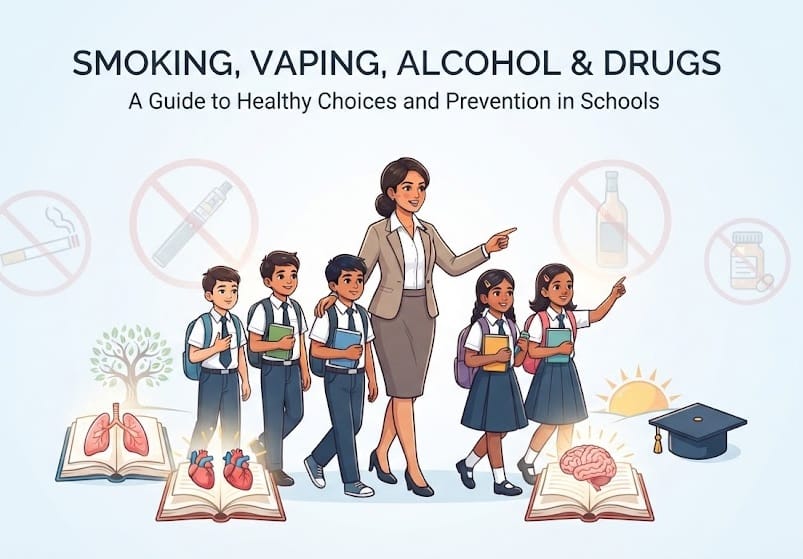
Smoking, Vaping, Alcohol & Drugs

Smoking, Vaping, Alcohol & Drugs

Young people today face many challenges while growing up. Along with academic pressure and social media influence, they may also come across cigarettes, e-cigarettes (vapes), alcohol, and illegal drugs. Curiosity, peer pressure, stress, and the desire to fit in can sometimes lead students to make choices that affect their health, education, and future.

The good news is that awareness and timely guidance can prevent most cases of substance use. This guide explains the dangers of smoking, vaping, alcohol, and drugs in simple language, helping students, parents, and teachers understand the risks and make informed decisions.

Why Students Experiment with Smoking, Vaping, Alcohol or Drugs

Most teenagers do not begin because they want to become addicted. Instead, they often start due to one or more of these reasons:

    • Curiosity
    • Friends encouraging them
    • Wanting to appear mature
    • Managing stress or anxiety
    • Social media influence
    • Celebrity culture
    • Lack of awareness about long-term consequences
    • Easy availability in some places

Research shows that the teenage brain is still developing until the mid-twenties. During this period, harmful substances can interfere with learning, decision-making, emotional control, and memory.

Understanding the Different Types

Smoking

Smoking involves burning tobacco and inhaling its smoke through cigarettes, bidis, cigars, or similar products.

Tobacco smoke contains more than 7,000 chemicals, including at least 70 known cancer-causing substances. According to the World Health Organization (WHO), tobacco kills more than 8 million people every year, including around 1.3 million deaths from second-hand smoke.

Vaping

Vaping uses electronic devices that heat a liquid into an aerosol. Many people mistakenly believe vaping is harmless because there is no burning tobacco.

However, vaping liquids often contain nicotine, heavy metals, chemicals, and flavoring agents that may harm the lungs and developing brain.

Nicotine addiction can develop quickly in teenagers.

Alcohol

Alcohol slows brain activity and affects judgment, balance, concentration, and reaction time.

Even occasional drinking during adolescence increases the risk of accidents, injuries, risky behaviour, and future alcohol dependence.

Illegal Drugs

Illegal drugs include substances such as cannabis, cocaine, heroin, methamphetamine, LSD, MDMA, and several synthetic drugs.

Some prescription medicines are also abused without medical supervision.

Different drugs affect the brain in different ways, but all carry serious physical and psychological risks.

How Smoking and Vaping Affect the Body

Damage to the Lungs

Smoking damages the tiny air sacs inside the lungs, making breathing difficult.

Students who smoke may experience:

    • Frequent cough
    • Breathlessness
    • Reduced sports performance
    • Chest infections
    • Long-term lung disease

Vaping has also been linked to serious lung injuries in some users.

Effects on the Brain

Nicotine changes the brain’s reward system.

Young users may develop:

    • Strong cravings
    • Poor concentration
    • Irritability
    • Mood swings
    • Difficulty quitting

Increased Risk of Cancer

Smoking significantly increases the risk of cancers affecting the lungs, mouth, throat, bladder, pancreas, and several other organs.

The earlier someone starts smoking, the greater the lifetime risk.

How Alcohol Affects Teenagers

Teenagers are more sensitive to alcohol than adults because their brains are still developing.

Possible consequences include:

    • Poor academic performance
    • Road accidents
    • Violence
    • Unsafe decisions
    • Memory loss
    • Depression
    • Increased risk-taking

Studies also suggest that early alcohol use is associated with a higher likelihood of addiction later in life.

Drug Abuse and Its Consequences

Drug use affects nearly every part of life.

Physical Health

Drug misuse can cause:

    • Heart problems
    • Breathing difficulties
    • Poor nutrition
    • Sleep disorders
    • Seizures
    • Overdose

Mental Health

Many substances increase the risk of:

    • Anxiety
    • Depression
    • Panic attacks
    • Hallucinations
    • Aggressive behaviour
    • Suicidal thoughts

Academic Performance

Students using addictive substances often experience:

    • Falling grades
    • Poor attendance
    • Lack of concentration
    • Missed assignments
    • Loss of motivation

Warning Signs Parents and Teachers Should Notice

Early detection can make a significant difference.

Common warning signs include:

Behavioural Changes

    • Sudden mood swings
    • Secretive behaviour
    • New friend groups
    • Loss of interest in hobbies
    • Frequent lying

Academic Changes

    • Declining marks
    • Skipping classes
    • Poor concentration
    • Increased disciplinary issues

Physical Signs

    • Red eyes
    • Persistent cough
    • Unusual smell on clothes
    • Weight loss
    • Frequent illness
    • Slurred speech

None of these signs alone proves substance use, but several occurring together deserve attention and supportive conversation.

The Role of Peer Pressure

Peer pressure is one of the biggest reasons students try harmful substances.

A friend may say:

    • “Everyone is doing it.”
    • “Try it just once.”
    • “Don’t be scared.”
    • “You’ll look cool.”

Students should remember that true friends respect personal choices.

Learning to politely refuse can prevent lifelong problems.

Simple responses include:

    • “No thanks.”
    • “I’m training for sports.”
    • “My parents would find out.”
    • “It’s not worth risking my health.”

Social Media and Online Influence

Many videos and advertisements make vaping or drinking appear fashionable.

However, these posts rarely show:

    • Addiction
    • Hospital visits
    • Health complications
    • Family stress
    • Financial loss
    • Legal consequences

Students should think critically before believing everything they see online.

What Schools Can Do

Schools play a major role in prevention.

Effective strategies include:

Awareness Programmes

Regular sessions help students understand real risks rather than relying on myths.

Counselling Support

Students facing stress should have access to trusted counsellors.

Positive Activities

Sports, music, debates, theatre, and clubs encourage healthy lifestyles.

Parent Involvement

Schools and parents working together create stronger protection for children.

How Parents Can Help

Parents do not need to wait until a problem develops.

Helpful steps include:

    • Talk openly without judging.
    • Listen carefully.
    • Know your child’s friends.
    • Encourage healthy hobbies.
    • Set clear family expectations.
    • Be a positive role model.
    • Celebrate achievements.

Children who feel emotionally supported are generally less likely to engage in risky behaviours.

If a Student Has Already Started

Do not panic.

Recovery is possible with early support.

Avoid punishment alone.

Instead:

    • Stay calm.
    • Have an honest conversation.
    • Seek professional guidance.
    • Inform the school if necessary.
    • Build a supportive environment.
    • Encourage healthier routines.

The sooner help begins, the better the outcome.

Important Facts Every Student Should Know

    • WHO estimates tobacco causes more than 8 million deaths every year worldwide.
    • About 1.3 million of these deaths occur among non-smokers exposed to second-hand smoke.
    • Most adult smokers begin before the age of 18.
    • The adolescent brain continues developing until around the mid-twenties, making teenagers especially vulnerable to addiction.
    • Nicotine can affect attention, learning, memory, and impulse control.
    • Early alcohol and drug use is linked with higher risks of dependence later in life.

Healthy Alternatives to Stress

Students can manage stress in healthier ways.

Try:

    • Regular exercise
    • Reading
    • Meditation
    • Deep breathing
    • Music
    • Drawing
    • Talking to family
    • Spending time outdoors
    • Joining school clubs
    • Seeking counselling when needed

Healthy habits improve both mental health and academic performance.

Frequently Asked Questions

Is vaping safer than smoking?

Vaping may expose users to fewer toxic substances than traditional cigarettes, but it is not harmless. Many vaping products contain nicotine and chemicals that can damage health, especially in young people.

Can someone become addicted after only a few uses?

Yes. Teenagers can develop nicotine dependence quickly because their brains are still developing.

Does alcohol improve confidence?

Alcohol may temporarily reduce inhibitions, but it also weakens judgment and increases risky behaviour.

What should students do if friends offer cigarettes or drugs?

Say no confidently, leave the situation if necessary, and seek support from trusted adults if the pressure continues.

My Thoughts

Smoking, vaping, alcohol, and drug use can have lasting effects on physical health, mental well-being, education, relationships, and future opportunities. The best protection is knowledge, supportive families, caring schools, and informed decision-making.

Students should remember that real confidence comes from making healthy choices, not from following harmful trends. Parents and teachers can make an enormous difference by listening, guiding, and creating an environment where young people feel safe asking for help.

Every positive choice made today helps build a healthier, brighter future tomorrow.

Related Topics

Bullying & Cyberbullying

Mental Health, Anxiety & Depression

Internet Safety & Social Media Safety

Self-Esteem, Confidence & Body Image

Exam Stress & Time Management

Peer Pressure

Respect, Kindness & Inclusion

Online Gaming & Smartphone Addiction 

Managing Anger & Emotions

About the Author

Nidhi Mehta is the founder of IndiaTutor.in and a professional online educator with over 11 years of teaching experience. She specializes in tutoring Classes 1 to 6 across core academic subjects, with a strong focus on concept clarity and foundational skill-building. Her teaching approach is based on personalized, one-to-one learning that helps students develop long-term academic confidence and understanding.
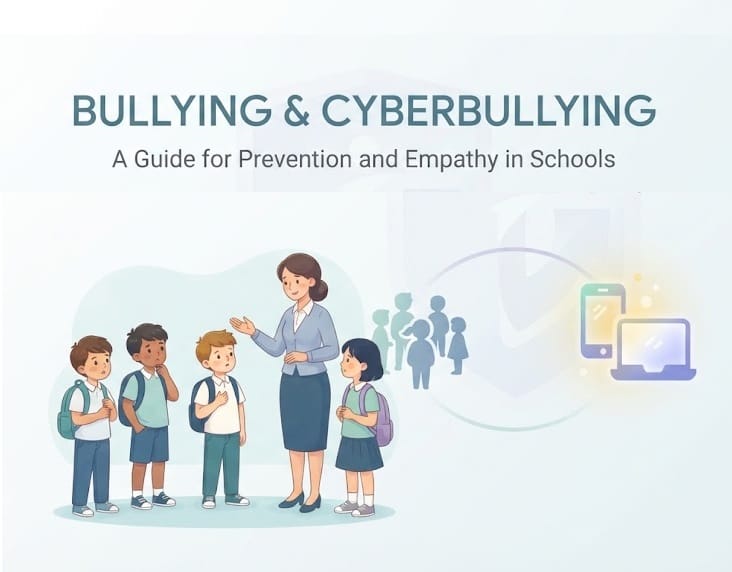
Visit her profile    Visit About Us Page

Bullying and Cyberbullying

Bullying and CyberBullying

Bullying and cyberbullying have become some of the biggest challenges facing school students today. While schools are places where children learn, make friends, and build confidence, they can also become places where some students experience repeated harassment, exclusion, or intimidation.

With smartphones, social media, gaming platforms, and messaging apps becoming part of everyday life, bullying no longer ends when the school bell rings. Many children continue to face hurtful messages, embarrassing photos, fake accounts, and online threats even after reaching home.

Understanding what bullying is, why it happens, and how to stop it is the first step toward creating a safer environment for every child.

What Is Bullying?

Bullying is repeated unwanted behavior intended to hurt, frighten, embarrass, or control another person. It usually involves an imbalance of power, where the person bullying believes they have more strength, popularity, or influence than the victim.

Bullying is different from a normal disagreement between friends. Arguments happen occasionally, but bullying is repeated and intentional.

Children who are bullied often feel unsafe, anxious, lonely, and afraid to attend school.

What Is Cyberbullying?

Cyberbullying is bullying that takes place through digital devices such as mobile phones, computers, tablets, gaming platforms, social media, or messaging applications.

Examples include:

    • Sending abusive or threatening messages
    • Posting embarrassing photos or videos without permission
    • Spreading false rumours online
    • Creating fake social media profiles
    • Excluding someone from online groups
    • Sharing private information without consent
    • Posting insulting comments repeatedly

Unlike traditional bullying, cyberbullying can happen at any time and may reach a very large audience within minutes.

Why Is Bullying Becoming More Common?

Several factors contribute to bullying.

Peer Pressure

Some children bully others to impress friends or gain popularity.

Lack of Empathy

Children who struggle to understand another person’s feelings may be more likely to bully.

Social Media

Online platforms make it easier for hurtful messages and rumours to spread quickly.

Desire for Power

Some students use bullying to feel important or control others.

Family or Personal Problems

Research suggests that children experiencing difficulties at home or emotional stress may sometimes express their frustration by bullying classmates.

Types of Bullying

Physical Bullying

Physical bullying involves hurting another student through actions such as pushing, kicking, hitting, damaging belongings, or blocking someone’s path.

Verbal Bullying

This includes insults, teasing, name-calling, mocking appearance, religion, language, disability, or family background.

Social Bullying

Also called relational bullying, this involves excluding someone from a group, spreading rumours, or damaging friendships.

Cyberbullying

This includes online harassment through texts, emails, social media, gaming platforms, or messaging apps.

Warning Signs That a Child May Be Bullied

Parents and teachers should watch for changes such as:

    • Suddenly refusing to attend school
    • Frequent headaches or stomach aches
    • Loss of confidence
    • Mood swings
    • Poor concentration
    • Falling academic performance
    • Damaged belongings
    • Changes in eating or sleeping habits
    • Avoiding friends
    • Becoming unusually quiet after using a phone or computer

One sign alone may not indicate bullying, but several together deserve attention.

Warning Signs That a Child May Be Bullying Others

Sometimes children who bully also need guidance and support.

Possible signs include:

    • Frequently getting into fights
    • Showing little empathy
    • Wanting to dominate others
    • Blaming classmates for problems
    • Bringing home items that do not belong to them
    • Becoming aggressive when corrected

Helping these children develop empathy and positive behaviour is important.

Facts and Statistics About Bullying

Bullying affects millions of children worldwide.

According to the United Nations Educational, Scientific and Cultural Organization (UNESCO), nearly one in three students globally reports being bullied by peers at school.

The World Health Organization has also reported that bullying remains a major public health concern among adolescents because of its impact on emotional well-being, mental health, and academic performance.

Research published by UNICEF shows that many young people have experienced online bullying, with social media becoming one of the most common places where harassment occurs.

Studies consistently show that students who experience bullying are more likely to develop anxiety, depression, lower self-esteem, and poorer academic outcomes than their peers.

Real-Life Examples

A student may be repeatedly laughed at because of their accent.

Another child may be excluded from every class group activity.

Someone’s photograph may be edited and shared online to embarrass them.

A student may receive anonymous threatening messages every evening.

Although these situations look different, they all have one thing in common—they cause emotional harm.

How Bullying Affects Students

Emotional Impact

Children may experience fear, sadness, loneliness, embarrassment, anger, or hopelessness.

Academic Impact

Many students find it difficult to concentrate in class, participate in activities, or complete homework.

Physical Impact

Stress may lead to headaches, stomach pain, sleep problems, and fatigue.

Social Impact

Victims often avoid school events, sports, or friendships because they no longer feel safe.

How Students Can Respond to Bullying

If someone is bullying you:

    • Stay calm whenever possible.
    • Walk away from unsafe situations.
    • Do not respond with violence.
    • Save screenshots of online abuse.
    • Block and report abusive accounts.
    • Tell a trusted adult immediately.
    • Keep evidence of repeated incidents.
    • Stay with supportive friends.
    • Remember that bullying is never your fault.

Speaking up early often prevents bullying from becoming worse.

What Should Parents Do?

Parents play an important role in protecting children.

Listen Carefully

Allow your child to explain what happened without interrupting.

Stay Calm

Avoid reacting with anger before understanding the complete situation.

Document Incidents

Keep records of messages, emails, screenshots, or written complaints.

Inform the School

Work together with teachers and school administrators to resolve the issue.

Encourage Confidence

Support children through positive conversations, hobbies, and healthy friendships.

How Schools Can Prevent Bullying

Schools can create safer environments through:

Clear Anti-Bullying Policies

Every student should understand that bullying is unacceptable.

Awareness Programs

Regular workshops help students understand kindness, empathy, and respect.

Teacher Training

Teachers should know how to identify and respond to bullying effectively.

Anonymous Reporting Systems

Students should have safe ways to report incidents without fear.

Digital Safety Education

Teaching responsible online behavior helps reduce cyberbullying.

Responsible Digital Behavior

Students should remember a simple rule:

Never post, share, or send anything online that could hurt, embarrass, or humiliate another person.

Before posting something, ask yourself:

    • Is it true?
    • Is it kind?
    • Is it necessary?
    • Would I say this face-to-face?

If the answer is no, it is better not to post it.

Building a Culture of Kindness

Every student can help reduce bullying.

Invite classmates to join games.

Stand up respectfully for someone being bullied.

Avoid spreading rumors.

Use kind words.

Include students who feel left out.

Celebrate differences instead of making fun of them.

Small acts of kindness create safer schools for everyone.

When Professional Help Is Needed

If bullying causes severe anxiety, depression, panic attacks, self-isolation, or major behavioral changes, parents should seek support from qualified school counselors, psychologists, or mental health professionals without delay.

Early intervention can make a significant difference in a child’s recovery.

My Thoughts

Bullying and cyberbullying can affect any student, regardless of age, background, or academic performance. However, they are preventable when students, parents, teachers, and schools work together.

Respect, empathy, and responsible digital behavior create classrooms where every child feels safe to learn and grow. By encouraging open communication, acting early, and supporting one another, we can build schools where kindness is stronger than bullying.

Related Topics

Smoking, Vaping, Alcohol & Drugs

Mental Health, Anxiety & Depression

Internet Safety & Social Media Safety

Self-Esteem, Confidence & Body Image

Exam Stress & Time Management

Peer Pressure

Respect, Kindness & Inclusion

Online Gaming & Smartphone Addiction 

Managing Anger & Emotions

About the Author

Nidhi Mehta is the founder of IndiaTutor.in and a professional online educator with over 11 years of teaching experience. She specializes in tutoring Classes 1 to 6 across core academic subjects, with a strong focus on concept clarity and foundational skill-building. Her teaching approach is based on personalized, one-to-one learning that helps students develop long-term academic confidence and understanding.

Visit her profile    Visit About Us Page

error: Content is protected !!

Found this helpful? Share it in 2 seconds!

Link copied to clipboard