
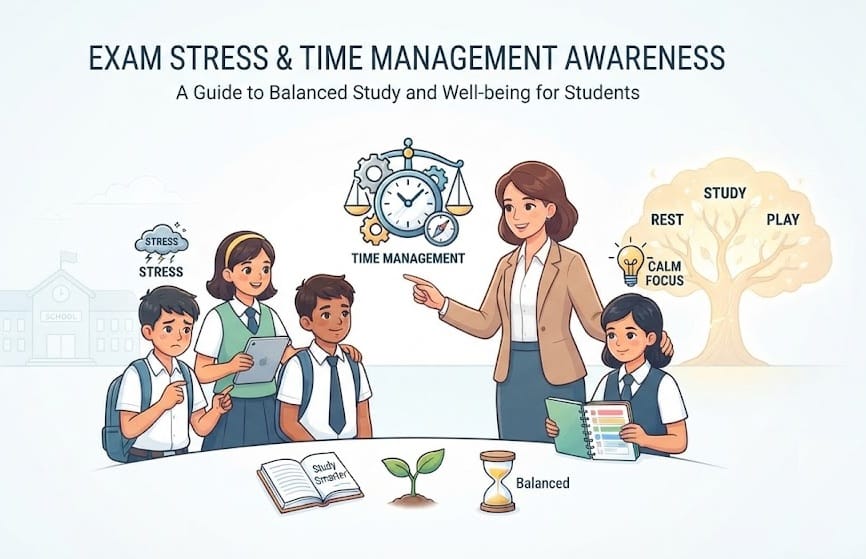
Exams are an important part of school life, but they should never become a source of constant fear. Every year, millions of students experience exam-related stress before unit tests, term exams, board examinations, and competitive entrance tests. While a certain level of pressure can improve focus, excessive stress can reduce concentration, affect sleep, lower confidence, and negatively impact academic performance.
The good news is that exam stress can be managed. With proper planning, healthy habits, and effective time management, students can prepare confidently without feeling overwhelmed.
This guide explains what exam stress is, why it happens, and practical ways students can stay organized, calm, and productive.
What Is Exam Stress?
Exam stress is the emotional, physical, and mental pressure students experience before or during examinations. It often develops when students feel they have too much to study in too little time or worry about disappointing themselves, their parents, or teachers.
Common signs include:
-
- Feeling anxious before studying
- Difficulty concentrating
- Poor sleep
- Frequent headaches
- Irritability
- Loss of motivation
- Forgetting information during exams
- Feeling tired even after resting
These reactions are common and can be managed with the right approach.
Why Do Students Feel Exam Pressure?
Several factors contribute to exam stress.
Fear of Failure
Many students believe that one exam determines their future. In reality, exams are only one measure of learning and do not define a person’s abilities.
Lack of Preparation
Waiting until the last few days to begin studying often creates unnecessary pressure.
High Expectations
Students may feel pressure from themselves, parents, relatives, friends, or social media to achieve perfect marks.
Comparing with Others
Comparing scores with classmates can reduce confidence and increase anxiety.
Poor Time Management
Without a study schedule, subjects pile up, making revision much more difficult.
What Research Says About Student Stress
Several studies show that academic pressure affects a large number of school students.
According to the World Health Organization (WHO), mental well-being during adolescence plays a major role in learning, confidence, and overall development.
Research published by the American Psychological Association has found that chronic stress can affect memory, attention, and learning efficiency.
India’s National Crime Records Bureau (NCRB) has also highlighted the importance of addressing academic pressure, with student stress remaining a significant concern across the country.
These findings remind us that managing stress is just as important as preparing for exams.
Why Time Management Matters
Time management means planning how you use your available hours effectively.
Students who manage their time well usually:
-
- Complete homework on time
- Revise regularly
- Sleep better
- Feel more confident
- Avoid last-minute panic
- Perform more consistently
Good planning creates more free time instead of less.
Create a Realistic Study Timetable
One of the best ways to reduce stress is to create a simple daily schedule.
Divide Subjects Across the Week
Instead of studying one subject for several hours, spread different subjects throughout the week.
For example:
-
- Mathematics
- Science
- English
- Social Science
- Languages
Studying different subjects keeps the brain engaged.
Break Large Chapters into Smaller Tasks
Instead of writing:
“Finish Science.”
Write:
-
- Read Chapter 3
- Learn definitions
- Solve textbook questions
- Revise diagrams
Completing small tasks gives a sense of progress.
Keep Revision Time
Many students spend all their time learning new chapters and forget revision.
Experts generally recommend revising topics several times rather than reading them only once.
The 45–15 Study Method
Many students find it easier to study in focused sessions.
Study for about 45 minutes, followed by a 10–15 minute break.
During the break:
-
- Walk around
- Drink water
- Stretch
- Rest your eyes
Avoid spending the break scrolling endlessly on social media, as it often becomes much longer than planned.
Prioritize Difficult Subjects
Study the subjects you find most challenging when your mind feels fresh.
For many students, this is during the morning or immediately after returning from school and taking a short break.
Leave easier subjects for later.
Avoid Last-Minute Cramming
Trying to memorize an entire syllabus in one night rarely works.
Instead:
-
- Start early.
- Revise regularly.
- Practice questions.
- Review mistakes.
- Sleep properly.
Learning over several weeks helps information stay in long-term memory.
Practice Writing Answers
Reading alone is not enough.
Writing answers helps improve:
-
- Speed
- Accuracy
- Presentation
- Confidence
For mathematics and science, solve problems on paper rather than only reading solutions.
For language subjects, practice writing complete answers.
Use Active Learning
Active learning is far more effective than passive reading.
Good methods include:
Teach Someone Else
Explaining a topic to a friend or family member helps identify gaps in understanding.
Make Short Notes
Create one-page summaries using important formulas, dates, keywords, and definitions.
Solve Previous Years’ Papers
Practicing earlier question papers improves familiarity with exam patterns and time limits.
Take Mock Tests
Timed practice tests help students learn how to complete papers within the available time.
Take Care of Your Health
Healthy habits improve concentration.
Sleep Well
The American Academy of Sleep Medicine recommends that teenagers generally need 8 to 10 hours of sleep every night.
Late-night studying may reduce memory and attention the next day.
Eat Balanced Meals
Choose nutritious foods such as fruits, vegetables, whole grains, milk, eggs, pulses, and nuts.
Avoid relying only on sugary snacks and energy drinks.
Stay Hydrated
Even mild dehydration can reduce concentration.
Drink water regularly throughout the day.
Exercise Daily
Even 20 to 30 minutes of walking, cycling, skipping, or playing outdoors can improve mood and reduce stress.
Reduce Digital Distractions
Mobile phones are one of the biggest challenges during exam preparation.
Helpful strategies include:
-
- Keep the phone away while studying.
- Turn off unnecessary notifications.
- Use app timers.
- Study first, then use social media as a reward.
Small changes can save several hours every week.
Build Confidence Instead of Perfection
Perfection is not necessary for success.
Focus on steady improvement.
For example:
Instead of saying,
“I must score 100%.”
Try saying,
“I will improve my score by preparing consistently.”
This mindset reduces unnecessary pressure.
What Parents Can Do
Parents play an important role in reducing exam stress.
They can:
-
- Encourage regular study habits.
- Praise effort instead of only marks.
- Avoid comparing children with others.
- Provide a quiet study environment.
- Ensure proper sleep and meals.
- Listen without criticism when children feel anxious.
Supportive families often help students perform better.
How Teachers Can Help
Teachers can reduce classroom anxiety by:
-
- Explaining exam patterns clearly.
- Giving realistic practice papers.
- Providing constructive feedback.
- Encouraging questions.
- Recognizing improvement, not only high marks.
A positive classroom environment builds confidence.
When Should Students Seek Help?
Sometimes stress becomes difficult to manage alone.
Students should speak with parents, teachers, school counselors, or another trusted adult if they experience:
-
- Constant anxiety
- Frequent panic
- Trouble sleeping for many days
- Loss of interest in studies
- Feeling hopeless
- Difficulty coping with everyday activities
Seeking help early is a sign of strength, not weakness.
Simple Daily Habits That Make a Big Difference
Small routines often produce the biggest results.
-
- Follow a study timetable.
- Revise every day.
- Practice writing answers.
- Sleep well.
- Stay physically active.
- Eat healthy food.
- Limit distractions.
- Ask questions whenever you are confused.
- Take short breaks.
- Believe in steady progress.
My Thoughts
Exams are important, but they are only one part of your educational journey. Good preparation, smart time management, healthy routines, and a positive mindset can greatly reduce stress while improving academic performance.
Remember that success is built through consistent effort rather than last-minute studying. Every chapter completed, every practice paper solved, and every small improvement brings you one step closer to your goals.
With proper planning and the right support from parents and teachers, every student can approach exams with confidence, stay organized, and perform to the best of their abilities.
Related Topics
Smoking, Vaping, Alcohol & Drugs
Mental Health, Anxiety & Depression
Internet Safety & Social Media Safety
Self-Esteem, Confidence & Body Image
Online Gaming & Smartphone Addiction
About the Author
Nidhi Mehta is the founder of IndiaTutor.in and a professional online educator with over 11 years of teaching experience. She specializes in tutoring Classes 1 to 6 across core academic subjects, with a strong focus on concept clarity and foundational skill-building. Her teaching approach is based on personalized, one-to-one learning that helps students develop long-term academic confidence and understanding.
Visit her profile Visit About Us Page
Share your Feedback or Review – Contact Us
Tutors, Register your Tutor profile
Career Tutors, Get Personalized Tutor Branding Services
Do you Own a Tuition Center? List it here
Are you a Parent or Student? Share your Tutor Requirement


