
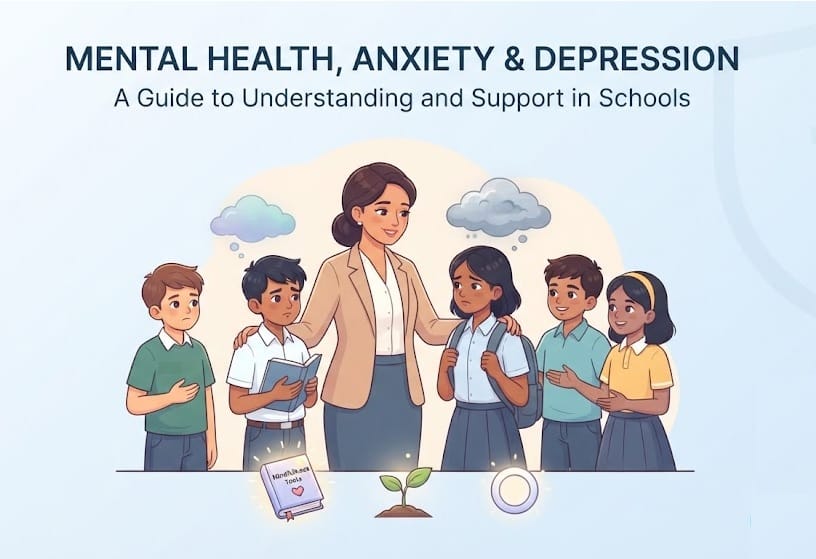
Mental health is just as important as physical health. A child may look healthy on the outside but may be struggling with stress, anxiety, sadness, or emotional pain. These feelings can affect learning, friendships, confidence, sleep, and overall happiness.
According to the World Health Organization (WHO), around 1 in 7 adolescents aged 10–19 years experiences a mental health condition, making emotional well-being one of the most important issues affecting young people today.
Parents, teachers, and schools play a major role in identifying problems early and providing support before they become more serious.
What Is Mental Health?
Mental health refers to a person’s emotional, psychological, and social well-being. It affects how children think, feel, behave, handle challenges, make decisions, and interact with others.
Good mental health helps students:
-
- Learn effectively
- Build healthy friendships
- Handle stress
- Solve problems
- Feel confident
- Enjoy school and family life
Mental health problems can happen to anyone regardless of intelligence, academic performance, or family background.
Why Mental Health Matters in School
Children spend a large part of their lives in school. Academic pressure, friendships, social media, examinations, bullying, family expectations, and changing emotions can all affect their mental well-being.
Studies have shown that students with good emotional health generally perform better academically, attend school more regularly, and build stronger relationships with classmates and teachers.
Ignoring emotional struggles can lead to long-term problems affecting education, career, and personal relationships.
Understanding Anxiety
Anxiety is the body’s natural response to stress or uncertainty. Feeling nervous before an exam, competition, or presentation is normal.
However, anxiety becomes a concern when it is excessive, lasts for weeks, or interferes with daily life.
Common Signs of Anxiety
-
- Constant worrying
- Fear without a clear reason
- Difficulty concentrating
- Trouble sleeping
- Fast heartbeat
- Sweating
- Stomach aches
- Headaches
- Avoiding school or social activities
- Feeling restless or tense
Some children cannot explain their feelings and may simply complain of physical discomfort.
Common Causes of Anxiety
Academic Pressure
Fear of poor marks, homework, competitive exams, or disappointing parents.
Bullying
Repeated teasing, exclusion, physical bullying, or cyberbullying.
Family Problems
Arguments at home, financial stress, divorce, illness, or loss of a loved one.
Social Media
Comparing themselves with others, fear of missing out (FOMO), online harassment, and unrealistic expectations.
Major Life Changes
Changing schools, moving to a new city, or adjusting after the pandemic.
What Is Depression?
Everyone feels sad occasionally. Depression is different.
Depression is a medical condition where sadness, hopelessness, or loss of interest continues for at least two weeks and affects daily functioning.
Children and teenagers with depression may not always cry. Some become angry, withdrawn, or unusually quiet.
Common Symptoms of Depression
-
- Persistent sadness
- Loss of interest in favourite activities
- Low energy
- Feeling worthless
- Difficulty concentrating
- Sleeping too much or too little
- Changes in appetite
- Poor academic performance
- Avoiding friends
- Frequent crying
- Irritability
- Thoughts that life has no meaning
These symptoms should never be ignored.
Mental Health Facts Every Parent Should Know
The World Health Organization reports that about 15% of the global burden of disease among adolescents is due to mental health conditions.
Research published in respected medical journals has found that half of all mental health conditions begin by around age 14, although many remain undetected and untreated.
The National Institute of Mental Health also notes that anxiety disorders are among the most common mental health conditions affecting children and adolescents.
Early identification greatly improves outcomes.
How Mental Health Affects Learning
A student experiencing anxiety or depression may appear lazy or uninterested, but the real problem is often emotional distress.
Mental health challenges can lead to:
-
- Lower grades
- Poor concentration
- Memory difficulties
- Reduced classroom participation
- Frequent absenteeism
- Behavioural changes
- Loss of motivation
- Reduced confidence
Supporting emotional well-being often improves academic performance.
Warning Signs Teachers Should Notice
Teachers interact with students daily and may notice changes before anyone else.
Watch for Changes Such As
-
- Sudden drop in marks
- Missing homework repeatedly
- Sleeping during class
- Withdrawal from classmates
- Frequent crying
- Anger or aggression
- Lack of participation
- Constant tiredness
- Poor attendance
- Loss of interest in activities
A caring conversation may encourage a student to seek help.
What Parents Can Do
Parents are often the first line of support.
Listen Without Judging
Allow children to express their feelings without immediately giving advice or criticism.
Maintain Daily Conversations
Simple questions like “How was your day?” can encourage communication.
Reduce Pressure
Praise effort instead of only focusing on marks.
Encourage Healthy Habits
Regular sleep, nutritious food, exercise, and outdoor activities improve emotional well-being.
Limit Screen Time
Balanced technology use helps reduce stress and improves sleep quality.
Spend Quality Time Together
Family meals, games, walks, and conversations strengthen emotional bonds.
How Schools Can Help
Schools have an important role in promoting emotional well-being.
Create Safe Classrooms
Students should feel respected and accepted regardless of their background or abilities.
Address Bullying Immediately
Every report of bullying should be taken seriously.
Train Teachers
Teachers should understand common signs of emotional distress and know when to refer students for additional support.
Promote Life Skills
Problem-solving, empathy, communication, resilience, and emotional regulation help students manage challenges.
Encourage Counselling
School counsellors provide a safe space where students can discuss concerns confidentially.
When Professional Help Is Needed
Professional support should be considered if symptoms:
-
- Continue for several weeks
- Become more severe
- Affect school performance
- Interfere with daily life
- Include self-harm or suicidal thoughts
Qualified psychologists, psychiatrists, counsellors, and mental health professionals can provide assessment and treatment.
Seeking help is a sign of responsibility, not weakness.
Supporting Friends Who Are Struggling
Students can make a real difference by supporting classmates.
They should:
-
- Listen kindly
- Include isolated classmates
- Report bullying
- Encourage trusted adult support
- Avoid spreading rumours
- Never make fun of emotional struggles
Sometimes one caring friend changes everything.
Everyday Habits That Improve Mental Well-Being
Healthy routines build emotional resilience.
Good habits include:
-
- Sleeping 8–10 hours each night
- Daily physical activity
- Eating balanced meals
- Taking breaks from studies
- Practising relaxation techniques
- Spending time outdoors
- Reading books
- Developing hobbies
- Maintaining positive friendships
- Asking for help when needed
Small daily actions often make a big difference.
Common Myths About Mental Health
Myth: Only adults experience mental health problems.
Fact: Children and teenagers can also experience anxiety, depression, and other mental health conditions.
Myth: Mental health problems mean someone is weak.
Fact: Mental health conditions are medical conditions that can affect anyone.
Myth: Talking about feelings makes problems worse.
Fact: Open communication often helps people feel supported and understood.
Myth: Students should simply “try harder.”
Fact: Emotional health problems cannot be solved through willpower alone.
My Thoughts
Mental health deserves the same attention as physical health. Anxiety and depression are common, treatable, and nothing to be ashamed of. Parents, teachers, schools, and students all have a role in creating supportive environments where young people feel safe, heard, and valued.
Recognising the early signs, encouraging open conversations, reducing unnecessary pressure, and seeking professional help when required can make a lasting difference. Every child deserves not only a good education but also the opportunity to grow with confidence, resilience, and emotional well-being.
Related Topics
Smoking, Vaping, Alcohol & Drugs
Internet Safety & Social Media Safety
Self-Esteem, Confidence & Body Image
Online Gaming & Smartphone Addiction
About the Author
Nidhi Mehta is the founder of IndiaTutor.in and a professional online educator with over 11 years of teaching experience. She specializes in tutoring Classes 1 to 6 across core academic subjects, with a strong focus on concept clarity and foundational skill-building. Her teaching approach is based on personalized, one-to-one learning that helps students develop long-term academic confidence and understanding.


