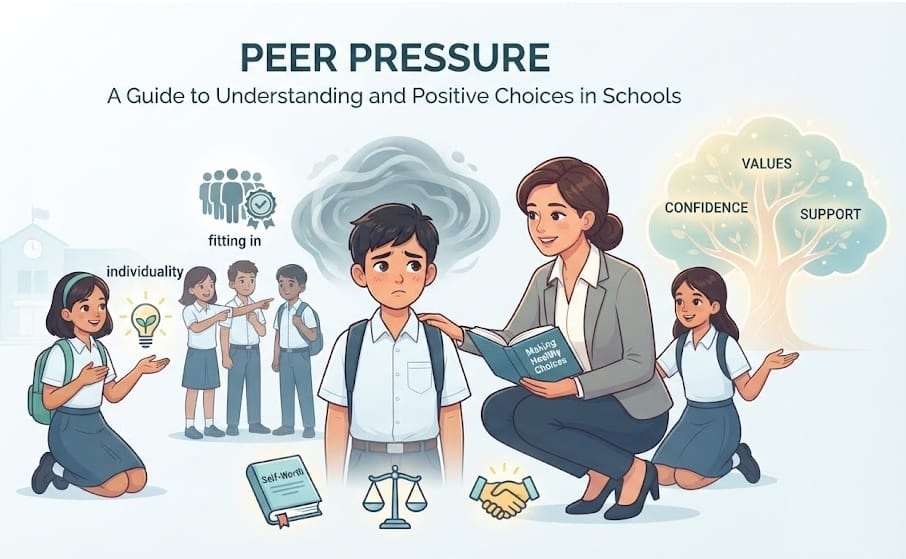
Peer pressure is a part of growing up. Every child and teenager wants to feel accepted by friends and classmates. While friendships can encourage learning, kindness, and confidence, they can also influence students to make choices they may not truly want to make. Understanding peer pressure helps students, parents, and teachers recognize its effects and respond in healthy ways.
Whether it is trying a harmful habit, dressing a certain way, or joining positive activities, peer pressure shapes many decisions during school years. Learning how to deal with it is an important life skill.
What Is Peer Pressure?
Peer pressure is the influence that people of the same age or social group have on one another. It can encourage someone to change their thoughts, behavior, or decisions to fit in with friends.
This influence is not always negative. Friends can inspire each other to study harder, participate in sports, volunteer, or develop good habits. Problems arise when students feel forced to do something that goes against their values or better judgment.
Why Is Peer Pressure So Powerful?
Children and teenagers naturally want to belong. Feeling accepted by classmates makes them feel safe and valued.
Researchers have found that adolescence is a period when the brain is still developing, especially the areas responsible for decision-making and self-control. At the same time, the brain becomes more sensitive to rewards and social approval. This combination makes teenagers more likely to be influenced by friends than adults.
According to the American Psychological Association, adolescents often place a high value on peer acceptance, making them more likely to adjust their behavior to match their social group.
Types of Peer Pressure
Positive Peer Pressure
Positive peer pressure encourages students to make better choices.
Examples include:
-
- Joining a reading club.
- Participating in sports.
- Studying together before exams.
- Helping classmates with homework.
- Staying away from harmful habits.
- Volunteering for community service.
Positive friendships help students build confidence, discipline, and leadership skills.
Negative Peer Pressure
Negative peer pressure pushes students toward unhealthy or risky behavior.
Examples include:
-
- Cheating during examinations.
- Skipping classes.
- Bullying others.
- Smoking or vaping.
- Trying alcohol or drugs.
- Spending excessive time on social media.
- Taking dangerous online challenges.
Students often know these actions are wrong but may still participate because they fear rejection.
Direct and Indirect Peer Pressure
Direct Peer Pressure
This happens when someone openly asks or forces another person to do something.
Example:
“Everyone is doing it. Why aren’t you?”
Indirect Peer Pressure
Sometimes nobody says anything directly. Students simply observe what others are doing and feel they should behave the same way.
Example:
A student buys an expensive phone because many classmates own one, even though they never wanted it.
Common Situations Where Students Experience Peer Pressure
In School
Students may feel pressured to:
-
- Score higher marks.
- Join particular friend groups.
- Wear fashionable clothes.
- Participate in trends.
- Cheat during exams.
Online
Social media has increased peer pressure significantly.
Students compare themselves with carefully edited photos and videos, leading to unrealistic expectations.
Common online pressures include:
-
- Posting frequently.
- Getting more followers.
- Receiving likes and comments.
- Participating in viral challenges.
- Looking perfect in photographs.
A 2023 advisory from the U.S. Surgeon General highlighted growing concerns about the impact of excessive social media use on young people’s mental health.
Signs That a Student Is Facing Peer Pressure
Parents and teachers should watch for changes such as:
-
- Sudden mood swings.
- New friend groups.
- Loss of confidence.
- Anxiety before school.
- Secretive behavior.
- Declining academic performance.
- Unexplained spending.
- Changes in clothing or appearance.
- Avoiding family conversations.
One sign alone does not always indicate peer pressure, but several changes together deserve attention.
How Peer Pressure Affects Students
Academic Performance
Students distracted by unhealthy friendships may lose interest in studies.
They may:
-
- Miss assignments.
- Skip classes.
- Lose concentration.
- Perform poorly in examinations.
Mental Health
Constant pressure to fit in can lead to:
-
- Stress.
- Anxiety.
- Low self-esteem.
- Loneliness.
- Depression.
Physical Health
Negative peer pressure sometimes results in:
-
- Lack of sleep.
- Poor eating habits.
- Substance use.
- Risk-taking behavior.
Decision-Making
Students may stop making independent choices and simply follow others.
Over time, this weakens confidence and personal responsibility.
Real-Life Examples
Example 1
A student refuses to cheat during an exam even when classmates encourage it. Although teased initially, the student earns respect from teachers and develops self-confidence.
Example 2
A group of friends decides to prepare together for board examinations. Their shared discipline improves everyone’s performance.
Example 3
A teenager joins an online challenge simply because classmates are participating. The activity becomes dangerous and results in injury. This shows how online trends can become harmful when students stop thinking independently.
Why Some Students Are More Vulnerable
Several factors increase the likelihood of being influenced by peers.
Low Self-Confidence
Students who doubt themselves often seek approval from others.
Desire to Belong
Being accepted feels important during adolescence.
Fear of Missing Out
Also known as FOMO, this fear encourages students to follow trends even when they disagree with them.
Lack of Family Communication
Students who cannot openly discuss problems at home may depend more heavily on friends for guidance.
How Students Can Handle Peer Pressure
Learn to Say No
Saying “No” politely but confidently is an important life skill.
Simple responses include:
-
- “I’m not comfortable doing that.”
- “That’s not for me.”
- “I’ll pass.”
Confidence grows with practice.
Choose Friends Carefully
Good friends:
-
- Respect boundaries.
- Encourage learning.
- Celebrate achievements.
- Support positive decisions.
Healthy friendships reduce harmful pressure.
Think Before Acting
Students should ask themselves:
-
- Is this safe?
- Is it legal?
- Would my parents approve?
- Could this affect my future?
- Am I doing this because I truly want to?
These questions often prevent poor decisions.
Build Confidence
Students who believe in themselves are less likely to be influenced negatively.
Confidence develops through:
-
- Sports.
- Music.
- Reading.
- Public speaking.
- Learning new skills.
- Volunteering.
How Parents Can Help
Parents play a major role in reducing the effects of peer pressure.
Keep Communication Open
Talk daily without judging or criticizing.
Children are more likely to share problems when they feel heard.
Know Their Friends
Invite friends home and understand who your child spends time with.
Encourage Independent Thinking
Teach children that they do not need everyone’s approval.
Set Clear Expectations
Explain family values regarding honesty, respect, safety, and responsibility.
How Teachers Can Support Students
Schools have an important role in creating a positive environment.
Teachers can:
-
- Encourage teamwork.
- Recognize kindness.
- Discuss peer pressure during classroom activities.
- Promote anti-bullying programs.
- Help students develop leadership skills.
- Create opportunities for every child to participate.
Students who feel included are less likely to seek acceptance through unhealthy behavior.
Interesting Facts About Peer Pressure
Social Influence Begins Early
Children begin responding to peer influence in primary school, and it becomes stronger during adolescence.
Positive Friends Improve Results
Several educational studies show that students surrounded by motivated classmates often perform better academically because positive attitudes spread through social groups.
Peer Pressure Is Lifelong
Adults also experience peer pressure at work, in social circles, and online. Learning healthy decision-making during school helps throughout life.
Building Positive Peer Influence
Students can become role models by:
-
- Including lonely classmates.
- Standing against bullying.
- Encouraging honest behavior.
- Appreciating differences.
- Supporting friends during difficult times.
- Celebrating effort instead of popularity.
One confident student can influence an entire group in a positive direction.
Frequently Asked Questions
Is peer pressure always harmful?
No. Positive peer pressure encourages healthy habits, learning, teamwork, and responsible behavior.
At what age does peer pressure become stronger?
It usually becomes more noticeable during middle school and continues throughout the teenage years.
Can parents completely prevent peer pressure?
No, but strong communication, trust, and guidance greatly reduce its harmful effects.
Does social media increase peer pressure?
Yes. Constant comparison, online trends, and the desire for approval can increase pressure, especially among teenagers.
My Thoughts
Peer pressure is a normal part of growing up, but students should never feel that they must change who they are to gain acceptance. Strong values, supportive families, caring teachers, and positive friendships help young people make wise decisions even when faced with difficult situations.
The goal is not to avoid friendships but to build relationships that encourage honesty, kindness, confidence, and personal growth. When students learn to think independently and respect themselves, they become better prepared for school, college, careers, and life.
Related Topics
Smoking, Vaping, Alcohol & Drugs
Mental Health, Anxiety & Depression
Internet Safety & Social Media Safety
Self-Esteem, Confidence & Body Image
Online Gaming & Smartphone Addiction
About the Author
Nidhi Mehta is the founder of IndiaTutor.in and a professional online educator with over 11 years of teaching experience. She specializes in tutoring Classes 1 to 6 across core academic subjects, with a strong focus on concept clarity and foundational skill-building. Her teaching approach is based on personalized, one-to-one learning that helps students develop long-term academic confidence and understanding.