

Why Students Fear Chemistry and How Parents Can Help

Why Students Fear Chemistry and How Parents Can Help

Chemistry is one of the most important subjects in school education. It forms the foundation for careers in medicine, pharmacy, biotechnology, engineering, environmental science, and many other fields. Despite its importance, chemistry is also one of the subjects that students often struggle with the most.

Many parents notice a sudden drop in confidence when their child begins studying chemistry in higher classes. A student who performs well in other subjects may suddenly find science difficult, confusing, and overwhelming. This fear can affect academic performance, exam results, and overall interest in learning.

Understanding why students fear chemistry is the first step toward helping them overcome these challenges. With the right support, every student can build confidence and develop a better understanding of the subject.

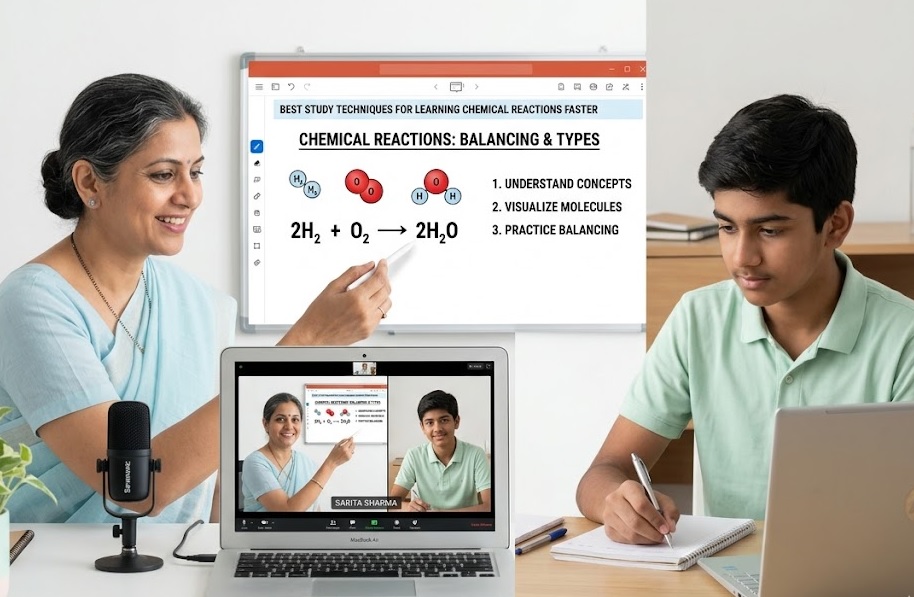
Best Study Techniques for Learning Chemical Reactions Faster

Why Do Students Fear Chemistry?

Chemistry combines concepts from physics, mathematics, and biology. Unlike many subjects that focus mainly on theory, chemistry requires students to understand concepts, remember formulas, solve numerical problems, and visualize processes that cannot be seen with the naked eye.

This combination often creates anxiety among learners.

The Subject Introduces Many New Concepts

Students encounter unfamiliar terms such as atoms, molecules, ions, valency, molarity, equilibrium, and oxidation. These concepts can seem abstract because they cannot be observed directly.

For example, a student can easily understand a plant or an animal because they can see them. Understanding atomic structure requires imagination and conceptual thinking, which may be difficult for some learners.

Chemistry Requires Strong Foundations

Chemistry is a cumulative subject. New chapters build upon previously learned concepts.

A student who does not fully understand chemical bonding may struggle with organic chemistry later. Similarly, weak knowledge of mole concepts can create difficulties in stoichiometry and numerical calculations.

Research in educational psychology consistently shows that gaps in foundational knowledge can significantly affect future learning outcomes.

Fear of Chemical Equations and Formulae

Many students believe chemistry is only about memorizing reactions and formulas. When they encounter long equations and complicated symbols, they often feel intimidated.

For instance:

2H₂ + O₂ → 2H₂O

While this equation appears simple to an experienced learner, beginners may feel overwhelmed by symbols, numbers, and unfamiliar notation.

Numerical Problems Create Anxiety

Physical chemistry includes calculations involving mole concepts, concentration, gas laws, and thermodynamics.

Students who already struggle with mathematics may find these topics especially challenging.

According to several educational surveys conducted in India, mathematics-related anxiety often affects performance in chemistry because both subjects require logical problem-solving skills.

How Chemistry Builds Careers Beyond Medicine and Engineering

Common Reasons Students Lose Confidence in Chemistry

Lack of Conceptual Understanding

Memorization without understanding creates short-term success but often leads to long-term difficulties.

Students may remember definitions before exams but forget them shortly afterward because they never fully understood the underlying concepts.

Fast Classroom Pace

School teachers must complete large syllabi within limited timeframes.

As a result, some students may hesitate to ask questions or may not receive enough individual attention. A single missed concept can create confusion in future lessons.

Negative Past Experiences

Poor marks in a test, difficulty answering questions in class, or repeated mistakes can reduce confidence.

Over time, students may begin believing they are “bad at chemistry,” even when they simply need additional guidance.

Exam Pressure

Board examinations, entrance tests, and competitive exams place significant pressure on students.

The fear of losing marks often makes chemistry seem even more difficult than it actually is.

Signs Your Child May Be Struggling with Chemistry

Parents should watch for early warning signs.

Avoiding Chemistry Homework

Students may postpone assignments, delay revision, or spend very little time studying chemistry compared to other subjects.

Complaints About Difficult Chapters

Frequent statements such as “I don’t understand anything” or “Chemistry is impossible” may indicate deeper learning challenges.

Falling Test Scores

Consistently low marks despite effort often suggest conceptual gaps rather than lack of intelligence.

Reduced Interest in Science

Students who once enjoyed science may begin avoiding laboratory work, practical activities, or science-related discussions.

How to Learn Chemical Equations Without Memorizing Everything

How Parents Can Help Students Overcome Fear of Chemistry

Parents do not need advanced chemistry knowledge to support their children effectively.

Focus on Understanding Instead of Marks

Many students become anxious when every conversation revolves around scores.

Instead of asking only about marks, ask questions such as:

    • Which topic did you learn today?
    • What was interesting in class?
    • Which concept feels difficult?

These conversations encourage learning rather than performance pressure.

Encourage Questions

Curiosity plays an important role in science education.

Children should feel comfortable asking questions without fear of criticism.

Some examples include:

    • Why does ice float on water?
    • Why does iron rust?
    • How do medicines work?

Connecting chemistry to everyday life makes learning more meaningful.

Break Large Topics into Smaller Parts

Complex chapters become easier when divided into manageable sections.

For example, instead of studying an entire chapter in one session, students can focus on:

    • Definitions
    • Important concepts
    • Examples
    • Practice questions

Small achievements build confidence over time.

Create a Consistent Study Routine

Educational research shows that regular revision improves retention significantly more than last-minute cramming.

Even 30 to 45 minutes of focused chemistry study several times per week can produce noticeable improvements.

Use Visual Learning Resources

Many chemistry concepts become easier when students use:

    • Diagrams
    • Animations
    • Videos
    • Molecular models
    • Practical demonstrations

Visual learning helps students understand abstract ideas more effectively.

Step-by-Step Guide to Scoring Full Marks in Chemistry Numericals

Making Chemistry Relevant to Everyday Life

One reason students fear chemistry is that they do not see its practical importance.

Parents can highlight chemistry in daily activities.

Cooking

Baking, boiling, fermentation, and food preservation all involve chemical changes.

Cleaning Products

Detergents, soaps, and disinfectants work because of chemical reactions.

Medicines

Every medicine contains chemical compounds designed to produce specific effects in the body.

Environment

Air pollution, water treatment, and climate science rely heavily on chemistry.

When students recognize chemistry around them, the subject feels less intimidating and more interesting.

Helping Students Prepare for Chemistry Exams

Begin Revision Early

Starting preparation weeks before examinations reduces stress and allows time for concept clarification.

Practice Previous Year Questions

Past papers help students understand question patterns and improve time management.

Create Formula Sheets

Condensed notes containing important reactions, equations, and concepts simplify revision.

Analyze Mistakes

Instead of focusing only on marks, students should identify why errors occurred and learn how to avoid them in future tests.

How to Choose the Right Chemistry Tutor for CBSE Students

Building Long-Term Confidence in Chemistry

Confidence develops gradually through consistent effort and positive experiences.

Parents can help by:

    • Celebrating small improvements
    • Encouraging persistence
    • Avoiding comparisons with other students
    • Recognizing effort as well as results
    • Maintaining realistic expectations

Studies on student motivation show that positive reinforcement often leads to better academic outcomes than criticism or pressure.

When Additional Support May Be Needed

Sometimes students require more personalized instruction than a classroom environment can provide.

A qualified private chemistry tutor can identify learning gaps, explain difficult concepts at the student’s pace, and provide targeted practice. Individual attention often helps students ask questions more freely and build confidence. Personalized lessons can improve understanding, strengthen problem-solving skills, and make chemistry less stressful. For many students, the right tutor transforms chemistry from a feared subject into one they can approach with confidence and success.

Looking for expert Chemistry tutors?

Find Chemistry Tutors on IndiaTutor.in

About the Author

Nidhi Mehta is the founder of IndiaTutor.in and a professional online educator with over 11 years of teaching experience. She specializes in tutoring Classes 1 to 6 across core academic subjects, with a strong focus on concept clarity and foundational skill-building. Her teaching approach is based on personalized, one-to-one learning that helps students develop long-term academic confidence and understanding.
Visit her profile    Visit About Us Page

Best Study Techniques for Learning Chemical Reactions Faster

Best Study Techniques for Learning Chemical Reactions Faster

Chemical reactions are one of the most important topics in Chemistry. Whether you are studying in Class 9, 10, 11, or 12, understanding reactions helps you perform better in school exams, board examinations, Olympiads, and competitive tests such as JEE and NEET.

Many students find chemical reactions difficult because there are hundreds of equations, symbols, reactants, products, and conditions to remember. As a result, they often try to memorize everything. Unfortunately, this approach usually leads to confusion and poor retention.

The good news is that learning chemical reactions does not have to be difficult. Research in cognitive science shows that students remember concepts longer when they understand patterns, actively recall information, and revise at regular intervals. By using the right techniques, you can learn reactions faster and remember them for much longer.

Why Students Struggle with Chemical Reactions

Before discussing study techniques, it is important to understand why many learners find reactions challenging.

Some common reasons include:

    • Memorizing without understanding concepts
    • Ignoring reaction patterns
    • Lack of regular revision
    • Studying reactions in isolation
    • Not practicing equation writing
    • Focusing only on theory

A study published in the journal Educational Psychology found that students who actively engaged with learning materials retained significantly more information than those who relied only on passive reading.

How Chemistry Builds Careers Beyond Medicine and Engineering

Understand the Logic Behind Every Reaction

The first step toward mastering chemical reactions is understanding why a reaction occurs.

Instead of trying to memorize:

Hydrochloric Acid + Sodium Hydroxide → Sodium Chloride + Water

Learn that this is a neutralization reaction where an acid reacts with a base to produce salt and water.

When you understand the reason behind the transformation, remembering the equation becomes much easier.

Ask These Questions

Whenever you learn a new reaction, ask:

    • What type of reaction is it?
    • Why does it happen?
    • What are the products formed?
    • What conditions are required?
    • Where is it used in real life?

This method helps build conceptual clarity.

Group Similar Reactions Together

One of the biggest mistakes students make is studying reactions randomly.

The human brain remembers information better when it is organized into categories.

Create Reaction Families

Group reactions under headings such as:

Combination Reactions

Examples:

  • Calcium Oxide + Water
  • Hydrogen + Oxygen

Decomposition Reactions

Examples:

  • Thermal decomposition
  • Electrolytic decomposition
  • Photolytic decomposition

Displacement Reactions

Examples:

  • Zinc with Copper Sulphate
  • Iron with Copper Sulphate

Redox Reactions

Examples involving oxidation and reduction.

Studying reactions in groups helps you identify similarities and reduces the amount of information your brain must process.

How to Learn Chemical Equations Without Memorizing Everything

Use Visual Learning Techniques

Scientists estimate that the brain processes visual information much faster than text.

Instead of maintaining long lists of reactions, create visual notes.

Use Flow Charts

For example:

Metal + Oxygen → Metal Oxide

Metal Oxide + Water → Base

This simple chain helps connect multiple concepts.

Create Color-Coded Notes

Use different colors for:

    • Reactants
    • Products
    • Catalysts
    • Conditions

Visual separation improves recall during examinations.

Practice Active Recall

Many students repeatedly read reactions from textbooks and assume they have learned them.

Unfortunately, recognition is not the same as recall.

Active recall forces the brain to retrieve information from memory.

Research from cognitive psychology has consistently shown that retrieval practice improves long-term retention.

How to Use Active Recall

Read a reaction once.

Close the book.

Write it from memory.

Check for mistakes.

Repeat after a few hours.

For example:

Can you write the reaction between magnesium and oxygen without looking at your notes?

If yes, you have learned it.

If not, more practice is needed.

Step-by-Step Guide to Scoring Full Marks in Chemistry Numericals

Follow Spaced Repetition

Students often study reactions only once before examinations.

This creates short-term memory rather than long-term understanding.

Spaced repetition is a learning method where revision occurs at increasing intervals.

Recommended Revision Schedule

    • Day 1: Learn the reaction
    • Day 2: Revise
    • Day 5: Review again
    • Day 10: Test yourself
    • Day 20: Quick revision
    • Day 30: Final review

Studies show that spaced repetition can significantly improve retention compared with cramming.

Learn Through Reaction Patterns

Chemistry contains many predictable patterns.

Recognizing these patterns reduces memorization.

Example 1: Metal Reactions

Many metals react with oxygen to form metal oxides.

Examples:

  • Magnesium + Oxygen → Magnesium Oxide
  • Calcium + Oxygen → Calcium Oxide

Example 2: Acid Reactions

Many acids react with metals to produce:

Acid + Metal → Salt + Hydrogen Gas

Examples:

  • Hydrochloric Acid + Zinc
  • Sulphuric Acid + Magnesium

Once you understand the pattern, learning additional reactions becomes easier.

Write Reactions Every Day

Chemistry is similar to mathematics.

Reading alone is not enough.

Writing reactions regularly improves speed and accuracy.

Daily Practice Routine

Spend 15 minutes each day:

    • Write five reactions from memory
    • Balance equations
    • Identify reaction types
    • Name reactants and products

This simple exercise strengthens memory pathways.

Why Students Fear Chemistry and How Parents Can Help

Connect Reactions to Real Life

The brain remembers information better when it is meaningful.

Try linking reactions with everyday examples.

Rusting of Iron

Iron reacts with oxygen and moisture.

This reaction explains why iron gates and vehicles rust.

Photosynthesis

Plants convert carbon dioxide and water into glucose using sunlight.

This is one of the most important chemical reactions on Earth.

Combustion

Burning LPG, petrol, diesel, wood, and candles involves combustion reactions.

Real-life connections make concepts easier to remember.

Create Flashcards

Flashcards are among the most effective revision tools.

Use physical cards or digital applications.

Front Side

Reactants

Example:

Calcium Carbonate →

Back Side

Products

Calcium Oxide + Carbon Dioxide

Flashcards encourage quick recall and make revision more engaging.

Learn Conditions and Catalysts Separately

Students often remember reactants and products but forget important conditions.

For example:

    • Temperature
    • Pressure
    • Catalyst
    • Light

These details frequently appear in board examinations and competitive tests.

Create a Separate Conditions Sheet

Maintain one notebook page dedicated to:

    • Haber Process conditions
    • Contact Process conditions
    • Catalysts used in industrial reactions
    • Electrolysis requirements

This improves accuracy during exams.

Teach Someone Else

One of the best ways to test understanding is to explain a concept to another person.

Educational researchers often refer to this as the “Protégé Effect.”

Students who teach others generally develop deeper understanding.

What You Can Do

Explain a reaction to:

    • A friend
    • A sibling
    • A parent
    • A study partner

If you can explain a reaction clearly, you probably understand it well.

How to Choose the Right Chemistry Tutor for CBSE Students

Solve Previous Year Questions

Examiners often repeat similar concepts in different formats.

Practicing past papers helps identify important reactions.

Benefits

    • Improves confidence
    • Reveals weak areas
    • Increases speed
    • Familiarizes students with question patterns

Many high-scoring students spend considerable time analyzing previous examination questions.

Avoid Common Mistakes

Learning Without Understanding

Memorization alone rarely works for long.

Ignoring Regular Revision

Even well-learned reactions fade without practice.

Skipping Balancing Practice

Balancing equations strengthens understanding.

Studying Large Lists at Once

Small, focused study sessions are more effective.

Waiting Until Exams Approach

Daily practice produces better results than last-minute preparation.

Build a Personal Reaction Notebook

A dedicated notebook can become your most valuable revision resource.

Include:

    • Important reactions
    • Reaction types
    • Conditions
    • Exceptions
    • Common mistakes
    • Short notes

Before exams, this notebook can save hours of revision time.

My Thoughts

Learning chemical reactions faster is not about memorizing hundreds of equations. Success comes from understanding concepts, identifying patterns, practicing active recall, revising at regular intervals, and applying knowledge through problem-solving.

Students who consistently spend even 15 to 20 minutes daily reviewing reactions often perform much better than those who rely on marathon study sessions before examinations.

For students who continue to struggle, a private Chemistry tutor can provide personalized explanations, identify weak areas, and create a structured study plan. One-to-one guidance also allows students to ask questions freely and receive immediate feedback. With expert support, difficult reaction mechanisms, equations, and concepts often become much easier to understand and remember.

Looking for expert Chemistry tutors?

Find Chemistry Tutors on IndiaTutor.in

About the Author

Nidhi Mehta is the founder of IndiaTutor.in and a professional online educator with over 11 years of teaching experience. She specializes in tutoring Classes 1 to 6 across core academic subjects, with a strong focus on concept clarity and foundational skill-building. Her teaching approach is based on personalized, one-to-one learning that helps students develop long-term academic confidence and understanding.

Visit her profile    Visit About Us Page

error: Content is protected !!

Found this helpful? Share it in 2 seconds!

Link copied to clipboard