
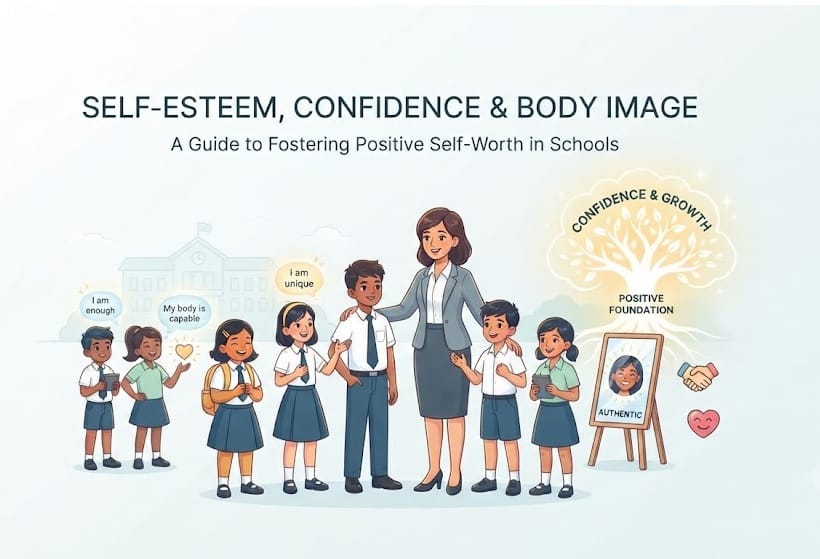
Every child deserves to feel good about who they are. Healthy self-esteem, genuine confidence, and a positive body image play a major role in academic success, friendships, emotional well-being, and future happiness. Unfortunately, many school students struggle with self-doubt, unrealistic beauty standards, peer pressure, and constant comparison through social media.
The encouraging news is that self-esteem and confidence are not fixed traits. They are skills that can be developed with support, encouragement, and healthy habits. Parents, teachers, and schools all have an important role in helping children appreciate themselves for who they are rather than how they look or how they compare with others.
What Is Self-Esteem?
Self-esteem is how a person feels about themselves. It is the opinion someone has about their own abilities, character, and worth.
A student with healthy self-esteem usually:
-
- Believes they can learn from mistakes.
- Accepts compliments comfortably.
- Tries new activities without excessive fear.
- Respects themselves and others.
- Handles setbacks without giving up.
A student with low self-esteem may:
-
- Think they are “not good enough.”
- Fear failure constantly.
- Avoid participating in class.
- Compare themselves with everyone else.
- Feel discouraged after small mistakes.
Healthy self-esteem does not mean believing you are better than others. It means recognizing your strengths while accepting that everyone has areas where they can improve.
What Is Confidence?
Confidence is the belief that you can successfully complete a task or overcome a challenge.
Confidence grows through experience. Every time students solve a difficult problem, deliver a presentation, play a sport, or learn a new skill, their confidence increases.
Confidence is not about never feeling nervous. Even successful athletes, scientists, artists, and public speakers feel anxious before important events. The difference is that they continue despite their fear.
Self-Esteem and Confidence Are Different
Although they are connected, they are not the same.
-
- Self-esteem is how you value yourself.
- Confidence is believing you can do something.
A student may feel confident in mathematics but insecure about making new friends. Another student may have excellent self-esteem but lack confidence in public speaking.
Both can improve over time.
Understanding Body Image
Body image is how people think and feel about their physical appearance.
A positive body image means appreciating your body for what it can do rather than judging it only by appearance.
Body image includes:
-
- Height
- Weight
- Skin colour
- Hair
- Body shape
- Facial features
- Physical abilities
Every person’s body is unique. There is no single “perfect” appearance.
Why Body Image Matters
Children begin noticing physical differences from a young age. As they grow older, advertisements, movies, influencers, and social media often create unrealistic expectations.
Many online images are carefully edited using filters, lighting, makeup, and photo editing software. Comparing yourself with these unrealistic images can lead to disappointment and low confidence.
According to the World Health Organization (WHO), adolescence is a critical stage for developing lifelong mental and emotional health. Positive self-image during these years contributes to better well-being and healthier relationships.
Research from organizations such as the American Psychological Association has also shown that excessive social comparison, particularly through social media, can negatively affect self-esteem in teenagers.
Common Causes of Low Self-Esteem
Academic Pressure
Constant concern about marks, examinations, and competition may make students believe their value depends only on grades.
Bullying
Name-calling, teasing, exclusion, or cyberbullying can seriously damage confidence.
Social Media
Students often compare their everyday lives with carefully edited online content.
Family Expectations
Supportive families motivate children, but unrealistic expectations may create unnecessary pressure.
Physical Changes During Puberty
Rapid physical development during adolescence can make students feel uncomfortable or self-conscious.
Comparing with Others
Everyone develops different talents at different speeds. Constant comparison usually reduces motivation rather than increasing it.
Signs That a Student May Need Support
Parents and teachers should notice changes such as:
-
- Frequently saying “I’m useless.”
- Avoiding mirrors or photographs.
- Refusing to participate in activities.
- Giving up easily.
- Constantly seeking approval.
- Becoming unusually quiet.
- Feeling embarrassed about appearance.
- Avoiding school or social situations.
Early support can prevent these feelings from becoming more serious.
Building Healthy Self-Esteem
Celebrate Effort, Not Just Results
Praise hard work, improvement, and determination instead of focusing only on marks.
Instead of saying, “You got full marks.”
Try saying, “You worked consistently and your effort paid off.”
Accept Mistakes
Mistakes help people learn.
Thomas Edison reportedly tested thousands of ideas before successfully developing the practical electric light bulb. Success often follows persistence.
Encourage Independence
Allow children to solve age-appropriate problems themselves.
Small achievements build lasting confidence.
Set Realistic Goals
Large goals become easier when divided into smaller steps.
Completing each step creates motivation and confidence.
Developing Real Confidence
Learn New Skills
Confidence increases when students experience progress.
Examples include:
-
- Reading regularly
- Playing a musical instrument
- Learning coding
- Drawing
- Public speaking
- Sports
- Science projects
Practice Positive Self-Talk
Replace negative thoughts with realistic ones.
Instead of:
“I always fail.”
Try:
“I didn’t do well this time, but I can improve.”
Prepare Well
Preparation reduces fear.
Students who revise regularly usually feel more confident during examinations than those who rely on last-minute studying.
Building a Positive Body Image
Appreciate What Your Body Can Do
Instead of focusing only on appearance, appreciate your body’s abilities.
Your body helps you:
-
- Walk
- Run
- Dance
- Play sports
- Learn
- Create
- Explore the world
Avoid Appearance-Based Comparisons
Beauty standards change across cultures and over time.
Kindness, honesty, intelligence, creativity, and determination remain valuable throughout life.
Choose Healthy Habits
Good health supports both physical and emotional well-being.
Healthy habits include:
-
- Nutritious food
- Regular exercise
- Adequate sleep
- Drinking enough water
- Limiting excessive screen time
How Parents Can Help
Parents influence children’s self-esteem every day.
Helpful habits include:
Listen Without Judging
Children should feel comfortable discussing worries without fear of criticism.
Encourage Interests
Support hobbies that genuinely interest the child instead of forcing activities.
Avoid Negative Labels
Words such as “lazy,” “stupid,” or “failure” can stay with children for years.
Instead, focus on behaviour that can improve.
Be a Positive Role Model
Children observe how adults talk about themselves.
Avoid constantly criticizing your own appearance or abilities.
How Teachers Can Build Confidence
Teachers shape students’ beliefs about themselves.
Effective approaches include:
Give Constructive Feedback
Highlight strengths while suggesting improvements.
Encourage Participation
Invite quieter students to contribute in supportive ways.
Recognize Different Talents
Not every child excels academically.
Some students shine in music, sports, leadership, art, technology, or kindness.
Prevent Bullying
Schools should maintain safe environments where every student feels respected.
Helping Students Handle Social Media
Students should remember:
-
- Most online photos are carefully selected.
- Filters and editing are common.
- Likes do not measure personal worth.
- Real life is different from social media.
Spending more time with family, friends, sports, books, and outdoor activities often improves emotional well-being.
When Professional Help May Be Needed
Sometimes low self-esteem becomes more serious.
Parents should consider speaking with a qualified mental health professional if a child:
-
- Appears sad for several weeks.
- Withdraws from friends and family.
- Experiences severe anxiety.
- Stops enjoying favourite activities.
- Shows major changes in eating or sleeping habits.
- Talks about hopelessness or self-harm.
Early intervention can make a significant difference.
Everyday Habits That Build Confidence
Students can strengthen self-esteem by:
-
- Learning something new every week.
- Reading daily.
- Exercising regularly.
- Speaking kindly to themselves.
- Helping others.
- Practising gratitude.
- Limiting unhealthy comparisons.
- Celebrating small achievements.
- Asking questions in class.
- Trying again after setbacks.
Small positive actions repeated consistently create lasting confidence.
My Thoughts
Every student has unique strengths, talents, and potential. Confidence does not come from looking perfect or being better than everyone else. It grows through learning, persistence, healthy relationships, and believing that mistakes are opportunities to improve.
Parents and teachers can make a lifelong difference by encouraging effort, respecting individuality, celebrating progress, and creating supportive environments where children feel valued.
When students develop healthy self-esteem, genuine confidence, and a positive body image, they are more likely to enjoy learning, build stronger friendships, overcome challenges, and grow into resilient, compassionate, and successful adults.
Related Topics
Smoking, Vaping, Alcohol & Drugs
Mental Health, Anxiety & Depression
Internet Safety & Social Media Safety
Online Gaming & Smartphone Addiction
About the Author
Nidhi Mehta is the founder of IndiaTutor.in and a professional online educator with over 11 years of teaching experience. She specializes in tutoring Classes 1 to 6 across core academic subjects, with a strong focus on concept clarity and foundational skill-building. Her teaching approach is based on personalized, one-to-one learning that helps students develop long-term academic confidence and understanding.


