
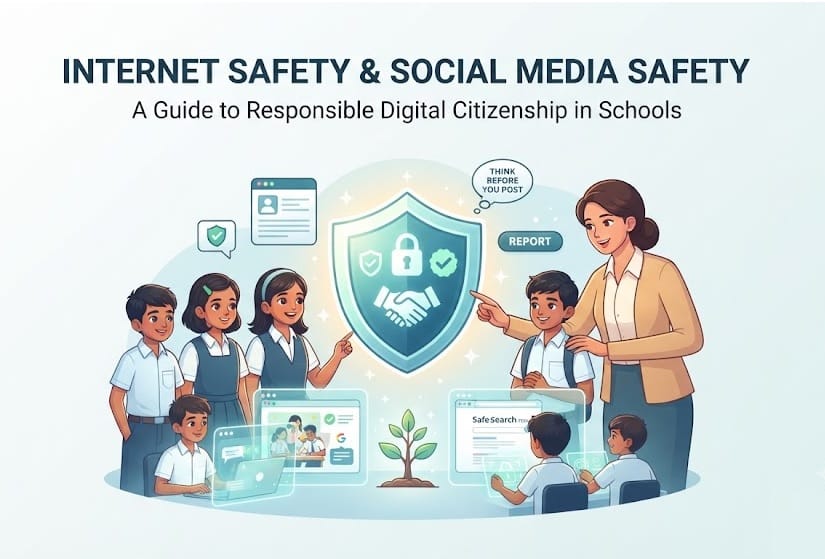
Internet Safety & Social Media Safety

Internet Safety & Social Media Safety

The internet has transformed the way children learn, communicate, and explore the world. Students use online resources for school assignments, educational videos, virtual classes, and connecting with friends. While the internet offers incredible opportunities, it also brings risks that every student, parent, and teacher should understand.

Learning how to stay safe online is now as important as learning road safety or personal hygiene. By developing good digital habits, children can enjoy the benefits of technology while avoiding many common dangers.

According to UNICEF, one in three internet users worldwide is a child. Studies also show that teenagers spend several hours online every day, making internet safety an essential life skill rather than an optional lesson.

Why Internet Safety Matters

The internet allows students to access information instantly, but not everything online is safe or trustworthy.

Children may encounter:

    • Cyberbullying
    • Online scams
    • Fake news
    • Inappropriate content
    • Identity theft
    • Privacy violations
    • Online predators
    • Gaming fraud
    • Harmful social media challenges

Teaching children how to recognize these risks helps them make better decisions and protects their emotional well-being.

Benefits of the Internet for Students

When used wisely, the internet offers many educational advantages.

Students can:

    • Learn from educational websites
    • Attend online tuition classes
    • Watch science experiments and tutorials
    • Practice coding and mathematics
    • Improve language skills
    • Participate in virtual competitions
    • Connect with teachers worldwide

The goal is not to avoid technology but to use it responsibly.

Understanding Social Media

Social media platforms help people share ideas, photos, videos, and messages.

Popular platforms include Instagram, YouTube, Snapchat, Facebook, WhatsApp, Discord, and X.

Many children begin using social media before reaching the recommended minimum age, often without understanding privacy settings or online risks.

A child’s digital footprint begins the moment something is shared online.

What Is a Digital Footprint?

Every photo, comment, video, message, or account created online leaves a digital footprint.

Even deleted content may remain stored on servers or screenshots taken by others.

Before posting anything, students should ask themselves:

    • Would I be comfortable if my parents saw this?
    • Could this affect my future?
    • Would I be happy if this appeared years later?

Good online choices today can protect future education and career opportunities.

Common Internet Risks for Students

Cyberbullying

Cyberbullying happens when someone repeatedly hurts another person using digital devices.

Examples include:

    • Sending abusive messages
    • Sharing embarrassing photos
    • Posting rumours
    • Excluding classmates from online groups
    • Creating fake profiles

Research from UNESCO indicates that cyberbullying affects millions of students worldwide and can lead to anxiety, depression, lower academic performance, and reduced self-confidence.

Students should never respond aggressively. Instead, they should save evidence, block the offender, and report the incident to trusted adults.

Online Strangers

Not everyone online is who they claim to be.

Some people pretend to be children to gain trust.

Students should never:

    • Share their address
    • Reveal school details
    • Send personal photographs
    • Meet online friends without parental knowledge
    • Share family information

Parents should encourage open conversations rather than creating fear.

Phishing and Online Scams

Cybercriminals often send fake emails, messages, or links pretending to be trusted companies.

Their goal is to steal:

    • Passwords
    • Bank details
    • OTPs
    • Personal information

Students should avoid clicking suspicious links and always verify websites before entering any information.

Fake News

Not everything online is true.

Images, videos, and articles can be edited or created using artificial intelligence.

Students should compare information from reliable educational sources before believing or sharing it.

Social Media Safety Tips

Protect Personal Information

Avoid posting:

    • Home address
    • Phone number
    • School location
    • Daily routine
    • Travel plans
    • Financial information

Privacy settings should be reviewed regularly.

Think Before You Share

Photos and comments can spread quickly.

Ask yourself:

    • Is this respectful?
    • Could someone misunderstand it?
    • Could it embarrass me or someone else?

A few seconds of thinking can prevent long-term problems.

Use Strong Passwords

A strong password should include:

    • Uppercase letters
    • Lowercase letters
    • Numbers
    • Special characters

Never share passwords with friends.

Enable two-factor authentication whenever available.

Accept Friend Requests Carefully

Students should only connect with people they know personally.

Fake accounts often use attractive profile pictures and friendly messages to gain trust.

Limit Screen Time

Too much screen time may affect:

    • Sleep
    • Concentration
    • Physical activity
    • Eye health
    • Emotional well-being

Experts recommend balancing online activities with outdoor games, reading, hobbies, and family time.

Safe Online Learning Habits

Online education has become common across schools.

Students should:

    • Attend classes from quiet places
    • Keep cameras off if instructed for privacy
    • Avoid sharing meeting links
    • Join only official classrooms
    • Use school-approved platforms
    • Log out after completing lessons

Teachers should also educate students about digital etiquette during virtual classes.

Gaming Safety

Online games can improve problem-solving skills and teamwork.

However, students should be cautious about:

    • Talking to strangers
    • Buying virtual items without permission
    • Downloading cheats
    • Sharing gaming accounts
    • Spending excessive time playing

Parents should understand the games children play and discuss safe behaviour instead of banning gaming completely.

The Role of Parents

Parents remain the strongest influence on children’s online behaviour.

Helpful practices include:

Create Family Rules

Agree on:

    • Daily screen time
    • Safe websites
    • Social media limits
    • Device-free family time
    • Bedtime without phones

Keep Communication Open

Children should feel comfortable discussing uncomfortable online experiences without fear of punishment.

Many problems become serious simply because children are afraid to tell adults.

Learn Together

Technology changes quickly.

Parents do not need to know everything.

Learning together builds trust and improves digital awareness for the whole family.

The Role of Teachers

Schools play an important role in digital citizenship education.

Teachers can:

    • Discuss internet safety regularly
    • Demonstrate safe online behaviour
    • Teach fact-checking skills
    • Encourage respectful communication
    • Explain copyright and plagiarism
    • Promote responsible use of artificial intelligence

Digital literacy is becoming as important as reading and writing.

Warning Signs That a Child May Need Help

Parents and teachers should notice sudden changes such as:

    • Avoiding devices after receiving messages
    • Becoming secretive online
    • Loss of confidence
    • Mood swings
    • Declining school performance
    • Fear of checking notifications
    • Withdrawal from friends

Early support can prevent long-term emotional harm.

Interesting Internet Safety Facts

Children Spend Significant Time Online

Global studies suggest many teenagers spend between 4 and 7 hours daily using digital devices outside schoolwork.

Billions Use Social Media

More than five billion people worldwide use social media, making digital safety a universal concern.

Weak Passwords Remain Common

Many cyberattacks succeed because users choose simple passwords that are easy to guess.

Digital Skills Are Future Skills

Employers increasingly value digital responsibility alongside academic qualifications.

Practical Internet Safety Checklist

Before going online, remember these simple rules:

    • Think before posting.
    • Protect your personal information.
    • Never share passwords.
    • Verify information before believing it.
    • Report bullying immediately.
    • Block suspicious users.
    • Respect others online.
    • Use strong privacy settings.
    • Balance online and offline activities.
    • Ask a trusted adult whenever something feels wrong.

My Thoughts

The internet is one of the greatest educational tools ever created, but like every powerful tool, it must be used responsibly.

Students who develop safe online habits today will become confident digital citizens tomorrow. Parents and teachers should work together to create an environment where children feel supported, informed, and protected.

Internet safety is not about restricting opportunities. It is about giving young people the knowledge and confidence to make smart decisions every time they go online.

By encouraging respectful communication, protecting personal information, recognizing online risks, and staying informed about changing technology, families and schools can ensure that the internet remains a place for learning, creativity, and positive growth.

About the Author

Nidhi Mehta is the founder of IndiaTutor.in and a professional online educator with over 11 years of teaching experience. She specializes in tutoring Classes 1 to 6 across core academic subjects, with a strong focus on concept clarity and foundational skill-building. Her teaching approach is based on personalized, one-to-one learning that helps students develop long-term academic confidence and understanding.
Visit her profile    Visit About Us Page

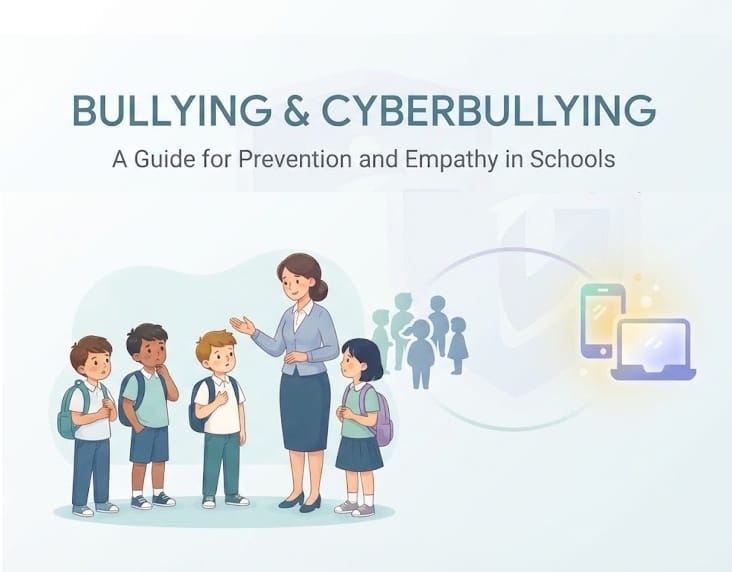
Bullying and Cyberbullying

Bullying and CyberBullying

Bullying and cyberbullying have become some of the biggest challenges facing school students today. While schools are places where children learn, make friends, and build confidence, they can also become places where some students experience repeated harassment, exclusion, or intimidation.

With smartphones, social media, gaming platforms, and messaging apps becoming part of everyday life, bullying no longer ends when the school bell rings. Many children continue to face hurtful messages, embarrassing photos, fake accounts, and online threats even after reaching home.

Understanding what bullying is, why it happens, and how to stop it is the first step toward creating a safer environment for every child.

What Is Bullying?

Bullying is repeated unwanted behavior intended to hurt, frighten, embarrass, or control another person. It usually involves an imbalance of power, where the person bullying believes they have more strength, popularity, or influence than the victim.

Bullying is different from a normal disagreement between friends. Arguments happen occasionally, but bullying is repeated and intentional.

Children who are bullied often feel unsafe, anxious, lonely, and afraid to attend school.

What Is Cyberbullying?

Cyberbullying is bullying that takes place through digital devices such as mobile phones, computers, tablets, gaming platforms, social media, or messaging applications.

Examples include:

    • Sending abusive or threatening messages
    • Posting embarrassing photos or videos without permission
    • Spreading false rumours online
    • Creating fake social media profiles
    • Excluding someone from online groups
    • Sharing private information without consent
    • Posting insulting comments repeatedly

Unlike traditional bullying, cyberbullying can happen at any time and may reach a very large audience within minutes.

Why Is Bullying Becoming More Common?

Several factors contribute to bullying.

Peer Pressure

Some children bully others to impress friends or gain popularity.

Lack of Empathy

Children who struggle to understand another person’s feelings may be more likely to bully.

Social Media

Online platforms make it easier for hurtful messages and rumours to spread quickly.

Desire for Power

Some students use bullying to feel important or control others.

Family or Personal Problems

Research suggests that children experiencing difficulties at home or emotional stress may sometimes express their frustration by bullying classmates.

Types of Bullying

Physical Bullying

Physical bullying involves hurting another student through actions such as pushing, kicking, hitting, damaging belongings, or blocking someone’s path.

Verbal Bullying

This includes insults, teasing, name-calling, mocking appearance, religion, language, disability, or family background.

Social Bullying

Also called relational bullying, this involves excluding someone from a group, spreading rumours, or damaging friendships.

Cyberbullying

This includes online harassment through texts, emails, social media, gaming platforms, or messaging apps.

Warning Signs That a Child May Be Bullied

Parents and teachers should watch for changes such as:

    • Suddenly refusing to attend school
    • Frequent headaches or stomach aches
    • Loss of confidence
    • Mood swings
    • Poor concentration
    • Falling academic performance
    • Damaged belongings
    • Changes in eating or sleeping habits
    • Avoiding friends
    • Becoming unusually quiet after using a phone or computer

One sign alone may not indicate bullying, but several together deserve attention.

Warning Signs That a Child May Be Bullying Others

Sometimes children who bully also need guidance and support.

Possible signs include:

    • Frequently getting into fights
    • Showing little empathy
    • Wanting to dominate others
    • Blaming classmates for problems
    • Bringing home items that do not belong to them
    • Becoming aggressive when corrected

Helping these children develop empathy and positive behaviour is important.

Facts and Statistics About Bullying

Bullying affects millions of children worldwide.

According to the United Nations Educational, Scientific and Cultural Organization (UNESCO), nearly one in three students globally reports being bullied by peers at school.

The World Health Organization has also reported that bullying remains a major public health concern among adolescents because of its impact on emotional well-being, mental health, and academic performance.

Research published by UNICEF shows that many young people have experienced online bullying, with social media becoming one of the most common places where harassment occurs.

Studies consistently show that students who experience bullying are more likely to develop anxiety, depression, lower self-esteem, and poorer academic outcomes than their peers.

Real-Life Examples

A student may be repeatedly laughed at because of their accent.

Another child may be excluded from every class group activity.

Someone’s photograph may be edited and shared online to embarrass them.

A student may receive anonymous threatening messages every evening.

Although these situations look different, they all have one thing in common—they cause emotional harm.

How Bullying Affects Students

Emotional Impact

Children may experience fear, sadness, loneliness, embarrassment, anger, or hopelessness.

Academic Impact

Many students find it difficult to concentrate in class, participate in activities, or complete homework.

Physical Impact

Stress may lead to headaches, stomach pain, sleep problems, and fatigue.

Social Impact

Victims often avoid school events, sports, or friendships because they no longer feel safe.

How Students Can Respond to Bullying

If someone is bullying you:

    • Stay calm whenever possible.
    • Walk away from unsafe situations.
    • Do not respond with violence.
    • Save screenshots of online abuse.
    • Block and report abusive accounts.
    • Tell a trusted adult immediately.
    • Keep evidence of repeated incidents.
    • Stay with supportive friends.
    • Remember that bullying is never your fault.

Speaking up early often prevents bullying from becoming worse.

What Should Parents Do?

Parents play an important role in protecting children.

Listen Carefully

Allow your child to explain what happened without interrupting.

Stay Calm

Avoid reacting with anger before understanding the complete situation.

Document Incidents

Keep records of messages, emails, screenshots, or written complaints.

Inform the School

Work together with teachers and school administrators to resolve the issue.

Encourage Confidence

Support children through positive conversations, hobbies, and healthy friendships.

How Schools Can Prevent Bullying

Schools can create safer environments through:

Clear Anti-Bullying Policies

Every student should understand that bullying is unacceptable.

Awareness Programs

Regular workshops help students understand kindness, empathy, and respect.

Teacher Training

Teachers should know how to identify and respond to bullying effectively.

Anonymous Reporting Systems

Students should have safe ways to report incidents without fear.

Digital Safety Education

Teaching responsible online behavior helps reduce cyberbullying.

Responsible Digital Behavior

Students should remember a simple rule:

Never post, share, or send anything online that could hurt, embarrass, or humiliate another person.

Before posting something, ask yourself:

    • Is it true?
    • Is it kind?
    • Is it necessary?
    • Would I say this face-to-face?

If the answer is no, it is better not to post it.

Building a Culture of Kindness

Every student can help reduce bullying.

Invite classmates to join games.

Stand up respectfully for someone being bullied.

Avoid spreading rumors.

Use kind words.

Include students who feel left out.

Celebrate differences instead of making fun of them.

Small acts of kindness create safer schools for everyone.

When Professional Help Is Needed

If bullying causes severe anxiety, depression, panic attacks, self-isolation, or major behavioral changes, parents should seek support from qualified school counselors, psychologists, or mental health professionals without delay.

Early intervention can make a significant difference in a child’s recovery.

My Thoughts

Bullying and cyberbullying can affect any student, regardless of age, background, or academic performance. However, they are preventable when students, parents, teachers, and schools work together.

Respect, empathy, and responsible digital behavior create classrooms where every child feels safe to learn and grow. By encouraging open communication, acting early, and supporting one another, we can build schools where kindness is stronger than bullying.

About the Author

Nidhi Mehta is the founder of IndiaTutor.in and a professional online educator with over 11 years of teaching experience. She specializes in tutoring Classes 1 to 6 across core academic subjects, with a strong focus on concept clarity and foundational skill-building. Her teaching approach is based on personalized, one-to-one learning that helps students develop long-term academic confidence and understanding.

Visit her profile    Visit About Us Page

error: Content is protected !!

Found this helpful? Share it in 2 seconds!

Link copied to clipboard