
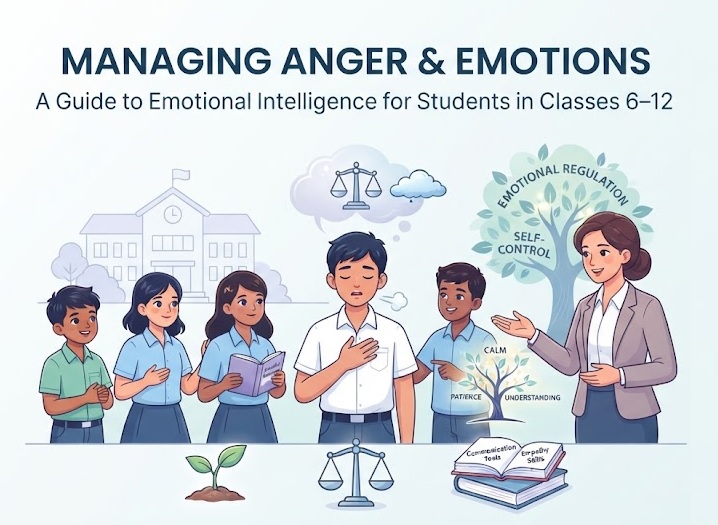
Managing Anger & Emotions

Managing Anger and Emotions

Every student experiences emotions every day. You may feel happy after scoring good marks, excited before a school trip, nervous before an exam, or angry when someone treats you unfairly. Emotions are a natural part of life, and they help us understand ourselves and the world around us.

Among all emotions, anger is one of the most misunderstood. Many people believe anger is bad, but that is not true. Anger is a normal human emotion. What matters is how we manage it. Learning to control anger and express emotions in a healthy way is an important life skill that helps students succeed in school, build better friendships, and enjoy happier lives.

This guide explains everything students in Classes 6 to 12 need to know about managing anger and emotions in simple language.

What Are Emotions?

Emotions are feelings that help us respond to different situations. They influence our thoughts, decisions, and actions.

Some common emotions include:

    • Happiness
    • Sadness
    • Anger
    • Fear
    • Excitement
    • Surprise
    • Disappointment
    • Worry
    • Pride
    • Love

Every emotion has a purpose. Feeling sad after losing something important or feeling nervous before an exam is completely normal.

There are no “good” or “bad” emotions. There are only healthy and unhealthy ways of expressing them.

What Is Anger?

Anger is your body’s natural response when you feel threatened, hurt, ignored, embarrassed, or treated unfairly.

For example, you may feel angry if:

    • Someone bullies you.
    • A friend breaks your trust.
    • You lose an important match.
    • Your parents misunderstand you.
    • Someone insults you online.
    • You are blamed for something you did not do.

Feeling angry does not make you a bad person. Everyone gets angry sometimes.

The real challenge is learning how to respond without hurting yourself or others.

Why Do Students Become Angry?

School life brings many challenges. Some common reasons include:

Academic Pressure

Homework, exams, competition, and high expectations can create stress.

Bullying

Being teased, excluded, or physically bullied often leads to frustration and anger.

Peer Pressure

Trying to fit in with friends or facing social rejection can affect emotions.

Family Problems

Arguments at home, financial stress, divorce, or lack of communication may make students feel upset.

Social Media

Negative comments, cyberbullying, unrealistic comparisons, and online conflicts can increase emotional stress.

Lack of Sleep

Students who do not get enough sleep often become more irritable and impatient.

What Happens Inside Your Body When You Get Angry?

Anger affects both the brain and the body.

When you become angry:

    • Your heart beats faster.
    • Your breathing speeds up.
    • Blood pressure increases.
    • Muscles become tense.
    • Stress hormones are released.
    • Clear thinking becomes more difficult.

Your brain prepares your body for a “fight or flight” response.

This is useful during real danger but not during everyday disagreements at school or home.

Signs That Anger Is Getting Out of Control

Everyone feels angry sometimes, but frequent or intense anger may become a problem.

Watch for these warning signs:

    • Shouting frequently
    • Fighting with classmates
    • Breaking things
    • Throwing objects
    • Using hurtful words
    • Holding grudges
    • Feeling angry most of the day
    • Hurting yourself
    • Thinking about hurting others

If these signs continue, it is important to seek help.

Why Managing Anger Is Important

Learning emotional control helps students in many ways.

Students who manage anger well often:

    • Make better decisions
    • Have stronger friendships
    • Perform better in school
    • Solve problems calmly
    • Feel more confident
    • Handle stress more effectively
    • Avoid unnecessary conflicts

Managing emotions is one of the most valuable life skills you can develop.

Healthy Ways to Manage Anger

Stop Before You React

Take a moment before speaking or acting.

A few seconds of thinking can prevent many problems.

Take Deep Breaths

Slow, deep breathing helps calm both your body and your mind.

Breathe in through your nose and slowly breathe out through your mouth.

Repeat several times.

Count Slowly

Counting from one to ten gives your brain time to think before reacting.

Walk Away

If an argument is becoming worse, politely leave the situation and return when you feel calmer.

Walking away is not weakness. It is self-control.

Drink Water

Something as simple as drinking water can help you slow down and relax.

Exercise

Physical activity reduces stress hormones and improves your mood.

Sports, walking, cycling, dancing, or yoga can all help.

Listen to Music

Soft, calming music helps many students relax after a stressful day.

Write Your Feelings

Keeping a journal allows you to express emotions without hurting anyone.

Writing often makes problems feel smaller.

Learn to Express Your Feelings

Instead of shouting or blaming others, use respectful language.

Try saying:

“I feel upset.”

“I didn’t like what happened.”

“I need some time to calm down.”

“I would like to talk about this.”

These simple sentences reduce misunderstandings and encourage healthy communication.

Think Before You Speak

Words can leave lasting emotional wounds.

Before speaking, ask yourself:

    • Is it true?
    • Is it necessary?
    • Is it kind?
    • Will it make the situation better?

Sometimes choosing silence is the wisest decision.

The Importance of Self-Control

Self-control means choosing your actions instead of letting emotions control you.

Strong people are not those who shout the loudest.

Strong people remain calm even during difficult situations.

Every time you stay calm, you strengthen your self-control.

Helping a Friend Who Is Angry

If someone you know is angry:

    • Stay calm.
    • Listen without interrupting.
    • Do not make fun of them.
    • Give them space if needed.
    • Encourage them to speak to a trusted adult.
    • Get immediate help if they talk about hurting themselves or someone else.

Sometimes simply listening is the greatest help you can offer.

How Sleep, Food, and Exercise Affect Emotions

Your body and mind work together.

Poor health habits often make emotions harder to control.

Healthy habits include:

    • Sleeping 8 to 10 hours each night
    • Eating balanced meals
    • Drinking enough water
    • Exercising regularly
    • Spending less time on screens
    • Taking short breaks while studying

Looking after your body helps your brain manage emotions better.

How Social Media Can Increase Anger

Social media can be fun, but it can also create unnecessary stress.

Students may become angry because of:

    • Online arguments
    • Negative comments
    • Cyberbullying
    • Comparing themselves with others
    • False information
    • Excessive screen time

If social media is affecting your emotions, take regular breaks and avoid responding when you are angry.

What Science Says About Emotions

Research from organizations such as the World Health Organization (WHO) and UNICEF highlights the importance of helping children and teenagers develop emotional and social skills.

Studies show that students with strong emotional skills often:

    • Build healthier friendships
    • Solve problems more effectively
    • Perform better academically
    • Experience less stress
    • Make safer decisions

Neuroscience also shows that the part of the brain responsible for planning, decision-making, and self-control continues developing throughout the teenage years. This means emotional control is a skill that improves with practice.

When Should You Ask for Help?

Sometimes anger becomes difficult to manage alone.

Talk to a trusted adult if:

    • You feel angry every day.
    • You often fight with others.
    • You break things when angry.
    • You hurt yourself.
    • You think about hurting others.
    • Anger is affecting your studies or friendships.

You can speak to:

    • Parents
    • Teachers
    • School counsellors
    • Relatives
    • Trusted family friends

Asking for help is a sign of courage and maturity.

Daily Habits That Help You Stay Calm

Small habits make a big difference.

Try to:

    • Smile more often.
    • Sleep well.
    • Eat healthy food.
    • Exercise every day.
    • Practice gratitude.
    • Read books.
    • Spend time outdoors.
    • Talk openly about your feelings.
    • Limit unnecessary screen time.
    • Be kind to yourself and others.

These habits improve both physical and emotional health.

Remember This Every Day

Before reacting, ask yourself:

“Will this matter one week from now?”

Many situations that feel huge today become much less important with time.

Choosing patience today can save you from regret tomorrow.

My Thoughts

Anger is a normal emotion, but it should never control your actions. Every student has the ability to learn patience, kindness, self-control, and emotional intelligence. These skills are just as important as mathematics, science, or languages because they help you succeed in every part of life.

You will not become calm overnight, and that is perfectly okay. Every time you pause before reacting, take a deep breath, speak respectfully, or ask for help, you are becoming stronger.

Remember, the strongest people are not those who never get angry. They are the ones who know how to manage their emotions wisely, solve problems peacefully, and treat others with respect.

Learning to manage your anger today will help you become a happier student, a better friend, and a more confident adult tomorrow.

Related Topics

Bullying & Cyberbullying

Smoking, Vaping, Alcohol & Drugs

Mental Health, Anxiety & Depression

Internet Safety & Social Media Safety

Self-Esteem, Confidence & Body Image

Exam Stress & Time Management

Peer Pressure

Online Gaming & Smartphone Addiction 

About the Author

Nidhi Mehta is the founder of IndiaTutor.in and a professional online educator with over 11 years of teaching experience. She specializes in tutoring Classes 1 to 6 across core academic subjects, with a strong focus on concept clarity and foundational skill-building. Her teaching approach is based on personalized, one-to-one learning that helps students develop long-term academic confidence and understanding.
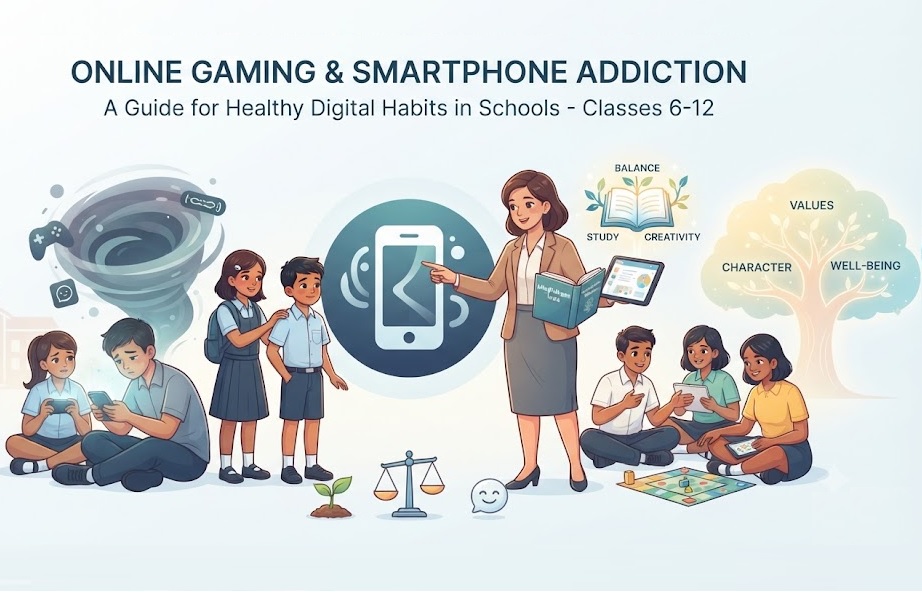
Visit her profile    Visit About Us Page

Online Gaming & Smartphone Addiction

Online Gaming & Smartphone Addiction

Technology has changed the way we learn, play, and connect with friends. Smartphones and online games can be fun, educational, and entertaining. They help us stay in touch with family, learn new skills, solve puzzles, and even improve creativity.

But what happens when “just five more minutes” turns into several hours every day?

For many students, excessive gaming and smartphone use can affect studies, sleep, health, friendships, and happiness. The good news is that with the right habits, you can enjoy technology without letting it control your life.

This guide explains everything Class 6 to 12 students, parents, and teachers should know about online gaming and smartphone addiction.

What Is Online Gaming & Smartphone Addiction?

Online gaming or smartphone addiction doesn’t mean you simply enjoy using your phone.

It becomes a problem when you:

    • Cannot stop playing or scrolling.
    • Feel restless or angry without your phone.
    • Ignore homework and studies.
    • Stay awake late every night.
    • Spend less time with family and friends.
    • Think about games or social media all day.

Technology should be a tool that helps you—not something that controls your daily life.

Why Are Online Games So Addictive?

Game developers spend years designing games that keep players interested.

Many games include:

    • Daily rewards
    • Bonus points
    • New levels
    • Special events
    • Leaderboards
    • Unlockable characters
    • Achievement badges
    • Surprise rewards
    • Multiplayer competitions

These features make players want to come back again and again.

That doesn’t mean games are “bad.” It simply means you need to know when to stop.

Why Smartphones Are Hard to Put Down

Smartphones constantly compete for your attention.

Every notification, message, like, or video encourages you to check your phone “just once.”

Soon:

One minute becomes ten.

Ten minutes become an hour.

Before you realize it, half the evening is gone.

Signs of Smartphone or Gaming Addiction

Ask yourself honestly.

Do you:

    • Check your phone immediately after waking up?
    • Spend several hours gaming every day?
    • Feel upset when someone asks you to stop?
    • Skip homework because of games?
    • Lose track of time while scrolling?
    • Think about games even during class?
    • Use your phone during meals?
    • Stay awake late using your phone?

If you answered “Yes” to several questions, it may be time to improve your digital habits.

How Too Much Screen Time Affects Your Health

Eye Problems

Looking at screens for long periods can cause:

    • Dry eyes
    • Blurred vision
    • Eye strain
    • Headaches

Following the 20-20-20 rule can help.

Every 20 minutes, look at something about 20 feet away for 20 seconds.

Poor Sleep

Using phones before bedtime is one of the biggest causes of poor sleep among teenagers.

The bright light from screens can make it harder for your brain to prepare for sleep.

Poor sleep can lead to:

    • Tiredness
    • Poor memory
    • Difficulty concentrating
    • Irritability
    • Lower academic performance

Less Physical Activity

Many students spend hours sitting while gaming.

This means:

    • Less exercise
    • Weight gain
    • Poor posture
    • Neck pain
    • Back pain

Even 30–60 minutes of outdoor play every day can make a big difference.

How Gaming Affects Your Brain

Your brain loves rewards.

Whenever you win a game, unlock a level, or receive points, your brain feels excited.

This is one reason games are so enjoyable.

However, spending too much time chasing these rewards may make it harder to enjoy everyday activities like reading, sports, or family time.

Balance is important.

Effects on Studies

Students who spend excessive time gaming often experience:

    • Poor concentration
    • Incomplete homework
    • Last-minute studying
    • Lower grades
    • Less interest in reading
    • Reduced classroom participation

Remember:

Every hour spent wisely today builds your future tomorrow.

Effects on Mental Health

Excessive smartphone use may increase feelings of:

    • Stress
    • Anxiety
    • Loneliness
    • Irritability
    • Mood swings

Social media can also make students compare themselves with others, leading to lower self-confidence.

Always remember:

People usually share only their best moments online—not their everyday struggles.

Effects on Friendships

Online friends can be enjoyable.

But real-life friendships are different.

Talking face-to-face, playing sports together, laughing, and helping each other create stronger and healthier relationships.

Don’t let screens replace real conversations.

Online Safety Every Student Must Know

Not everyone online is who they claim to be.

Never:

    • Share your home address.
    • Share passwords.
    • Share OTPs.
    • Share school details.
    • Send personal photos to strangers.
    • Meet online friends without informing your parents.

If someone makes you uncomfortable online, block them and tell a trusted adult immediately.

Beware of In-Game Purchases

Many games encourage players to buy:

    • Coins
    • Gems
    • Skins
    • Battle passes
    • Loot boxes
    • Power-ups

These small purchases can quickly become expensive.

Always ask your parents before spending money online.

What Does Science Say?

Research has found that excessive recreational screen time is linked with poorer sleep, reduced physical activity, and difficulties with attention in many children and teenagers.

The World Health Organization (WHO) also recognizes Gaming Disorder as a health condition when gaming becomes so excessive that it causes significant problems in daily life. This applies to a small number of people but highlights the importance of maintaining healthy gaming habits.

How Much Screen Time Is Healthy?

There isn’t one perfect number that suits everyone.

Instead, ask yourself:

    • Am I finishing my homework?
    • Am I sleeping well?
    • Am I exercising?
    • Am I spending time with family?
    • Am I enjoying hobbies beyond my phone?

If the answer is “Yes,” your digital life is likely in good balance.

Healthy Digital Habits Every Student Should Follow

Finish Important Work First

Complete homework before gaming.

It feels much better to play after your responsibilities are finished.

Create Screen-Free Time

Keep your phone away:

    • During meals
    • During study time
    • Before bedtime
    • During family conversations

Small habits make a big difference.

Enjoy Offline Activities

Try:

    • Reading
    • Cricket
    • Football
    • Badminton
    • Cycling
    • Drawing
    • Music
    • Dance
    • Gardening
    • Photography

The real world has many adventures waiting for you.

Sleep on Time

Aim for enough sleep every night.

A well-rested brain learns faster, remembers better, and feels happier.


What Should You Do If a Friend Is Addicted?

Don’t laugh or tease them.

Instead:

    • Talk kindly.
    • Invite them to play outside.
    • Encourage healthy habits.
    • Tell a trusted teacher or parent if you’re worried.

Sometimes a caring friend can make all the difference.

Tips for Parents

Parents can help by:

    • Setting reasonable screen-time rules.
    • Being good role models.
    • Encouraging outdoor games.
    • Having regular family conversations.
    • Keeping phones away during meals.
    • Avoiding punishment-only approaches.
    • Appreciating healthy digital habits.

Support works better than constant criticism.

Tips for Teachers

Teachers can help students by:

    • Discussing digital well-being in class.
    • Encouraging sports and extracurricular activities.
    • Teaching cyber safety.
    • Recognizing warning signs early.
    • Working closely with parents.
    • Creating awareness without fear.

Schools play an important role in helping students develop responsible digital habits.

Frequently Asked Questions (FAQs)

Is online gaming always bad?

No. Many games improve problem-solving, teamwork, creativity, and strategic thinking. Problems arise only when gaming begins affecting studies, sleep, health, or relationships.

How do I know if I use my phone too much?

If you cannot stop using it, neglect important responsibilities, or feel anxious without it, it’s time to reassess your habits.

Can smartphone addiction be reduced?

Yes. Setting time limits, keeping phones away during study and sleep, spending time outdoors, and enjoying offline hobbies can all help.

Should parents ban gaming completely?

Usually no. A balanced approach with clear rules, open communication, and age-appropriate limits is more effective than a complete ban.

My Thoughts

Technology is one of the greatest inventions of our time. It helps us learn, explore, communicate, and create. But like any powerful tool, it should be used wisely.

Your phone is meant to help you achieve your dreams—not distract you from them.

So the next time you pick up your phone, ask yourself one simple question:

“Am I using my phone… or is my phone using me?”

Remember this simple message:

Play games. Learn new things. Stay connected. But never let a screen become more important than your health, family, friends, and future.

Related Topics

Bullying & Cyberbullying

Smoking, Vaping, Alcohol & Drugs

Mental Health, Anxiety & Depression

Internet Safety & Social Media Safety

Self-Esteem, Confidence & Body Image

Exam Stress & Time Management

Peer Pressure

Respect, Kindness & Inclusion

Managing Anger & Emotions

About the Author

Nidhi Mehta is the founder of IndiaTutor.in and a professional online educator with over 11 years of teaching experience. She specializes in tutoring Classes 1 to 6 across core academic subjects, with a strong focus on concept clarity and foundational skill-building. Her teaching approach is based on personalized, one-to-one learning that helps students develop long-term academic confidence and understanding.

Visit her profile    Visit About Us Page

error: Content is protected !!

Found this helpful? Share it in 2 seconds!

Link copied to clipboard