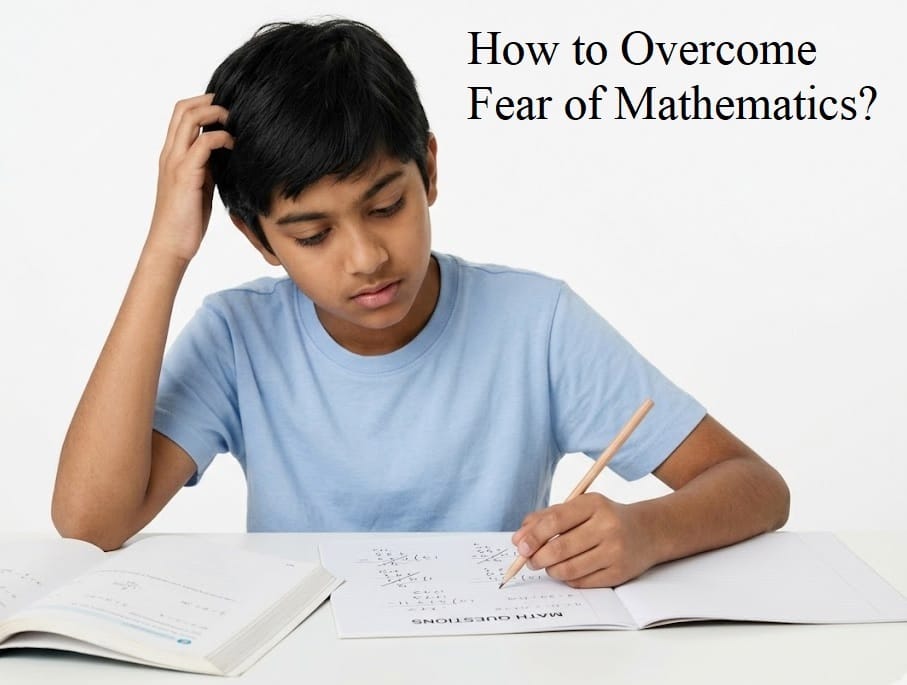

Mathematics is one of the most important subjects in a student’s academic journey. It develops logical thinking, analytical ability, problem-solving skills, and decision-making capabilities that extend far beyond the classroom. Yet many students struggle with mathematics due to weak fundamentals, lack of confidence, ineffective study habits, or fear of making mistakes.
The good news is that mathematical ability is not an inborn talent. Research consistently shows that students can improve significantly when they follow the right learning strategies, practice regularly, and receive appropriate guidance. Parents play a crucial role in creating an environment where children can develop strong mathematical skills and a positive attitude toward learning.
Why Mathematics Skills Matter
Mathematics is often referred to as the language of logic. It helps students understand patterns, relationships, and problem-solving techniques that are valuable in science, technology, engineering, finance, and everyday life.
Students with strong mathematics skills often demonstrate:
-
- Better analytical thinking
- Improved reasoning abilities
- Enhanced problem-solving capabilities
- Greater confidence in academics
- Stronger performance in competitive examinations
Developing these skills early can have a long-term impact on academic success and career opportunities.
How to Overcome Fear of Mathematics
Build Strong Fundamentals Before Moving Ahead
One of the biggest reasons students struggle with mathematics is gaps in foundational concepts.
Mathematics is cumulative. A student who does not fully understand fractions may struggle with algebra later. Similarly, weaknesses in multiplication, division, percentages, or decimals often create difficulties in advanced topics.
Parents should ensure that children:
-
- Master basic arithmetic operations
- Understand concepts instead of memorizing procedures
- Clarify doubts immediately
- Practice foundational topics regularly
A strong foundation makes future learning faster and less stressful.
Encourage Conceptual Understanding Instead of Memorization
Many students attempt to memorize formulas without understanding their purpose. This approach often leads to confusion when questions are presented differently.
Instead, encourage children to ask:
Why Does This Formula Work?
When students understand the logic behind a formula, they can apply it in different situations.
How Is This Concept Used?
Relating mathematics to real-life situations improves comprehension and retention.
For example:
-
- Percentages can be connected to shopping discounts.
- Fractions can be explained through food portions.
- Geometry can be linked to buildings and everyday objects.
Concept-based learning improves confidence and long-term retention.
How to Improve Calculation Speed in Mathematics
Use the Power of Daily Practice
Mathematics is a skill-based subject. Like learning a musical instrument or a sport, improvement comes through consistent practice.
Students benefit more from 20 to 30 minutes of daily practice than from several hours of study once a week.
Focus on Quality Rather Than Quantity
Solving a few questions with complete understanding is often more effective than rushing through dozens of problems.
Review Mistakes Carefully
Errors provide valuable learning opportunities. Students should understand where they went wrong and how to avoid similar mistakes in the future.
Regular practice gradually improves speed, accuracy, and confidence.
How to Help Your Child Improve in Mathematics
Adopt Spaced Learning Instead of Last-Minute Cramming
Modern educational research strongly supports spaced learning as an effective strategy for mathematics improvement.
A 2025 meta-analysis reviewing multiple mathematics studies found that spaced practice produced a measurable improvement in mathematics learning compared to massed or last-minute study sessions. Researchers reported a small-to-medium positive effect when students revisited mathematical concepts over time rather than studying everything at once.
What Is Spaced Learning?
Instead of studying a chapter only once, students review it multiple times over several days or weeks.
For example:
-
- Learn a concept today
- Review it after two days
- Practice again after one week
- Revise once more after two weeks
This method strengthens long-term memory and reduces forgetting.
Encourage Active Recall Techniques
Many students spend hours rereading textbooks, believing they are learning effectively. However, modern research suggests that active recall often produces better results.
Active recall means retrieving information from memory without looking at notes.
Examples include:
-
- Solving problems without checking solutions
- Answering self-created questions
- Explaining concepts aloud
- Teaching a topic to someone else
Recent mathematics education research has shown that retrieval practice can improve mathematical learning outcomes and help reduce achievement gaps among students.
Make Self-Testing a Habit
Instead of repeatedly reading a chapter, students should regularly test themselves on previously learned concepts.
This strengthens memory pathways and improves exam performance.
Signs Your Child Needs a Maths Tutor
Develop Problem-Solving Skills Through Diverse Questions
Many students become comfortable solving only familiar question types. When exam questions are framed differently, they struggle.
To build flexibility:
Practice Different Difficulty Levels
Students should attempt:
-
- Basic questions
- Application-based questions
- Higher-order thinking problems
- Real-world mathematics scenarios
Mix Topics During Practice
Educational experts refer to this as interleaving.
Instead of solving twenty similar problems consecutively, students can mix algebra, geometry, arithmetic, and data interpretation questions.
Research suggests that interleaved practice improves retention and transfer of learning.
Leverage Technology and Interactive Learning
Today’s students have access to excellent digital learning resources.
Interactive tools can help visualize mathematical concepts and make learning more engaging.
Benefits of Technology in Mathematics Learning
Interactive learning can:
-
- Improve conceptual understanding
- Increase engagement
- Build confidence
- Provide instant feedback
Recent studies examining interactive mathematics tutorials have reported positive effects on both student performance and self-confidence.
Parents should ensure that technology supports learning rather than becoming a distraction.
Why Some Children Struggle With Maths Despite Working Hard
Reduce Mathematics Anxiety
Mathematics anxiety is a genuine challenge for many students.
Children who believe they are “bad at maths” often avoid practice, creating a cycle of poor performance and declining confidence.
Promote a Growth Mindset
Encourage children to understand that mathematical ability develops through effort and practice.
Instead of saying:
“You are not good at maths.”
Try saying:
“You have not mastered this topic yet.”
This small shift can significantly influence motivation and persistence.
Celebrate Progress
Recognize improvements in effort, understanding, and consistency rather than focusing solely on marks.
Students who feel supported are more likely to remain engaged and resilient.
Prioritize Sleep, Nutrition, and Concentration
Academic success is closely linked to overall well-being.
Research increasingly highlights the role of healthy habits in learning effectiveness. Students who maintain proper sleep schedules often demonstrate better concentration, memory, and problem-solving abilities.
Key Habits for Better Mathematical Performance
-
- Get adequate sleep every night
- Maintain regular study schedules
- Stay physically active
- Limit unnecessary screen distractions
- Eat balanced meals
A healthy mind learns more efficiently.
Create a Mathematics-Friendly Home Environment
Parents do not need to be mathematics experts to support learning.
Simple actions can make a significant difference.
Encourage Mathematical Conversations
Discuss:
-
- Shopping budgets
- Discounts
- Measurements
- Time calculations
- Travel distances
These activities help children see mathematics as a practical life skill.
Maintain a Positive Attitude
Children often adopt their parents’ attitudes toward learning. A supportive environment encourages curiosity and persistence.
Track Progress and Address Learning Gaps Early
Small misunderstandings can become major obstacles if left unresolved.
Parents should regularly monitor:
-
- Test performance
- Homework completion
- Conceptual understanding
- Confidence levels
Early intervention prevents larger academic challenges later.
When difficulties persist, seeking additional support can help students regain confidence and stay on track.
The Role of Personalized Guidance in Mathematics Success
Every student learns differently. Some need additional explanations, while others benefit from advanced problem-solving practice. Personalized instruction allows learning to progress at the student’s pace and according to individual strengths and weaknesses.
Private online mathematics tuition provides one-to-one attention, customized lesson plans, regular feedback, and focused doubt-solving sessions. An experienced tutor can identify learning gaps, strengthen fundamentals, improve confidence, and help students develop effective study habits. With flexible schedules and access to qualified educators from anywhere, online tuition has become an effective solution for parents seeking consistent academic improvement in mathematics.
Looking for expert Mathematics tutors?
Find Math Tutors on IndiaTutor.in
About the Author
Nidhi Mehta is the founder of IndiaTutor.in and a professional online educator with over 11 years of teaching experience. She specializes in tutoring Classes 1 to 6 across core academic subjects, with a strong focus on concept clarity and foundational skill-building. Her teaching approach is based on personalized, one-to-one learning that helps students develop long-term academic confidence and understanding.