

How to Make Computer Science Fun and Exciting for Children

How to Make Computer Science Fun and Exciting for Children

Computer Science is no longer a subject reserved for future programmers. Today, it helps children develop logical thinking, creativity, problem-solving abilities, and digital literacy. As technology becomes a part of everyday life, understanding how computers work is becoming as important as reading, writing, and mathematics.

However, many children view Computer Science as difficult, technical, or boring. Long explanations, complex terminology, and theory-heavy lessons can quickly reduce interest. The good news is that Computer Science can be made enjoyable, engaging, and highly rewarding when introduced in the right way.

This guide will help parents create a positive learning experience that encourages curiosity and builds confidence.

Why Computer Science Matters for Today’s Children

The world is becoming increasingly digital. According to the World Economic Forum, technology-related skills are among the fastest-growing skills globally. Many future careers will require some level of understanding of computers, data, coding, automation, or artificial intelligence.

Learning Computer Science offers several benefits:

    • Improves logical reasoning
    • Strengthens problem-solving skills
    • Encourages creativity
    • Develops analytical thinking
    • Builds confidence with technology
    • Prepares children for future careers

Research published by the American Academy of Pediatrics has also highlighted that productive technology use can support learning, creativity, and cognitive development when used appropriately.

The key is helping children see Computer Science as something exciting rather than intimidating.

Why Logical Thinking Matters More Than Memorization in Computer Science

Start with Their Interests

Children learn best when lessons connect to things they already enjoy.

Instead of beginning with technical concepts, look at your child’s hobbies and interests.

Gaming Enthusiasts

If your child enjoys video games, explain how games are designed and programmed. Show them simple game creation tools where they can build their own levels, characters, or animations.

Creative Learners

Children who enjoy drawing, storytelling, or designing may love creating animations, digital art, or interactive stories using beginner-friendly platforms.

Curious Thinkers

Children who ask lots of questions often enjoy discovering how websites, mobile apps, robots, and smart devices function.

When Computer Science connects with personal interests, motivation naturally increases.

Introduce Coding Through Play

One of the biggest mistakes adults make is treating coding like a traditional academic subject.

Young learners respond much better to hands-on activities.

Use Visual Coding Platforms

Many beginner-friendly tools allow children to create projects using drag-and-drop blocks instead of complex programming syntax.

These platforms help students understand concepts such as:

    • Sequences
    • Loops
    • Conditions
    • Events
    • Variables

Without feeling overwhelmed, children start learning computational thinking through experimentation and creativity.

Create Small Projects

Children stay engaged when they can see immediate results.

Simple projects may include:

    • Animated stories
    • Interactive quizzes
    • Mini games
    • Digital greeting cards
    • Virtual pets

Completing projects gives learners a sense of achievement and keeps them interested.

Why Some Students Excel in Computer Science While Others Struggle

Turn Everyday Activities into Learning Opportunities

Computer Science concepts can be introduced without using a computer.

Teach Algorithms Through Daily Tasks

An algorithm is simply a set of instructions.

Ask children to explain:

    • How to make a sandwich
    • How to brush teeth
    • How to pack a school bag

Breaking activities into steps helps them understand the logic behind programming.

Encourage Problem Solving

Present small challenges such as:

    • Finding the shortest route in a room
    • Organizing books efficiently
    • Solving puzzles

These activities strengthen the same thinking skills used in coding.

Make Learning Interactive

Children learn more effectively when they actively participate.

Use Educational Games

Interactive games often teach important concepts such as:

    • Logic
    • Pattern recognition
    • Sequencing
    • Critical thinking

Many educational games transform learning into an enjoyable experience rather than a classroom task.

Explore Robotics

Robotics combines coding, engineering, and creativity.

Building and controlling robots can make abstract concepts easier to understand.

Students learn:

    • Cause and effect
    • Programming logic
    • Design thinking
    • Problem solving

Robotics activities are particularly effective for children who enjoy hands-on learning.

How Students Can Build a Strong Foundation in Computer Science

Encourage Creativity Alongside Technology

Many people incorrectly assume Computer Science is only about coding.

In reality, creativity plays a major role.

Design Digital Projects

Allow children to create:

    • Websites
    • Presentations
    • Posters
    • Animations
    • Videos

This helps them combine technical skills with imagination.

Let Them Solve Real Problems

Ask children how technology could help solve everyday challenges.

For example:

    • A reminder app for homework
    • A digital timetable
    • A family budgeting tracker

Thinking about practical solutions develops innovation and critical thinking.

Celebrate Curiosity and Experimentation

Children should feel comfortable making mistakes.

Many successful technology innovations were developed through trial and error.

Focus on Learning Rather Than Perfection

When a project does not work correctly, avoid criticism.

Instead, encourage questions such as:

    • What happened?
    • Why did it happen?
    • What can we change?

This mindset teaches resilience and persistence.

Praise Effort

Research from Stanford University psychologist Dr. Carol Dweck shows that praising effort rather than natural ability encourages a growth mindset.

Children become more willing to tackle difficult challenges when they understand that improvement comes through practice.

Computer Science Skills Every School Student Should Develop

Set Realistic Expectations

Not every child will become a software engineer, and that is perfectly fine.

The goal is not necessarily to create expert programmers.

The objective is to develop:

    • Confidence
    • Digital literacy
    • Logical thinking
    • Creativity
    • Problem-solving abilities

Even basic Computer Science knowledge can provide lifelong advantages.

Avoid Overloading Children

Too many lessons or advanced topics can reduce enthusiasm.

Keep sessions:

    • Short
    • Enjoyable
    • Age-appropriate
    • Practical

Consistent exposure over time is usually more effective than intensive study.

Learn Together as a Family

Children often become more enthusiastic when parents participate.

You do not need advanced technical knowledge.

Simply showing interest can make a significant difference.

Ask Questions

Encourage conversations such as:

    • What did you create today?
    • How does your project work?
    • What problem did you solve?

These discussions reinforce learning and build confidence.

Explore Technology Together

Watch educational videos, try beginner coding activities, or explore simple projects as a family.

Shared experiences create positive associations with learning.

Questions Parents Should Ask Before Hiring a Computer Science Tutor

Help Children See Real-World Applications

Many students lose interest when they cannot understand why a subject matters.

Show examples of how Computer Science influences daily life.

Explain Familiar Technologies

Discuss the technology behind:

    • Mobile apps
    • Online shopping
    • Navigation systems
    • Streaming services
    • Social media platforms

Children often become fascinated when they realize how much technology surrounds them.

Introduce Inspiring Success Stories

Many young innovators started experimenting with technology at an early age.

Stories about app creators, entrepreneurs, and inventors can inspire children to explore their own ideas.

Create a Positive Learning Environment

The learning environment has a strong impact on motivation.

Encourage Questions

Children should never feel embarrassed about asking for clarification.

Curiosity is one of the most valuable qualities in Computer Science.

Provide Access to Resources

Useful learning materials may include:

    • Age-appropriate books
    • Interactive websites
    • Educational videos
    • Coding challenges
    • Project kits

A variety of resources keeps learning fresh and interesting.

Common Mistakes Parents Should Avoid

Comparing Children

Every child learns at a different pace.

Comparisons can reduce confidence and enjoyment.

Focusing Only on Marks

Computer Science is about skills and understanding, not just examination scores.

Expecting Immediate Results

Developing technical skills takes time.

Celebrate small achievements along the way.

Turning Learning into Pressure

Children are more likely to stay engaged when learning feels rewarding rather than stressful.

My Thoughts

Making Computer Science fun and exciting does not require expensive equipment or advanced expertise. By connecting learning to your child’s interests, encouraging creativity, using interactive activities, and celebrating curiosity, parents can help children develop a lifelong appreciation for technology.

A private Computer Science tutor can provide personalized guidance, explain difficult concepts in simple ways, and create lessons based on a child’s learning style. Individual attention often helps students build confidence faster, stay motivated, and develop stronger problem-solving skills. For children who need additional support or greater challenges, one-to-one tutoring can make learning both enjoyable and highly effective.

Looking for expert Computer Science tutors?

Find Computer Science Tutors on IndiaTutor.in

About the Author

Nidhi Mehta is the founder of IndiaTutor.in and a professional online educator with over 11 years of teaching experience. She specializes in tutoring Classes 1 to 6 across core academic subjects, with a strong focus on concept clarity and foundational skill-building. Her teaching approach is based on personalized, one-to-one learning that helps students develop long-term academic confidence and understanding.

Visit her profile    Visit About Us Page

Computer Science Skills Every School Student Should Develop

Computer Science Skills Every School Student Should Develop

Computer Science is no longer a subject meant only for future software engineers. Today, technology influences education, communication, business, healthcare, banking, entertainment, and almost every industry. As a result, computer science skills have become essential for school students regardless of their career goals.

According to the World Economic Forum, digital skills, problem-solving abilities, and technology literacy are among the most important competencies required in the modern workforce. Students who develop these skills early often find it easier to adapt to new technologies, perform better academically, and prepare for future career opportunities.

This article explores the most important computer science skills every school student should develop and practical ways to improve them.

Why Computer Science Skills Matter for Students

Technology has become a part of everyday life. Students use computers for assignments, online learning, research, presentations, and communication. However, using technology is different from understanding how it works.

Learning computer science helps students:

    • Improve logical thinking
    • Develop problem-solving abilities
    • Enhance creativity
    • Build confidence with technology
    • Prepare for future careers
    • Understand digital safety and responsibility

Research from various educational studies has shown that students exposed to coding and computational thinking often demonstrate stronger analytical and reasoning skills compared to those with limited technology education.

Why Logical Thinking Matters More Than Memorization in Computer Science

Problem-Solving Skills

Problem-solving is one of the most valuable abilities taught through computer science.

Understanding Problems Systematically

Students learn to break large challenges into smaller parts. This approach helps not only in programming but also in mathematics, science, and daily life.

For example, if a student needs to design a school project website, they must first identify the requirements, plan the structure, create the pages, and then test the final product.

This step-by-step approach develops organized thinking.

Learning Through Mistakes

Programming teaches students that errors are part of learning. When code does not work correctly, students investigate the cause and find solutions.

This habit encourages persistence and resilience.

Computational Thinking

Computational thinking is a method of solving problems using concepts commonly applied in computer science.

Breaking Down Complex Tasks

Students learn to divide difficult tasks into manageable components.

For example, creating a simple game may involve:

    • Designing characters
    • Creating movement controls
    • Adding scoring systems
    • Testing gameplay

Handling each part separately makes the project easier to complete.

Recognizing Patterns

Many computer science activities involve identifying similarities between problems.

Students who recognize patterns often solve new challenges more efficiently because they can apply previous knowledge.

Why Some Students Excel in Computer Science While Others Struggle

Basic Programming Knowledge

Programming is one of the foundational skills in computer science.

Why Coding Is Important

Coding teaches students how software, applications, and websites are built.

Even basic programming knowledge helps students understand technology more deeply.

Popular beginner-friendly languages include:

    • Python
    • Scratch
    • JavaScript
    • HTML
    • CSS

Python is especially popular because its simple syntax makes it easier for beginners to learn.

Building Logical Thinking

Writing code requires students to think carefully about instructions and sequences.

For example, if a student wants a program to calculate average marks, they must identify the required inputs, perform calculations, and display the results correctly.

This develops structured reasoning.

Digital Literacy

Digital literacy goes beyond operating a computer.

Finding Reliable Information

Students often use the internet for research. Learning how to evaluate sources is extremely important.

They should learn to:

    • Verify information from multiple sources
    • Check publication dates
    • Identify trustworthy websites
    • Avoid misinformation

These skills are valuable throughout academic and professional life.

Effective Online Communication

Students should understand how to communicate professionally through email, online discussions, and collaborative platforms.

Clear communication supports teamwork and academic success.

How Students Can Build a Strong Foundation in Computer Science

Cyber Safety Awareness

As internet usage increases, digital safety becomes increasingly important.

Protecting Personal Information

Students should understand how to:

    • Create strong passwords
    • Enable two-factor authentication
    • Avoid sharing sensitive information online
    • Recognize suspicious messages

Cybercrime affects millions of internet users worldwide every year, making online safety education essential.

Understanding Digital Responsibility

Responsible technology use includes:

    • Respecting privacy
    • Avoiding cyberbullying
    • Following ethical online behavior
    • Respecting intellectual property rights

Developing these habits early creates responsible digital citizens.

Data Handling and Analysis

Data is everywhere in today’s world.

Understanding Data

Students encounter data in subjects such as mathematics, science, economics, and geography.

Computer science teaches them how to:

    • Collect information
    • Organize records
    • Interpret results
    • Draw conclusions

Using Spreadsheets Effectively

Learning tools such as spreadsheets helps students analyze information efficiently.

For example, students can track study hours, calculate averages, create charts, and identify trends.

These practical skills are widely used in higher education and workplaces.

Creativity Through Technology

Computer science is not only about coding.

Designing Digital Projects

Students can express creativity through:

    • Website design
    • Graphic creation
    • App development
    • Game design
    • Animation projects

These activities combine technical skills with imagination.

Creating Solutions

Many successful technological innovations began as simple ideas designed to solve everyday problems.

Computer science encourages students to think creatively and develop practical solutions.

How to Make Computer Science Fun and Exciting for Children

Collaboration and Teamwork

Modern technology projects are rarely completed by individuals working alone.

Working Together on Projects

Students often participate in group activities where they:

    • Share ideas
    • Divide responsibilities
    • Review each other’s work
    • Solve challenges collectively

These experiences improve teamwork and communication.

Learning Project Management

Students gain experience planning tasks, managing deadlines, and coordinating efforts with others.

These abilities are valuable in both academic and professional environments.

Understanding Artificial Intelligence and Emerging Technologies

Artificial Intelligence is becoming increasingly important in modern society.

Learning the Basics

School students should develop a basic understanding of:

    • Artificial Intelligence
    • Machine Learning
    • Automation
    • Robotics
    • Cloud Computing

They do not need advanced technical expertise, but understanding the concepts helps them stay informed about technological developments.

Preparing for Future Careers

According to reports from international workforce organizations, many future jobs will require digital and technology-related skills.

Early exposure helps students adapt more easily to future opportunities.

Questions Parents Should Ask Before Hiring a Computer Science Tutor

Time Management and Productivity Tools

Technology can help students become more organized.

Using Digital Tools Effectively

Students can use technology to:

    • Create study schedules
    • Set reminders
    • Manage assignments
    • Track deadlines
    • Organize notes

These habits improve productivity and reduce academic stress.

Avoiding Digital Distractions

Students should also learn how to balance technology use.

Developing self-discipline helps them focus on learning rather than spending excessive time on entertainment platforms.

Communication and Presentation Skills

Computer science supports effective communication.

Creating Professional Presentations

Students should learn to create presentations that are:

    • Clear
    • Visually appealing
    • Well-organized
    • Informative

Presentation skills are valuable in school projects, competitions, and future careers.

Explaining Technical Concepts

Learning how to explain technology in simple language helps students communicate effectively with different audiences.

This skill is highly valued in education and the workplace.

Practical Ways Students Can Improve Computer Science Skills

Students can strengthen their abilities through regular practice.

Start Small

Begin with basic programming exercises and gradually increase complexity.

Build Simple Projects

Examples include:

    • Personal websites
    • Quiz applications
    • Calculators
    • Digital portfolios
    • Educational games

Projects provide hands-on experience and reinforce learning.

Participate in Competitions

Coding competitions, technology clubs, and school projects help students apply their knowledge in real-world situations.

Stay Curious

Technology evolves rapidly. Reading articles, exploring educational resources, and experimenting with new tools helps students continue learning.

My Thoughts

Computer science skills are becoming essential for success in education and future careers. Problem-solving, coding, digital literacy, cybersecurity awareness, data analysis, creativity, teamwork, and technology understanding all contribute to a student’s overall development.

Students who start building these skills during their school years often gain confidence, improve academic performance, and become better prepared for future opportunities. While self-learning can be effective, a private computer science tutor can provide structured guidance, personalized feedback, and targeted support. Tutors help students overcome difficulties faster, strengthen weak areas, and build confidence through one-to-one attention. This personalized approach often leads to deeper understanding, better grades, and stronger long-term technology skills.

Looking for expert Computer Science tutors?

Find Computer Science Tutors on IndiaTutor.in

About the Author

Nidhi Mehta is the founder of IndiaTutor.in and a professional online educator with over 11 years of teaching experience. She specializes in tutoring Classes 1 to 6 across core academic subjects, with a strong focus on concept clarity and foundational skill-building. Her teaching approach is based on personalized, one-to-one learning that helps students develop long-term academic confidence and understanding.

Visit her profile    Visit About Us Page

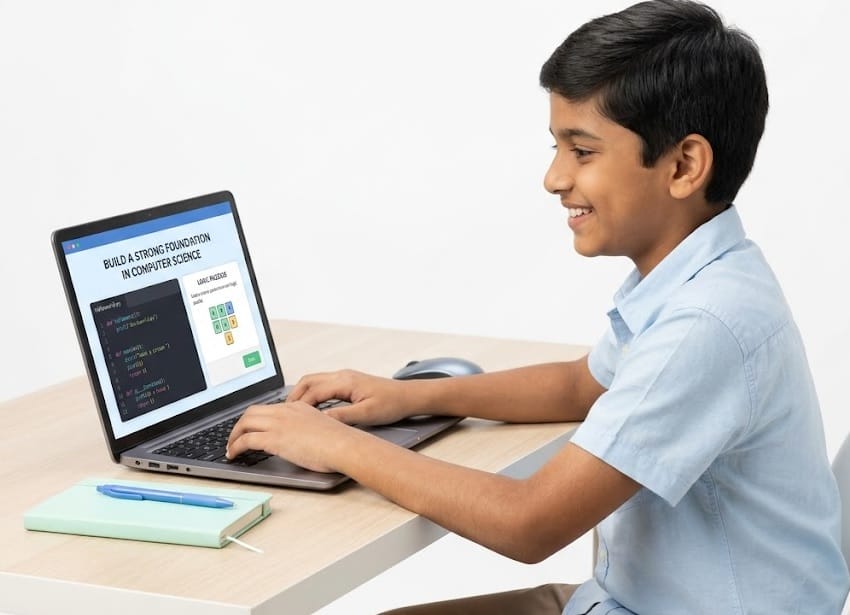
How Students Can Build a Strong Foundation in Computer Science

How Students Can Build a Strong Foundation in Computer Science

Computer Science is one of the most important subjects in today’s digital world. From smartphones and websites to artificial intelligence and robotics, computer science powers many aspects of modern life. As technology continues to grow, students with strong computer science skills will have access to a wider range of educational and career opportunities.

Many students believe that computer science is only about coding. In reality, it involves problem-solving, logical thinking, creativity, and understanding how computers work. Building a strong foundation early can make learning advanced concepts much easier in the future.

Why a Strong Foundation in Computer Science Matters

Computer science is becoming increasingly important across industries. According to the World Economic Forum, digital and technology-related skills are among the fastest-growing skill areas globally. Many future careers, even outside the technology sector, will require at least a basic understanding of computing and digital systems.

Students who develop computer science skills often improve their analytical thinking, decision-making abilities, and problem-solving techniques. These skills are valuable not only in academics but also in everyday life.

Start With the Basics

Before learning advanced programming languages or software development, students should understand the core concepts of computer science.

Learn How Computers Work

A computer may seem complicated, but understanding its basic components helps students gain confidence.

Important topics include:

    • Hardware and software
    • Input and output devices
    • Memory and storage
    • Operating systems
    • Computer networks
    • Internet fundamentals

When students understand what happens behind the screen, advanced topics become easier to grasp.

Understand Digital Literacy

Digital literacy is more than using a computer. It includes:

    • Safe internet usage
    • Online research skills
    • Managing digital files
    • Understanding cybersecurity basics
    • Evaluating online information

A study by UNESCO highlights that digital literacy is becoming an essential skill for students worldwide as education and workplaces become increasingly technology-driven.

Why Logical Thinking Matters More Than Memorization in Computer Science

Develop Strong Logical Thinking Skills

Logical thinking forms the foundation of computer science.

Programming requires students to break large problems into smaller, manageable steps. This process helps improve reasoning abilities and structured thinking.

Practice Problem Solving Daily

Students can strengthen logical thinking through activities such as:

    • Puzzles
    • Sudoku
    • Brain teasers
    • Strategy games
    • Mathematical challenges

These activities train the mind to recognize patterns and develop solutions efficiently.

Learn Computational Thinking

Computational thinking involves solving problems in a way that computers can understand.

Key elements include:

Decomposition

Breaking a complex problem into smaller parts.

Pattern Recognition

Identifying similarities and trends.

Abstraction

Focusing on important information while ignoring unnecessary details.

Algorithm Design

Creating step-by-step instructions to solve a problem.

Students who practice these skills often find programming much easier later.

Why Some Students Excel in Computer Science While Others Struggle

Learn Programming Step by Step

Coding is a major part of computer science, but students should avoid rushing into advanced topics.

Choose a Beginner-Friendly Language

Popular beginner languages include:

    • Scratch
    • Python
    • JavaScript

Python is particularly popular because its syntax is simple and easy to read. According to multiple industry surveys, Python remains one of the most widely used programming languages worldwide.

Focus on Concepts Rather Than Syntax

Many students spend too much time memorizing commands.

Instead, focus on understanding:

    • Variables
    • Data types
    • Loops
    • Conditions
    • Functions
    • Arrays
    • Basic algorithms

Once these concepts are clear, learning additional programming languages becomes much easier.

Write Small Programs Regularly

Practice is essential.

Students can create simple projects such as:

    • Number guessing games
    • Basic calculators
    • Quiz applications
    • To-do lists
    • Personal websites

Small projects help transform theory into practical understanding.

Computer Science Skills Every School Student Should Develop

Strengthen Mathematics Skills

Mathematics and computer science are closely connected.

Students do not need to be mathematical geniuses, but strong numerical skills make many topics easier.

Important Areas of Mathematics

Focus on:

    • Arithmetic
    • Algebra
    • Probability
    • Statistics
    • Logical reasoning

These topics support programming, data science, artificial intelligence, and software development.

Understand the Relationship Between Math and Coding

For example, algorithms often rely on mathematical logic to produce correct results efficiently.

Students who understand mathematical thinking usually find it easier to debug programs and solve coding challenges.

How to Make Computer Science Fun and Exciting for Children

Build Good Learning Habits

Consistent effort produces better results than occasional intensive study sessions.

Create a Study Schedule

Even 20 to 30 minutes of focused practice each day can produce significant improvement over time.

Research on learning and memory consistently shows that spaced repetition and regular practice improve long-term retention more effectively than last-minute cramming.

Keep a Learning Journal

Students can record:

    • New concepts learned
    • Programming challenges faced
    • Solutions discovered
    • Areas needing improvement

A learning journal helps track progress and identify knowledge gaps.

Review Concepts Frequently

Revisiting previous lessons strengthens understanding and prevents forgetting.

Computer science concepts often build upon one another, making revision especially important.

Learn Through Real-World Examples

Many students struggle because they cannot see how computer science applies to everyday life.

Connect Concepts to Real Applications

For example:

    • Search engines use algorithms.
    • Social media platforms use databases.
    • Navigation apps use data structures and mapping systems.
    • Online shopping websites rely on programming and networking.

Understanding practical applications makes learning more meaningful and engaging.

Explore Emerging Technologies

Students can learn about:

    • Artificial Intelligence
    • Machine Learning
    • Robotics
    • Cloud Computing
    • Cybersecurity
    • Data Science

Exploring these fields can increase motivation and provide direction for future studies.

Improve Debugging Skills

Mistakes are a normal part of learning computer science.

Even experienced software engineers spend a significant amount of time identifying and fixing errors.

Learn to Analyze Errors Calmly

Instead of becoming frustrated, students should:

    • Read error messages carefully
    • Check code step by step
    • Test small sections individually
    • Look for patterns

Debugging develops patience and analytical thinking.

Treat Mistakes as Learning Opportunities

Every error teaches something valuable.

Students who embrace mistakes often progress faster than those who fear making them.

Questions Parents Should Ask Before Hiring a Computer Science Tutor

Use Quality Learning Resources

The internet provides access to thousands of educational resources.

Choose Reliable Sources

Look for:

    • Educational websites
    • Interactive coding platforms
    • Video tutorials
    • Online courses
    • Computer science textbooks

Using structured learning materials helps students avoid confusion and build knowledge systematically.

Participate in Coding Communities

Discussion forums and student coding groups allow learners to:

    • Ask questions
    • Share projects
    • Receive feedback
    • Learn from others

Collaborative learning often improves understanding and confidence.

Build Projects and Create a Portfolio

Practical experience is one of the best ways to strengthen computer science skills.

Start With Beginner Projects

Examples include:

    • Personal portfolio websites
    • Basic games
    • Budget trackers
    • Weather applications
    • School management programs

Showcase Your Work

Keeping a collection of completed projects demonstrates growth and achievement.

A project portfolio can also become valuable when applying for internships, competitions, higher education programs, or future job opportunities.

Stay Curious and Keep Exploring

Technology changes rapidly.

Students who remain curious often achieve greater success because they continuously learn new concepts and tools.

Ask Questions

Successful learners frequently ask:

    • How does this work?
    • Why was this solution chosen?
    • Is there a better method?

Curiosity drives deeper understanding.

Learn Beyond the School Curriculum

School lessons provide a strong starting point, but exploring additional topics helps students gain broader knowledge and practical experience.

My Thoughts

Building a strong foundation in computer science does not require advanced technical knowledge from the beginning. Students should focus on understanding basic concepts, developing logical thinking, practicing programming regularly, strengthening mathematical skills, and applying learning through projects.

For students who need additional guidance, a private computer science tutor can provide personalized support, explain difficult concepts in simpler ways, and create a structured learning plan. One-to-one attention helps identify weaknesses early and builds confidence more quickly. A tutor can also provide targeted practice, exam preparation strategies, and regular feedback, helping students develop a stronger understanding of computer science and achieve better academic results.

Looking for expert Computer Science tutors?

Find Computer Science Tutors on IndiaTutor.in

About the Author

Nidhi Mehta is the founder of IndiaTutor.in and a professional online educator with over 11 years of teaching experience. She specializes in tutoring Classes 1 to 6 across core academic subjects, with a strong focus on concept clarity and foundational skill-building. Her teaching approach is based on personalized, one-to-one learning that helps students develop long-term academic confidence and understanding.

Visit her profile    Visit About Us Page

Computer Science Tutors

Computer Science Tutors

Finding the right Computer Science tutor can make a big difference in how confidently your child understands coding, programming, and technology. At IndiaTutor.in, we connect parents with experienced and verified Computer Science tutors who teach students from Class 1 to 12 across CBSE, ICSE, IGCSE, IB, and State Boards. Whether your child needs help with basics or advanced programming, our tutors provide clear explanations, practical examples, and step-by-step guidance to make learning simple and enjoyable.

Right below, you will find our Featured Tutors so you can quickly browse profiles, compare experience, and directly contact the tutor who fits your child’s needs best.

Featured Tutors

Divya Gupta

Online Computer Science Tuition Classes 6 to 12 by Divya Gupta

Divya Gupta is a dedicated and enthusiastic Online Computer Science and Informatics Practices Tutor with a strong academic background in ...
Nabanita Paul

Online Computer Science Tuition Classes 6 to 8 by Nabanita Paul

Ms. Nabanita Paul is an experienced and dedicated educator committed to helping students achieve academic success with confidence and clarity ...
Shree Ram Sharma

Online Computer Science Tuition Classes 6 to 12 by Shree Ram Sharma

Shree Ram Sharma is a dedicated and versatile educator with a strong academic background in Computer Science, Informatics Practices (IP) ...
Subrahmanyeswari Kommireddy

Online Computer Science IP Tuition Classes 6 to 12 by Subrahmanyeswari Kommireddy

Subrahmanyeswari Kommireddy is a passionate and dedicated online Computer Science tutor with a strong academic foundation and hands-on teaching experience ...

Why Choose Online Computer Science Tutors from IndiaTutor.in

Online learning saves time, offers flexibility, and gives access to some of the best teachers from across India. With IndiaTutor.in, parents can choose from multiple tutors instead of being limited to local options. Classes happen from the comfort of your home, and students receive personal attention that is often missing in large classrooms.

Tutors focus on concept clarity, regular practice, and real-life application of skills. This helps students not only score better in exams but also build strong technical thinking that is useful for future careers.

How IndiaTutor.in Makes It Easy for Parents

IndiaTutor.in is designed to help parents quickly find trusted tutors without long searches. Each tutor profile includes qualifications, teaching experience, subjects taught, fees, and contact options. You can directly message or call tutors and start classes without middlemen or delays.

Our platform helps you:

    • Find verified tutors
    • Compare multiple profiles
    • Choose based on budget and experience
    • Contact tutors directly
    • Start classes fast

This simple process saves time and ensures you get the right teacher for your child.

Who Can Benefit from Computer Science Tuition

    • Students who are new to computers and need basics
    • Students struggling with programming concepts
    • Students preparing for board exams
    • Students interested in coding careers
    • Kids who want to learn coding early
    • NRI parents looking for quality Indian tutors online

Start Learning with the Best Computer Science Tutors Today

Technology skills are essential for every child’s future. A strong foundation in Computer Science improves logical thinking, creativity, and problem-solving ability. With expert tutors from IndiaTutor.in, your child can learn coding in a friendly and supportive environment while achieving excellent academic results.

Browse the Featured Tutors above, compare profiles, and connect directly with the best Computer Science tutor for your child today.

Related Topics

Why Logical Thinking Matters More Than Memorization in Computer Science

Why Some Students Excel in Computer Science While Others Struggle

How Students Can Build a Strong Foundation in Computer Science

Computer Science Skills Every School Student Should Develop

How to Make Computer Science Fun and Exciting for Children

Questions Parents Should Ask Before Hiring a Computer Science Tutor

error: Content is protected !!

Found this helpful? Share it in 2 seconds!

Link copied to clipboard