

10 Best Ways to Memorize Scientific Terms and Definitions

10 Best Ways to Memorize Scientific Terms and Definitions

Science is full of fascinating concepts, discoveries, and ideas. However, many students struggle with one common challenge: remembering scientific terms and definitions. From photosynthesis and osmosis to force, energy, and respiration, science introduces hundreds of new words that students must understand and recall accurately during exams.

Parents often notice that their child understands a chapter while studying but forgets important terminology during tests. This can lead to lower marks, frustration, and reduced confidence in the subject.

The good news is that memorizing scientific vocabulary does not require endless repetition. Modern learning research shows that certain study techniques help students retain information more effectively and for longer periods. By using the right strategies, students can improve memory, strengthen understanding, and perform better in science examinations.

How to Develop Interest in Science from an Early Age

Why Scientific Terms Are Difficult to Remember

Science introduces a unique language that students do not use in everyday conversations. Many scientific words originate from Greek or Latin roots and may sound unfamiliar.

Students often face challenges because:

    • Scientific vocabulary is complex.
    • Similar terms can cause confusion.
    • Definitions must be remembered accurately.
    • New concepts build upon previous knowledge.
    • Large portions of information are learned within a short time.

When students simply read definitions repeatedly, the brain treats the information as temporary. Effective learning requires active engagement with the content.

Why Practical Understanding Is Important in Science

The Science Behind Memory and Learning

Educational research has consistently shown that active recall and spaced repetition improve long-term memory retention better than passive reading.

A 2024 study published in BMC Medical Education found that spaced learning significantly improved learning outcomes and retention compared to traditional continuous study sessions. Students who reviewed material at intervals demonstrated stronger memory retention over time.

Similarly, research on retrieval practice has shown that actively recalling information strengthens memory pathways more effectively than simply re-reading notes.

Understanding these principles can help parents guide children toward smarter study habits.

Use Active Recall Instead of Re-Reading

One of the most effective ways to memorize scientific definitions is active recall.

What Is Active Recall?

Active recall involves trying to remember information without looking at notes.

For example:

Instead of repeatedly reading:

“Photosynthesis is the process by which green plants prepare food using sunlight.”

The student closes the book and attempts to say or write the definition from memory.

This process forces the brain to retrieve information, strengthening neural connections and improving recall during exams. Research shows retrieval practice improves long-term retention and learning performance.

How Parents Can Help

Ask simple questions such as:

    • What is evaporation?
    • Define force.
    • What is an ecosystem?
    • Explain respiration in your own words.

These quick conversations can greatly improve retention.

Why Science Marks Drop in Middle School and High School

Make Use of Spaced Repetition

Many students try to memorize everything in a single sitting. Unfortunately, cramming often leads to rapid forgetting.

What Is Spaced Repetition?

Spaced repetition involves reviewing information at increasing intervals.

A simple schedule could be:

    • Day 1: Learn the definition.
    • Day 2: Review it.
    • Day 5: Review again.
    • Day 10: Review once more.
    • Day 20: Conduct another revision.

Research published in 2024 highlighted the effectiveness of spaced learning for improving long-term retention.

This technique helps transfer information from short-term memory to long-term memory.

Create Flashcards for Scientific Vocabulary

Flashcards remain one of the most effective tools for memorizing science terminology.

Traditional Flashcards

Write the scientific term on one side and the definition on the other.

Example:

Front:
Photosynthesis

Back:
The process through which green plants make food using sunlight, water, and carbon dioxide.

Digital Flashcards

Several modern learning platforms use spaced repetition technology to schedule reviews automatically.

Research on digital flashcards and spaced repetition has shown positive effects on vocabulary retention and learner engagement.

Students often find digital tools more engaging than traditional note-taking.

Connect New Terms With Real-Life Examples

The brain remembers information better when it has meaning.

Example-Based Learning

Instead of memorizing:

“Condensation is the conversion of water vapor into liquid.”

Connect it with:

Water droplets forming on a cold bottle during summer.

Instead of learning “friction” as a definition alone, relate it to bicycle brakes stopping a moving cycle.

Real-life associations make scientific concepts easier to understand and remember.

Use Visual Learning Techniques

Many students are visual learners.

Mind Maps

Create a central topic and connect related terms through branches.

For example:

Human Digestive System

    • Mouth
    • Esophagus
    • Stomach
    • Small Intestine
    • Large Intestine

Visual organization helps students see relationships between concepts.

Diagrams and Charts

Scientific illustrations support memory because they engage multiple areas of the brain simultaneously.

Students often recall diagrams faster than long paragraphs of text.

Break Large Chapters Into Smaller Sections

Trying to memorize an entire science chapter in one session can overwhelm the brain.

Chunking Method

Divide information into smaller groups.

For example:

Instead of studying the complete chapter on Human Body Systems, break it into:

    • Respiratory System
    • Digestive System
    • Circulatory System
    • Nervous System

Learning smaller sections improves focus and reduces mental fatigue.

Teach the Concept to Someone Else

One of the most powerful learning methods is teaching.

The Explain-It Method

After studying a scientific term, ask the student to explain it in simple language.

For example:

“Explain photosynthesis as if you were teaching a younger child.”

If the explanation is clear, understanding is strong. If the student struggles, more revision is needed.

This technique improves comprehension and identifies knowledge gaps.

Learn Word Roots and Scientific Prefixes

Many scientific terms become easier to understand when students recognize common prefixes and suffixes.

Examples include:

    • Bio = Life
    • Hydro = Water
    • Photo = Light
    • Therm = Heat
    • Geo = Earth

Understanding word origins helps students decode unfamiliar terminology and reduces the need for rote memorization.

How to Score Better Marks in Science Without Studying Longer Hours  

Encourage Regular Revision Instead of Last-Minute Preparation

Students often postpone science revision until exams approach.

This habit increases stress and reduces retention.

Build a Weekly Review Routine

Parents can encourage:

    • Ten minutes of science revision daily.
    • Weekly vocabulary quizzes.
    • Monthly chapter reviews.
    • Revision notebooks for difficult terms.

Small and consistent study sessions are more effective than marathon study schedules.

Common Mistakes Students Make While Memorizing Definitions

Memorizing Without Understanding

Students who learn definitions word-for-word without understanding often forget them quickly.

Ignoring Revision

Learning once is rarely enough. Regular review is essential for long-term retention.

Depending Only on Highlighting

Highlighting may create an illusion of learning but does not guarantee recall.

Studying Passively

Simply reading notes repeatedly is less effective than testing memory through active recall.

How to Build Strong Science Fundamentals From an Early Age

How Parents Can Support Better Science Learning

Parents play a crucial role in helping children develop effective study habits.

Simple actions can make a significant difference:

    • Ask science-related questions.
    • Encourage curiosity.
    • Discuss scientific phenomena in daily life.
    • Create a distraction-free study environment.
    • Celebrate improvement rather than focusing only on marks.

When students feel supported, they become more confident learners.

My Thoughts

Memorizing scientific terms and definitions does not have to be stressful. Active recall, spaced repetition, flashcards, visual learning, teaching others, and regular revision are proven techniques that help students remember information more effectively. Research continues to show that students learn better when they actively engage with material rather than relying on passive reading.

For students who continue to struggle with science vocabulary, concepts, or exam preparation, personalized guidance can make a significant difference. An experienced private online science tutor can identify learning gaps, simplify difficult topics, provide structured revision plans, and build confidence through one-on-one attention. Online tuition also offers flexibility, individualized support, and targeted practice that helps students improve understanding and achieve better academic results.

Looking for expert Science tutors?

Find Science Tutors on IndiaTutor.in

About the Author

Nidhi Mehta is the founder of IndiaTutor.in and a professional online educator with over 11 years of teaching experience. She specializes in tutoring Classes 1 to 6 across core academic subjects, with a strong focus on concept clarity and foundational skill-building. Her teaching approach is based on personalized, one-to-one learning that helps students develop long-term academic confidence and understanding.

Visit her profile    Visit About Us Page

How to Build Strong Science Fundamentals From an Early Age

How to Build Strong Science Fundamentals From an Early Age

Science is much more than a school subject. It teaches children how to observe, question, think logically, solve problems, and understand the world around them. Strong science fundamentals developed during childhood can help students perform better in school, build confidence in learning, and prepare for future academic and career opportunities.

Many parents worry when their children begin struggling with Science in middle school. In most cases, the problem does not start in Class 6 or Class 7. Weak foundations often develop years earlier when basic concepts are not properly understood.

The good news is that parents can play a major role in helping children develop scientific thinking from an early age. By creating the right learning environment, encouraging curiosity, and focusing on understanding rather than memorization, children can build a lifelong interest in Science.

Why Early Science Learning Matters

Young children are naturally curious. They constantly ask questions about how things work, why events happen, and what causes changes in their surroundings. Science education helps channel this curiosity into meaningful learning.

Recent research published in Scientific Reports highlighted the growing importance of introducing scientific inquiry skills during early childhood. Researchers found that early exposure to science activities supports cognitive development and strengthens problem-solving abilities. Children who regularly engage in exploration and questioning develop stronger learning habits that benefit them throughout their academic journey.

Science learning at a young age also supports language development, observation skills, reasoning, and decision-making abilities.

Focus on Curiosity Before Content

One of the biggest mistakes parents make is focusing only on facts and definitions.

Children do not need to memorize complex scientific terms during their early years. Instead, they should learn how to ask questions and investigate answers.

When a child asks:

    • Why does rain fall?
    • Why do plants grow?
    • Why does ice melt?
    • Why does the moon change shape?

Use these questions as learning opportunities.

Encouraging curiosity helps children develop scientific thinking naturally. Research on inquiry-based science learning has shown significant improvements in children’s critical thinking and understanding of scientific concepts when learning is driven by exploration and questioning.

Encourage the “Why” Habit

Whenever your child asks a question, avoid giving immediate answers every time.

Instead ask:

    • What do you think?
    • Why do you believe that?
    • How can we find out?

These conversations teach children to think independently rather than simply memorize information.

Make Science Part of Daily Life

Science is everywhere. Parents do not need expensive laboratory equipment or advanced experiments to introduce scientific concepts.

Simple household activities can become valuable learning experiences.

In the Kitchen

Cooking introduces concepts such as:

    • Heat transfer
    • States of matter
    • Chemical changes
    • Measurement

Ask children what happens when water boils or why dough rises.

In the Garden

Gardening teaches:

    • Plant life cycles
    • Photosynthesis
    • Ecosystems
    • Weather effects

Children learn best when they can see changes happening in real life.

During Outdoor Activities

Nature walks provide opportunities to observe:

    • Insects
    • Trees
    • Birds
    • Clouds
    • Soil

Observation is one of the most important scientific skills children can develop.

Why Science Marks Drop in Middle School and High School

Build Understanding Instead of Memorization

Many students struggle with Science later because they rely heavily on rote learning.

Scientific concepts are interconnected. If a child memorizes facts without understanding them, future topics become difficult.

For example:

A student who understands how plants make food will find biology easier in higher classes.

A child who understands force and motion early will grasp Physics concepts more easily later.

Parents should encourage children to explain concepts in their own words rather than repeat textbook definitions.

Use Visual Learning Techniques

Visual learning helps children understand abstract concepts more effectively.

Useful methods include:

    • Diagrams
    • Charts
    • Models
    • Educational videos
    • Science animations

Studies have shown that children often retain information better when concepts are presented visually and interactively rather than through passive reading alone.

Promote Hands-On Experiments

Children remember experiences far longer than textbook explanations.

Simple experiments make learning exciting and memorable.

Examples include:

    • Growing beans in cotton
    • Creating a volcano model
    • Observing shadows throughout the day
    • Testing which objects float or sink
    • Building simple machines

Research continues to support project-based and hands-on learning approaches for improving scientific literacy, problem-solving skills, and concept retention among young learners.

Learning Through Play

Educational experts increasingly recommend play-based science activities during early childhood.

Activities involving building blocks, construction toys, puzzles, and exploration games strengthen observation, reasoning, and analytical thinking.

These experiences lay the groundwork for future STEM learning.

Why Practical Understanding Is Important in Science

Develop Critical Thinking Skills

Strong Science students do more than remember information. They analyze situations and evaluate evidence.

Parents can nurture critical thinking by asking open-ended questions such as:

    • What do you notice?
    • What changed?
    • Why do you think that happened?
    • What could happen next?

Research on scientific inquiry in early education shows that open-ended learning experiences help children become more engaged and independent learners.

Allow Children to Make Mistakes

Children learn valuable lessons when experiments do not go as expected.

Failure often teaches more than success.

Allow children to test ideas, make predictions, and learn from outcomes. This process strengthens resilience and problem-solving ability.

Encourage Reading Beyond School Textbooks

Many children only read Science content required for exams.

Parents can broaden learning through:

    • Children’s science magazines
    • Science storybooks
    • Nature books
    • Age-appropriate documentaries
    • Educational websites

Reading beyond the curriculum exposes children to new ideas and helps them connect classroom concepts with real-world applications.

How to Score Better Marks in Science Without Studying Longer Hours  

Use Technology Wisely

Modern technology offers excellent opportunities for science learning when used appropriately.

Interactive simulations, educational apps, virtual science labs, and age-appropriate videos can make difficult topics easier to understand.

Recent studies have found that thoughtfully designed digital learning experiences can support language development, cognitive growth, and engagement when combined with active parental involvement.

Balance Screen Time with Real Experiences

Technology should support learning, not replace hands-on exploration.

The best learning happens when digital tools complement practical experiences.

Create a Positive Attitude Toward Science

Children often develop fears about Science because they believe it is difficult.

Parents can help by:

    • Praising effort rather than marks
    • Celebrating curiosity
    • Avoiding negative comments about Science
    • Encouraging questions
    • Making learning enjoyable

A positive mindset can significantly influence academic performance over time.

Avoid Comparing Children

Every child learns at a different pace.

Comparisons often reduce confidence and motivation.

Instead, focus on individual progress and celebrate small improvements.

10 Best Ways to Memorize Scientific Terms and Definitions

Signs Your Child Has Strong Science Foundations

Children with strong Science fundamentals often:

    • Ask thoughtful questions
    • Enjoy exploring new ideas
    • Connect concepts with daily life
    • Solve problems independently
    • Show curiosity about how things work
    • Understand concepts instead of memorizing answers
    • Participate actively during discussions

These qualities often predict long-term success in Science learning.

Common Mistakes Parents Should Avoid

Prioritizing Marks Over Understanding

High scores achieved through memorization rarely create lasting knowledge.

Ignoring Curiosity

Children’s questions are opportunities for learning, not distractions.

Delaying Science Exposure

Science learning should begin early through observation and exploration.

Overloading Children with Information

Too much content can reduce interest.

Focus on gradual understanding rather than covering large amounts of material.

How to Develop Interest in Science from an Early Age

My Thoughts

Building strong Science fundamentals from an early age is not about teaching advanced theories. It is about helping children observe, question, investigate, and think logically. When curiosity is encouraged and concepts are understood clearly, Science becomes enjoyable rather than intimidating.

For parents seeking additional support, private online Science tuition can provide personalized guidance tailored to a child’s learning style. An experienced tutor can identify gaps in understanding, simplify difficult concepts, and build confidence through one-on-one attention. Online tuition also offers flexibility, structured learning plans, and regular feedback, helping students develop stronger foundations and perform better in school over time.

Looking for expert Science tutors?

Find Science Tutors on IndiaTutor.in

About the Author

Nidhi Mehta is the founder of IndiaTutor.in and a professional online educator with over 11 years of teaching experience. She specializes in tutoring Classes 1 to 6 across core academic subjects, with a strong focus on concept clarity and foundational skill-building. Her teaching approach is based on personalized, one-to-one learning that helps students develop long-term academic confidence and understanding.

Visit her profile    Visit About Us Page

How to Develop Interest in Science from an Early Age

How to Develop Interest in Science from an Early Age

Science is one of the most important subjects children study during their school years. It helps them understand the world around them, ask meaningful questions, solve problems, and develop logical thinking. However, many children begin to see science as difficult, confusing, or boring as they progress through school. This often happens when learning becomes focused on memorization rather than curiosity and exploration.

Developing an interest in science from an early age can make a significant difference in a child’s academic performance and confidence. Children who enjoy science are more likely to stay engaged in learning, perform better in examinations, and develop valuable life skills that extend beyond the classroom.

Recent research published by the Organisation for Economic Co-operation and Development (OECD) shows that students who express curiosity about scientific topics tend to achieve higher academic outcomes compared to those who learn only for examinations. Studies also suggest that children begin forming attitudes toward science as early as primary school, making early exposure especially important.

Why Early Interest in Science Matters

Science is not just a school subject. It influences how children think, observe, analyze, and make decisions.

Children who develop scientific curiosity early often:

    • Ask more questions about the world around them
    • Become better problem-solvers
    • Improve observation skills
    • Develop stronger reasoning abilities
    • Build confidence in learning new concepts
    • Perform better in STEM-related subjects

According to UNESCO, careers related to science, technology, engineering, and mathematics continue to grow globally. Building a strong foundation during childhood can help students prepare for future educational and career opportunities.

Why Practical Understanding Is Important in Science

Understanding Why Some Children Lose Interest in Science

Before helping children develop interest, it is important to understand what causes disengagement.

Excessive Focus on Memorization

Many students associate science with lengthy definitions, diagrams, and textbook content. When learning becomes focused solely on remembering facts, curiosity often disappears.

Lack of Real-Life Connections

Children learn best when they can connect concepts to everyday experiences. If they cannot see how science applies to their lives, lessons may feel irrelevant.

Fear of Making Mistakes

Some students become hesitant to participate because they worry about giving incorrect answers. Science learning should encourage exploration rather than perfection.

Limited Hands-On Experiences

Scientific understanding grows through observation and experimentation. Without practical exposure, concepts may feel abstract and difficult to understand.

Why Science Marks Drop in Middle School and High School

Encourage Curiosity Every Day

Curiosity is the foundation of scientific thinking.

Parents can encourage curiosity by welcoming questions and discussing possible answers together.

Instead of immediately providing solutions, ask questions such as:

      • Why do you think that happened?
      • What do you notice?
      • What might happen if we change something?

These conversations teach children how scientists think and investigate.

Make Everyday Activities Scientific

Science is present everywhere.

Simple daily activities can become learning opportunities:

    • Cooking teaches chemistry and measurements
    • Gardening introduces plant biology
    • Weather observations explain environmental science
    • Household repairs demonstrate physics concepts

Children often become more interested when they discover that science exists beyond textbooks.

Create a Science-Friendly Environment at Home

A child’s surroundings can influence learning habits significantly.

Provide Science Books and Resources

Age-appropriate science books, magazines, and educational videos can spark interest in various topics.

Children who regularly engage with science-related content are exposed to new ideas and discoveries that may inspire further learning.

Encourage Observation

Observation is one of the most important scientific skills.

Ask children to:

    • Observe birds and insects
    • Track weather patterns
    • Notice changes in plants
    • Compare objects around them

Keeping a simple observation journal can make learning more engaging.

How to Build Strong Science Fundamentals From an Early Age

Use Experiments to Make Learning Fun

Hands-on experiences make science memorable.

Research from the National Science Teaching Association indicates that practical activities improve understanding and retention compared to passive learning methods.

Simple Home Experiments

Children do not need expensive equipment to enjoy science.

Safe activities may include:

    • Growing seeds in different conditions
    • Creating simple volcano models
    • Testing which objects float or sink
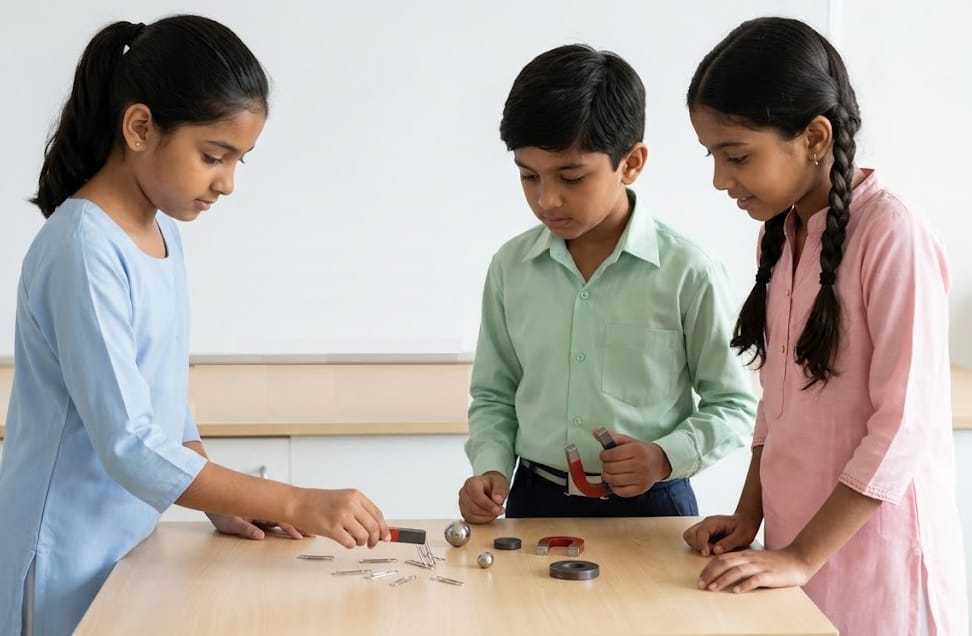
    • Exploring magnetism
    • Observing water evaporation

Experiments help transform scientific theories into real experiences.

Focus on Exploration Rather Than Results

The goal is not to achieve perfect outcomes.

Encourage children to discuss observations, predictions, and explanations. This process develops analytical thinking and scientific reasoning.

Connect Science to Your Child’s Interests

Every child has unique interests.

Science can be linked to hobbies and passions.

Examples include:

    • Sports enthusiasts can learn about motion and energy
    • Animal lovers can explore biology and ecosystems
    • Technology enthusiasts can study electronics and robotics
    • Space fans can discover astronomy

When science aligns with existing interests, motivation often increases naturally.

Use Modern Learning Tools

Technology has transformed science education.

Interactive resources provide engaging ways to explore complex concepts.

Educational Apps and Simulations

Many digital platforms allow students to:

    • Explore virtual laboratories
    • Conduct simulations
    • Visualize scientific processes
    • Practice problem-solving

Research shows that interactive learning tools can improve engagement and concept retention when used appropriately.

Educational Videos

Short visual explanations often help students understand topics more effectively than lengthy textbook descriptions.

Animations can simplify difficult concepts such as:

    • Human body systems
    • Chemical reactions
    • Planetary motion
    • Electricity

How to Score Better Marks in Science Without Studying Longer Hours  

Encourage Questions Instead of Providing Immediate Answers

Scientific thinking begins with questioning.

Children should feel comfortable asking:

    • Why?
    • How?
    • What if?
    • What happens next?

Rather than providing immediate solutions, guide them toward discovering answers independently.

This approach strengthens critical thinking and promotes lifelong learning habits.

Celebrate Scientific Thinking

Children respond positively to encouragement.

Recognize efforts such as:

    • Asking thoughtful questions
    • Completing experiments
    • Making observations
    • Solving science problems

Praise focused on effort and curiosity can increase motivation more effectively than praise focused solely on marks.

Help Children Learn From Mistakes

Scientific discoveries often emerge from trial and error.

Children should understand that mistakes are part of learning.

When experiments fail or answers are incorrect, encourage discussion about what can be learned from the experience.

This mindset builds resilience and confidence.

Make Science Discussions Part of Daily Life

Interesting conversations can strengthen scientific awareness.

Topics may include:

    • New inventions
    • Space missions
    • Environmental issues
    • Medical discoveries
    • Wildlife conservation

Recent surveys indicate that students who regularly discuss science topics with family members tend to show greater interest and confidence in the subject.

Visit Science Museums and Learning Centers

Educational outings provide valuable exposure.

Museums, planetariums, science exhibitions, and nature parks allow children to experience concepts in an engaging environment.

These experiences often leave lasting impressions and inspire further exploration.

10 Best Ways to Memorize Scientific Terms and Definitions

Build Strong Foundations Before Focusing on Marks

Many parents become concerned primarily about examination performance.

While academic achievement is important, genuine understanding should come first.

Children who develop conceptual clarity during primary and middle school often perform better in higher classes because they understand principles rather than memorizing information.

A strong foundation reduces future learning difficulties and builds long-term confidence.

The Role of Parents in Developing Scientific Interest

Parents play a critical role in shaping attitudes toward learning.

Children are more likely to value science when parents:

    • Show enthusiasm for learning
    • Encourage questions
    • Support exploration
    • Avoid excessive academic pressure
    • Provide opportunities for discovery

Small daily interactions often have a greater impact than expensive educational resources.

My Thoughts

Developing interest in science from an early age is not about creating future scientists. It is about helping children become curious, confident, and capable learners. By encouraging questions, connecting concepts to real life, providing hands-on experiences, and supporting exploration, parents can create a positive relationship with science that lasts for years.

For students who need additional guidance, private online science tuition can provide personalized support tailored to individual learning styles. An experienced tutor can simplify complex topics, strengthen conceptual understanding, identify learning gaps, and build confidence through one-on-one attention. Online tuition also offers flexibility, interactive learning methods, and consistent academic support that helps students develop both interest and success in science.

Looking for expert Science tutors?

Find Science Tutors on IndiaTutor.in

About the Author

Nidhi Mehta is the founder of IndiaTutor.in and a professional online educator with over 11 years of teaching experience. She specializes in tutoring Classes 1 to 6 across core academic subjects, with a strong focus on concept clarity and foundational skill-building. Her teaching approach is based on personalized, one-to-one learning that helps students develop long-term academic confidence and understanding.

Visit her profile    Visit About Us Page

Science Tutors

Science Tutors

Finding the right science tutor can make a huge difference in your child’s academic performance and confidence. At IndiaTutor.in, we connect parents with experienced, verified, and highly qualified Science Tutors who provide personalized online and home tuition for students from Class 1 to Class 12 across CBSE, ICSE, State Boards, and international curricula.

Whether your child needs help understanding basic concepts, improving marks, preparing for board exams, or getting ready for competitive exams, our featured tutors offer focused, one-to-one guidance that delivers real results. Browse the Featured Tutors listed below and contact them directly to start learning without delay.

Featured Tutors

Nidhi Mehta

Online Tuition Classes 1 to 6 by Nidhi Mehta

Nidhi Mehta is an experienced tutor based in New Delhi, India, with over 10 years of teaching expertise. She holds ...
Dr. Saloni Goyal

Online Science Maths Physics Tuition Classes 6 to 12 by Dr.Saloni Goyal

Dr. Saloni is a highly qualified online tutor with over 6+ years of experience, specializing in Science, Maths, and Foundation ...
Sonal Choudhary

Online Tuition Classes 1 to 7 by Sonal Choudhary

Sonal Choudhary is an experienced and patient tutor specializing in online classes for students from Class 1 to 7 (CBSE, ...
Swapna K Bhalke

Online Tuition Classes 1 to 5 by Swapna K Bhalke

Swapna K. Bhalke is a dedicated educator with over 10 years of experience teaching classes 1 to 5, All Subjects ...
Debarati Saha

Home Tuition Classes 1 to 8 in Kolkata by Debarati Saha

Debarati Saha is a dedicated and experienced home tutor based in Kolkata, with over a decade of hands-on teaching experience ...
Shelly Bhargav

Online Science Tuition Classes 6 to 10 by Shelly Bhargav

Shelly Bhargav is a highly dedicated and qualified science tutor based in Vasant Kunj, New Delhi, with a strong academic ...
Debashree Ghoshal

Online Science Tuition Classes 6 to 8 by Debashree Ghoshal

Debashree Ghoshal is a highly experienced online tutor with over 10 years of teaching expertise, including leadership experience as Head ...
Monika Madhesh

Online Science Tuition Classes 6 to 12 by Monika Madhesh

Monika Madhesh is a dedicated Science Tutor from Salem with a Bachelor of Pharmacy (B.Pharm) qualification and 3–5 years of ...
Rani Bala

Online Mathematics Tuition Classes 6 to 10 by Rani Bala

Rani Bala is an experienced and dedicated online tutor with over 10 years of success in teaching Mathematics, Physics, and ...
Amrutha Lakshmi Bhat

Online Science Tuition Classes 6 to 12 by Amrutha Lakshmi Bhat

Amrutha Lakshmi Bhat K is a highly qualified and dedicated online science tutor with a strong academic background in Applied ...
Firdous Jahn

Online Tuition Classes 1 to 5 All Subjects by Firdous Jahn

Firdous Jahn is a dedicated and qualified online tutor offering all subjects tuition to students in Class 1 to 5 ...
Mansi Vaze

Online Tuition Classes 1 to 5 All Subjects by Mansi V

Mansi is a dedicated and enthusiastic online tutor specializing in primary education - Class 1 to 5, with a focus ...
Rajat Soni

Online Mathematics Science Tuition Classes 8 to 12 by Rajat Soni

Rajat Soni is an online Science and Mathematics tutor based in Munirka, South West Delhi. He is a BTech graduate ...
Siji Rachel Mathew

Online Tuition Classes 1 to 5 All Subjects by Siji Rachel Mathew

Siji Rachel Mathew is an experienced online primary tutor with 8 years of teaching experience, helping young learners build strong ...
Khadija

Online Tuition Classes 1 to 5 by Khadija

Khadija is an experienced and qualified online tutor with over 6 years of teaching expertise, specializing in primary classes 1 ...
Sonali Sen

Online Tuition Classes 1 to 5 by Sonali Sen

Sonali Sen is a dedicated tutor with over 10 years of experience in teaching primary classes (1–5). She offers engaging ...
Prajwal

Home Tuition Classes 7 to 12 Math Science in Vidhyaranyapura by Prajwal

Prajwal GJ is a dedicated and experienced tutor with 6–10 years of teaching students from Class 7 to 12 in ...
Anshik Kumar

Online Science Mathematics Tuition Classes 9 to 10 by Anshik Kumar

Anshik Kumar is a dedicated and experienced online tutor with a background in Civil Engineering and 3–5 years of teaching ...
Kirti Gupta

Online Tuition Classes 1 to 5 by Kirti Gupta

Kirti Gupta is a dedicated and experienced tutor specializing in teaching Classes 1 to 5. With over 6 years of ...
Vidhya K

Online Science Tuition Classes 9 and 10 by Vidhya

Vidhya is a dedicated and academically strong Science tutor with a postgraduate qualification and a clear passion for teaching students ...

Why Choose Science Tutors from IndiaTutor.in

Science is not just about memorizing formulas. It requires clarity, logical thinking, and practical understanding. Our tutors simplify difficult topics and make learning interactive and interesting.

Personalized One-to-One Attention

Every student learns differently. Tutors adapt their teaching style, pace, and examples according to your child’s needs so concepts become clear and easy to remember.

Experienced and Verified Tutors

We list qualified teachers, subject experts, school teachers, and professionals with strong academic backgrounds and proven teaching experience.

Online and Home Tuition Options

Choose online classes from anywhere or home tuition in your city. Flexible schedules make it easy to fit learning into your child’s routine.

Focus on Results

Regular tests, assignments, doubt-solving sessions, and exam strategies help students score higher marks and build confidence.

Subjects Covered by Our Science Tutors

Parents can find specialized tutors for every science subject and class level.

Physics Tutors

Learn motion, electricity, magnetism, numericals, derivations, and problem-solving techniques with clear step-by-step explanations.

Chemistry Tutors

Understand reactions, equations, formulas, organic chemistry, and lab concepts through simple methods and memory tricks.

Biology Tutors

Master diagrams, definitions, processes, and theory-based chapters with easy notes and visual learning.

General Science Tutors

Strong foundation classes for primary and middle school students covering basics of physics, chemistry, and biology in a fun and simple way.

Classes and Boards Supported

Our Science Tutors teach students from:

Primary and Middle School

Strong foundation building for Class 1 to 8 students with concept clarity and homework support.

Secondary Classes

Class 9 and 10 board exam preparation with chapter-wise coverage, numericals, and revision tests.

Senior Secondary

Class 11 and 12 advanced preparation for board exams and competitive exams like NEET, JEE, and other entrance tests.

All Major Boards

CBSE, ICSE, State Boards, IGCSE, IB and international curricula for NRI students worldwide.

Benefits of Hiring a Science Tutor Early

Many students struggle with science because small doubts remain unclear. Early guidance helps avoid bigger problems later.

Strong Conceptual Base

Clear basics help students perform better in higher classes and competitive exams.

Improved Confidence

Students feel more confident asking questions in one-to-one sessions.

Better Exam Scores

Structured practice and revision lead to higher marks and consistent improvement.

Love for Learning

Interactive teaching makes science interesting instead of stressful.

How IndiaTutor.in Makes It Easy for Parents

We designed IndiaTutor.in to help parents quickly find the right tutor without wasting time.

Easy Search and Direct Contact

Browse tutor profiles, check experience, subjects, and fees, and contact tutors directly for faster response.

Verified Profiles

View qualifications, teaching methods, and details before choosing the best match.

Save Time and Effort

No middlemen. Connect directly with tutors and start classes immediately.

Perfect for Students in India and Abroad

If you are an NRI parent looking for reliable Indian Science Tutors for your child, our online tuition option allows students to learn from top Indian teachers from anywhere in the world. Flexible timings make it easy to match different time zones.

Start Learning Today

Scroll through the Featured Tutors above and choose the right Science Tutor for your child. Early support can improve grades, reduce stress, and build a strong future in science. Join thousands of parents who trust IndiaTutor.in to find the best tutors quickly and easily.

Related Topics

How to Develop Interest in Science from an Early Age

Why Practical Understanding Is Important in Science

Why Science Marks Drop in Middle School and High School

How to Build Strong Science Fundamentals From an Early Age

How to Score Better Marks in Science Without Studying Longer Hours  

10 Best Ways to Memorize Scientific Terms and Definitions

error: Content is protected !!

Found this helpful? Share it in 2 seconds!

Link copied to clipboard