
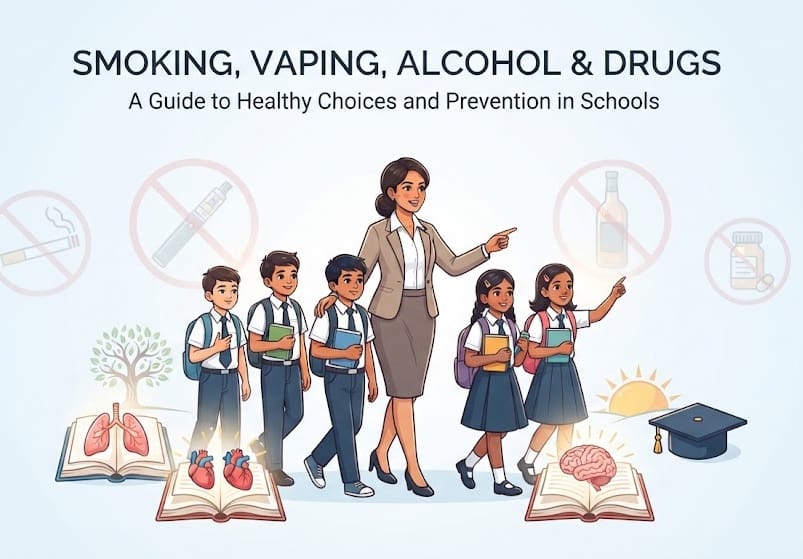
Young people today face many challenges while growing up. Along with academic pressure and social media influence, they may also come across cigarettes, e-cigarettes (vapes), alcohol, and illegal drugs. Curiosity, peer pressure, stress, and the desire to fit in can sometimes lead students to make choices that affect their health, education, and future.
The good news is that awareness and timely guidance can prevent most cases of substance use. This guide explains the dangers of smoking, vaping, alcohol, and drugs in simple language, helping students, parents, and teachers understand the risks and make informed decisions.
Why Students Experiment with Smoking, Vaping, Alcohol or Drugs
Most teenagers do not begin because they want to become addicted. Instead, they often start due to one or more of these reasons:
-
- Curiosity
- Friends encouraging them
- Wanting to appear mature
- Managing stress or anxiety
- Social media influence
- Celebrity culture
- Lack of awareness about long-term consequences
- Easy availability in some places
Research shows that the teenage brain is still developing until the mid-twenties. During this period, harmful substances can interfere with learning, decision-making, emotional control, and memory.
Understanding the Different Types
Smoking
Smoking involves burning tobacco and inhaling its smoke through cigarettes, bidis, cigars, or similar products.
Tobacco smoke contains more than 7,000 chemicals, including at least 70 known cancer-causing substances. According to the World Health Organization (WHO), tobacco kills more than 8 million people every year, including around 1.3 million deaths from second-hand smoke.
Vaping
Vaping uses electronic devices that heat a liquid into an aerosol. Many people mistakenly believe vaping is harmless because there is no burning tobacco.
However, vaping liquids often contain nicotine, heavy metals, chemicals, and flavoring agents that may harm the lungs and developing brain.
Nicotine addiction can develop quickly in teenagers.
Alcohol
Alcohol slows brain activity and affects judgment, balance, concentration, and reaction time.
Even occasional drinking during adolescence increases the risk of accidents, injuries, risky behaviour, and future alcohol dependence.
Illegal Drugs
Illegal drugs include substances such as cannabis, cocaine, heroin, methamphetamine, LSD, MDMA, and several synthetic drugs.
Some prescription medicines are also abused without medical supervision.
Different drugs affect the brain in different ways, but all carry serious physical and psychological risks.
How Smoking and Vaping Affect the Body
Damage to the Lungs
Smoking damages the tiny air sacs inside the lungs, making breathing difficult.
Students who smoke may experience:
-
- Frequent cough
- Breathlessness
- Reduced sports performance
- Chest infections
- Long-term lung disease
Vaping has also been linked to serious lung injuries in some users.
Effects on the Brain
Nicotine changes the brain’s reward system.
Young users may develop:
-
- Strong cravings
- Poor concentration
- Irritability
- Mood swings
- Difficulty quitting
Increased Risk of Cancer
Smoking significantly increases the risk of cancers affecting the lungs, mouth, throat, bladder, pancreas, and several other organs.
The earlier someone starts smoking, the greater the lifetime risk.
How Alcohol Affects Teenagers
Teenagers are more sensitive to alcohol than adults because their brains are still developing.
Possible consequences include:
-
- Poor academic performance
- Road accidents
- Violence
- Unsafe decisions
- Memory loss
- Depression
- Increased risk-taking
Studies also suggest that early alcohol use is associated with a higher likelihood of addiction later in life.
Drug Abuse and Its Consequences
Drug use affects nearly every part of life.
Physical Health
Drug misuse can cause:
-
- Heart problems
- Breathing difficulties
- Poor nutrition
- Sleep disorders
- Seizures
- Overdose
Mental Health
Many substances increase the risk of:
-
- Anxiety
- Depression
- Panic attacks
- Hallucinations
- Aggressive behaviour
- Suicidal thoughts
Academic Performance
Students using addictive substances often experience:
-
- Falling grades
- Poor attendance
- Lack of concentration
- Missed assignments
- Loss of motivation
Warning Signs Parents and Teachers Should Notice
Early detection can make a significant difference.
Common warning signs include:
Behavioural Changes
-
- Sudden mood swings
- Secretive behaviour
- New friend groups
- Loss of interest in hobbies
- Frequent lying
Academic Changes
-
- Declining marks
- Skipping classes
- Poor concentration
- Increased disciplinary issues
Physical Signs
-
- Red eyes
- Persistent cough
- Unusual smell on clothes
- Weight loss
- Frequent illness
- Slurred speech
None of these signs alone proves substance use, but several occurring together deserve attention and supportive conversation.
The Role of Peer Pressure
Peer pressure is one of the biggest reasons students try harmful substances.
A friend may say:
-
- “Everyone is doing it.”
- “Try it just once.”
- “Don’t be scared.”
- “You’ll look cool.”
Students should remember that true friends respect personal choices.
Learning to politely refuse can prevent lifelong problems.
Simple responses include:
-
- “No thanks.”
- “I’m training for sports.”
- “My parents would find out.”
- “It’s not worth risking my health.”
Social Media and Online Influence
Many videos and advertisements make vaping or drinking appear fashionable.
However, these posts rarely show:
-
- Addiction
- Hospital visits
- Health complications
- Family stress
- Financial loss
- Legal consequences
Students should think critically before believing everything they see online.
What Schools Can Do
Schools play a major role in prevention.
Effective strategies include:
Awareness Programmes
Regular sessions help students understand real risks rather than relying on myths.
Counselling Support
Students facing stress should have access to trusted counsellors.
Positive Activities
Sports, music, debates, theatre, and clubs encourage healthy lifestyles.
Parent Involvement
Schools and parents working together create stronger protection for children.
How Parents Can Help
Parents do not need to wait until a problem develops.
Helpful steps include:
-
- Talk openly without judging.
- Listen carefully.
- Know your child’s friends.
- Encourage healthy hobbies.
- Set clear family expectations.
- Be a positive role model.
- Celebrate achievements.
Children who feel emotionally supported are generally less likely to engage in risky behaviours.
If a Student Has Already Started
Do not panic.
Recovery is possible with early support.
Avoid punishment alone.
Instead:
-
- Stay calm.
- Have an honest conversation.
- Seek professional guidance.
- Inform the school if necessary.
- Build a supportive environment.
- Encourage healthier routines.
The sooner help begins, the better the outcome.
Important Facts Every Student Should Know
-
- WHO estimates tobacco causes more than 8 million deaths every year worldwide.
- About 1.3 million of these deaths occur among non-smokers exposed to second-hand smoke.
- Most adult smokers begin before the age of 18.
- The adolescent brain continues developing until around the mid-twenties, making teenagers especially vulnerable to addiction.
- Nicotine can affect attention, learning, memory, and impulse control.
- Early alcohol and drug use is linked with higher risks of dependence later in life.
Healthy Alternatives to Stress
Students can manage stress in healthier ways.
Try:
-
- Regular exercise
- Reading
- Meditation
- Deep breathing
- Music
- Drawing
- Talking to family
- Spending time outdoors
- Joining school clubs
- Seeking counselling when needed
Healthy habits improve both mental health and academic performance.
Frequently Asked Questions
Is vaping safer than smoking?
Vaping may expose users to fewer toxic substances than traditional cigarettes, but it is not harmless. Many vaping products contain nicotine and chemicals that can damage health, especially in young people.
Can someone become addicted after only a few uses?
Yes. Teenagers can develop nicotine dependence quickly because their brains are still developing.
Does alcohol improve confidence?
Alcohol may temporarily reduce inhibitions, but it also weakens judgment and increases risky behaviour.
What should students do if friends offer cigarettes or drugs?
Say no confidently, leave the situation if necessary, and seek support from trusted adults if the pressure continues.
My Thoughts
Smoking, vaping, alcohol, and drug use can have lasting effects on physical health, mental well-being, education, relationships, and future opportunities. The best protection is knowledge, supportive families, caring schools, and informed decision-making.
Students should remember that real confidence comes from making healthy choices, not from following harmful trends. Parents and teachers can make an enormous difference by listening, guiding, and creating an environment where young people feel safe asking for help.
Every positive choice made today helps build a healthier, brighter future tomorrow.
Related Topics
Mental Health, Anxiety & Depression
Internet Safety & Social Media Safety
Self-Esteem, Confidence & Body Image
Online Gaming & Smartphone Addiction
About the Author
Nidhi Mehta is the founder of IndiaTutor.in and a professional online educator with over 11 years of teaching experience. She specializes in tutoring Classes 1 to 6 across core academic subjects, with a strong focus on concept clarity and foundational skill-building. Her teaching approach is based on personalized, one-to-one learning that helps students develop long-term academic confidence and understanding.


