
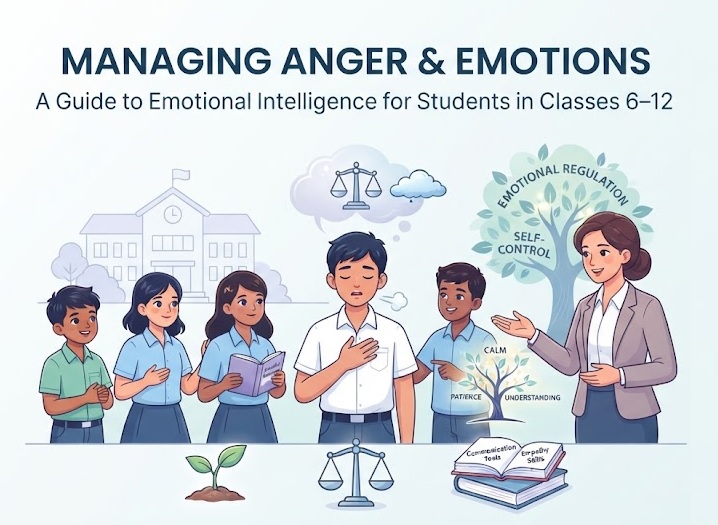
Managing Anger & Emotions

Managing Anger and Emotions

Every student experiences emotions every day. You may feel happy after scoring good marks, excited before a school trip, nervous before an exam, or angry when someone treats you unfairly. Emotions are a natural part of life, and they help us understand ourselves and the world around us.

Among all emotions, anger is one of the most misunderstood. Many people believe anger is bad, but that is not true. Anger is a normal human emotion. What matters is how we manage it. Learning to control anger and express emotions in a healthy way is an important life skill that helps students succeed in school, build better friendships, and enjoy happier lives.

This guide explains everything students in Classes 6 to 12 need to know about managing anger and emotions in simple language.

What Are Emotions?

Emotions are feelings that help us respond to different situations. They influence our thoughts, decisions, and actions.

Some common emotions include:

    • Happiness
    • Sadness
    • Anger
    • Fear
    • Excitement
    • Surprise
    • Disappointment
    • Worry
    • Pride
    • Love

Every emotion has a purpose. Feeling sad after losing something important or feeling nervous before an exam is completely normal.

There are no “good” or “bad” emotions. There are only healthy and unhealthy ways of expressing them.

What Is Anger?

Anger is your body’s natural response when you feel threatened, hurt, ignored, embarrassed, or treated unfairly.

For example, you may feel angry if:

    • Someone bullies you.
    • A friend breaks your trust.
    • You lose an important match.
    • Your parents misunderstand you.
    • Someone insults you online.
    • You are blamed for something you did not do.

Feeling angry does not make you a bad person. Everyone gets angry sometimes.

The real challenge is learning how to respond without hurting yourself or others.

Why Do Students Become Angry?

School life brings many challenges. Some common reasons include:

Academic Pressure

Homework, exams, competition, and high expectations can create stress.

Bullying

Being teased, excluded, or physically bullied often leads to frustration and anger.

Peer Pressure

Trying to fit in with friends or facing social rejection can affect emotions.

Family Problems

Arguments at home, financial stress, divorce, or lack of communication may make students feel upset.

Social Media

Negative comments, cyberbullying, unrealistic comparisons, and online conflicts can increase emotional stress.

Lack of Sleep

Students who do not get enough sleep often become more irritable and impatient.

What Happens Inside Your Body When You Get Angry?

Anger affects both the brain and the body.

When you become angry:

    • Your heart beats faster.
    • Your breathing speeds up.
    • Blood pressure increases.
    • Muscles become tense.
    • Stress hormones are released.
    • Clear thinking becomes more difficult.

Your brain prepares your body for a “fight or flight” response.

This is useful during real danger but not during everyday disagreements at school or home.

Signs That Anger Is Getting Out of Control

Everyone feels angry sometimes, but frequent or intense anger may become a problem.

Watch for these warning signs:

    • Shouting frequently
    • Fighting with classmates
    • Breaking things
    • Throwing objects
    • Using hurtful words
    • Holding grudges
    • Feeling angry most of the day
    • Hurting yourself
    • Thinking about hurting others

If these signs continue, it is important to seek help.

Why Managing Anger Is Important

Learning emotional control helps students in many ways.

Students who manage anger well often:

    • Make better decisions
    • Have stronger friendships
    • Perform better in school
    • Solve problems calmly
    • Feel more confident
    • Handle stress more effectively
    • Avoid unnecessary conflicts

Managing emotions is one of the most valuable life skills you can develop.

Healthy Ways to Manage Anger

Stop Before You React

Take a moment before speaking or acting.

A few seconds of thinking can prevent many problems.

Take Deep Breaths

Slow, deep breathing helps calm both your body and your mind.

Breathe in through your nose and slowly breathe out through your mouth.

Repeat several times.

Count Slowly

Counting from one to ten gives your brain time to think before reacting.

Walk Away

If an argument is becoming worse, politely leave the situation and return when you feel calmer.

Walking away is not weakness. It is self-control.

Drink Water

Something as simple as drinking water can help you slow down and relax.

Exercise

Physical activity reduces stress hormones and improves your mood.

Sports, walking, cycling, dancing, or yoga can all help.

Listen to Music

Soft, calming music helps many students relax after a stressful day.

Write Your Feelings

Keeping a journal allows you to express emotions without hurting anyone.

Writing often makes problems feel smaller.

Learn to Express Your Feelings

Instead of shouting or blaming others, use respectful language.

Try saying:

“I feel upset.”

“I didn’t like what happened.”

“I need some time to calm down.”

“I would like to talk about this.”

These simple sentences reduce misunderstandings and encourage healthy communication.

Think Before You Speak

Words can leave lasting emotional wounds.

Before speaking, ask yourself:

    • Is it true?
    • Is it necessary?
    • Is it kind?
    • Will it make the situation better?

Sometimes choosing silence is the wisest decision.

The Importance of Self-Control

Self-control means choosing your actions instead of letting emotions control you.

Strong people are not those who shout the loudest.

Strong people remain calm even during difficult situations.

Every time you stay calm, you strengthen your self-control.

Helping a Friend Who Is Angry

If someone you know is angry:

    • Stay calm.
    • Listen without interrupting.
    • Do not make fun of them.
    • Give them space if needed.
    • Encourage them to speak to a trusted adult.
    • Get immediate help if they talk about hurting themselves or someone else.

Sometimes simply listening is the greatest help you can offer.

How Sleep, Food, and Exercise Affect Emotions

Your body and mind work together.

Poor health habits often make emotions harder to control.

Healthy habits include:

    • Sleeping 8 to 10 hours each night
    • Eating balanced meals
    • Drinking enough water
    • Exercising regularly
    • Spending less time on screens
    • Taking short breaks while studying

Looking after your body helps your brain manage emotions better.

How Social Media Can Increase Anger

Social media can be fun, but it can also create unnecessary stress.

Students may become angry because of:

    • Online arguments
    • Negative comments
    • Cyberbullying
    • Comparing themselves with others
    • False information
    • Excessive screen time

If social media is affecting your emotions, take regular breaks and avoid responding when you are angry.

What Science Says About Emotions

Research from organizations such as the World Health Organization (WHO) and UNICEF highlights the importance of helping children and teenagers develop emotional and social skills.

Studies show that students with strong emotional skills often:

    • Build healthier friendships
    • Solve problems more effectively
    • Perform better academically
    • Experience less stress
    • Make safer decisions

Neuroscience also shows that the part of the brain responsible for planning, decision-making, and self-control continues developing throughout the teenage years. This means emotional control is a skill that improves with practice.

When Should You Ask for Help?

Sometimes anger becomes difficult to manage alone.

Talk to a trusted adult if:

    • You feel angry every day.
    • You often fight with others.
    • You break things when angry.
    • You hurt yourself.
    • You think about hurting others.
    • Anger is affecting your studies or friendships.

You can speak to:

    • Parents
    • Teachers
    • School counsellors
    • Relatives
    • Trusted family friends

Asking for help is a sign of courage and maturity.

Daily Habits That Help You Stay Calm

Small habits make a big difference.

Try to:

    • Smile more often.
    • Sleep well.
    • Eat healthy food.
    • Exercise every day.
    • Practice gratitude.
    • Read books.
    • Spend time outdoors.
    • Talk openly about your feelings.
    • Limit unnecessary screen time.
    • Be kind to yourself and others.

These habits improve both physical and emotional health.

Remember This Every Day

Before reacting, ask yourself:

“Will this matter one week from now?”

Many situations that feel huge today become much less important with time.

Choosing patience today can save you from regret tomorrow.

My Thoughts

Anger is a normal emotion, but it should never control your actions. Every student has the ability to learn patience, kindness, self-control, and emotional intelligence. These skills are just as important as mathematics, science, or languages because they help you succeed in every part of life.

You will not become calm overnight, and that is perfectly okay. Every time you pause before reacting, take a deep breath, speak respectfully, or ask for help, you are becoming stronger.

Remember, the strongest people are not those who never get angry. They are the ones who know how to manage their emotions wisely, solve problems peacefully, and treat others with respect.

Learning to manage your anger today will help you become a happier student, a better friend, and a more confident adult tomorrow.

Related Topics

Bullying & Cyberbullying

Smoking, Vaping, Alcohol & Drugs

Mental Health, Anxiety & Depression

Internet Safety & Social Media Safety

Self-Esteem, Confidence & Body Image

Exam Stress & Time Management

Peer Pressure

Online Gaming & Smartphone Addiction 

About the Author

Nidhi Mehta is the founder of IndiaTutor.in and a professional online educator with over 11 years of teaching experience. She specializes in tutoring Classes 1 to 6 across core academic subjects, with a strong focus on concept clarity and foundational skill-building. Her teaching approach is based on personalized, one-to-one learning that helps students develop long-term academic confidence and understanding.
Visit her profile    Visit About Us Page

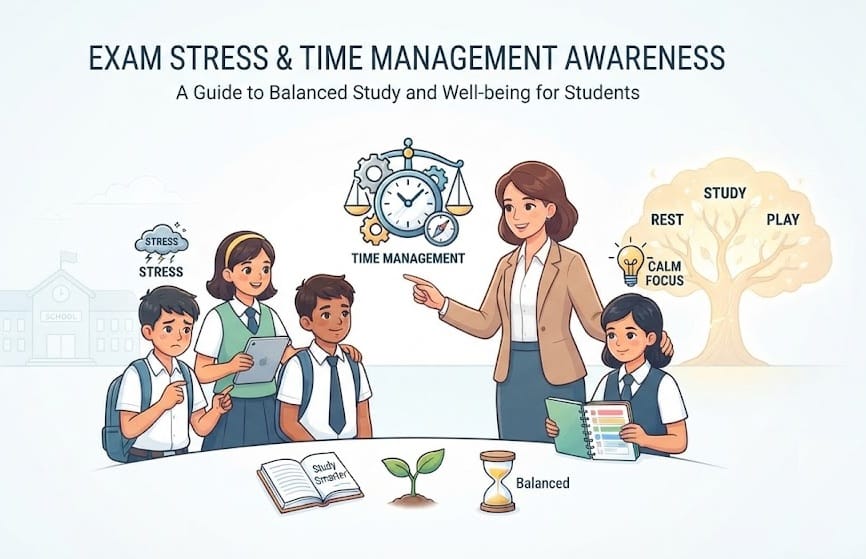
Exam Stress & Time Management

Exam Stress & Time Management

Exams are an important part of school life, but they should never become a source of constant fear. Every year, millions of students experience exam-related stress before unit tests, term exams, board examinations, and competitive entrance tests. While a certain level of pressure can improve focus, excessive stress can reduce concentration, affect sleep, lower confidence, and negatively impact academic performance.

The good news is that exam stress can be managed. With proper planning, healthy habits, and effective time management, students can prepare confidently without feeling overwhelmed.

This guide explains what exam stress is, why it happens, and practical ways students can stay organized, calm, and productive.

What Is Exam Stress?

Exam stress is the emotional, physical, and mental pressure students experience before or during examinations. It often develops when students feel they have too much to study in too little time or worry about disappointing themselves, their parents, or teachers.

Common signs include:

    • Feeling anxious before studying
    • Difficulty concentrating
    • Poor sleep
    • Frequent headaches
    • Irritability
    • Loss of motivation
    • Forgetting information during exams
    • Feeling tired even after resting

These reactions are common and can be managed with the right approach.

Why Do Students Feel Exam Pressure?

Several factors contribute to exam stress.

Fear of Failure

Many students believe that one exam determines their future. In reality, exams are only one measure of learning and do not define a person’s abilities.

Lack of Preparation

Waiting until the last few days to begin studying often creates unnecessary pressure.

High Expectations

Students may feel pressure from themselves, parents, relatives, friends, or social media to achieve perfect marks.

Comparing with Others

Comparing scores with classmates can reduce confidence and increase anxiety.

Poor Time Management

Without a study schedule, subjects pile up, making revision much more difficult.

What Research Says About Student Stress

Several studies show that academic pressure affects a large number of school students.

According to the World Health Organization (WHO), mental well-being during adolescence plays a major role in learning, confidence, and overall development.

Research published by the American Psychological Association has found that chronic stress can affect memory, attention, and learning efficiency.

India’s National Crime Records Bureau (NCRB) has also highlighted the importance of addressing academic pressure, with student stress remaining a significant concern across the country.

These findings remind us that managing stress is just as important as preparing for exams.

Why Time Management Matters

Time management means planning how you use your available hours effectively.

Students who manage their time well usually:

    • Complete homework on time
    • Revise regularly
    • Sleep better
    • Feel more confident
    • Avoid last-minute panic
    • Perform more consistently

Good planning creates more free time instead of less.

Create a Realistic Study Timetable

One of the best ways to reduce stress is to create a simple daily schedule.

Divide Subjects Across the Week

Instead of studying one subject for several hours, spread different subjects throughout the week.

For example:

    • Mathematics
    • Science
    • English
    • Social Science
    • Languages

Studying different subjects keeps the brain engaged.

Break Large Chapters into Smaller Tasks

Instead of writing:

“Finish Science.”

Write:

    • Read Chapter 3
    • Learn definitions
    • Solve textbook questions
    • Revise diagrams

Completing small tasks gives a sense of progress.

Keep Revision Time

Many students spend all their time learning new chapters and forget revision.

Experts generally recommend revising topics several times rather than reading them only once.

The 45–15 Study Method

Many students find it easier to study in focused sessions.

Study for about 45 minutes, followed by a 10–15 minute break.

During the break:

    • Walk around
    • Drink water
    • Stretch
    • Rest your eyes

Avoid spending the break scrolling endlessly on social media, as it often becomes much longer than planned.

Prioritize Difficult Subjects

Study the subjects you find most challenging when your mind feels fresh.

For many students, this is during the morning or immediately after returning from school and taking a short break.

Leave easier subjects for later.

Avoid Last-Minute Cramming

Trying to memorize an entire syllabus in one night rarely works.

Instead:

    • Start early.
    • Revise regularly.
    • Practice questions.
    • Review mistakes.
    • Sleep properly.

Learning over several weeks helps information stay in long-term memory.

Practice Writing Answers

Reading alone is not enough.

Writing answers helps improve:

    • Speed
    • Accuracy
    • Presentation
    • Confidence

For mathematics and science, solve problems on paper rather than only reading solutions.

For language subjects, practice writing complete answers.

Use Active Learning

Active learning is far more effective than passive reading.

Good methods include:

Teach Someone Else

Explaining a topic to a friend or family member helps identify gaps in understanding.

Make Short Notes

Create one-page summaries using important formulas, dates, keywords, and definitions.

Solve Previous Years’ Papers

Practicing earlier question papers improves familiarity with exam patterns and time limits.

Take Mock Tests

Timed practice tests help students learn how to complete papers within the available time.

Take Care of Your Health

Healthy habits improve concentration.

Sleep Well

The American Academy of Sleep Medicine recommends that teenagers generally need 8 to 10 hours of sleep every night.

Late-night studying may reduce memory and attention the next day.

Eat Balanced Meals

Choose nutritious foods such as fruits, vegetables, whole grains, milk, eggs, pulses, and nuts.

Avoid relying only on sugary snacks and energy drinks.

Stay Hydrated

Even mild dehydration can reduce concentration.

Drink water regularly throughout the day.

Exercise Daily

Even 20 to 30 minutes of walking, cycling, skipping, or playing outdoors can improve mood and reduce stress.

Reduce Digital Distractions

Mobile phones are one of the biggest challenges during exam preparation.

Helpful strategies include:

    • Keep the phone away while studying.
    • Turn off unnecessary notifications.
    • Use app timers.
    • Study first, then use social media as a reward.

Small changes can save several hours every week.

Build Confidence Instead of Perfection

Perfection is not necessary for success.

Focus on steady improvement.

For example:

Instead of saying,

“I must score 100%.”

Try saying,

“I will improve my score by preparing consistently.”

This mindset reduces unnecessary pressure.

What Parents Can Do

Parents play an important role in reducing exam stress.

They can:

    • Encourage regular study habits.
    • Praise effort instead of only marks.
    • Avoid comparing children with others.
    • Provide a quiet study environment.
    • Ensure proper sleep and meals.
    • Listen without criticism when children feel anxious.

Supportive families often help students perform better.

How Teachers Can Help

Teachers can reduce classroom anxiety by:

    • Explaining exam patterns clearly.
    • Giving realistic practice papers.
    • Providing constructive feedback.
    • Encouraging questions.
    • Recognizing improvement, not only high marks.

A positive classroom environment builds confidence.

When Should Students Seek Help?

Sometimes stress becomes difficult to manage alone.

Students should speak with parents, teachers, school counselors, or another trusted adult if they experience:

    • Constant anxiety
    • Frequent panic
    • Trouble sleeping for many days
    • Loss of interest in studies
    • Feeling hopeless
    • Difficulty coping with everyday activities

Seeking help early is a sign of strength, not weakness.

Simple Daily Habits That Make a Big Difference

Small routines often produce the biggest results.

    • Follow a study timetable.
    • Revise every day.
    • Practice writing answers.
    • Sleep well.
    • Stay physically active.
    • Eat healthy food.
    • Limit distractions.
    • Ask questions whenever you are confused.
    • Take short breaks.
    • Believe in steady progress.

My Thoughts

Exams are important, but they are only one part of your educational journey. Good preparation, smart time management, healthy routines, and a positive mindset can greatly reduce stress while improving academic performance.

Remember that success is built through consistent effort rather than last-minute studying. Every chapter completed, every practice paper solved, and every small improvement brings you one step closer to your goals.

With proper planning and the right support from parents and teachers, every student can approach exams with confidence, stay organized, and perform to the best of their abilities.

Related Topics

Bullying & Cyberbullying

Smoking, Vaping, Alcohol & Drugs

Mental Health, Anxiety & Depression

Internet Safety & Social Media Safety

Self-Esteem, Confidence & Body Image

Peer Pressure

Respect, Kindness & Inclusion

Online Gaming & Smartphone Addiction 

Managing Anger & Emotions

About the Author

Nidhi Mehta is the founder of IndiaTutor.in and a professional online educator with over 11 years of teaching experience. She specializes in tutoring Classes 1 to 6 across core academic subjects, with a strong focus on concept clarity and foundational skill-building. Her teaching approach is based on personalized, one-to-one learning that helps students develop long-term academic confidence and understanding.

Visit her profile    Visit About Us Page

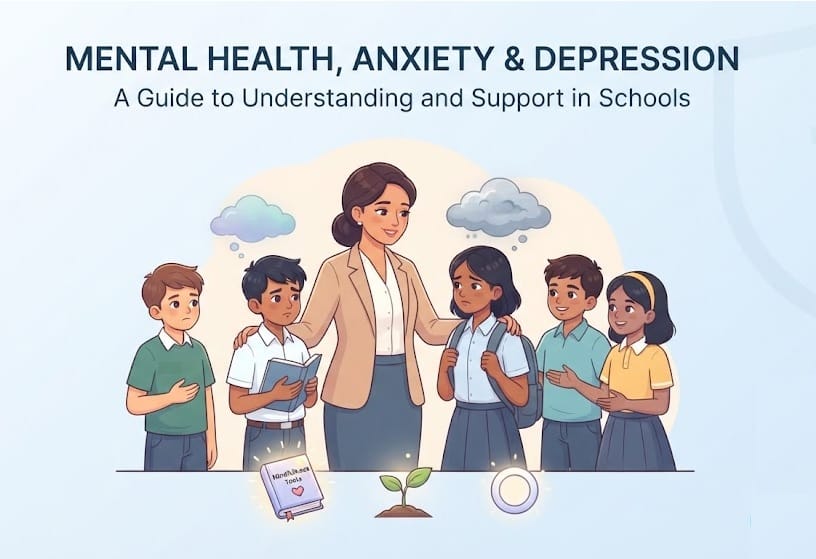
Mental Health, Anxiety & Depression

Mental Health, Anxiety & Depression

Mental health is just as important as physical health. A child may look healthy on the outside but may be struggling with stress, anxiety, sadness, or emotional pain. These feelings can affect learning, friendships, confidence, sleep, and overall happiness.

According to the World Health Organization (WHO), around 1 in 7 adolescents aged 10–19 years experiences a mental health condition, making emotional well-being one of the most important issues affecting young people today.

Parents, teachers, and schools play a major role in identifying problems early and providing support before they become more serious.

What Is Mental Health?

Mental health refers to a person’s emotional, psychological, and social well-being. It affects how children think, feel, behave, handle challenges, make decisions, and interact with others.

Good mental health helps students:

    • Learn effectively
    • Build healthy friendships
    • Handle stress
    • Solve problems
    • Feel confident
    • Enjoy school and family life

Mental health problems can happen to anyone regardless of intelligence, academic performance, or family background.

Why Mental Health Matters in School

Children spend a large part of their lives in school. Academic pressure, friendships, social media, examinations, bullying, family expectations, and changing emotions can all affect their mental well-being.

Studies have shown that students with good emotional health generally perform better academically, attend school more regularly, and build stronger relationships with classmates and teachers.

Ignoring emotional struggles can lead to long-term problems affecting education, career, and personal relationships.

Understanding Anxiety

Anxiety is the body’s natural response to stress or uncertainty. Feeling nervous before an exam, competition, or presentation is normal.

However, anxiety becomes a concern when it is excessive, lasts for weeks, or interferes with daily life.

Common Signs of Anxiety

    • Constant worrying
    • Fear without a clear reason
    • Difficulty concentrating
    • Trouble sleeping
    • Fast heartbeat
    • Sweating
    • Stomach aches
    • Headaches
    • Avoiding school or social activities
    • Feeling restless or tense

Some children cannot explain their feelings and may simply complain of physical discomfort.

Common Causes of Anxiety

Academic Pressure

Fear of poor marks, homework, competitive exams, or disappointing parents.

Bullying

Repeated teasing, exclusion, physical bullying, or cyberbullying.

Family Problems

Arguments at home, financial stress, divorce, illness, or loss of a loved one.

Social Media

Comparing themselves with others, fear of missing out (FOMO), online harassment, and unrealistic expectations.

Major Life Changes

Changing schools, moving to a new city, or adjusting after the pandemic.

What Is Depression?

Everyone feels sad occasionally. Depression is different.

Depression is a medical condition where sadness, hopelessness, or loss of interest continues for at least two weeks and affects daily functioning.

Children and teenagers with depression may not always cry. Some become angry, withdrawn, or unusually quiet.

Common Symptoms of Depression

    • Persistent sadness
    • Loss of interest in favourite activities
    • Low energy
    • Feeling worthless
    • Difficulty concentrating
    • Sleeping too much or too little
    • Changes in appetite
    • Poor academic performance
    • Avoiding friends
    • Frequent crying
    • Irritability
    • Thoughts that life has no meaning

These symptoms should never be ignored.

Mental Health Facts Every Parent Should Know

The World Health Organization reports that about 15% of the global burden of disease among adolescents is due to mental health conditions.

Research published in respected medical journals has found that half of all mental health conditions begin by around age 14, although many remain undetected and untreated.

The National Institute of Mental Health also notes that anxiety disorders are among the most common mental health conditions affecting children and adolescents.

Early identification greatly improves outcomes.

How Mental Health Affects Learning

A student experiencing anxiety or depression may appear lazy or uninterested, but the real problem is often emotional distress.

Mental health challenges can lead to:

    • Lower grades
    • Poor concentration
    • Memory difficulties
    • Reduced classroom participation
    • Frequent absenteeism
    • Behavioural changes
    • Loss of motivation
    • Reduced confidence

Supporting emotional well-being often improves academic performance.

Warning Signs Teachers Should Notice

Teachers interact with students daily and may notice changes before anyone else.

Watch for Changes Such As

    • Sudden drop in marks
    • Missing homework repeatedly
    • Sleeping during class
    • Withdrawal from classmates
    • Frequent crying
    • Anger or aggression
    • Lack of participation
    • Constant tiredness
    • Poor attendance
    • Loss of interest in activities

A caring conversation may encourage a student to seek help.

What Parents Can Do

Parents are often the first line of support.

Listen Without Judging

Allow children to express their feelings without immediately giving advice or criticism.

Maintain Daily Conversations

Simple questions like “How was your day?” can encourage communication.

Reduce Pressure

Praise effort instead of only focusing on marks.

Encourage Healthy Habits

Regular sleep, nutritious food, exercise, and outdoor activities improve emotional well-being.

Limit Screen Time

Balanced technology use helps reduce stress and improves sleep quality.

Spend Quality Time Together

Family meals, games, walks, and conversations strengthen emotional bonds.

How Schools Can Help

Schools have an important role in promoting emotional well-being.

Create Safe Classrooms

Students should feel respected and accepted regardless of their background or abilities.

Address Bullying Immediately

Every report of bullying should be taken seriously.

Train Teachers

Teachers should understand common signs of emotional distress and know when to refer students for additional support.

Promote Life Skills

Problem-solving, empathy, communication, resilience, and emotional regulation help students manage challenges.

Encourage Counselling

School counsellors provide a safe space where students can discuss concerns confidentially.

When Professional Help Is Needed

Professional support should be considered if symptoms:

    • Continue for several weeks
    • Become more severe
    • Affect school performance
    • Interfere with daily life
    • Include self-harm or suicidal thoughts

Qualified psychologists, psychiatrists, counsellors, and mental health professionals can provide assessment and treatment.

Seeking help is a sign of responsibility, not weakness.

Supporting Friends Who Are Struggling

Students can make a real difference by supporting classmates.

They should:

    • Listen kindly
    • Include isolated classmates
    • Report bullying
    • Encourage trusted adult support
    • Avoid spreading rumours
    • Never make fun of emotional struggles

Sometimes one caring friend changes everything.

Everyday Habits That Improve Mental Well-Being

Healthy routines build emotional resilience.

Good habits include:

    • Sleeping 8–10 hours each night
    • Daily physical activity
    • Eating balanced meals
    • Taking breaks from studies
    • Practising relaxation techniques
    • Spending time outdoors
    • Reading books
    • Developing hobbies
    • Maintaining positive friendships
    • Asking for help when needed

Small daily actions often make a big difference.

Common Myths About Mental Health

Myth: Only adults experience mental health problems.

Fact: Children and teenagers can also experience anxiety, depression, and other mental health conditions.

Myth: Mental health problems mean someone is weak.

Fact: Mental health conditions are medical conditions that can affect anyone.

Myth: Talking about feelings makes problems worse.

Fact: Open communication often helps people feel supported and understood.

Myth: Students should simply “try harder.”

Fact: Emotional health problems cannot be solved through willpower alone.

My Thoughts

Mental health deserves the same attention as physical health. Anxiety and depression are common, treatable, and nothing to be ashamed of. Parents, teachers, schools, and students all have a role in creating supportive environments where young people feel safe, heard, and valued.

Recognising the early signs, encouraging open conversations, reducing unnecessary pressure, and seeking professional help when required can make a lasting difference. Every child deserves not only a good education but also the opportunity to grow with confidence, resilience, and emotional well-being.

Related Topics

Bullying & Cyberbullying

Smoking, Vaping, Alcohol & Drugs

Internet Safety & Social Media Safety

Self-Esteem, Confidence & Body Image

Exam Stress & Time Management

Peer Pressure

Respect, Kindness & Inclusion

Online Gaming & Smartphone Addiction 

Managing Anger & Emotions

About the Author

Nidhi Mehta is the founder of IndiaTutor.in and a professional online educator with over 11 years of teaching experience. She specializes in tutoring Classes 1 to 6 across core academic subjects, with a strong focus on concept clarity and foundational skill-building. Her teaching approach is based on personalized, one-to-one learning that helps students develop long-term academic confidence and understanding.

Visit her profile    Visit About Us Page

error: Content is protected !!

Found this helpful? Share it in 2 seconds!

Link copied to clipboard