Online Tuition for NRI Students: How Indian Tutors Can Tap Global Demand

Online Tuition for NRI Students: How Indian Tutors Can Tap Global Demand

The number of Indians living abroad is growing fast, and so is the need for quality education that connects children to their Indian roots. Many Non-Resident Indian (NRI) families want tutors who can help their children do well in school and stay in touch with Indian culture, values, and languages. This has opened up a big opportunity for Indian tutors to teach students worldwide through online classes.

In this article, I’ll explain how Indian tutors can easily connect with NRI families, what subjects are in demand, and how to grow a successful online tutoring business from home.


Why NRI Families Choose Indian Tutors

Families living in countries like the USA, UK, UAE, Canada, Singapore, and Australia often prefer Indian tutors. Here’s why:

  • Familiar with Indian Curriculum: Many NRI students study Indian boards like CBSE or ICSE in international schools.

  • Cultural Understanding: Indian tutors understand the student’s background, which makes learning more relatable.

  • Language Comfort: Tutors who speak Hindi or regional languages help students stay connected to their roots.

  • Affordable Quality: Indian tutors often offer expert teaching at much lower prices compared to local tutors abroad.


Online Tuition: A Global Trend

The global online tutoring market is expected to reach $23 billion by 2027. This is great news for Indian tutors, and here’s why:

  • Time Zone Match: Indian evenings match mornings or afternoons in many other countries, making it easy to schedule sessions.

  • Technology Support: High-speed internet, Zoom, Google Meet, and online whiteboards make online teaching smooth and professional.

  • Parental Preference: NRI parents trust Indian tutors and often search for them on platforms like IndiaTutor.in.


Subjects NRI Students Need Help With

If you’re a tutor in India, here are subjects you should consider teaching online:

  • Math & Science (Classes 1–12) – For CBSE, ICSE, and IB students

  • English – With Indian cultural examples to help students understand better

  • Hindi & Regional Languages – For students who want to stay connected to their heritage

  • Coding & Robotics – Very popular among tech-loving kids

  • Competitive Exams – JEE, NEET, and others for students planning to return to India

  • Indian Culture & Sanskrit – For those interested in values-based learning


How Indian Tutors Can Reach NRI Students

1. Build a Strong Online Presence

  • Create your tutor profile on trusted platforms like IndiaTutor.in

  • Mention your experience with international students

  • Show your comfort with CBSE, ICSE, IB, or IGCSE

  • Be open to flexible timings across time zones

2. Use Good Teaching Tools

Make sure your online classes are smooth by using:

  • A good webcam and mic

  • Zoom, Google Meet, or Skype for video calls

  • Jamboard or BitPaper for whiteboard teaching

  • Google Classroom for sharing assignments

3. Offer Trial Classes and Packages

NRI parents want to make sure they’re choosing the right tutor. Offer:

  • Free or discounted trial classes

  • Monthly or custom packages

  • Easy rescheduling and flexible plans

4. Promote Yourself in NRI Groups

Spread the word through:

  • Facebook groups like “Indians in USA”, “NRIs in Dubai”

  • WhatsApp parent groups

  • LinkedIn and Instagram using NRI-focused hashtags

5. Collect Reviews and Referrals

Ask happy parents for feedback and testimonials. Good reviews help build trust and get more students through word of mouth.


Real Success Story

Seema, a tutor from Bangalore, started teaching a Grade 4 student in Dubai during the COVID lockdown. That one class led to more students through WhatsApp groups. Within a year, she was teaching 12 students in 4 countries—and now earns over ₹1 lakh per month—just from online tutoring!


My Thoughts

Teaching NRI students online is a great way for Indian tutors to grow their career globally. With the right tools and mindset, you can teach kids in the US in the morning, students in the UAE after lunch, and children in Singapore by evening—all from the comfort of your home.

So, if you’re ready to teach globally, list your tutor profile on IndiaTutor.in today. Your next student might be just a time zone away!

A Smarter Way for Tutors to Get Students Without Big Spending

Written by Nidhi Mehta, Founder – IndiaTutor.in
Online Teaching as a Career: Opportunities, Growth and Challenges

Online Teaching as a Career: Opportunities, Growth, and Challenges

In today’s digital world, education is no longer limited to classrooms. Thanks to the internet, online teaching has become one of the best career choices. Whether you’re a teacher, a subject expert, a homemaker, or even a college student looking for extra income — online tutoring offers flexibility, good income, and the chance to make a real difference.

But like any job, online teaching has its challenges too.

Let’s take a closer look at the opportunities, growth, and common challenges of building a successful online teaching career from India.


Opportunities in Online Teaching

1. Teach Students Across the World
With a good internet connection, Indian tutors can now teach students in the USA, UK, Australia, UAE, Singapore, and more. This means better income and a chance to connect with different cultures.

2. Many Ways to Teach
You can choose the style that suits you best:

  • One-on-one live classes (like on Zoom, Google Meet or Preply)

  • Group coaching for school or exam preparation

  • Pre-recorded courses on platforms like Udemy or your own website

3. Work From Home at Your Own Time
Online teaching gives you the freedom to pick your own schedule. You can work from home and even teach part-time. This is ideal for parents, students, or retired professionals.

4. Earn More Than Traditional Tuition
Online tutors, especially those teaching English, science, math, or coding, often earn much more than regular tutors. If your subject is in demand and you teach well, your income can grow quickly.

5. Build Your Own Brand
Using platforms like YouTube, Instagram, or LinkedIn, tutors can grow their personal brand. You can reach thousands of students and even start your own online academy.


Online Teaching is Growing Fast

  • India’s EdTech Industry is Booming: The online education market in India is expected to grow to $10 billion by 2025. This means more demand for skilled tutors.

  • Parents Prefer Online Classes: After COVID-19, many parents feel more comfortable with online or hybrid learning for their children.

  • Government Support: Programs like Digital India and online teacher training make it easier for tutors to grow.


Challenges to Know About

1. Internet & Technology Issues
Not all areas have strong internet. Tutors must invest in a stable connection, a good device, and learn how to use tools like Zoom, Google Meet, and online whiteboards.

2. Less Face-to-Face Interaction
Online classes make it harder to read students’ body language. Teachers need to find creative ways to keep students engaged.

3. A Lot of Competition
Since anyone can start teaching online, competition is high. To stand out, focus on quality, marketing, and collecting reviews from happy students.

4. Payment Problems
Some platforms delay payments or charge high commissions. Choose trusted platforms like IndiaTutor.in to avoid such issues.

5. Mixing Work and Personal Life
The flexibility of online teaching is great, but it can sometimes blur the line between work and personal time. Set clear boundaries to avoid burnout.


Tips to Succeed as an Online Tutor

  • Choose a subject you’re great at — like Class 1-6 subjects, English, or exam preparation.

  • If possible, get certified (like TEFL for English or Google Educator) to build trust with students.

  • Join trusted websites like IndiaTutor.in to reach more students.

  • Invest in a good mic, camera, and writing tools — they improve your class quality.

  • Collect feedback and reviews — positive testimonials help attract more students.

  • Keep learning — attend webinars and join teacher communities to stay updated.


My Thoughts

Online teaching is not just a side job. It’s a career that can grow with you. You can work from anywhere, teach students from any part of the world, and enjoy both income and personal satisfaction.

At IndiaTutor.in, we help tutors like you connect with genuine students, grow your profile, and succeed as an online educator.

If you’re ready to take the next step in your teaching journey, now is the best time to start.

A Smarter Way for Tutors to Get Students Without Big Spending

Written by Nidhi Mehta – Founder, IndiaTutor.in

What Qualifications Are Needed to Teach Online in India?

What Qualifications Are Needed to Teach Online in India

Online education in India has grown very fast in the last few years. From school subjects and coding to spoken English and hobby classes, more and more people are learning online. Because of this, the need for good online tutors is now very high.

But many people ask: What do you need to become an online tutor in India?

Whether you want to become a tutor or you’re a parent looking for one, it’s important to know what qualifications matter. This guide will help you understand everything in a simple and clear way.


1. Basic Education Qualifications

There’s no fixed rule for becoming an online tutor. But most parents and online platforms look for some basic education background.

For Classes 1 to 10 (Primary and Secondary):

  • Minimum: Bachelor’s Degree (like BA, B.Sc, B.Com)

  • Better to Have: B.Ed or D.El.Ed (for primary school tutors)

  • Important: You must know the CBSE, ICSE, or NCERT syllabus well

For Classes 11 and 12 (Senior Secondary):

  • Minimum: Master’s Degree in the subject you want to teach

  • Better to Have: M.Ed or similar teacher training certification

  • Bonus: If you’ve cleared exams like IIT-JEE or NEET, it adds great value

For Hobby or Skill-Based Courses (like Coding, Music, Yoga):

  • No strict degree required

  • Certifications or real-world experience is usually enough

  • What matters most is your practical knowledge and how well you teach


2. Technical Skills You Need for Online Tutoring

Online teaching is different from classroom teaching. You need to be comfortable using some basic digital tools.

Important Tech Skills:

  • How to use Zoom, Google Meet, or Microsoft Teams

  • Use of online whiteboards like BitPaper or Jamboard

  • Knowing platforms like Google Classroom or Moodle

  • Creating and sharing slides, PDFs, videos, and quizzes

Tip: You can learn these for free on websites like Coursera, Udemy, or YouTube.


3. Certifications That Can Help (But Not a Must)

You don’t always need a certificate, but having one can make you stand out—especially if you’re applying to companies like BYJU’S, Vedantu, or WhiteHat Jr.

Useful Certifications:

CertificationWhy It’s Useful
B.Ed / M.EdHelps with school-level teaching
TEFL / TESOLGood if you want to teach English online
CTET / TETUseful for teaching in schools
Online Teaching CoursesShows you understand how to teach online

4. Soft Skills Are Very Important

Even if you have the right degree or certificate, what truly matters is how you teach. Parents and students like tutors who:

  • Speak clearly and explain patiently

  • Understand that every student learns differently

  • Are always on time and prepared

  • Make learning fun and easy

Good tutors connect with students and make learning stress-free.


5. Do You Need to Register Anywhere?

If you’re teaching through a platform like IndiaTutor.in, you don’t need any license. But:

  • You should have valid education certificates and ID proof

  • Some platforms might ask you to give a demo class

  • GST registration is not needed unless you are running it like a business


6. Can College Students or Homemakers Teach Online?

Yes! Absolutely. Many tutors are college toppers, retired teachers, or homemakers who want to teach part-time. You can teach if you:

  • Know your subject well

  • Can explain in a simple way

  • Have basic tech and communication skills

Many part-time tutors at IndiaTutor.in teach students in India and abroad.


My Thoughts

Online tutoring in India is not just a part-time job—it’s a growing profession. While degrees and certificates are important, what really matters is your passion, teaching style, and how well you connect with students.

If you love teaching, are willing to learn, and can guide students with patience—you’re ready to start your journey as an online tutor.

Join IndiaTutor.in and start helping students all over the world.

Written by Nidhi Mehta
Founder – IndiaTutor.in

How to Take Demo Classes Online and Convert Leads into Students

How to Take Demo Classes Online and Convert Leads into Students

Online tutoring is growing fast, and many parents are looking for the right tutor for their child. But getting a lead is only the first step. What really matters is how you take your demo class. A good demo can turn an interested parent or student into a long-term student.

If you’re a tutor trying to grow your online tuition business, learning how to take a great demo class is very important. Here’s a simple step-by-step guide to help you do just that.


1. Make a Great First Impression

Before the class starts, make sure your setup is ready:

  • Use a clear webcam and microphone so they can see and hear you properly.

  • Choose a good video platform like Zoom, Google Meet, or Skype.

  • Sit in a clean and quiet place with a tidy background.

  • Dress in a simple, professional way to build trust.

  • Keep your teaching material ready — PDFs, slides, or an online whiteboard like Jamboard.

Tip: Join the class 5 minutes early to greet the student and check everything is working.


2. Understand Your Student

Before the demo, ask a few basic questions:

  • What class and board is the student in?

  • Which subjects or topics are difficult for them?

  • Have they taken online classes before?

This helps you give a more personalized experience. When a student feels the class is made just for them, they’re more likely to continue.


3. Teach One Simple, Powerful Lesson

Don’t try to cover everything in one class. Focus on:

  • A single concept that shows how you teach.

  • Pick something the student finds difficult and explain it in a simple way.

  • Use examples, easy tricks, or real-life situations to make it fun.

Goal: Show that your teaching style makes learning easy and enjoyable.


4. Make the Class Interactive

Don’t just talk the whole time. Keep the student involved:

  • Ask small questions to check understanding.

  • Share your screen or use pictures to explain things clearly.

  • Let the student try solving something with you.

Remember: Students love tutors who listen to them. Make them feel heard and involved.


5. Share Your Experience Smartly

Talk about your teaching background without sounding like you’re showing off:

  • Mention how long you’ve been teaching.

  • Share a short success story. For example: “One of my Class 5 students improved 20% in just two months!”

  • Explain how you track student progress and give feedback.

Parents look for results. Students want comfort. Show that you can offer both.


6. Handle Questions Confidently

Parents usually ask:

  • What are your fees?

  • How many classes will there be in a week?

  • Will you help with homework too?

Be clear, polite, and flexible. Offer trial classes or starting discounts if needed. If they seem unsure, ask, “Is there anything specific you’re looking for in a tutor?” and adjust your answers based on their needs.


My Thoughts

A demo class is your chance to show why you’re the right tutor. With the right setup, a bit of planning, and a friendly approach, you can easily turn your leads into regular students.

By giving your best in just 30 minutes, you can win the trust of parents and build a strong online tutoring business.

Written by Nidhi Mehta – Founder, IndiaTutor.in

Tutoring as a Career in India – Scope, Salary, and Success Tips

Tutoring as a Career in India – Scope, Salary and Success

Tutoring has become one of the best career options in India. With more students needing extra help, and education moving online, tutoring is no longer just a part-time job. It is a full career that offers good income and long-term stability.

In this article, I’ll explain the growing opportunities in tutoring, how much you can earn, and some useful tips to succeed — all based on my 10+ years of experience.

The Growing Demand for Tutors in India

Tutoring in India is growing fast. More parents want personalized teaching for their children, and students want help to stay ahead.

  • According to reports by KPMG and Google, India’s online education market was worth nearly $2 billion in 2021 and has grown even more since then.

  • The private coaching industry in India is huge — over ₹2.5 lakh crore (about $30 billion).

  • Around 70% of students in big cities like Delhi, Mumbai, and Bengaluru take private tuition.

  • Online platforms like IndiaTutor.in now make it easy for tutors to teach students anywhere in India or abroad.

With new education policies like NEP 2020, the demand for qualified tutors will keep rising.

How Much Can Tutors Earn in India?

Tutoring can be very flexible in terms of income. Your earnings depend on the subjects, class levels, and teaching method.

Tutoring TypeHourly Rate (INR)Monthly Income Range
Home Tuition (Class 1 to 5)₹200 – ₹500₹15,000 – ₹35,000
Home Tuition (Class 6 to 10)₹300 – ₹800₹25,000 – ₹60,000
Senior Secondary & Competitive₹500 – ₹2,000₹40,000 – ₹1,00,000+
Online 1-on-1 Tutoring₹300 – ₹1,500₹20,000 – ₹1,00,000+
Group Online Classes₹100 – ₹500 per student₹50,000 – ₹2,00,000+

Many tutors combine both home and online teaching to increase their earnings.

Example: Ravi, a math tutor from Lucknow, started with 3 students. Now, teaching 30 students online and offline, he earns about ₹1.2 lakh every month using IndiaTutor.in to find students.

Why Choose Tutoring as a Career?

Here are 5 strong reasons to consider tutoring in India:

  1. Low Investment, High Returns: You don’t need a big setup. Just your skills, knowledge, and passion.

  2. Work from Home: Flexible hours make it perfect for women, parents, or anyone wanting a balanced life.

  3. Teach Students Worldwide: Use tools like Zoom or Google Meet to teach students anywhere.

  4. Long-Term Career: Tutoring is a lifelong profession unlike some short-term jobs.

  5. Job Satisfaction: Helping students improve is very rewarding and fulfilling.

Tips for New Tutors to Succeed

If you want to build a successful tutoring career, follow these simple steps:

  1. Choose Your Niche: Focus on one subject, a particular class level, or a board like CBSE or ICSE.

  2. Create a Strong Profile: Register on IndiaTutor.in. Add your experience, subjects, board, and a good profile photo or video.

  3. Use Digital Tools: Make classes interesting with Zoom, Google Meet, digital whiteboards, and study materials.

  4. Keep Learning: Stay updated with syllabus changes and teaching methods.

  5. Focus on Students’ Progress: Happy students mean more referrals. Track their progress and give regular feedback.

Challenges in Tutoring and How to Handle Them

Like any career, tutoring has some challenges:

    • Income may be irregular at first.
    • Some parents or students can be tough.
    • Marketing yourself is necessary to get more students.

But with patience, good guidance from IndiaTutor.in, and steady work, you can overcome these easily.

My Thoughts

Tutoring in India today is more than just a job. It is a respected and stable career that offers financial freedom and personal satisfaction. Whether you are a student, homemaker, retired teacher, or working professional, tutoring can fit your lifestyle and goals.

Ready to start?

    • Sign up at IndiaTutor.in
    • Complete your tutor profile with your details and subjects
    • Get connected with thousands of students and parents looking for tutors
    • Grow with help from IndiaTutor’s support and community

Start your tutoring journey today and make a difference!

A Smarter Way for Tutors to Get Students Without Big Spending

By Nidhi Mehta – Founder, IndiaTutor.in

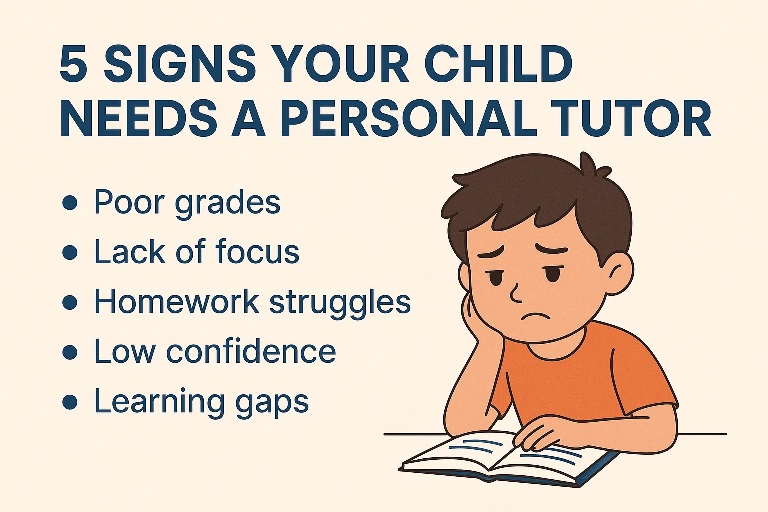
5 Signs Your Child Needs a Personal Tutor

5 Signs your child needs a personal tutor

As a tutor with over 10 years of experience teaching students from different boards and age groups, parents often ask: “How do I know if my child really needs a personal tutor?”

Not every child struggling at school needs a tutor. But when learning problems start affecting your child’s confidence, grades, or happiness, a personal tutor can make a big difference.

Here are 5 clear signs your child may need tutoring help, with real examples and useful facts to guide you.

1. Grades Are Falling Despite Hard Work

If your child studies regularly but their marks keep dropping, it may mean they need extra help.

  • Fact: In 2023, a study showed 42% of parents in cities in India hire tutors because their child’s grades don’t match their effort.

  • Example: Ria, a 9th-grade student, couldn’t score above 60% in Math even after studying hard. After getting a personal tutor from IndiaTutor.in, she understood concepts better and raised her score to 82% in just 3 months.

  • Why tutoring helps: Tutors teach in ways your child learns best — like using pictures, sounds, or examples — something busy teachers may not always do.

2. Low Confidence or Fear of Exams

If your child says things like “I’m not smart” or feels very nervous before tests, this can hurt their learning.

  • Fact: About 1 in 5 school kids in India face stress and anxiety related to studies.

  • Example: Aryan used to get very upset before science tests. After starting sessions with a kind tutor, his marks and confidence improved.

  • Why tutoring helps: A tutor gives patient support and praise, helping your child feel safe and confident to ask questions and learn.

3. Not Enough Attention in School

In many Indian schools, one teacher may have 35 or more students to handle. This means some kids don’t get enough help.

  • Problem: Kids who learn slowly or need extra practice may fall behind.

  • Example: A student who struggles with English grammar in a big class may hesitate to ask questions. With a private tutor, they can learn at their own speed and improve fast.

  • Why tutoring helps: One-on-one time means your child’s doubts are cleared quickly and they don’t feel lost in the crowd.

4. Poor Study Habits or Time Management

Does your child forget homework, miss deadlines, or study only at the last minute? This can hurt their progress.

  • Fact: Over half of Indian students find it hard to manage their study time well.

  • From a tutor’s view: Regular tutoring sessions help kids build a study routine. They learn discipline and organize their work better — even without parents reminding them.

  • Why tutoring helps: Tutors act as guides and motivate your child to stay on track, making study time effective and less stressful.

5. Switching Boards or Curriculum

Moving from one board (like CBSE) to another (like IB or ICSE) can confuse students because the syllabus and exam styles differ a lot.

  • Example: Meera shifted from ICSE to IGCSE in Grade 8. She was smart but struggled with the new case-study style. A tutor helped her adjust quickly and succeed.

  • Why tutoring helps: Tutors give special coaching focused on the new board’s needs, so your child doesn’t fall behind.


My Thoughts

Getting a personal tutor is not about weakness. It’s about giving your child the right support to succeed. Whether it’s for better grades, confidence, or learning skills, a tutor can be a helpful partner on your child’s learning journey.

Pro tip: Always pick experienced and verified tutors from trusted platforms like IndiaTutor.in. Here, tutors are matched carefully with your child’s subjects, learning style, and needs.

Nidhi Mehta, Founder – IndiaTutor.in

Why Indian Parents Are Choosing Online Tutors Over Coaching Centers

Why Indian parents are choosing online tutors over Coaching Centers in India

Education in India is changing fast. Many parents who once sent their children to coaching centers are now choosing online tutors instead. This change started during the pandemic but has become a popular choice for many families today. So, why are online tutors winning the trust of Indian parents? Let’s explore the reasons.

1. Online Learning is Growing Fast

According to a 2024 report by RedSeer Consulting, India’s online tutoring market will reach $3.5 billion by 2025, growing at a rapid rate of 40% every year. Websites like IndiaTutor.in connect thousands of students and tutors from cities, towns, and even rural areas.

A survey by LocalCircles found that 68% of parents prefer online tutors because they get more personal attention and the classes are very convenient.

2. Parents’ Priorities Have Changed

Before, many parents liked coaching centers because they thought these centers offered strict discipline and structure. But now, parents want:

  • One-on-One Attention: Online tutors focus fully on one student at a time, unlike coaching centers with many students.

  • Save Time: No need to travel. Students can study at home and spend more time learning.

  • Comfort and Safety: Parents feel safer when their kids learn in their own home.

3. Coaching Centers Are Losing Trust

Some coaching centers still do a good job. But many parents complain about:

  • Crowded classrooms with 40 or more students per teacher.

  • Fixed class timings that don’t fit every child’s schedule.

  • Same lessons for everyone, which don’t match individual learning styles.

Online tutors, on the other hand, are rated and reviewed by parents. Many offer free trial classes, so parents can pick the best tutor without risk.

4. Real Stories from Parents

Mrs. Sharma from Delhi says,
“My daughter’s marks were not improving at the coaching center. After switching to an online tutor from IndiaTutor.in, her confidence and grades got better in just two months. The tutor focused on her weak points.”

Mr. Naidu from Bengaluru shares,
“Managing two kids’ coaching schedules was tough. Online tutors made it easier. Now both kids study comfortably from home, at their own pace.”

5. Personalized Learning is Key

Online tutoring lets parents choose tutors based on:

  • Subject expertise

  • Language preference

  • Class type (live video, interactive tools, or recorded lessons)

  • Flexible timing

This personalized approach is very different from the usual one-size-fits-all coaching center model.

6. Technology Makes Learning Better

With digital tools like whiteboards, screen sharing, and instant doubt clearing, students understand lessons more clearly and remember better.

Research by the National Institute of Open Schooling (NIOS) shows students learning online score 22% higher in tests than those in regular offline classes.

7. Affordable and Quality Education

Many think online tutoring is expensive, but it can actually save money:

  • No travel expenses

  • No extra fees for materials

  • Pay for only the hours you need

  • Plans that fit every budget

On IndiaTutor.in, many tutors offer free demo classes and affordable monthly packages that give great results without breaking the bank.

8. Preparing for the Future

The future of education is digital and flexible. Parents know this and want their kids to be ready.

Online tutoring helps students:

  • Get familiar with digital tools early

  • Adapt easily to hybrid (online + offline) learning

  • Build self-discipline and good communication skills

My Thoughts

Choosing online tutors is more than just a trend. It shows how families today want better, more flexible, and affordable education for their children. Online tutors give personal attention, use smart technology, and fit easily into busy family lives.

At IndiaTutor.in, we connect you with trusted tutors who can help your child improve in school, prepare for exams, or learn new skills—all from home, anytime.

Find the right tutor today and see the difference!

— Nidhi Mehta, Founder, IndiaTutor.in

Top 10 Most Demanded Subjects for Home Tuition in India

Top 10 Most in Demand Subject Tutors in India

Home tuition in India has grown a lot in the last 10 years. More parents and students want one-on-one learning that suits their needs. As a tutor with over 10 years of experience, I have noticed how demand for subjects changes with exams, career goals, and technology.

If you are a tutor or a parent looking for tuition help, this list of the top 10 most demanded subjects in India will help you understand what students need the most.

1. Mathematics

Math is the most popular subject for home tuition. No matter which board students follow—CBSE, ICSE, or State Boards—parents want their kids to do well in math.

Did you know?
Almost half of all students getting private tuition in India choose math. Students need help with everything from basic arithmetic in lower classes to complex calculus in higher classes. Tutors help students understand concepts better and gain confidence.

2. Science (Physics, Chemistry, Biology)

Science is important for careers like engineering, medicine, and research. Many parents start science tuition for their children from Class 6 onwards.

After Class 8, students start focusing on separate subjects like Physics and Chemistry. Tutors who specialize in exam preparations like NEET and JEE are very popular. I have helped students score over 95% in Biology after they switched to home tuition from coaching centers.

3. English

English is more than just a subject; it is an essential skill. Good English helps in writing essays, interviews, and daily communication. Parents want tutors who can improve their child’s grammar, vocabulary, and speaking skills.

In big cities like Delhi and Bengaluru, tutors also offer spoken English and personality development classes.

4. Computer Science and Coding

With new education policies encouraging programming, many parents want their kids to learn coding early. Subjects like Python, Java, Scratch, and basic computer skills are in high demand.

By 2024, over 60% of urban students had tried coding classes. I recently taught a Class 9 student Python, and she made her own quiz app in just two months.

5. Hindi and Regional Languages

Students in English-medium schools often find Hindi grammar and literature tough. Hindi remains an important subject for good board exam scores.

In states like Uttar Pradesh, Maharashtra, Tamil Nadu, and others, the demand for home tuition in Hindi, Marathi, Tamil, Telugu, and Bengali is increasing.

6. Accounts and Economics (Commerce)

Commerce students in Class 11, 12, and even B.Com college courses need help with Accounts and Economics. These subjects have many concepts and practical problems.

Many students especially from semi-urban areas don’t get clear explanations in school, so home tutors are much needed.

7. Social Studies (History, Civics, Geography)

Social Studies is often seen as just theory, but many students lose marks due to weak answer writing and low interest.

Home tutors use maps, timelines, and stories to make these subjects easier and more interesting.

8. Business Studies

Class 11 and 12 students often want help with business topics like SWOT analysis, case studies, and entrepreneurship.

With growing interest in BBA, MBA, and startups, Business Studies has become very popular in metro cities.

9. French, German, Sanskrit (Foreign and Optional Languages)

Foreign languages are no longer just hobbies. Schools include them as third languages, and many students take exams like DELF for French.

One of my students passed the A1 DELF exam in 5 months and joined a French exchange program.

10. Competitive Exam Preparation (Olympiads, NTSE, CUET, etc.)

More parents want tutors to prepare their children for competitions and entrance exams besides regular board exams.

Subjects like Logical Reasoning, Mental Ability, General Science, and Aptitude are very popular now, especially for Olympiads and CUET.


My Thoughts

The need for personal, subject-wise tutoring in India is growing fast. Parents want the best results for their children, and tutors want stable work. Knowing which subjects are in demand helps everyone.

Whether you are a tutor planning your next step or a parent searching for the right help, focusing on these top subjects can lead to better marks and steady growth.

— Nidhi Mehta, Founder of IndiaTutor.in

How to Choose the Right Tutor for Your Child – A Parent’s Checklist

How to Choose the Right Tutor for your Child – A Parent’s Checklist

Whether your child is finding math tough, needs help with English, or is getting ready for exams, having the right tutor can make a big difference. In India, many students get extra tuition — in fact, about 75% of urban students take private tuition (Source: NSSO Survey). So, finding a good tutor is more important than ever.

But with so many tutors available online, how do you pick the best one for your child?

As a tutor with over 10 years of experience, I’ve worked with thousands of students and parents across India and other countries. I have seen tutoring relationships that worked well and some that didn’t. To help you avoid mistakes and choose smartly, here is a simple guide you can follow.

Why Choosing the Right Tutor Matters

Studies show that personalized teaching can improve your child’s results by up to 40% compared to regular classroom learning (Azim Premji Foundation, 2022). A good tutor does more than teach—they help your child gain confidence, develop good study habits, and enjoy learning.

A wrong tutor can confuse your child, hurt their confidence, and waste your time and money.

Parent’s 10-Point Checklist to Find the Best Tutor

  1. Know Your Child’s Needs

Find out what your child really needs help with: Is it understanding concepts, exam practice, or advanced learning? Do they learn better by seeing or listening?

Example: Riya, a 7th grader from Mumbai, was scoring low in science. Her mother found that the teaching speed was too fast. After switching to a tutor who used diagrams and videos, Riya improved from 62% to 87% in two terms.

  1. Check Tutor’s Qualifications

Make sure the tutor knows the subject well. Ideally, they should have at least a Bachelor’s degree in that subject. For higher classes, tutors with a Master’s degree or B.Ed. are better.

On IndiaTutor.in, you can filter tutors by their qualifications and subjects.

  1. Consider Experience and Compatibility

Experienced tutors know the syllabus and common student problems. But sometimes, a younger tutor with less experience can connect better with your child.

Example: A Class 10 student from Delhi struggled in math until a 24-year-old engineering student tutor helped him with simple, real-life examples.

  1. Ask for a Demo Class

Always start with a trial session. See how the tutor explains things and if your child feels comfortable asking questions. The tutor should adjust to your child’s pace.

  1. Look for Good Communication Skills

A great tutor is patient, listens well, encourages your child, and explains clearly. Ask how they handle shy or nervous students.

  1. Read Reviews and Feedback

Check reviews and testimonials on trusted sites like IndiaTutor.in. Look for consistent positive feedback on punctuality, teaching style, and progress.

  1. Check Tutor’s Availability

Make sure the tutor’s schedule fits your child’s routine. Can they reschedule if needed? Do they offer both online and home tutoring?

  1. Discuss Fees Clearly

Compare fees in your area. Tutors may charge hourly or monthly. Ask about discounts or refund policies.

According to IndiaTutor.in, average tuition fees are ₹300–₹800 per hour for classes 1 to 10, and ₹500–₹1500 per hour for classes 11 to 12 or competitive exam coaching.

  1. Track Your Child’s Progress

A good tutor shares regular updates, test results, or progress reports. Some use charts or apps to show improvement.

  1. Trust Your Instinct

If your child is happy and slowly improving, you’ve likely found a good tutor.

Where to Find Trusted Tutors?

Avoid random ads or unknown apps. Use reliable platforms like IndiaTutor.in, India’s top site to find qualified tutors for home or online lessons.


Choosing the right tutor is about more than just knowledge—it’s about teaching your child in the way they learn best. The right tutor can help your child score better, build confidence, and love learning for life.

By Nidhi Mehta
Founder, IndiaTutor.in

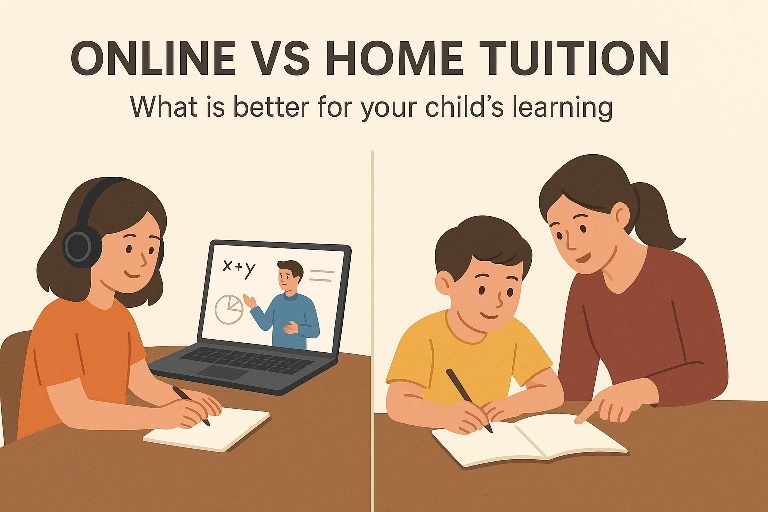
Online vs Home Tuition: What is Best for Your Child’s Learning?

Online Vs Home Tuition – What is better for your child’s learning

Online Tuition vs Home Tuition: What’s Best for Your Child?

In today’s fast-changing education world, many parents wonder: Should I choose online tuition or home tuition for my child?

With over 10 years of experience teaching students across India and abroad, I’ve seen the good and the challenges of both online and home tuition. Each has its own benefits depending on your child’s age, learning style, goals, and home setup. This article will help you decide what’s best for your child.

What Does the Data Say?

A 2022 report by Redseer Strategy Consultants showed that India’s online education market was worth $2.8 billion in 2021 and is expected to grow to $11 billion by 2025. Almost 40% of this is from K-12 tutoring.

A 2023 IndiaTutor survey found that:

  • 67% of parents prefer home tutors for children aged 5 to 12.

  • 75% of high school students like online tuition because it is flexible and saves time.

The National Education Policy (NEP) 2020 also supports a mix of online and offline learning, making this choice even more important.

Home Tuition: The Traditional Way

Advantages:

  • Personal Attention: Tutors can understand your child better by seeing their expressions and body language.

  • Less Distraction: A quiet home environment helps young kids focus.

  • Better Relationship: Tutors often become mentors and friends, which motivates the child.

  • Parent’s Role: Parents can easily check on their child’s progress and talk to the tutor.

Disadvantages:

  • Limited tutors available nearby.

  • Tutors and students need to travel, which takes time and money.

  • Usually more expensive because of travel costs.

Example:
Riya, a 7-year-old from Delhi, struggled with online classes. After switching to a home tutor, she gained confidence and improved in just 3 months.

Online Tuition: Modern and Flexible

Advantages:

  • Access to Experts: Learn from top tutors anywhere in India, including IIT and IIM graduates.

  • Flexible Timing: Classes can be scheduled anytime, even weekends or holidays.

  • Interactive Tools: Features like digital whiteboards and screen sharing make lessons fun and clear.

  • Session Recording: Students can watch recorded lessons again to revise.

Disadvantages:

  • Long screen time may tire young kids.

  • Internet problems can interrupt classes, especially in smaller towns.

  • Tutors may miss subtle cues if the child is confused or distracted.

Example:
Arjun, an 11th-grade student in Pune, used online tutors from different cities to prepare for JEE and ranked in the top 1000 in 2023.

What Works Best by Age?

Age GroupBest Tuition TypeWhy
5–10 yrsHome TuitionNeeds close guidance and routine
11–14 yrsHybrid (Home + Online)Balance of personal and tech help
15+ yrsOnline TuitionMore self-study, expert help needed

Things to Think About Before Choosing

  • Is your child motivated to study on their own?

  • Do you have a good internet connection and a quiet place at home?

  • Does your child need hands-on help or just concept explanations?

  • Are good tutors available nearby or only online?

Final Advice: A Mix of Both is Best

There’s no one perfect choice. Often, starting with a home tutor to build basics and then switching to online classes for advanced topics works well. At IndiaTutor.in, you can find both online and home tutors and choose what fits your child’s needs best.

Find the Best Tutors on IndiaTutor.in

Looking for top online tutors in Mumbai or trusted home tutors in Lucknow? IndiaTutor.in connects you with verified, experienced teachers from all over India.

By Nidhi Mehta
Founder, IndiaTutor.in


error: Content is protected !!