

How Education Boards Affect Career Choices

How Education Boards Affect Career Choices

Choosing a school education board is one of the most important decisions parents make for their children. While many families focus on school reputation, fees, and location, the curriculum followed by the school can also influence academic development, learning style, higher education opportunities, and future career paths.

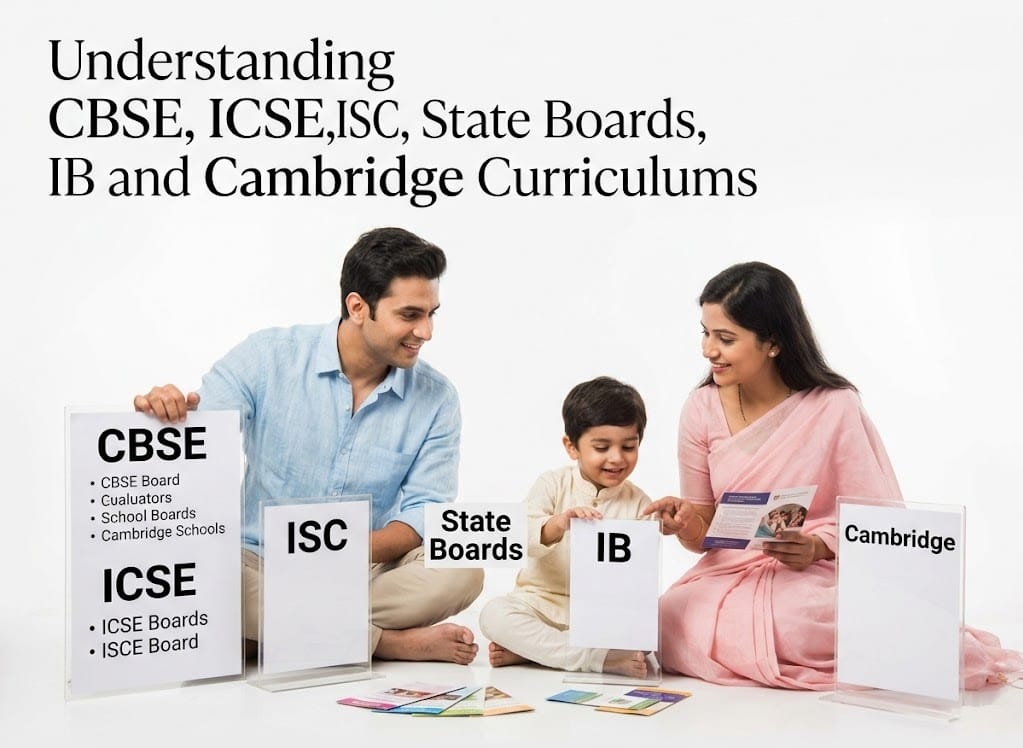
In India and around the world, students study under different education systems such as CBSE, ICSE, ISC, State Boards, International Baccalaureate (IB), and Cambridge. Each curriculum has its own teaching methods, assessment patterns, subject choices, and learning outcomes.

A common question among parents is whether the education board can affect a student’s future career. The answer is yes, but perhaps not in the way many people think. The board itself does not determine success, but it can shape academic strengths, skill development, and preparation for specific goals.

Why Education Boards Matter

Education boards create the framework through which students learn. They determine:

    • Subjects offered
    • Examination methods
    • Assessment standards
    • Teaching approaches
    • Skill development opportunities
    • Academic flexibility

The knowledge and skills gained during school years often influence future academic and professional choices.

According to the World Economic Forum, critical thinking, problem-solving, communication, and adaptability are among the most valuable skills for future careers. Different education boards emphasize these skills in different ways.

Understanding CBSE, ICSE, ISC, State Boards, IB and Cambridge Curriculums  

Understanding Major Education Boards

CBSE (Central Board of Secondary Education)

CBSE is one of the most widely followed education boards in India. More than 30,000 schools in India and abroad are affiliated with CBSE.

The curriculum focuses on:

    • Mathematics and Science
    • Conceptual understanding
    • Structured learning
    • National-level competitive examinations

Students preparing for entrance exams such as JEE, NEET, CUET, and NDA often find the CBSE curriculum aligned with exam syllabi.

Career Areas Commonly Pursued by CBSE Students

    • Engineering
    • Medicine
    • Defence Services
    • Government Examinations
    • Technology
    • Data Science

ICSE and ISC

ICSE is conducted for Class 10, while ISC covers Classes 11 and 12.

The curriculum places strong emphasis on:

    • English language proficiency
    • Analytical thinking
    • Project-based learning
    • Balanced subject exposure

Students often develop strong writing, research, and communication skills.

Career Areas Commonly Pursued by ICSE and ISC Students

    • Law
    • Journalism
    • Literature
    • Management
    • Social Sciences
    • Liberal Arts

How to Choose the Right School Board for Your Child

How State Boards Influence Career Choices

State Boards serve millions of students across India and are designed according to regional educational requirements.

Many state boards provide:

    • Affordable education
    • Regional language learning
    • Localized curriculum
    • Strong preparation for state-level examinations

Several successful doctors, engineers, civil servants, entrepreneurs, and scientists have graduated from State Board schools.

Advantages for Certain Career Paths

Students aiming for:

    • State Public Service Commissions
    • State Government Jobs
    • Regional Professional Colleges
    • Local University Admissions

may benefit from familiarity with state-specific educational systems.

The Growing Popularity of International Curriculums

International Baccalaureate (IB)

IB is known for encouraging inquiry-based learning and global perspectives.

Students are encouraged to:

    • Think independently
    • Conduct research
    • Participate in community projects
    • Develop international awareness

The IB Diploma Programme is recognized by universities in more than 150 countries.

Careers Often Linked with IB Graduates

    • International Business
    • Global Studies
    • Research
    • Economics
    • International Relations
    • Entrepreneurship

Common Academic Challenges Students Face in Different Boards

Cambridge Curriculum

The Cambridge pathway includes Primary, Lower Secondary, IGCSE, and International AS & A Levels.

The curriculum emphasizes:

    • Critical thinking
    • Independent learning
    • Subject specialization
    • International academic standards

Cambridge qualifications are accepted by universities worldwide.

Career Areas Commonly Pursued by Cambridge Students

    • Finance
    • Computer Science
    • Design
    • Business Management
    • International Education
    • Scientific Research

Does One Board Guarantee Career Success?

A common misconception is that one board automatically leads to better career outcomes.

Research consistently shows that long-term success depends more on:

    • Student interest
    • Academic effort
    • Quality teaching
    • Learning habits
    • Family support
    • Skill development

A study published by the Organisation for Economic Co-operation and Development (OECD) found that problem-solving ability, adaptability, and lifelong learning skills are stronger indicators of future success than examination scores alone.

The education board provides a foundation, but personal commitment plays a much larger role.

How Subject Choices Matter More Than the Board

In many cases, subject selection has a greater impact on career opportunities than the curriculum itself.

For example:

Engineering Aspirants

Students usually require strong foundations in:

    • Physics
    • Chemistry
    • Mathematics

Medical Aspirants

Students need:

    • Biology
    • Chemistry
    • Physics

Future Lawyers

Students benefit from:

    • English
    • Political Science
    • History
    • Sociology

Business and Finance Careers

Useful subjects include:

    • Economics
    • Accountancy
    • Mathematics
    • Business Studies

Regardless of the board, choosing subjects aligned with career goals is essential.

Understanding Different Grading Systems Across Education Boards

Skills Employers Value Today

The modern job market is changing rapidly.

According to LinkedIn’s workplace studies and employer surveys, organizations increasingly look for candidates with:

Communication Skills

The ability to express ideas clearly remains valuable across industries.

Critical Thinking

Employers seek individuals who can analyze information and make informed decisions.

Digital Literacy

Technology is now part of almost every profession.

Collaboration

Teamwork is essential in workplaces around the world.

Adaptability

Many professionals will change careers multiple times during their working lives.

Students should focus on developing these abilities alongside academic achievement.

Factors Parents Should Consider When Choosing a Board

Child’s Learning Style

Some students thrive in structured environments, while others perform better with inquiry-based learning.

Career Aspirations

Long-term goals can help guide curriculum choices.

Higher Education Plans

Students planning to study abroad may prefer international curriculums, while those targeting Indian competitive examinations often benefit from nationally aligned syllabi.

Availability of Academic Support

Access to experienced teachers, learning resources, and subject experts can significantly influence outcomes.

Why Personalized Tuition Improves Performance Across All Education Boards

Real-World Examples

An aspiring engineer preparing for JEE may find the CBSE curriculum closely aligned with entrance examination requirements.

A student interested in international university admissions may appreciate the research and analytical focus of IB or Cambridge.

A student preparing for regional government examinations may benefit from a State Board curriculum.

At the same time, successful professionals emerge from every education system. India has produced entrepreneurs, scientists, doctors, judges, civil servants, and business leaders from CBSE, ICSE, ISC, State Boards, IB, and Cambridge backgrounds.

My Thoughts

Education boards influence how students learn, think, and prepare for future opportunities. They can shape academic strengths and learning experiences, but they do not determine career success on their own.

The most important factors remain curiosity, discipline, skill development, quality guidance, and consistent effort. Parents should focus on finding the right educational environment that matches their child’s abilities, interests, and future aspirations.

For students who need additional academic support, a private tutor can provide personalized attention that is difficult to achieve in a classroom setting. One-to-one guidance helps identify learning gaps, improve confidence, strengthen subject knowledge, and develop effective study habits. Experienced tutors can also adapt lessons to the requirements of CBSE, ICSE, ISC, State Boards, IB, and Cambridge curriculums, helping students achieve their academic and career goals more effectively.

Looking for expert tutors?

Find Verified Tutors on IndiaTutor.in

About the Author

Nidhi Mehta is the founder of IndiaTutor.in and a professional online educator with over 11 years of teaching experience. She specializes in tutoring Classes 1 to 6 across core academic subjects, with a strong focus on concept clarity and foundational skill-building. Her teaching approach is based on personalized, one-to-one learning that helps students develop long-term academic confidence and understanding.

Visit her profile    Visit About Us Page

Understanding CBSE, ICSE, ISC, State Boards, IB and Cambridge Curriculums

Understanding CBSE, ICSE, ISC, State Boards, IB and Cambridge Curriculums

Choosing the right school curriculum is one of the most important decisions parents make for their child’s education. Every curriculum follows a different teaching approach, assessment style, and learning philosophy. While all aim to build knowledge and skills, they prepare students in different ways for higher education and future careers.

In India, the most common school curriculums include CBSE, ICSE, ISC, State Boards, the International Baccalaureate (IB), and Cambridge. Understanding how each one works can help parents select the best fit for their child’s learning style, academic goals, and future plans.

According to the Ministry of Education, India has more than 1.5 million schools serving over 250 million students, making it one of the world’s largest education systems. Students today have more curriculum choices than ever before, making informed decisions increasingly important.

How Education Boards Affect Career Choices

Why Understanding Different School Curriculums Matters

Every child learns differently. Some students enjoy structured learning, while others perform better through projects, research, discussions, and practical activities. The curriculum influences:

    • Subjects offered
    • Teaching methods
    • Examination pattern
    • Grading system
    • Homework expectations
    • Critical thinking development
    • College and career opportunities

Choosing the right curriculum is not about finding the “best” one. It is about finding the one that best matches a student’s strengths, interests, and long-term goals.

What is CBSE?

The Central Board of Secondary Education (CBSE) is one of India’s largest national education boards. Thousands of schools across India and many international schools abroad follow the CBSE curriculum.

Key Features of CBSE

    • Uniform curriculum across affiliated schools
    • Strong emphasis on Mathematics and Science
    • NCERT textbooks form the academic foundation
    • Regular syllabus updates
    • Focus on conceptual understanding
    • Widely accepted across Indian colleges and universities

Who Benefits Most from CBSE?

CBSE is often preferred by families whose children may relocate frequently because the curriculum remains consistent across affiliated schools.

It is also a popular choice for students preparing for competitive examinations such as engineering and medical entrance tests because these exams are largely based on NCERT concepts.

What is ICSE?

The Indian Certificate of Secondary Education (ICSE) is conducted by the Council for the Indian School Certificate Examinations (CISCE).

ICSE is known for its balanced curriculum that gives equal importance to languages, sciences, mathematics, social sciences, arts, and practical learning.

Key Features of ICSE

    • Strong focus on English language skills
    • Detailed subject content
    • Project work and internal assessments
    • Application-based learning
    • Broad subject choices

Students often develop strong communication, analytical thinking, and writing skills through the ICSE curriculum.

What is ISC?

The Indian School Certificate (ISC) is the senior secondary curriculum offered by CISCE for Classes 11 and 12.

Key Features of ISC

    • Flexible subject combinations
    • In-depth academic content
    • Strong emphasis on analytical writing
    • Extensive practical and project work
    • Preparation for university education

Students can choose combinations across Science, Commerce, Humanities, and other disciplines depending on their career aspirations.

How to Choose the Right School Board for Your Child

Understanding State Boards

Every Indian state has its own education board designed according to regional educational priorities and state-level requirements.

Examples include boards in Maharashtra, Tamil Nadu, Karnataka, Uttar Pradesh, Rajasthan, Gujarat, West Bengal, Kerala, Punjab, and many other states.

Key Features of State Boards

    • Regional language options
    • Affordable education
    • Curriculum aligned with state universities
    • Focus on local history and culture
    • State-level examination system

Many students successfully qualify for engineering, medical, civil services, and government examinations after studying in State Board schools.

The curriculum and assessment methods may vary from one state to another.

What is the International Baccalaureate (IB)?

The International Baccalaureate (IB) is an internationally recognized education framework followed by schools in more than 160 countries.

Rather than emphasizing memorization, IB encourages students to become independent thinkers, researchers, and effective communicators.

Main IB Programmes

Primary Years Programme (PYP)

Designed for younger learners with inquiry-based education.

Middle Years Programme (MYP)

Encourages interdisciplinary learning and practical application.

Diploma Programme (DP)

A rigorous programme for students aged 16 to 19 that is widely respected by universities worldwide.

Key Features of IB

    • Inquiry-based learning
    • Research projects
    • International perspective
    • Creativity, Activity and Service (CAS)
    • Critical thinking
    • Independent learning

Many universities around the world value the research and analytical skills developed through the IB Diploma Programme.

Common Academic Challenges Students Face in Different Boards

What is Cambridge Curriculum?

The Cambridge curriculum is developed by Cambridge Assessment International Education and is followed by schools in more than 160 countries.

It provides a flexible learning pathway from primary education through advanced secondary education.

Cambridge Learning Stages

Cambridge Primary

Builds strong foundations in literacy, numeracy, and science.

Cambridge Lower Secondary

Develops subject knowledge and problem-solving skills.

Cambridge IGCSE

Typically taken by students aged 14 to 16, Cambridge IGCSE is one of the world’s most recognized international qualifications.

Students can choose from a wide range of subjects according to their interests.

Cambridge International AS & A Level

These advanced qualifications prepare students for university education across the world.

Key Features of Cambridge

    • Flexible subject selection
    • Global recognition
    • Conceptual learning
    • Practical assessments
    • Research-based assignments
    • Development of independent learning skills

Cambridge qualifications are accepted by universities in many countries.

Understanding Different Grading Systems Across Education Boards

Comparing the Major School Curriculums

Learning Style

CBSE focuses on conceptual clarity.

ICSE provides detailed subject knowledge.

ISC promotes deeper academic understanding.

State Boards vary depending on the state.

IB emphasizes inquiry and research.

Cambridge encourages flexible and application-oriented learning.

Assessment

CBSE combines theory with competency-based questions.

ICSE includes written examinations along with project work.

ISC places strong emphasis on analytical writing and practical assessments.

State Boards follow their respective examination systems.

IB evaluates students using coursework, projects, presentations, and examinations.

Cambridge uses a combination of written papers, coursework, and practical assessments depending on the subject.

Best for Higher Education

All these curriculums provide pathways to higher education.

The right choice depends on where a student intends to study and the learning environment that suits them best.

Students aiming for Indian competitive examinations often find CBSE helpful because of its alignment with NCERT.

Students planning to study overseas may benefit from IB or Cambridge qualifications, as these are widely recognized internationally.

Which Curriculum is the Hardest?

There is no universally hardest curriculum.

Difficulty depends on several factors:

    • Learning style
    • Interest in subjects
    • Quality of teaching
    • Study habits
    • Time management
    • Academic support

A curriculum that challenges one student may be ideal for another.

Why Personalized Tuition Improves Performance Across All Education Boards

Common Misconceptions

Higher Fees Mean Better Education

School quality depends on teaching standards, student support, and learning environment, not only on curriculum or fees.

One Curriculum Guarantees Success

Academic success depends on consistent effort, curiosity, discipline, and guidance rather than the curriculum alone.

Students Cannot Switch Curriculums

Many students successfully transition between curriculums with proper planning and academic support.

How Parents Can Choose the Right Curriculum

Before selecting a curriculum, consider:

    • Your child’s interests
    • Learning preferences
    • Future career plans
    • College aspirations
    • Language comfort
    • School teaching quality
    • Availability of academic support

Visiting schools, interacting with teachers, and understanding the curriculum structure can help parents make a confident decision.

Frequently Asked Questions

Which curriculum is best for engineering and medical entrance exams?

Many students preparing for national competitive examinations prefer CBSE because of its close alignment with NCERT textbooks.

Is ICSE better than CBSE?

Neither is universally better. Both have different strengths and suit different learners.

Is IB accepted in India?

Yes. Universities across India and around the world recognize IB qualifications, subject to their admission requirements.

Is Cambridge accepted by Indian universities?

Yes. Cambridge qualifications are accepted by many Indian universities as well as institutions across the globe, provided students meet the respective eligibility criteria.

Can students move from one curriculum to another?

Yes. Many schools admit transfer students, although some additional academic preparation may be required depending on syllabus differences.

My Thoughts

Every curriculum offers valuable learning opportunities. The best choice depends on a student’s goals, interests, strengths, and preferred learning style. Rather than searching for the “perfect” board, focus on finding a school and curriculum that encourage curiosity, confidence, and consistent academic growth.

No matter which curriculum a student follows, there may be times when extra academic support becomes valuable. A private tutor provides individual attention, explains difficult concepts at the student’s pace, strengthens confidence, and fills learning gaps that may not be addressed in a busy classroom. Personalised tuition also helps students prepare effectively for school assessments, board examinations, and competitive tests while developing better study habits and independent learning skills.

Find Verified Tutors on IndiaTutor.in

About the Author

Nidhi Mehta is the founder of IndiaTutor.in and a professional online educator with over 11 years of teaching experience. She specializes in tutoring Classes 1 to 6 across core academic subjects, with a strong focus on concept clarity and foundational skill-building. Her teaching approach is based on personalized, one-to-one learning that helps students develop long-term academic confidence and understanding.
Visit her profile    Visit About Us Page

How to Learn Accounting Concepts Faster and Remember Them Longer

How to Learn Accounting Concepts Faster and Remember Them Longer

Accounting is often seen as a subject full of rules, formats, and calculations. Many students try to memorize it, but still forget concepts during exams. The real issue is not difficulty, but the way it is learned. Accounting becomes easy when understood through logic, repetition techniques, and structured practice. Research in cognitive science shows that students retain information up to 80% longer when they actively recall concepts instead of passively reading them.

This article explains simple, practical, and proven methods to learn accounting concepts faster and remember them for a long time.

Why Accounting Feels Difficult for Many Students

Heavy use of concepts and logic

Accounting is not just theory. It is a system of rules connected to real business activity. Students who treat it like memorization often struggle.

Multiple formats and rules

Journal entries, ledgers, trial balances, and final accounts each follow structured formats. Confusion happens when students mix steps.

Lack of practice consistency

According to educational research published by the National Training Laboratories, learners forget nearly 70% of new information within 24 hours if it is not revised. Accounting requires daily revision to avoid this loss.

Weak foundation in basics

Most errors in higher classes come from unclear understanding of debit-credit rules introduced in early chapters.

How the Brain Learns Accounting Faster

Active recall improves memory strength

A study by cognitive psychologist Henry Roediger shows that testing yourself repeatedly improves memory retention by nearly 50% more than rereading notes. In accounting, solving problems without looking at solutions strengthens recall.

Spaced repetition increases long-term retention

Research from learning science shows that revising concepts at increasing time intervals improves retention by up to 200%. For example, revising journal entries after 1 day, then 3 days, then 7 days helps the brain store them in long-term memory.

Visualization builds understanding

Students who convert accounting entries into story-like transactions remember them better. For example, “Bought goods for cash” becomes a visual exchange instead of a rule to memorize.

Career Opportunities for Students Who Study Accounting

Step-by-Step Method to Learn Accounting Faster

Build strong basics first

Understand debit and credit deeply

Instead of memorizing rules, focus on logic:

    • Assets increase → debit
    • Liabilities increase → credit

Learn classification of accounts

Group accounts into:

    • Personal accounts
    • Real accounts
    • Nominal accounts

This structure reduces confusion during exams.

Learn through real-life examples

Connect transactions to daily life

Example:

    • Buying stationery → expense
    • Selling goods → revenue
    • Paying rent → expense

When students relate entries to real situations, memory becomes stronger.

Use simple business stories

Imagine a small shop:

    • Owner invests money
    • Buys goods
    • Sells products
    • Pays rent

This storyline helps connect all accounting entries logically.

Practice using active recall technique

Close-book problem solving

Instead of looking at notes:

    • Attempt journal entries first
    • Then check answers
    • Correct mistakes immediately

Studies show active recall improves exam performance by 20–30% compared to passive revision.

Teach someone else

Explaining concepts to a friend or family member improves understanding significantly. This technique is supported by the “learning pyramid” model used in education psychology.

Use structured revision plan

Daily revision cycle

    • Day 1: Learn concept
    • Day 2: Solve 10–15 questions
    • Day 4: Revise without notes
    • Day 7: Full test

This system ensures concepts stay in long-term memory.

Weekly mock tests

Mock tests simulate exam pressure and improve speed. Research shows students who practice under timed conditions perform better by nearly 25% in final exams.

Best Study Techniques for Accounts Students

Common Mistakes That Slow Down Learning

Memorizing instead of understanding

Accounting is logic-based. Memorization leads to confusion when questions change format.

Skipping practice questions

Reading theory alone is not enough. At least 60–70% of learning should come from problem solving.

Ignoring mistakes

Every mistake highlights a weak concept. Students who review errors regularly improve faster.

Mixing formats

Writing journal entries incorrectly or confusing ledger formats leads to marks loss even when concepts are known.

Smart Techniques to Improve Retention

Chunking method

Break large topics into smaller parts. For example:

    • Journal entries → 5 types
    • Ledger → 3 steps
    • Trial balance → 2 methods

Small chunks are easier for the brain to store.

Color-coded notes

Using different colors for:

    • Debit (blue)
    • Credit (red)
    • Formulas (green)

This improves visual memory and recall speed.

Formula sheet creation

Create a one-page summary of all key formats. Revising this sheet daily increases recall efficiency.

Error notebook method

Maintain a notebook for mistakes only. Studies show reviewing mistakes improves accuracy faster than re-learning correct answers.

How to Score 90+ Marks in Accounts Without Studying All Day

Real Example of Faster Learning

A student preparing for Class 12 Accounts struggled with final accounts for 3 months. After switching to structured practice:

    • 30 minutes daily active recall
    • Weekly timed tests
    • Error tracking notebook

The student improved from 52% to 81% in two months. The key change was not more study time, but better learning method.

Why Consistency Matters More Than Hours

Research in learning science shows that 1 hour of focused daily study is more effective than 5 hours of irregular study. The brain builds stronger neural connections through repetition over time, not through one-time effort.

How to Build Strong Accounting Fundamentals from the Beginning

How to Stay Motivated in Accounting

Set small goals

Instead of “finish full syllabus,” aim for:

    • 10 journal entries today
    • 1 chapter per week

Track progress visually

Mark completed topics on a checklist. This creates motivation and clarity.

Reward system

Small rewards after completing study targets help maintain consistency.

How to Choose the Right Accounts Tutor for Class 11 and 12

My Thoughts

Accounting becomes simple when learned with logic, practice, and structured revision instead of memorization. Students who apply active recall, spaced repetition, and real-life examples improve faster and retain concepts longer. Consistency is more important than long study hours. Small daily effort leads to strong exam performance over time.

For students who still struggle despite regular practice, guided support can make a major difference. A private tutor provides step-by-step explanations, identifies weak areas early, and creates a personalized learning plan. One-to-one attention ensures mistakes are corrected instantly, concepts become clearer, and exam preparation becomes more structured and effective. With the right guidance, students often improve confidence and marks significantly in a shorter time.

Looking for expert Accounts tutors?

Find Accounts Tutors on IndiaTutor.in

About the Author

Nidhi Mehta is the founder of IndiaTutor.in and a professional online educator with over 11 years of teaching experience. She specializes in tutoring Classes 1 to 6 across core academic subjects, with a strong focus on concept clarity and foundational skill-building. Her teaching approach is based on personalized, one-to-one learning that helps students develop long-term academic confidence and understanding.

Visit her profile    Visit About Us Page

Career Opportunities for Students Who Study Accounting

Career Opportunities for Students Who Study Accountingc

Accounting is one of the most stable and widely used career fields in the world. Every business, whether small shop or multinational company, needs professionals who can manage money, prepare reports, handle taxes, and ensure compliance. Students who study accounting are not limited to a single job role. Instead, they gain access to a wide range of career paths across finance, business, government, and global industries.

This article explains real career options, salary expectations, global demand, and future scope of accounting in a simple and practical way.

Why Accounting is a Strong Career Choice

Accounting is often called the language of business. It helps organizations understand profit, loss, expenses, and financial health.

According to the U.S. Bureau of Labor Statistics (BLS), employment of accountants and auditors is projected to grow steadily at around 4% between 2022 and 2032, which is considered average growth for most professions but very stable compared to many fields affected by automation.

In India, ICAI (Institute of Chartered Accountants of India) reports increasing demand for accounting professionals due to expanding startups, GST compliance, digital taxation systems, and global outsourcing of financial services.

This shows that accounting is not just traditional bookkeeping anymore. It has become a modern, technology-driven profession.

Core Career Paths in Accounting

Students who study accounting can choose from multiple professional directions depending on their skills and interests.

Chartered Accountant (CA)

A Chartered Accountant is one of the most respected careers in India.

What CAs Do

    • Audit financial statements
    • File taxes and manage GST compliance
    • Provide financial advisory services
    • Help companies with budgeting and forecasting

Career Scope

    • High demand in India and abroad
    • Opportunities in Big 4 firms like Deloitte, EY, KPMG, PwC
    • Independent practice after certification

Salary Range

Fresh CAs in India can earn between ₹7 lakh to ₹12 lakh per year on average. Experienced professionals often cross ₹25 lakh to ₹60 lakh annually depending on expertise.

How to Learn Accounting Concepts Faster and Remember Them Longer

Company Secretary (CS)

Company Secretaries manage legal and regulatory compliance of organizations.

Key Responsibilities

    • Ensure corporate governance
    • Handle board meetings and documentation
    • Maintain legal records
    • Advise companies on company law matters

Career Growth

CS professionals are required in listed companies, large corporations, and consultancy firms. With India’s increasing corporate regulations, demand continues to rise.

Cost and Management Accountant (CMA)

CMA professionals focus on cost control and internal financial management.

What They Do

    • Analyze business costs
    • Help improve profit margins
    • Prepare financial planning reports
    • Support strategic decision-making

Career Outlook

CMAs are widely employed in manufacturing, logistics, and large enterprises where cost efficiency is critical.

Best Study Techniques for Accounts Students

Accounting and Finance Jobs in Corporates

Not every student becomes a CA, CS, or CMA. Many choose direct job roles in companies after graduation.

Common Job Roles

Financial Analyst

Financial analysts study business performance and investment opportunities.

    • Average salary in India: ₹4 lakh to ₹12 lakh per year
    • Strong demand in banking and investment firms

Accountant

Accountants handle daily financial records, payroll, and reporting.

    • Entry-level salary: ₹2.5 lakh to ₹5 lakh per year
    • Growth with experience and skill in software like Tally and SAP

Internal Auditor

Internal auditors review company systems and identify risks or errors.

    • Salary range: ₹4 lakh to ₹10 lakh per year
    • High demand in large organizations and MNCs

Government Job Opportunities in Accounting

Accounting students can also apply for stable government positions.

Popular Roles

    • Accounts Officer
    • Tax Assistant
    • Auditor in CAG (Comptroller and Auditor General of India)
    • Income Tax Inspector (through SSC exams)

Why Government Jobs Are Attractive

    • Job security
    • Fixed salary structure
    • Pension and benefits
    • Work-life balance

SSC CGL exam and UPSC finance-related posts are common pathways for accounting graduates.

How to Score 90+ Marks in Accounts Without Studying All Day

Banking and Financial Sector Careers

Banks are one of the largest employers of accounting professionals.

Roles in Banking

Probationary Officer (PO)

    • Handles customer accounts and banking operations
    • Salary: ₹5 lakh to ₹9 lakh per year

Credit Analyst

    • Evaluates loan applications
    • Studies financial risk of borrowers

Investment Banking Assistant Roles

    • Works on mergers, acquisitions, and capital markets

India’s growing banking sector continues to create thousands of new roles every year.

International Career Opportunities

Accounting is a global profession. Certifications like ACCA (Association of Chartered Certified Accountants), CPA (Certified Public Accountant), and CFA (Chartered Financial Analyst) open international career doors.

Countries with High Demand

    • United Kingdom
    • Canada
    • Australia
    • United Arab Emirates
    • Singapore

Salary Insight

In countries like the UK and Canada, accountants earn between £30,000 to £60,000 annually in early to mid-level roles. Senior professionals can earn significantly higher.

How to Build Strong Accounting Fundamentals from the Beginning

Emerging Careers in Accounting

The accounting field is changing rapidly due to technology and digital tools.

1. Forensic Accounting

Forensic accountants investigate financial fraud and scams.

    • Used in legal cases and corporate investigations
    • High demand in banks and insurance companies

2. Financial Technology (FinTech)

Accounting professionals are now working in fintech startups.

    • Digital payments
    • Blockchain accounting
    • Automated financial systems

3. Data Analytics in Finance

Modern accountants use data tools to analyze trends and predict business performance.

    • Tools: Excel, Power BI, Python-based financial tools
    • Growing demand in multinational companies

Skills Required for Accounting Careers

To succeed in accounting, students need both academic knowledge and practical skills.

Technical Skills

    • Financial accounting
    • Taxation knowledge
    • GST and compliance rules
    • Accounting software (Tally, SAP, QuickBooks)

Soft Skills

    • Attention to detail
    • Analytical thinking
    • Problem-solving ability
    • Communication skills

Challenges Students Face in Accounting

Many students struggle with accounting because it requires logical understanding, not just memorization.

Common difficulties include:

    • Journal entries and ledger posting
    • Trial balance errors
    • Final accounts preparation
    • Time management during exams

Students who overcome these challenges often perform much better in board exams and professional courses.

How to Choose the Right Accounts Tutor for Class 11 and 12

Future Scope of Accounting in India

India’s economy is expanding, and businesses are becoming more structured and regulated.

Key growth drivers include:

    • GST implementation
    • Startup ecosystem growth
    • Foreign investments
    • Digital accounting systems

According to industry reports, India’s financial services sector is expected to grow significantly over the next decade, creating continuous demand for accounting professionals at all levels.

Why Accounting Remains a Safe Career Choice

Unlike many industries affected by automation, accounting is evolving rather than shrinking. Software can handle calculations, but interpretation, decision-making, and advisory roles still require human expertise.

This makes accounting a balanced career with both stability and long-term growth.

My Thoughts

Accounting is not limited to classroom theory. It opens doors to multiple industries including finance, taxation, auditing, banking, corporate management, and international business. Students who build strong fundamentals early can access high-paying and respected roles across the world.

Success in accounting depends heavily on clarity of concepts and regular practice. Many students improve significantly when they receive structured guidance, especially during board exam preparation and complex topics like taxation or final accounts.

A private tutor can help students understand difficult concepts in a simple way, provide step-by-step problem solving, and correct mistakes instantly. One-to-one attention ensures better focus, faster doubt resolution, and improved confidence in exams. Regular guidance from an experienced tutor often leads to higher marks and stronger conceptual clarity, especially in subjects like accounting where practice and accuracy matter most.

Looking for expert Accounts tutors?

Find Accounts Tutors on IndiaTutor.in

About the Author

Nidhi Mehta is the founder of IndiaTutor.in and a professional online educator with over 11 years of teaching experience. She specializes in tutoring Classes 1 to 6 across core academic subjects, with a strong focus on concept clarity and foundational skill-building. Her teaching approach is based on personalized, one-to-one learning that helps students develop long-term academic confidence and understanding.

Visit her profile    Visit About Us Page

Is Psychology a Good Career Choice in India?

Is Psychology a Good Career Choice in India

Psychology has emerged as one of the most discussed and sought-after subjects among students in recent years. Growing awareness about mental health, human behavior, workplace well-being, and emotional intelligence has created new opportunities for psychology graduates across multiple industries.

Many students and parents often ask, “Is Psychology a good career choice in India?” The answer depends on your interests, career goals, and willingness to pursue specialized education. However, one thing is certain: psychology is no longer limited to counseling clinics and hospitals. Today, psychologists contribute to education, healthcare, business, sports, technology, research, and public policy.

This article explores the scope, career opportunities, salary prospects, challenges, and future growth of psychology in India.

What Is Psychology?

Psychology is the scientific study of human behavior, emotions, thoughts, learning, memory, personality, and mental processes. It helps us understand why people think, feel, and act in certain ways.

Students who study psychology learn about topics such as:

    • Human development
    • Learning and memory
    • Social behavior
    • Personality
    • Mental health
    • Motivation
    • Emotional intelligence
    • Psychological disorders
    • Research methods

The subject combines theory, observation, analysis, and practical application.

The Role of Psychology in Everyday Life

Why Is Psychology Becoming Popular in India?

India has witnessed a significant increase in awareness regarding mental health over the past decade. Educational institutions, corporations, healthcare organizations, and government bodies are increasingly recognizing the importance of psychological well-being.

According to the World Health Organization, mental health conditions affect millions of people globally, creating a growing need for trained professionals who can provide support, research, and intervention.

The COVID-19 pandemic further highlighted the importance of mental wellness. Anxiety, stress, burnout, and emotional challenges became major concerns for students, employees, and families. As a result, demand for qualified psychology professionals has increased substantially.

Key Reasons Behind Growing Demand

    • Increased awareness of mental health
    • Rising workplace stress
    • Expansion of counseling services
    • Greater focus on student well-being
    • Growing acceptance of therapy
    • Demand for behavioral experts in organizations
    • Increased research opportunities

Is Psychology a Good Subject for Students?

Psychology is an excellent choice for students who enjoy understanding people, solving problems, observing behavior, and helping others.

The subject develops valuable skills such as:

    • Critical thinking
    • Communication
    • Research and analysis
    • Problem-solving
    • Observation
    • Empathy
    • Decision-making

These skills remain useful regardless of the career path students eventually choose.

Who Should Consider Psychology?

Psychology may be a good fit if you:

    • Enjoy studying human behavior
    • Like reading and analyzing situations
    • Have strong listening skills
    • Want to work with people
    • Are interested in mental health
    • Enjoy research and learning

Students from Arts, Humanities, Science, and even Commerce backgrounds can pursue psychology at higher levels.

How to Build Critical Thinking Skills Through Psychology  

Career Opportunities in Psychology

One of the biggest misconceptions is that psychology only leads to counseling careers. In reality, psychology graduates work across a wide range of industries.

Clinical Psychologist

Clinical psychologists assess, diagnose, and help individuals dealing with emotional, behavioral, and psychological difficulties.

They often work in:

    • Hospitals
    • Mental health centers
    • Rehabilitation facilities
    • Private practice

Counseling Psychologist

Counseling psychologists help people manage everyday challenges such as stress, anxiety, relationships, academic pressure, and career concerns.

They commonly work in:

    • Schools
    • Colleges
    • Universities
    • Community organizations
    • Private counseling centers

Educational Psychologist

Educational psychologists focus on learning, development, and student performance.

Their work may involve:

    • Learning difficulties
    • Academic interventions
    • Student assessments
    • Educational research

Industrial and Organizational Psychologist

Businesses increasingly rely on psychology professionals to improve workplace performance.

Responsibilities include:

    • Employee engagement
    • Leadership development
    • Recruitment
    • Workplace well-being
    • Organizational behavior analysis

Sports Psychologist

Athletes often work with sports psychologists to improve focus, confidence, motivation, and performance under pressure.

As sports participation grows in India, opportunities in this field continue to expand.

Research Psychologist

Research psychologists study behavior and mental processes through scientific investigation.

They work in:

    • Universities
    • Research institutions
    • Government projects
    • Private organizations

Human Resources Professional

Many psychology graduates build successful careers in human resource management because they understand motivation, behavior, communication, and workplace dynamics.

How to Improve Memory Retention for Psychology Subjects

What Is the Educational Pathway?

Students interested in psychology typically follow this route:

Bachelor’s Degree

A Bachelor of Arts (BA) or Bachelor of Science (BSc) in Psychology is the first step.

Master’s Degree

Specialization generally begins at the postgraduate level.

Popular options include:

    • Clinical Psychology
    • Counseling Psychology
    • Applied Psychology
    • Industrial Psychology
    • Educational Psychology

Advanced Qualifications

Certain professional roles require additional training, internships, supervised practice, or doctoral-level qualifications.

Students should carefully research the educational requirements of their preferred career path.

Effective Psychology Study Techniques for Better Results

What Is the Salary Potential?

Salary depends on qualifications, specialization, location, skills, and experience.

Entry-Level Professionals

Fresh graduates may start with modest salaries while gaining experience.

Experienced Specialists

Professionals with advanced qualifications and expertise can earn significantly higher compensation.

Fields such as organizational psychology, corporate training, behavioral consulting, and specialized mental health services often provide attractive earning opportunities.

Private practice also allows experienced professionals to build independent careers.

Challenges Students Should Know About

Like every profession, psychology comes with challenges.

Higher Education Is Often Necessary

Many specialized positions require postgraduate education and practical training.

Continuous Learning Is Important

Psychology is an evolving discipline. Professionals must stay updated with new research, techniques, and developments.

Emotional Demands

Those working directly with clients may encounter emotionally challenging situations and must maintain professional boundaries.

Despite these challenges, many psychologists find the profession deeply meaningful and rewarding.

How to Score Full Marks in Psychology

Future Scope of Psychology in India

The future of psychology in India appears promising.

Several factors support long-term growth:

Mental Health Awareness

More individuals are seeking professional support than ever before.

Expansion of Educational Services

Schools and universities increasingly recognize the importance of student counseling and psychological support.

Corporate Wellness Programs

Organizations are investing in employee well-being, resilience, and productivity initiatives.

Digital Counseling Platforms

Online counseling and teletherapy have made psychological services more accessible across the country.

Research and Data-Driven Decision Making

Governments, institutions, and businesses are increasingly using behavioral science to improve outcomes.

These trends indicate growing opportunities for psychology graduates in the coming years.

Is Psychology a Good Career Choice in India?

For students interested in human behavior, mental health, communication, research, and helping others, psychology can be an excellent career choice.

The subject offers intellectual challenge, diverse career paths, meaningful work, and growing employment opportunities. While advanced education is often necessary for specialized roles, the long-term prospects remain encouraging.

Rather than focusing only on salary, students should consider whether they genuinely enjoy understanding people and solving real-world problems. Those with passion, dedication, and the right qualifications can build successful and fulfilling careers in psychology.

How Can a Private Psychology Tutor Help?

Many students find psychology interesting but struggle with theories, research methods, case studies, and answer writing. A private psychology tutor can simplify difficult concepts, explain topics using real-life examples, and provide personalized guidance based on the student’s learning style.

Individual attention often helps students improve confidence, strengthen conceptual understanding, and perform better in school, college, and competitive examinations. A qualified psychology tutor can also assist with assignment preparation, exam strategies, revision planning, and career guidance, helping students achieve their academic goals more effectively.

Looking for expert Psychology tutors?

Find Psychology Tutors on IndiaTutor.in

About the Author

Nidhi Mehta is the founder of IndiaTutor.in and a professional online educator with over 11 years of teaching experience. She specializes in tutoring Classes 1 to 6 across core academic subjects, with a strong focus on concept clarity and foundational skill-building. Her teaching approach is based on personalized, one-to-one learning that helps students develop long-term academic confidence and understanding.

Visit her profile    Visit About Us Page

The Role of Psychology in Everyday Life

The Role of Psychology in Everyday Life

Psychology is often associated with therapists, researchers, and university classrooms. However, its influence extends far beyond academic settings. Psychology plays a significant role in everyday life, helping people understand thoughts, emotions, decisions, relationships, habits, and behavior.

Whether you are a student preparing for exams, a parent raising children, a professional managing workplace challenges, or simply someone trying to make better decisions, psychological principles affect your daily experiences. Understanding these concepts can improve communication, enhance productivity, strengthen relationships, and support overall well-being.

What Is Psychology?

Psychology is the scientific study of the mind and behavior. It examines how people think, feel, learn, remember, interact, and respond to different situations.

Modern psychology covers many areas, including:

    • Cognitive psychology
    • Developmental psychology
    • Social psychology
    • Educational psychology
    • Clinical psychology
    • Industrial and organizational psychology

Researchers use scientific methods to understand human behavior and identify patterns that can improve individual and societal outcomes.

Why Psychology Matters in Daily Life

Many people unknowingly apply psychological principles every day. From setting goals to making purchases, from managing stress to building friendships, psychology influences countless decisions and actions.

A study published by the American Psychological Association found that understanding human behavior can significantly improve problem-solving abilities, decision-making skills, and emotional regulation.

By learning psychology, individuals become more aware of their own actions and the factors that influence others.

Is Psychology a Good Career Choice in India?

How Psychology Helps Us Make Decisions

Every day, people make hundreds of decisions, ranging from simple choices such as selecting a meal to complex decisions involving education, careers, and finances.

Understanding Cognitive Biases

Psychologists have identified several cognitive biases that influence judgment.

For example:

    • Confirmation bias causes people to seek information that supports existing beliefs.
    • Availability bias leads individuals to rely on recent or memorable information.
    • Anchoring bias causes people to depend heavily on the first piece of information they receive.

Recognizing these patterns helps people make more rational and informed choices.

Real-Life Example

A student choosing a college may initially focus on one institution because of a friend’s recommendation. By understanding cognitive biases, the student can evaluate multiple options objectively before making a final decision.

How to Build Critical Thinking Skills Through Psychology  

Psychology and Learning

Learning is one of the most important areas where psychology has practical applications.

How Memory Works

Research suggests that spaced repetition and active recall improve long-term memory retention far more effectively than cramming.

According to studies by cognitive psychologists, reviewing information at regular intervals strengthens neural connections and improves recall during examinations.

Improving Academic Performance

Students can use psychological principles to:

    • Develop effective study habits
    • Improve concentration
    • Manage distractions
    • Increase motivation
    • Enhance memory retention

Understanding how the brain learns can make studying more efficient and less stressful.

The Role of Psychology in Relationships

Healthy relationships depend on communication, empathy, trust, and emotional understanding.

Understanding Emotions

Psychology helps people identify emotional triggers and respond appropriately during conflicts.

Instead of reacting impulsively, individuals can learn to:

    • Listen actively
    • Express feelings clearly
    • Resolve disagreements constructively
    • Build stronger interpersonal connections

Empathy and Social Skills

Empathy allows people to understand another person’s perspective.

Research consistently shows that individuals with strong emotional intelligence often experience better relationships, improved teamwork, and greater social success.

How to Improve Memory Retention for Psychology Subjects

Psychology and Mental Well-Being

Mental health has become an increasingly important topic worldwide.

According to the World Health Organization, mental health conditions affect hundreds of millions of people globally and contribute significantly to reduced quality of life.

Psychology provides tools that help individuals:

    • Manage stress
    • Build resilience
    • Develop coping strategies
    • Improve self-awareness
    • Maintain emotional balance

Stress Management Techniques

Psychologists often recommend evidence-based approaches such as:

Mindfulness

Mindfulness encourages individuals to focus on the present moment rather than worrying about the future or dwelling on the past.

Positive Self-Talk

Replacing negative thoughts with constructive ones can improve confidence and emotional stability.

Goal Setting

Breaking large tasks into smaller achievable steps reduces anxiety and increases motivation.

Psychology in the Workplace

Psychology plays a vital role in professional environments.

Organizations use psychological principles to improve employee satisfaction, teamwork, leadership, and productivity.

Motivation and Performance

One of the most influential theories in psychology is Abraham Maslow’s hierarchy of needs, which suggests that people are motivated by different levels of needs ranging from basic survival to personal growth.

Employers who understand these motivations often create better work environments and achieve higher employee engagement.

Leadership and Communication

Effective leaders use psychological insights to:

    • Understand team dynamics
    • Resolve conflicts
    • Encourage collaboration
    • Improve workplace morale

These skills contribute to stronger organizational performance.

Effective Psychology Study Techniques for Better Results

Psychology and Consumer Behavior

Have you ever wondered why certain advertisements capture attention while others do not?

The answer often lies in psychology.

The Psychology of Buying Decisions

Businesses study consumer behavior to understand how people make purchasing decisions.

Factors that influence buying choices include:

    • Social proof
    • Scarcity
    • Trust
    • Emotional appeal
    • Brand perception

For example, online reviews influence consumer confidence because people tend to trust the experiences of others.

Everyday Example

A person may choose a product with thousands of positive reviews over a similar product with no ratings, even when both have comparable features.

Psychology and Habit Formation

Habits shape much of daily life.

Researchers estimate that a large percentage of daily actions occur automatically rather than through conscious decision-making.

Building Positive Habits

Psychological research suggests that habits develop through a loop involving:

    1. A cue
    2. A routine
    3. A reward

Understanding this process helps individuals create productive behaviors such as:

    • Daily exercise
    • Regular study sessions
    • Reading habits
    • Time management routines

Breaking Unwanted Habits

The same principles can be used to identify triggers and replace undesirable behaviors with healthier alternatives.

How to Score Full Marks in Psychology

Psychology and Child Development

Parents frequently benefit from psychological knowledge when supporting children’s growth and education.

Understanding Developmental Stages

Children’s thinking abilities change as they grow.

Psychologists such as Jean Piaget demonstrated that cognitive development occurs through distinct stages, each involving new ways of understanding the world.

This knowledge helps parents set realistic expectations and provide appropriate support.

Encouraging Positive Learning

Psychological principles can help parents:

    • Improve communication
    • Build confidence
    • Encourage curiosity
    • Support emotional development
    • Foster independent thinking

Psychology and Social Media

Social media has become a major part of modern life.

Psychologists study how digital platforms affect attention, self-esteem, relationships, and behavior.

Positive Effects

    • Staying connected with friends and family
    • Access to educational resources
    • Building professional networks

Potential Challenges

    • Comparison with others
    • Reduced attention span
    • Excessive screen time
    • Increased stress and anxiety

Understanding these effects helps individuals use technology more responsibly.

Why Students Should Study Psychology

Psychology is valuable not only as an academic subject but also as a life skill.

Students who study psychology often gain:

    • Better communication skills
    • Improved critical thinking
    • Greater self-awareness
    • Enhanced problem-solving abilities
    • Stronger understanding of human behavior

These skills remain useful throughout education, careers, and personal life.

My Thoughts

Psychology is deeply connected to everyday experiences. It helps people understand how they think, learn, communicate, make decisions, manage emotions, and interact with others. From improving academic performance and workplace productivity to strengthening relationships and developing healthy habits, psychological knowledge provides practical tools that can benefit people of all ages.

For students studying psychology, a strong understanding of concepts and theories can make a significant difference in academic success. A private psychology tutor can provide personalized guidance, clarify difficult topics, improve answer-writing skills, and build confidence before examinations. One-to-one support also allows students to learn at their own pace and receive focused attention based on their individual learning needs.

Looking for expert Psychology tutors?

Find Psychology Tutors on IndiaTutor.in

About the Author

Nidhi Mehta is the founder of IndiaTutor.in and a professional online educator with over 11 years of teaching experience. She specializes in tutoring Classes 1 to 6 across core academic subjects, with a strong focus on concept clarity and foundational skill-building. Her teaching approach is based on personalized, one-to-one learning that helps students develop long-term academic confidence and understanding.

Visit her profile    Visit About Us Page

How French Can Improve Career Opportunities in India and Abroad

How French Can Improve Career Opportunities in India and Abroad

Learning French is no longer just about passing a school subject. It is becoming a practical career skill that can influence job opportunities, salaries, and international mobility. French is spoken across Europe, Africa, Canada, and parts of the Caribbean, making it one of the most useful global languages for students planning long-term careers.

According to the Organisation Internationale de la Francophonie (OIF), French is spoken by more than 300 million people worldwide and is expected to reach nearly 700 million speakers by 2050. This growth is mainly driven by Africa, where French is widely used in business, education, and government communication. For Indian students, this creates strong future relevance in both domestic and international job markets.

Global importance of French in employment

French is an official language in 29 countries and one of the working languages in major international institutions such as the United Nations, European Union, UNESCO, NATO, and the International Olympic Committee. This means French is not limited to one region; it is actively used in diplomacy, global trade, education, and international relations.

A report by the European Commission highlights that multilingual employees have better employability and higher adaptability in cross-border roles. Companies prefer candidates who can handle clients from different regions without language barriers. French becomes especially valuable because it connects Europe, Africa, and parts of North America.

Career opportunities in India after learning French

India has a rapidly growing services sector that works closely with international clients. French language skills are in demand in several industries.

BPO and KPO sector jobs

Many multinational companies in India hire French-speaking professionals for customer support, technical assistance, and backend operations. These roles involve communicating with clients from France, Canada, Belgium, and African countries.

Entry-level salaries in French-speaking BPO roles typically range between ₹3.5 lakh to ₹6 lakh per year, while experienced professionals can earn significantly higher depending on expertise and domain knowledge.

Translation and interpretation work

French translators are required for legal documents, business communication, medical reports, and technical content. Certified translators often work as freelancers or with agencies serving international clients. The demand for accurate translation is increasing due to global outsourcing and cross-border trade.

Tourism and aviation industry

Tourism companies, airlines, and luxury hotels in India often deal with French-speaking tourists. Roles such as tour guides, airline cabin crew, and guest relations executives benefit greatly from French communication skills. India’s growing inbound tourism from France and Canada strengthens this demand.

Teaching and academic careers

French is taught in CBSE, ICSE, IB, and international schools across India. Students with strong French skills can become school teachers, private tutors, or online educators. With certifications like DELF and DALF, teaching opportunities become more structured and globally recognized.

Top Benefits of Learning French Alongside School Studies

Career opportunities abroad with French

French opens direct pathways to international jobs and immigration opportunities.

Canada as a top destination

Canada is officially bilingual with English and French. In provinces like Quebec, French is widely used in administration, education, and business. Candidates with French proficiency receive additional points in Canada’s Express Entry immigration system, improving chances of permanent residency.

Job roles in Canada for French speakers include administrative support, customer service, healthcare assistance, IT support, and government-related positions.

France and European job market

France offers opportunities in sectors such as engineering, hospitality, luxury retail, and international business. Many European companies require employees who can communicate in French for client-facing and operational roles.

African economies and French usage

Countries like Morocco, Ivory Coast, Senegal, and Cameroon use French as an official or business language. Indian professionals are increasingly recruited for roles in telecom, banking, infrastructure, and international trade projects in these regions.

International organizations

French is one of the official languages of global institutions like the United Nations, WHO, UNESCO, and the International Red Cross. Careers in diplomacy, foreign services, and global NGOs often require or prefer French proficiency.

How to Memorize French Vocabulary Faster

Why French creates a competitive advantage

French provides a unique advantage because it combines global reach with relatively lower competition compared to other skills like English or basic computer literacy.

It also shares many vocabulary roots with English due to Latin influence, making it easier for English-speaking students to learn compared to many Asian languages. This reduces learning time and improves early fluency potential.

French certifications like DELF and DALF are internationally recognized, helping students prove their language skills for education or employment abroad. These certifications are often required by universities and employers in Europe and Canada.

French Grammar Basics Every Student Should Know

French in the Indian education system

French is offered as a third language in many CBSE and ICSE schools. Students who perform well in French often develop stronger grammar awareness, better communication skills, and improved cognitive ability in language learning.

French also helps students planning higher education abroad, especially in France, Belgium, Switzerland, and Canada. Many universities offer affordable tuition fees or scholarships for international students with language proficiency.

How Parents Can Support French Learning at Home

Salary growth and long-term career value

French-speaking professionals often earn higher salaries compared to non-language roles in similar sectors.

In India, entry-level French support roles can start around ₹25,000 to ₹50,000 per month. With experience, professionals in translation, interpretation, or corporate roles can earn ₹60,000 to ₹1,50,000 per month or more. Freelancers working with international clients may earn even higher depending on workload and specialization.

The key advantage is that French creates niche opportunities where demand is steady but supply of skilled professionals is limited.

Common Mistakes Parents Make When Helping Children Learn French

Future scope of French language careers

The global demand for French is expected to grow due to Africa’s economic expansion, increased international outsourcing, and rising student migration to Europe and Canada. Remote work opportunities are also increasing, allowing French speakers to work with global companies from India.

French remains one of the most stable long-term language skills because it connects education, employment, and immigration opportunities across multiple continents.

My Thoughts

French is not just a language subject in school; it is a career-building skill with global relevance. It creates opportunities in India’s BPO sector, education system, tourism industry, and also opens doors to international jobs in Canada, Europe, and Africa. Students who invest early in learning French gain a strong advantage in both academic and professional life.

A private French tutor can significantly accelerate learning by offering personalized attention, correcting pronunciation, and simplifying complex grammar rules. Regular one-to-one guidance helps students build confidence in speaking and writing while improving exam performance. With structured support, students can achieve fluency faster and turn French into a valuable career asset.

Looking for expert French tutors?

Find French Tutors on IndiaTutor.in

About the Author

Nidhi Mehta is the founder of IndiaTutor.in and a professional online educator with over 11 years of teaching experience. She specializes in tutoring Classes 1 to 6 across core academic subjects, with a strong focus on concept clarity and foundational skill-building. Her teaching approach is based on personalized, one-to-one learning that helps students develop long-term academic confidence and understanding.

Visit her profile    Visit About Us Page

Top Benefits of Learning French Alongside School Studies

Top Benefits of Learning French Alongside School Studies

Learning a new language while continuing regular school education is no longer unusual. Among global languages, French stands out as one of the most widely taught and useful second languages for students. It is spoken across more than 29 countries and by over 320 million people worldwide, making it one of the most influential international languages in education, travel, and career development.

For school students, learning French is not just an extra subject. It is a skill that supports academic growth, improves cognitive ability, and opens global opportunities.

Why French Is Becoming a Popular School Subject

Global reach and academic value

French is an official language in organizations such as the United Nations, European Union, UNESCO, and International Olympic Committee. According to reports from the Organisation internationale de la Francophonie, French is expected to be spoken by over 700 million people by 2050 due to population growth in Africa.

This global relevance is one reason schools across India and other countries include French as a second or third language option.

Academic advantage in school curriculum

In CBSE, ICSE, and various international boards, French is often considered scoring when students build strong basics. Many students choose it as an alternative to regional or additional language subjects due to its structured grammar system and predictable patterns.

How French Can Improve Career Opportunities in India and Abroad

Cognitive Benefits of Learning French for Students

Improved memory and brain development

Research from the American Academy of Neurology suggests that students who learn a second language show better memory retention and stronger attention control compared to monolingual learners. Learning French requires memorizing vocabulary, verb forms, and sentence structures, which actively trains the brain.

Better multitasking and problem-solving

A study published in the journal Psychological Science found that bilingual students perform better in tasks requiring switching between activities. Learning French while managing school subjects like mathematics and science improves mental flexibility.

Stronger concentration in academics

French learning requires focus on grammar rules, pronunciation, and listening skills. This helps students develop sustained attention, which indirectly improves performance in other school subjects.

How to Memorize French Vocabulary Faster

Academic Advantages in School Performance

Better understanding of grammar concepts

French grammar introduces students to structured sentence building. Concepts like verb conjugation, gender rules, and tense usage help students understand grammar in a more logical way, which also supports English learning.

Improved English language skills

Many English words have French origins. Around 30% of English vocabulary is derived from French. For example, words like “restaurant,” “information,” “balance,” and “culture” come from French influence. Learning French often strengthens English vocabulary and comprehension skills.

Higher scoring potential in exams

French is considered a relatively structured subject in school boards. Students who practice regularly can score well in reading comprehension, writing tasks, and grammar sections. Schools often report higher average marks in French compared to other foreign language options when students receive proper guidance.

French Grammar Basics Every Student Should Know

Career and Future Opportunities

Growing demand for French speakers

French is the fifth most spoken language globally. It is widely used in international business, tourism, fashion, aviation, and diplomacy. Companies like Airbus, L’Oréal, Renault, and BNP Paribas actively require employees with French language skills.

Study abroad advantages

French universities offer affordable or low-cost education compared to many English-speaking countries. Knowledge of French can help students apply for programs in France, Canada (Quebec), Belgium, and Switzerland.

Better job opportunities in India

In India, French speakers are in demand in IT companies, BPOs, embassies, and multinational corporations. Entry-level salaries for French-speaking professionals are often higher compared to non-language roles in similar domains.

Ease of Learning Compared to Other Foreign Languages

Structured and rule-based language

French follows consistent grammatical rules. While pronunciation may initially seem challenging, the language structure becomes predictable with practice.

Shared vocabulary with English

Many French words are similar to English words, which helps students recognize and remember vocabulary faster.

Availability of learning resources

Students now have access to online classes, mobile apps, school curriculum books, and private tutors, making learning more flexible than before.

How Parents Can Support French Learning at Home

Challenges Students Face While Learning French

Difficulty in pronunciation

French pronunciation includes silent letters and nasal sounds, which can confuse beginners.

Grammar complexity at higher levels

As students progress, verb conjugations and sentence structures become more advanced, requiring consistent practice.

Lack of practice environment

Unlike English, students rarely get real-life exposure to French outside the classroom. This slows down fluency development.

How Learning French Supports Overall Personality Development

Builds confidence in communication

Students who learn French gradually become more confident in speaking and expressing ideas in public.

Enhances cultural awareness

French introduces students to global cultures, literature, and history. This broadens thinking and improves general awareness.

Encourages discipline and consistency

Regular practice in language learning builds study habits that benefit other academic subjects.

Common Mistakes Parents Make When Helping Children Learn French

Real-Life Examples of Benefits

A student who learns French in school can:

    • Understand exam passages faster due to vocabulary familiarity
    • Improve English essay writing through better grammar understanding
    • Perform well in competitive exams where language skills are tested
    • Communicate basic French while traveling or studying abroad

Schools in metro cities like Delhi, Mumbai, and Bangalore often report that students who take French seriously tend to develop stronger overall academic performance due to improved cognitive discipline.

Why French Is a Smart Long-Term Investment

French is not just a school subject; it is a skill that grows in value over time. Unlike some academic topics that are limited to exams, language skills remain useful throughout life.

With increasing globalization, companies prefer candidates who can communicate in more than one international language. French remains one of the most respected and widely used languages in this context

How Private Tutoring Can Help Students Excel in French

Many students struggle with pronunciation, grammar rules, and exam writing formats when learning French only in school classrooms. A private tutor provides focused attention that helps identify weak areas early and correct mistakes before they become habits.

Personalized tutoring also ensures consistent practice in speaking, writing, and comprehension, which is often missing in group learning environments. Students receive structured learning plans based on their school syllabus and exam requirements. This improves confidence, strengthens fundamentals, and leads to better academic performance in a shorter time.

For parents, hiring a private French tutor ensures that their child gets guided support, regular feedback, and a clear learning path that aligns with school expectations and future goals.

My Thoughts

Learning French alongside school studies offers academic, cognitive, and career benefits. It strengthens memory, improves language skills, enhances exam performance, and opens global opportunities for students. With the right guidance and consistent practice, French can become one of the most valuable skills in a student’s academic journey.

Looking for expert French tutors?

Find French Tutors on IndiaTutor.in

About the Author

Nidhi Mehta is the founder of IndiaTutor.in and a professional online educator with over 11 years of teaching experience. She specializes in tutoring Classes 1 to 6 across core academic subjects, with a strong focus on concept clarity and foundational skill-building. Her teaching approach is based on personalized, one-to-one learning that helps students develop long-term academic confidence and understanding.

Visit her profile    Visit About Us Page

Most Common Mistakes Students Make While Learning Sanskrit

Most Common Mistakes Students Make While Learning Sanskrit

Sanskrit is one of the oldest languages in the world and is known for its structured grammar and scientific sentence formation. In India, it is often introduced as a school subject, especially in CBSE, ICSE, and state boards. Despite being logical in structure, many students struggle to score well or develop fluency in Sanskrit.

Research in language learning shows that nearly 60–70% of students face difficulty in classical language subjects due to grammar complexity, lack of practice, and memorization-heavy learning methods. Sanskrit is no exception. Most problems are not due to the subject being “difficult,” but because students follow the wrong learning approach.

Below are the most common mistakes students make while learning Sanskrit, along with practical explanations and improvements.

Relying Too Much on Memorization Instead of Understanding

One of the biggest mistakes students make is trying to memorize Sanskrit like a list of formulas instead of understanding its structure.

Why this becomes a problem

Sanskrit grammar is highly systematic. According to traditional Panini grammar principles, words change based on case (vibhakti), number (vachana), and gender (linga). When students memorize without understanding these patterns, they forget quickly during exams.

Example

A student may memorize:
“रामः, रामौ, रामाः” without knowing why the endings change.

Better approach

Instead of rote learning, students should:

    • Understand declension patterns
    • Practice forming new words from root forms
    • Use tables for noun and verb structures

How Learning Sanskrit Helps Improve Memory and Concentration

Ignoring Grammar Rules (Vyakaran) Basics

Sanskrit grammar is the backbone of the language. Many students skip foundational rules and directly attempt translations or exercises.

Impact of this mistake

Studies in classical language learning indicate that weak grammar foundation reduces accuracy in sentence formation by up to 50% in exam settings.

Common grammar gaps

    • Confusion in विभक्ति (case endings)
    • Incorrect verb conjugation
    • Misuse of sandhi rules

Example

Writing “बालकः गच्छति विद्यालय” instead of “बालकः विद्यालयं गच्छति”

Solution

Students should:

    • Learn basic grammar rules step by step
    • Practice daily sentence construction
    • Revise vibhakti charts regularly

Not Practicing Daily Writing

Sanskrit requires consistent practice. Many students only read or memorize but rarely write.

Why writing matters

Language learning studies from cognitive psychology show that active recall (writing without looking) improves retention by nearly 80% compared to passive reading.

Common issue

Students understand a lesson but cannot write correct answers in exams due to lack of practice.

How to improve

    • Write 5–10 Sanskrit sentences daily
    • Translate simple English sentences into Sanskrit
    • Maintain a separate Sanskrit notebook for practice

Easy Tricks to Learn Sanskrit Vocabulary Faster

Weak Vocabulary Building

A limited vocabulary is another major barrier.

Problem pattern

Students often depend only on textbook words and struggle when new words appear in exams.

Example

If a student does not know words like “teacher (अध्यापकः)” or “student (छात्रः)”, sentence formation becomes impossible.

Better strategy

    • Learn 5–10 new words daily
    • Group vocabulary into themes like school, family, nature
    • Use flashcards for revision

Supporting insight

Language acquisition research shows that learners need exposure to at least 2,000–3,000 words for basic fluency in structured languages.

How to Improve Sanskrit Reading and Comprehension Skills

Avoiding Spoken Practice

Even though Sanskrit is not widely spoken in daily life, speaking practice improves retention and understanding.

Common mistake

Students treat Sanskrit as a “written-only subject.”

Result

They struggle in oral exams and pronunciation-based assessments.

Improvement method

    • Read sentences aloud daily
    • Practice pronunciation of shlokas
    • Join group reading sessions if possible

Confusion Between Similar Words and Forms

Sanskrit has multiple forms of words depending on context. Many students mix them up.

Example confusion

    • बालकः (boy – subject form)
    • बालकम् (boy – object form)

Why it happens

Students do not understand case-based usage and only memorize word lists.

Fix

    • Learn sentence-based usage instead of isolated words
    • Practice identifying subject, object, and verb in sentences
    • Solve grammar-based worksheets regularly

How Parents Can Help Children Memorize Sanskrit Vocabulary

Lack of Revision Strategy

Many students study Sanskrit only during exams.

Impact

According to general learning retention models like the Ebbinghaus Forgetting Curve, students can forget nearly 70% of newly learned material within a week without revision.

Common behavior

    • Last-minute cramming
    • No structured revision schedule

Effective solution

    • Revise grammar rules weekly
    • Revisit vocabulary every 3–4 days
    • Practice previous year question papers regularly

Poor Time Management During Exams

Even well-prepared students lose marks due to poor exam strategy.

Common mistakes

    • Spending too much time on translation questions
    • Leaving grammar sections incomplete
    • Not reading instructions carefully

Improvement tips

    • Practice timed mock tests
    • Allocate fixed time per section
    • Start with easier questions to build confidence

Not Using Proper Learning Resources

Many students depend only on textbooks.

Limitation

Textbooks alone may not provide enough practice examples or varied exercises.

Better resources

    • NCERT Sanskrit guides
    • Grammar workbooks
    • Online practice worksheets
    • Audio pronunciation tools

Modern learning insight

EdTech studies show that multi-resource learning improves subject performance by 30–40% compared to single-source learning.

How Parents Can Make Sanskrit Learning Interesting

Fear and Lack of Confidence in the Subject

A psychological barrier is also common.

Why it happens

Students believe Sanskrit is “too difficult” because of unfamiliar grammar patterns.

Result

They avoid practice and develop anxiety before exams.

Solution

    • Start with simple sentences
    • Break learning into small steps
    • Celebrate small improvements

Not Seeking Help When Stuck

Many students hesitate to ask questions in class or seek external help.

Consequence

Small doubts accumulate and become major learning gaps.

Better approach

    • Ask teachers immediately when confused
    • Practice doubts with peers
    • Consider structured tutoring support when needed

How Better Guidance Can Improve Sanskrit Learning

Most Sanskrit learning challenges come from method-related mistakes rather than the subject itself. With proper grammar understanding, regular writing practice, vocabulary building, and consistent revision, students can significantly improve their performance. Studies across language education consistently show that structured learning combined with feedback leads to faster mastery and higher retention rates.

Sanskrit becomes much easier when students follow a guided learning path instead of random preparation. Small improvements every day create strong long-term results and better academic confidence.

Why Private Tutoring Makes a Difference

A private tutor provides structured guidance tailored to the student’s level, helping them understand grammar rules clearly and practice effectively. Regular one-on-one attention ensures that mistakes are corrected immediately before they become habits. Tutors also simplify complex concepts, improve exam strategy, and provide consistent motivation. With personalized learning support, students gain confidence faster and achieve better results in Sanskrit exams.

Looking for expert Sanskrit tutors?

Find Sanskrit Tutors on IndiaTutor.in

About the Author

Nidhi Mehta is the founder of IndiaTutor.in and a professional online educator with over 11 years of teaching experience. She specializes in tutoring Classes 1 to 6 across core academic subjects, with a strong focus on concept clarity and foundational skill-building. Her teaching approach is based on personalized, one-to-one learning that helps students develop long-term academic confidence and understanding.

Visit her profile    Visit About Us Page

How Learning Sanskrit Helps Improve Memory and Concentration

How Learning Sanskrit Helps Improve Memory and Concentration

Sanskrit is one of the oldest languages in the world, known for its structured grammar and precise pronunciation system. In India, it is still taught in schools and universities as an academic subject. Beyond its cultural importance, Sanskrit is increasingly being studied for its cognitive benefits.

Modern education research suggests that learning complex languages can enhance brain performance. Sanskrit, due to its rule-based structure, memorization practices, and phonetic discipline, may help improve memory strength and concentration levels in students.

Why Sanskrit Is Considered a Brain-Enhancing Language

Structured Grammar System

Sanskrit grammar, developed by ancient linguist Panini, is highly systematic. Every sentence follows defined rules, which reduces ambiguity and increases mental discipline.

Students must learn:

    • Root words (Dhatu)
    • Word formations (Sandhi and Samasa)
    • Case endings (Vibhakti)

This structured approach trains the brain to recognize patterns and logical sequences.

Phonetic Accuracy Requirement

Sanskrit pronunciation depends heavily on sound precision. Even small changes in sound can change meaning completely.

This trains:

    • Auditory memory
    • Focused listening
    • Speech accuracy

Repeated pronunciation practice strengthens neural pathways linked to memory recall.

Most Common Mistakes Students Make While Learning Sanskrit

Scientific Connection Between Language Learning and Memory

Cognitive Science Findings

Research in cognitive neuroscience shows that learning a second language improves executive brain functions such as attention control, working memory, and problem-solving ability.

A widely referenced meta-analysis in bilingual cognition studies (including work by researcher Ellen Bialystok and others) found that bilingual individuals often perform better in tasks involving:

    • Attention switching
    • Memory recall
    • Mental flexibility

While Sanskrit-specific large-scale brain studies are limited, its structured learning process aligns with these cognitive benefits.

Impact on Brain Plasticity

Brain imaging studies on language learners show increased gray matter density in areas associated with language processing and memory.

On average, consistent language learning over several months can lead to measurable improvements in cognitive efficiency, especially in adolescents whose brains are still developing.

How Sanskrit Improves Memory in Students

Memorization of Shlokas and Verses

Sanskrit learning often involves memorizing shlokas (verses). These verses are rhythmic and structured, making them easier to retain over time.

This improves:

    • Short-term memory
    • Long-term retention
    • Pattern recognition ability

For example, students who regularly memorize Sanskrit verses often find it easier to recall long sequences of information in other subjects like history or science.

Repetition and Chanting Techniques

Chanting Sanskrit verses involves repetition with rhythm. This technique strengthens auditory memory and improves concentration span.

Studies on verbal repetition suggest that rhythmic learning methods can improve recall accuracy by up to 20–30% compared to passive reading methods.

Logical Sentence Construction

Sanskrit sentences follow a flexible word order due to grammatical markers. Students must understand meaning rather than rely on word position alone.

This improves:

    • Analytical thinking
    • Deep comprehension
    • Cognitive processing speed

Easy Tricks to Learn Sanskrit Vocabulary Faster

How Sanskrit Enhances Concentration

Requires Deep Focus During Learning

Unlike casual reading, Sanskrit demands attention to detail. Mispronunciation or incorrect grammar changes meaning entirely.

This encourages:

    • Sustained attention
    • Reduced distractions
    • Mental discipline

Students gradually develop the ability to focus for longer periods without losing concentration.

Meditation-Like Learning Process

Many Sanskrit learning traditions involve chanting, breathing control, and repetition. These practices resemble mindfulness techniques.

Research in attention training shows that mindfulness-based practices can improve focus levels by 10–15% in students over time.

Structured Practice Builds Discipline

Daily repetition of grammar rules and vocabulary creates a disciplined study routine. This consistency directly supports improved concentration in other academic subjects.

Real-Life Academic Benefits for Students

Better Performance in Language Subjects

Students who learn Sanskrit often perform better in grammar-heavy subjects like English and Hindi due to improved understanding of sentence structure.

Improved Learning Capacity in Other Subjects

Stronger memory and focus help students retain concepts in science, mathematics, and social studies more effectively.

For example:

    • Memorizing formulas becomes easier
    • Understanding historical timelines improves
    • Scientific definitions are retained longer

Enhanced Exam Performance

Better concentration leads to fewer careless mistakes during exams. Students also develop improved answer-writing skills due to structured thinking.

How to Improve Sanskrit Reading and Comprehension Skills

Role of Sanskrit in Developing Cognitive Skills

Strengthening Working Memory

Working memory is the ability to hold and process information at the same time. Sanskrit exercises, especially grammar parsing, train this ability continuously.

Improving Multitasking Ability

Because students must analyze meaning, grammar, and pronunciation simultaneously, their mental processing speed improves over time.

Building Long-Term Cognitive Discipline

Regular Sanskrit study builds habits of consistency and patience, both of which are essential for academic success.

Why Students Often Find Sanskrit Challenging Initially

Complex Grammar Rules

Sanskrit has detailed grammatical systems that require patience and practice.

Need for Regular Revision

Without repetition, students may forget rules quickly, which can affect confidence.

Limited Exposure in Daily Life

Unlike English or Hindi, Sanskrit is not commonly spoken, so practice opportunities are mostly academic.

However, with proper guidance and structured learning, these challenges can be overcome effectively.

How Parents Can Help Children Memorize Sanskrit Vocabulary

Practical Tips to Learn Sanskrit Effectively

Break Learning into Small Steps

Focus on one grammar concept at a time instead of trying to learn everything together.

Practice Daily for Short Durations

Even 20–30 minutes of daily practice is more effective than long, irregular study sessions.

Use Audio Learning Methods

Listening to shlokas and repeating them improves pronunciation and memory retention.

Revise Regularly

Frequent revision strengthens long-term recall and reduces forgetting.

Why Sanskrit Remains Relevant in Modern Education

Despite being an ancient language, Sanskrit is still relevant because it develops core cognitive skills that are useful across all academic disciplines.

Modern education systems increasingly emphasize:

    • Critical thinking
    • Memory development
    • Focus training

Sanskrit naturally supports all these areas through its structured learning process.

How Parents Can Make Sanskrit Learning Interesting

My Thoughts

Learning Sanskrit is not only about language acquisition. It is a mental exercise that strengthens memory, improves concentration, and builds disciplined thinking habits. The combination of structured grammar, rhythmic memorization, and precise pronunciation creates a strong cognitive training system for students.

Students who study Sanskrit regularly often show improved academic performance, better attention control, and stronger recall abilities across subjects.

With consistent practice and guided learning, Sanskrit can become a powerful tool for overall intellectual development.

Benefits of Hiring a Private Tutor

A private Sanskrit tutor provides personalized attention that helps students understand complex grammar rules more easily. Tutors also identify weak areas quickly and offer targeted practice, which improves learning speed. One-to-one guidance ensures better pronunciation, structured revision, and consistent progress tracking. With expert support, students gain confidence, stay motivated, and achieve stronger academic results in less time.

Looking for expert Sanskrit tutors?

Find Sanskrit Tutors on IndiaTutor.in

About the Author

Nidhi Mehta is the founder of IndiaTutor.in and a professional online educator with over 11 years of teaching experience. She specializes in tutoring Classes 1 to 6 across core academic subjects, with a strong focus on concept clarity and foundational skill-building. Her teaching approach is based on personalized, one-to-one learning that helps students develop long-term academic confidence and understanding.

Visit her profile    Visit About Us Page

error: Content is protected !!

Found this helpful? Share it in 2 seconds!

Link copied to clipboard