

How Parents Can Help Children Improve Biology Grades

How Parents Can Help Children Improve Biology Grades

Biology is one of the most important subjects in school. It helps students understand living organisms, the human body, plants, animals, genetics, and the natural world around them. However, many students struggle to achieve good marks in Biology despite spending hours studying.

Parents often assume that Biology is easier than subjects like Physics or Mathematics because it contains fewer calculations. In reality, Biology requires strong conceptual understanding, accurate recall, scientific vocabulary, and the ability to explain ideas clearly in exams.

Research published by the National Center for Education Statistics has consistently shown that parental involvement in education is associated with better academic performance, improved attendance, and stronger study habits. The good news is that parents do not need to be Biology experts to help their children succeed.

Career Options in Biology Beyond Medicine

Why Students Often Struggle With Biology

Before helping a child improve grades, it is important to understand the common challenges they face.

Too Much Information to Remember

Biology contains a large number of scientific terms, definitions, classifications, and processes. Students often try to memorize everything without understanding the underlying concepts.

Weak Understanding of Basic Concepts

Many chapters build upon earlier knowledge. If a student does not understand cells, tissues, or basic genetics, advanced topics become difficult.

Poor Revision Habits

According to learning studies, students forget a significant portion of newly learned information if it is not reviewed regularly. Biology requires consistent revision rather than last-minute preparation.

Difficulty With Diagrams

Many school examinations include labeled diagrams and biological illustrations. Students who ignore diagram practice often lose valuable marks.

Create a Positive Learning Environment at Home

A supportive home environment can significantly influence academic performance.

Set Up a Dedicated Study Space

A quiet and organized study area helps improve concentration. The space should have good lighting, minimal distractions, and easy access to study materials.

Establish a Consistent Routine

Students perform better when studying becomes part of their daily schedule. Encourage fixed study hours instead of irregular sessions.

For example, spending 45 minutes on Biology five days a week is often more effective than studying for four hours the night before a test.

Reduce Distractions

Mobile phones, television, and social media can interrupt learning. Encourage focused study sessions followed by short breaks.

How Biology Is Used in Healthcare, Agriculture and Research

Encourage Understanding Instead of Memorization

One of the biggest mistakes students make is trying to memorize entire chapters.

Ask Questions During Discussions

Simple questions can help students think critically.

Examples include:

    • Why does the heart have four chambers?
    • What would happen if plants could not perform photosynthesis?
    • How are genes passed from parents to children?

These discussions help children connect concepts with real-life situations.

Use Everyday Examples

Biology exists all around us.

Parents can discuss topics such as:

    • Digestion during meals
    • Plant growth in the garden
    • Vaccinations and immunity
    • Nutrition and healthy eating

Relating lessons to daily experiences improves understanding and retention.

Make Biology More Visual

Scientific concepts are often easier to learn through visual methods.

Encourage Diagram Practice

Students should regularly draw and label diagrams such as:

    • Human digestive system
    • Heart structure
    • Plant cell
    • Animal cell
    • Reproductive organs

Many board examinations award marks specifically for correctly labeled diagrams.

Use Educational Videos

Visual explanations can simplify complex topics. Short educational videos often help students understand processes such as respiration, photosynthesis, and cell division more effectively than reading alone.

Create Mind Maps

Mind maps help organize information into manageable sections. They are especially useful for revision before examinations.

How to Memorize Biological Terms Without Forgetting Them  

Help Children Build Strong Revision Habits

Regular revision is essential for long-term retention.

Follow the Spaced Revision Method

Educational research shows that reviewing information at increasing intervals improves memory retention.

A simple schedule could include:

    • Review after one day
    • Review after one week
    • Review after two weeks
    • Review after one month

This approach helps students remember concepts for longer periods.

Use Flashcards

Flashcards work well for:

    • Scientific terms
    • Definitions
    • Biological processes
    • Classification systems

They make revision quick and interactive.

Encourage Self-Testing

Students often believe they know a topic because they have read it multiple times. However, active recall is far more effective.

Ask children to explain concepts without looking at their textbooks. This reveals gaps in understanding and strengthens memory.

Focus on Scientific Vocabulary

Biology contains hundreds of specialized terms.

Build a Biology Vocabulary Notebook

Encourage students to maintain a notebook containing:

    • New terms
    • Definitions
    • Examples
    • Illustrations where applicable

Reviewing vocabulary regularly can improve both understanding and examination performance.

Learn Small Groups of Terms Daily

Trying to memorize dozens of terms in one sitting can be overwhelming.

Learning five to ten new terms per day is often more manageable and effective.

How to Learn Biology Diagrams Quickly and Accurately

Monitor Progress Without Creating Pressure

Parents play an important role in maintaining motivation.

Track Improvement, Not Perfection

Instead of focusing only on marks, pay attention to progress.

For example:

    • Improved test scores
    • Better understanding of concepts
    • Increased confidence
    • More consistent study habits

These improvements often lead to higher grades over time.

Celebrate Small Achievements

Recognizing effort can motivate students to continue working hard.

Simple praise for completing revision goals or improving test performance can make a significant difference.

Avoid Comparing Children

Every student learns at a different pace. Comparisons with siblings, classmates, or relatives can reduce confidence and create unnecessary stress.

Teach Effective Exam Strategies

Many students lose marks because they do not understand examination requirements.

Practice Previous Years’ Papers

Solving past papers helps students:

    • Understand question patterns
    • Improve time management
    • Identify weak areas
    • Build confidence

Learn Answer Presentation Skills

Biology examiners often reward well-structured answers.

Students should:

    • Use proper scientific terminology
    • Write clear explanations
    • Include diagrams when appropriate
    • Underline important keywords

Manage Time During Exams

Children should learn how much time to spend on different sections to avoid rushing through the final questions.

Watch for Signs of Academic Difficulty

Sometimes poor grades indicate deeper learning challenges.

Common Warning Signs

Parents should pay attention if a child:

    • Frequently forgets concepts
    • Avoids studying Biology
    • Performs poorly despite effort
    • Shows frustration during homework
    • Consistently struggles with tests

Early intervention can prevent small difficulties from becoming major academic problems.

How to Choose the Right Biology Tutor for Your Child

Encourage Curiosity About Science

Students often perform better when they become genuinely interested in the subject.

Explore Biology Beyond Textbooks

Interesting activities include:

    • Nature walks
    • Science documentaries
    • Educational museums
    • Gardening projects
    • Science exhibitions

Exposure to real-world applications makes Biology more engaging and meaningful.

Discuss Future Career Opportunities

Many students believe Biology only leads to medicine.

In reality, Biology supports careers in:

    • Biotechnology
    • Genetics
    • Environmental science
    • Agriculture
    • Research
    • Pharmacy
    • Nutrition
    • Microbiology
    • Wildlife conservation

Understanding these opportunities can increase motivation to learn.

When Additional Academic Support May Be Needed

Despite a parent’s best efforts, some students require personalized guidance to overcome learning challenges. Every child has different strengths, weaknesses, and learning styles.

A qualified private Biology tutor can identify knowledge gaps, explain difficult concepts in simpler ways, provide structured revision plans, and offer regular practice. Individual attention often helps students gain confidence, improve understanding, and develop stronger exam techniques. For students preparing for school examinations, board exams, or competitive entrance tests, one-to-one Biology tuition can provide focused support that is difficult to achieve in large classrooms.

Looking for expert Biology tutors?

Find Biology Tutors on IndiaTutor.in

About the Author

Nidhi Mehta is the founder of IndiaTutor.in and a professional online educator with over 11 years of teaching experience. She specializes in tutoring Classes 1 to 6 across core academic subjects, with a strong focus on concept clarity and foundational skill-building. Her teaching approach is based on personalized, one-to-one learning that helps students develop long-term academic confidence and understanding.

Visit her profile    Visit About Us Page

How Parents Can Help Children Improve in Physics

How Parents Can Help Children Improve in Physics

Physics is one of the most important subjects in school, yet it is also one of the most challenging for many students. From understanding motion and forces to solving numerical problems, Physics requires logical thinking, mathematical skills, and conceptual clarity. It is common for students to feel overwhelmed, especially when they encounter difficult topics in higher classes.

Parents often believe that helping with Physics requires strong subject knowledge. In reality, parents can play a major role in improving their child’s performance even without being Physics experts. The right guidance, encouragement, and learning environment can significantly impact a student’s confidence and academic results.

Research published by the Organization for Economic Co-operation and Development (OECD) has consistently shown that parental involvement in education is associated with better academic performance, improved motivation, and stronger learning habits. Small actions at home can make a meaningful difference in how students approach Physics.

Why Many Students Struggle With Physics

Before helping a child improve, it is important to understand the challenges they face.

Physics Is Concept-Based

Unlike subjects that rely heavily on memorization, Physics focuses on understanding principles and applying them to different situations. Students who try to memorize answers often struggle when questions are presented differently.

Mathematics and Physics Are Closely Connected

Many Physics problems involve calculations, formulas, graphs, and equations. Weak mathematical foundations can make Physics appear much harder than it actually is.

Concepts Build on Previous Learning

Physics topics are interconnected. Difficulty understanding one chapter can create problems in future lessons. For example, a student who struggles with motion may find force and energy chapters more difficult later.

Fear of Numericals

Many students become anxious when they see lengthy calculations or word problems. This fear can reduce confidence and discourage regular practice.

Why Good Students Suddenly Start Scoring Low in Physics

Create a Positive Attitude Toward Physics

A child’s mindset often determines how effectively they learn.

Avoid Saying Physics Is Difficult

Many students hear statements such as “Physics is very hard” from friends, relatives, or even adults. Such messages can create unnecessary fear before the student even begins studying.

Instead, encourage your child by explaining that Physics is a subject that becomes easier with practice and understanding.

Celebrate Effort, Not Just Marks

Children who are praised only for high scores may become afraid of making mistakes. Focus on progress, consistency, and effort.

For example, if your child improves from 50% to 65%, acknowledge the improvement and discuss what helped them succeed.

Encourage Conceptual Learning

Physics becomes interesting when students understand how concepts relate to everyday life.

Connect Physics to Daily Activities

Many Physics principles can be observed at home.

Examples include:

    • Why a football slows down after being kicked
    • How a bicycle remains balanced while moving
    • Why seat belts are important in vehicles
    • How fans, refrigerators, and mobile phones work

Discussing such examples helps children realize that Physics is not limited to textbooks.

Ask Questions Instead of Giving Answers

When your child studies a topic, ask simple questions such as:

    • Why do you think this happens?
    • Can you explain this concept in your own words?
    • Where can you see this principle in real life?

This approach strengthens understanding and critical thinking.

How to Build Strong Fundamentals in Physics

Build Strong Study Habits

Consistent study routines often produce better results than last-minute preparation.

Create a Dedicated Study Schedule

Students who study Physics regularly tend to retain concepts more effectively.

Even 30 to 45 minutes of focused practice each day can produce significant improvements over time.

Break Large Topics Into Smaller Sections

Complex chapters become less intimidating when divided into manageable parts.

For example:

Day 1

Understand theory and definitions.

Day 2

Study formulas and derivations.

Day 3

Solve basic numerical questions.

Day 4

Attempt higher-level problems.

This method reduces stress and improves retention.

How to Improve Physics Problem-Solving Skills

Support Mathematical Skills

Success in Physics often depends on comfort with numbers.

Strengthen Basic Mathematics

Students should be comfortable with:

    • Fractions
    • Percentages
    • Algebra
    • Graphs
    • Unit conversions

Weaknesses in these areas frequently lead to mistakes in Physics calculations.

Encourage Formula Practice

Many students know formulas but struggle to identify when to use them.

Creating a formula notebook can help. Encourage your child to review important equations regularly and solve a few related questions every week.

Promote Active Learning

Passive reading is rarely enough for mastering Physics.

Encourage Problem Solving

Studies in science education have shown that students learn Physics more effectively through active problem-solving than through reading alone.

After studying a concept, students should solve questions that test different applications of the topic.

Use Multiple Learning Resources

Different explanations can improve understanding.

Useful resources include:

    • School textbooks
    • Educational videos
    • Interactive simulations
    • Practice worksheets
    • Physics learning apps

Exposure to different teaching styles often helps students grasp difficult concepts more quickly.

Physics Formulas Every Student Must Know

Help Manage Exam Stress

Many students understand Physics but perform poorly due to anxiety.

Conduct Mini Practice Tests

Regular practice tests help students become familiar with exam conditions.

Research suggests that retrieval practice, where students recall information from memory, improves long-term retention significantly compared to repeated reading.

Teach Time Management

Students should learn how much time to spend on:

    • Theory questions
    • Numericals
    • Diagrams
    • Revision

Good time management can improve overall exam performance.

Encourage Questions and Curiosity

Curiosity is one of the strongest drivers of learning.

Create an Open Learning Environment

Children should feel comfortable asking questions without fear of criticism.

When students hesitate to ask questions, misunderstandings often remain unresolved and accumulate over time.

Explore Interesting Physics Topics

Introduce fascinating subjects such as:

    • Space exploration
    • Black holes
    • Electricity
    • Robotics
    • Renewable energy

Interesting topics can spark enthusiasm and increase engagement with the subject.

Monitor Progress Without Creating Pressure

Parental support should motivate rather than overwhelm.

Track Learning Goals

Set realistic weekly targets.

Examples include:

    • Completing one chapter
    • Solving twenty numerical problems
    • Revising formulas
    • Improving test scores

Small achievements build confidence and momentum.

Focus on Continuous Improvement

Every child learns at a different pace. Comparing children with classmates, siblings, or relatives often damages motivation.

Instead, focus on individual growth and consistent progress.

Make Learning More Interactive

Physics can become enjoyable when students participate actively.

Perform Simple Home Experiments

Safe household activities can demonstrate important concepts.

Examples include:

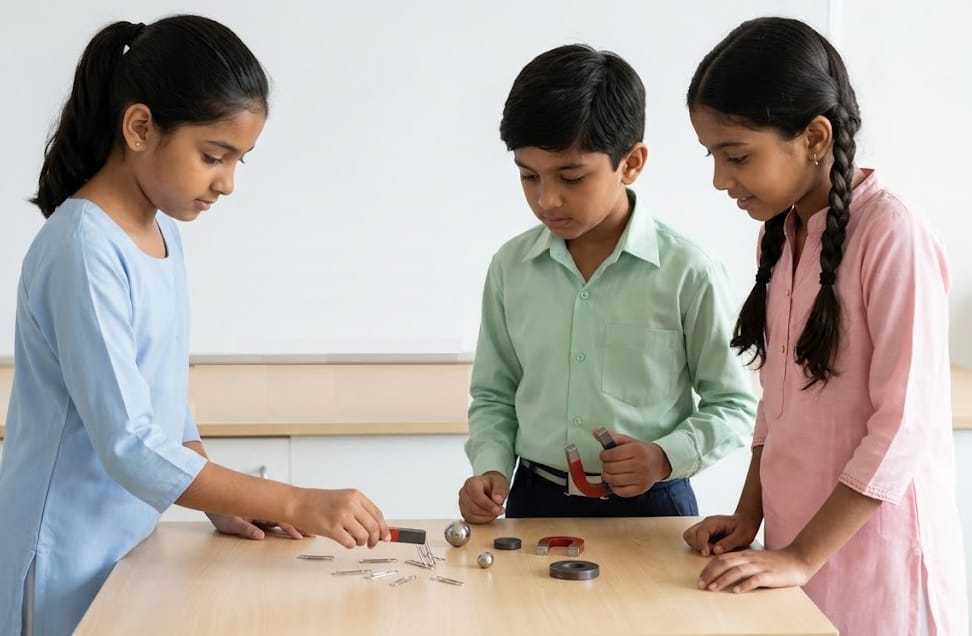
    • Magnet experiments
    • Balloon electricity demonstrations
    • Reflection using mirrors
    • Water pressure activities

Practical experiences often improve conceptual understanding.

Encourage Group Discussions

Discussing topics with friends or family members helps students organize their thoughts and identify gaps in understanding.

Teaching others is also a highly effective way to reinforce learning.

Recognize When Additional Support Is Needed

Sometimes students require personalized guidance despite parental efforts.

Common signs include:

    • Consistently low Physics marks
    • Difficulty understanding classroom lessons
    • Lack of confidence in solving problems
    • Avoiding Physics homework
    • Anxiety before tests

Early intervention can prevent learning gaps from becoming larger.

Questions Parents Should Ask Before Hiring a Physics Tutor

My Thoughts

Parents do not need advanced Physics knowledge to help their children succeed. By creating a positive learning environment, encouraging regular practice, supporting conceptual understanding, and promoting curiosity, parents can significantly improve their child’s confidence and performance.

For students who need additional academic support, a private Physics tutor can provide personalized attention, identify learning gaps, and explain concepts at the student’s pace. One-to-one guidance often helps students ask questions more freely, improve problem-solving skills, and develop stronger exam strategies. With the right support system at home and expert academic assistance when needed, students can build confidence and achieve better results in Physics.

Looking for expert Physics tutors?

Find Physics Tutors on IndiaTutor.in

About the Author

Nidhi Mehta is the founder of IndiaTutor.in and a professional online educator with over 11 years of teaching experience. She specializes in tutoring Classes 1 to 6 across core academic subjects, with a strong focus on concept clarity and foundational skill-building. Her teaching approach is based on personalized, one-to-one learning that helps students develop long-term academic confidence and understanding.

Visit her profile    Visit About Us Page

How to Build Strong Science Fundamentals From an Early Age

How to Build Strong Science Fundamentals From an Early Age

Science is much more than a school subject. It teaches children how to observe, question, think logically, solve problems, and understand the world around them. Strong science fundamentals developed during childhood can help students perform better in school, build confidence in learning, and prepare for future academic and career opportunities.

Many parents worry when their children begin struggling with Science in middle school. In most cases, the problem does not start in Class 6 or Class 7. Weak foundations often develop years earlier when basic concepts are not properly understood.

The good news is that parents can play a major role in helping children develop scientific thinking from an early age. By creating the right learning environment, encouraging curiosity, and focusing on understanding rather than memorization, children can build a lifelong interest in Science.

Why Early Science Learning Matters

Young children are naturally curious. They constantly ask questions about how things work, why events happen, and what causes changes in their surroundings. Science education helps channel this curiosity into meaningful learning.

Recent research published in Scientific Reports highlighted the growing importance of introducing scientific inquiry skills during early childhood. Researchers found that early exposure to science activities supports cognitive development and strengthens problem-solving abilities. Children who regularly engage in exploration and questioning develop stronger learning habits that benefit them throughout their academic journey.

Science learning at a young age also supports language development, observation skills, reasoning, and decision-making abilities.

Focus on Curiosity Before Content

One of the biggest mistakes parents make is focusing only on facts and definitions.

Children do not need to memorize complex scientific terms during their early years. Instead, they should learn how to ask questions and investigate answers.

When a child asks:

    • Why does rain fall?
    • Why do plants grow?
    • Why does ice melt?
    • Why does the moon change shape?

Use these questions as learning opportunities.

Encouraging curiosity helps children develop scientific thinking naturally. Research on inquiry-based science learning has shown significant improvements in children’s critical thinking and understanding of scientific concepts when learning is driven by exploration and questioning.

Encourage the “Why” Habit

Whenever your child asks a question, avoid giving immediate answers every time.

Instead ask:

    • What do you think?
    • Why do you believe that?
    • How can we find out?

These conversations teach children to think independently rather than simply memorize information.

Make Science Part of Daily Life

Science is everywhere. Parents do not need expensive laboratory equipment or advanced experiments to introduce scientific concepts.

Simple household activities can become valuable learning experiences.

In the Kitchen

Cooking introduces concepts such as:

    • Heat transfer
    • States of matter
    • Chemical changes
    • Measurement

Ask children what happens when water boils or why dough rises.

In the Garden

Gardening teaches:

    • Plant life cycles
    • Photosynthesis
    • Ecosystems
    • Weather effects

Children learn best when they can see changes happening in real life.

During Outdoor Activities

Nature walks provide opportunities to observe:

    • Insects
    • Trees
    • Birds
    • Clouds
    • Soil

Observation is one of the most important scientific skills children can develop.

Why Science Marks Drop in Middle School and High School

Build Understanding Instead of Memorization

Many students struggle with Science later because they rely heavily on rote learning.

Scientific concepts are interconnected. If a child memorizes facts without understanding them, future topics become difficult.

For example:

A student who understands how plants make food will find biology easier in higher classes.

A child who understands force and motion early will grasp Physics concepts more easily later.

Parents should encourage children to explain concepts in their own words rather than repeat textbook definitions.

Use Visual Learning Techniques

Visual learning helps children understand abstract concepts more effectively.

Useful methods include:

    • Diagrams
    • Charts
    • Models
    • Educational videos
    • Science animations

Studies have shown that children often retain information better when concepts are presented visually and interactively rather than through passive reading alone.

Promote Hands-On Experiments

Children remember experiences far longer than textbook explanations.

Simple experiments make learning exciting and memorable.

Examples include:

    • Growing beans in cotton
    • Creating a volcano model
    • Observing shadows throughout the day
    • Testing which objects float or sink
    • Building simple machines

Research continues to support project-based and hands-on learning approaches for improving scientific literacy, problem-solving skills, and concept retention among young learners.

Learning Through Play

Educational experts increasingly recommend play-based science activities during early childhood.

Activities involving building blocks, construction toys, puzzles, and exploration games strengthen observation, reasoning, and analytical thinking.

These experiences lay the groundwork for future STEM learning.

Why Practical Understanding Is Important in Science

Develop Critical Thinking Skills

Strong Science students do more than remember information. They analyze situations and evaluate evidence.

Parents can nurture critical thinking by asking open-ended questions such as:

    • What do you notice?
    • What changed?
    • Why do you think that happened?
    • What could happen next?

Research on scientific inquiry in early education shows that open-ended learning experiences help children become more engaged and independent learners.

Allow Children to Make Mistakes

Children learn valuable lessons when experiments do not go as expected.

Failure often teaches more than success.

Allow children to test ideas, make predictions, and learn from outcomes. This process strengthens resilience and problem-solving ability.

Encourage Reading Beyond School Textbooks

Many children only read Science content required for exams.

Parents can broaden learning through:

    • Children’s science magazines
    • Science storybooks
    • Nature books
    • Age-appropriate documentaries
    • Educational websites

Reading beyond the curriculum exposes children to new ideas and helps them connect classroom concepts with real-world applications.

How to Score Better Marks in Science Without Studying Longer Hours  

Use Technology Wisely

Modern technology offers excellent opportunities for science learning when used appropriately.

Interactive simulations, educational apps, virtual science labs, and age-appropriate videos can make difficult topics easier to understand.

Recent studies have found that thoughtfully designed digital learning experiences can support language development, cognitive growth, and engagement when combined with active parental involvement.

Balance Screen Time with Real Experiences

Technology should support learning, not replace hands-on exploration.

The best learning happens when digital tools complement practical experiences.

Create a Positive Attitude Toward Science

Children often develop fears about Science because they believe it is difficult.

Parents can help by:

    • Praising effort rather than marks
    • Celebrating curiosity
    • Avoiding negative comments about Science
    • Encouraging questions
    • Making learning enjoyable

A positive mindset can significantly influence academic performance over time.

Avoid Comparing Children

Every child learns at a different pace.

Comparisons often reduce confidence and motivation.

Instead, focus on individual progress and celebrate small improvements.

10 Best Ways to Memorize Scientific Terms and Definitions

Signs Your Child Has Strong Science Foundations

Children with strong Science fundamentals often:

    • Ask thoughtful questions
    • Enjoy exploring new ideas
    • Connect concepts with daily life
    • Solve problems independently
    • Show curiosity about how things work
    • Understand concepts instead of memorizing answers
    • Participate actively during discussions

These qualities often predict long-term success in Science learning.

Common Mistakes Parents Should Avoid

Prioritizing Marks Over Understanding

High scores achieved through memorization rarely create lasting knowledge.

Ignoring Curiosity

Children’s questions are opportunities for learning, not distractions.

Delaying Science Exposure

Science learning should begin early through observation and exploration.

Overloading Children with Information

Too much content can reduce interest.

Focus on gradual understanding rather than covering large amounts of material.

How to Develop Interest in Science from an Early Age

My Thoughts

Building strong Science fundamentals from an early age is not about teaching advanced theories. It is about helping children observe, question, investigate, and think logically. When curiosity is encouraged and concepts are understood clearly, Science becomes enjoyable rather than intimidating.

For parents seeking additional support, private online Science tuition can provide personalized guidance tailored to a child’s learning style. An experienced tutor can identify gaps in understanding, simplify difficult concepts, and build confidence through one-on-one attention. Online tuition also offers flexibility, structured learning plans, and regular feedback, helping students develop stronger foundations and perform better in school over time.

Looking for expert Science tutors?

Find Science Tutors on IndiaTutor.in

About the Author

Nidhi Mehta is the founder of IndiaTutor.in and a professional online educator with over 11 years of teaching experience. She specializes in tutoring Classes 1 to 6 across core academic subjects, with a strong focus on concept clarity and foundational skill-building. Her teaching approach is based on personalized, one-to-one learning that helps students develop long-term academic confidence and understanding.

Visit her profile    Visit About Us Page

Why Practical Understanding Is Important in Science

Why Practical Understanding Is Important in Science

Science is much more than facts, formulas, and textbook definitions. It is a way of understanding how the world works. From the food we eat and the medicines we use to the technology that powers our daily lives, science is everywhere. Yet many students struggle with the subject because they focus only on memorizing information instead of understanding how scientific concepts apply in real situations.

Practical understanding helps students connect classroom learning with everyday experiences. It makes lessons more meaningful, improves retention, and develops important problem-solving abilities. For parents, encouraging practical learning can play a significant role in helping children perform better academically and develop lifelong curiosity.

What Does Practical Understanding in Science Mean?

Practical understanding refers to learning scientific concepts through observation, experimentation, application, and critical thinking rather than relying solely on memorization.

For example, a student may memorize that plants require sunlight for photosynthesis. However, observing how plants grow differently under varying light conditions creates a deeper understanding of the concept.

Similarly, learning about electricity becomes far more effective when students build simple circuits rather than only reading about them in a textbook.

When students see science in action, abstract theories become easier to understand and remember.

How to Develop Interest in Science from an Early Age

Why Memorization Alone Is Not Enough

Many students prepare for exams by repeatedly reading notes and memorizing answers. While this approach may help in short-term recall, it often fails when students face application-based questions.

Modern school examinations increasingly assess understanding, analysis, and problem-solving skills rather than simple recall.

International assessments such as the Programme for International Student Assessment (PISA) evaluate how effectively students can apply science knowledge to real-life situations. The assessment focuses on scientific reasoning, critical thinking, and practical problem solving rather than rote learning.

Students who understand concepts practically are generally better equipped to answer higher-order questions and tackle unfamiliar problems.

Benefits of Practical Learning in Science

Improves Concept Clarity

Scientific concepts often involve processes that are difficult to visualize through text alone.

Experiments, demonstrations, simulations, and hands-on activities help students observe these processes directly. This improves comprehension and reduces confusion.

Whether learning about chemical reactions, gravity, ecosystems, or electricity, practical experiences make lessons easier to understand.

Strengthens Memory Retention

Students tend to remember experiences longer than information they simply read.

Research in science education has shown that hands-on experiments and active learning approaches improve understanding and retention compared to passive learning methods. Recent studies continue to highlight the educational value of practical science activities in enhancing student engagement and learning outcomes.

When students actively participate in learning, they are more likely to retain concepts for future examinations and higher studies.

Develops Critical Thinking Skills

Science is fundamentally about asking questions and finding evidence-based answers.

Practical learning encourages students to:

    • Observe carefully
    • Form hypotheses
    • Analyze results
    • Draw conclusions
    • Evaluate evidence

These skills help students become independent thinkers and confident learners.

Builds Problem-Solving Ability

Many science questions require students to apply knowledge in unfamiliar situations.

Practical understanding helps students recognize patterns and connections between concepts, making it easier to solve complex problems.

This skill becomes particularly important in board examinations and competitive entrance tests.

Increases Student Engagement

Children naturally enjoy discovering how things work.

Hands-on activities, experiments, interactive models, and scientific investigations create excitement and make learning more enjoyable.

Students who enjoy learning are more likely to remain motivated and consistent in their studies.

Why Science Marks Drop in Middle School and High School

The Link Between Practical Learning and Academic Success

One common misconception is that practical learning is separate from examination preparation. In reality, strong conceptual understanding often leads to better academic performance.

Students who understand scientific principles can:

    • Answer application-based questions accurately
    • Write better explanations
    • Interpret diagrams effectively
    • Solve numerical problems confidently
    • Retain information for longer periods

Studies examining practical science instruction have found positive relationships between experimental learning and academic achievement among school students.

As educational systems continue to emphasize competency-based learning, practical understanding becomes increasingly valuable.

How Modern Technology Is Transforming Science Learning

Technology has created new opportunities for practical science education beyond traditional laboratories.

Interactive Simulations

Digital simulations allow students to explore scientific phenomena that may be difficult or expensive to demonstrate physically.

Students can experiment with variables, observe outcomes, and gain deeper insight into scientific principles.

Research published in 2024 found that interactive multimedia, simulation-based learning, and blended approaches can significantly support science achievement among learners with different ability levels.

Educational Videos

Well-designed educational videos help students visualize processes that cannot easily be observed in classrooms.

Topics such as cell division, planetary motion, and molecular interactions become easier to understand through visual demonstrations.

Recent science education research highlights that both video-based learning and hands-on experiments contribute uniquely to science understanding when used appropriately.

Virtual Laboratories

Virtual labs provide opportunities for experimentation even when physical resources are limited.

Students can safely conduct experiments, test hypotheses, and develop investigative skills from home.

STEM-Based Learning

Science, Technology, Engineering, and Mathematics (STEM) education encourages project-based learning and practical application.

Hands-on STEM experiences using digital technologies help students develop creativity, collaboration, experimentation, and problem-solving skills.

How to Build Strong Science Fundamentals From an Early Age

Signs Your Child May Need More Practical Science Support

Parents should watch for indicators that a child may be relying too heavily on memorization.

Some common signs include:

    • Difficulty explaining concepts in their own words
    • Trouble answering application-based questions
    • Forgetting lessons quickly after exams
    • Lack of interest in science topics
    • Fear of numerical or analytical questions
    • Dependence on rote learning techniques

These challenges often indicate gaps in conceptual understanding rather than lack of effort.

How Parents Can Encourage Practical Learning at Home

Connect Science to Everyday Life

Simple discussions about weather, cooking, plants, health, or household appliances can spark scientific curiosity.

Encourage Questions

Children learn best when they are free to ask questions and explore answers.

Instead of providing immediate solutions, encourage investigation and reasoning.

Use Educational Resources

Science documentaries, educational videos, interactive apps, and simulations can complement classroom learning.

Support Small Experiments

Safe home experiments can make science more engaging and memorable.

Activities such as growing plants, observing water evaporation, or building simple models can reinforce classroom concepts.

Focus on Understanding Rather Than Marks Alone

When children prioritize understanding, improved academic performance often follows naturally.

How to Score Better Marks in Science Without Studying Longer Hours

The Future of Science Education

Educational systems worldwide are moving toward competency-based learning. Students are increasingly expected to analyze information, evaluate evidence, and apply knowledge to real-world situations.

Science literacy now involves much more than remembering facts. It includes understanding scientific processes, interpreting data, and making informed decisions based on evidence. OECD frameworks emphasize these practical scientific competencies as essential skills for modern learners.

As science continues to shape industries, careers, and society, practical understanding will remain one of the most valuable skills students can develop.

10 Best Ways to Memorize Scientific Terms and Definitions

My Thoughts

Practical understanding transforms science from a subject that students memorize into a subject they truly understand. It improves concept clarity, strengthens retention, develops analytical thinking, and prepares students for academic and real-world success.

For students who need additional support, private online science tuition can provide personalized guidance that is often difficult to achieve in large classrooms. An experienced tutor can identify learning gaps, explain concepts using real-life examples, conduct interactive sessions, and help students build confidence through structured practice. With one-on-one attention and customized teaching methods, online tuition can make science more engaging, understandable, and rewarding for learners of all levels.

Looking for expert Science tutors?

Find Science Tutors on IndiaTutor.in

About the Author

Nidhi Mehta is the founder of IndiaTutor.in and a professional online educator with over 11 years of teaching experience. She specializes in tutoring Classes 1 to 6 across core academic subjects, with a strong focus on concept clarity and foundational skill-building. Her teaching approach is based on personalized, one-to-one learning that helps students develop long-term academic confidence and understanding.

Visit her profile    Visit About Us Page

error: Content is protected !!

Found this helpful? Share it in 2 seconds!

Link copied to clipboard