
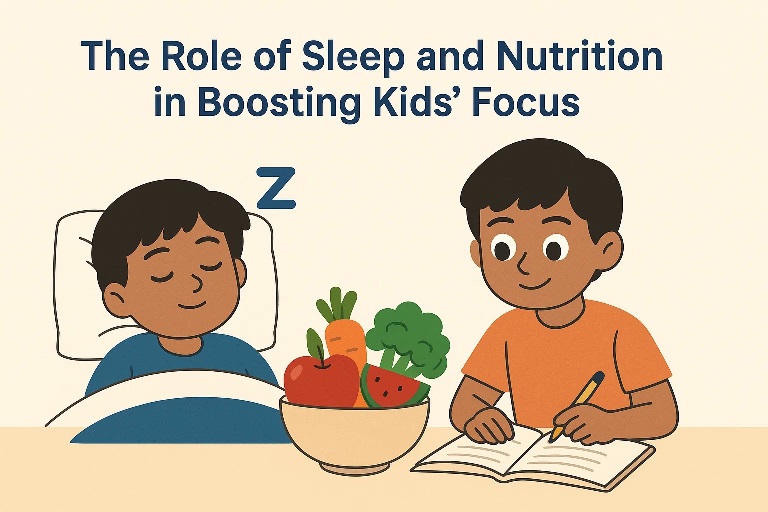
Every parent wants their child to stay attentive in class, complete homework efficiently, and perform well in exams. When concentration drops, many families immediately think about screen time, study habits, or lack of motivation. While these factors matter, two powerful influences on learning are often overlooked: sleep and nutrition.
A child’s brain is constantly developing. The quality of sleep they get and the food they eat directly affect memory, attention span, problem-solving ability, mood, and academic performance. Understanding the connection can help parents create an environment where children learn more effectively and enjoy better overall well-being.
Rising Stress in School Children – Causes, Symptoms, and How Parents Can Help
Why Focus Matters for Academic Success
Focus is the ability to concentrate on a task without getting distracted. It allows children to absorb information, understand concepts, and retain knowledge.
Students with strong concentration skills often:
-
- Learn new topics faster
- Complete assignments more accurately
- Participate actively in class
- Perform better in examinations
- Develop greater confidence in their abilities
Poor concentration, on the other hand, can lead to frustration, incomplete work, and lower academic outcomes.
Why Your Child Struggles to Concentrate – 7 Common Reasons & Solutions
How Sleep Affects a Child’s Brain
Sleep is not simply a period of rest. During sleep, the brain processes information learned throughout the day, strengthens memory, and prepares for future learning.
Research shows that adequate sleep is linked to better cognitive functioning in children, including improved memory and learning abilities.
Recommended Sleep Duration by Age
Experts generally recommend:
-
- Ages 6–12 years: 9–12 hours of sleep each night
- Ages 13–18 years: 8–10 hours of sleep each night
Children who consistently achieve these targets are more likely to remain alert and engaged during school hours.
How to Help Your Child Balance School, Homework, and Hobbies
What Happens When Children Do Not Sleep Enough?
Insufficient sleep can affect several areas of learning:
Reduced Attention Span
A tired brain struggles to maintain concentration. Children may become distracted easily and find it difficult to follow instructions.
Poor Memory Retention
Sleep plays a major role in memory consolidation. Without enough rest, information learned during the day is less likely to be stored effectively.
Lower Problem-Solving Ability
Mathematics, science, and reasoning tasks often require sustained mental effort. Fatigue can make these activities more challenging.
Emotional Instability
Children who are sleep-deprived may become irritable, anxious, or impatient, which can affect classroom behaviour and learning outcomes.
Studies have also found positive associations between adequate sleep and academic performance among school students.
How Strong Communication Skills Shape a Child’s Personality
The Powerful Link Between Nutrition and Concentration
The brain accounts for roughly 20% of the body’s energy use despite representing a much smaller portion of body weight. This means the quality of fuel children receive through food significantly influences mental performance.
A balanced diet supports:
-
- Sustained energy levels
- Better concentration
- Faster information processing
- Improved memory
- Healthy brain development
Why Breakfast Is Important
Many students leave for school without eating breakfast or consume foods high in sugar. While sugary foods may provide a quick burst of energy, they are often followed by a sudden drop in alertness.
A nutritious breakfast helps maintain steady blood sugar levels and supports learning throughout the morning.
Good breakfast choices include:
-
- Eggs
- Milk
- Whole-grain bread
- Oats
- Fruits
- Nuts
- Yogurt
Nutrients That Support Brain Function
Protein
Protein provides essential amino acids needed for brain development and neurotransmitter production.
Good sources include:
-
- Eggs
- Dairy products
- Lentils
- Beans
- Paneer
- Nuts
Complex Carbohydrates
These release energy gradually and help children remain alert for longer periods.
Examples include:
-
- Whole grains
- Brown rice
- Oats
- Whole wheat chapati
Omega-3 Fatty Acids
Omega-3 fats support brain growth and cognitive function.
Sources include:
-
- Fish
- Walnuts
- Flaxseeds
Iron
Iron helps transport oxygen throughout the body, including the brain.
Iron-rich foods include:
-
- Green leafy vegetables
- Lentils
- Beans
- Dates
- Fortified cereals
The Hidden Impact of Dehydration
Many children do not drink enough water during the day. Even mild dehydration can affect concentration, mood, and mental performance.
Parents can encourage better hydration by:
-
- Providing a water bottle for school
- Offering water regularly during study sessions
- Including water-rich fruits such as watermelon and oranges
Building Healthy Sleep Habits
Improving sleep quality does not require complicated changes.
Create a Consistent Bedtime
Going to bed and waking up at the same time each day helps regulate the body’s internal clock.
Reduce Screen Exposure Before Bed
Mobile phones, tablets, and televisions emit blue light that can interfere with natural sleep patterns.
Aim to stop screen use at least one hour before bedtime.
Create a Calm Evening Routine
Reading, storytelling, or light conversation can help children relax before sleep.
Ensure a Comfortable Sleep Environment
A quiet, dark, and comfortable room encourages deeper, more restorative sleep.
Research has shown that improvements in sleep can lead to better cognitive functioning and academic outcomes.
Smart Nutrition Habits for Better Learning
Parents can support learning by making small but consistent dietary improvements.
Choose Healthy Snacks
Instead of highly processed snacks, consider:
-
- Roasted chickpeas
- Fruit slices
- Nuts
- Homemade sandwiches
- Yogurt
Include Vegetables Daily
Vegetables provide vitamins, minerals, and antioxidants that support overall health and brain function.
Avoid Excessive Sugary Foods
Frequent consumption of sugary snacks and drinks may contribute to energy fluctuations that affect concentration.
Plan Balanced Meals
Each meal should ideally contain:
-
- Protein
- Whole grains
- Vegetables or fruits
- Healthy fats
How Parents and Tutors Can Work Together
Academic success is not determined solely by study hours. Learning outcomes improve when parents, teachers, and tutors understand the role of lifestyle habits.
Tutors often notice when a student appears tired, distracted, or lacking energy. Open communication between parents and educators can help identify whether sleep routines or dietary habits may be affecting performance.
When healthy routines are combined with effective teaching and personalized academic support, children are better positioned to reach their full potential.
My Thoughts
Strong focus begins long before a child opens a textbook. Quality sleep and proper nutrition provide the foundation for attention, memory, emotional balance, and learning efficiency. By prioritizing healthy daily habits, parents can help children develop the mental energy needed for success in school and beyond.
Looking for experienced tutors who can support your child’s academic growth? Visit IndiaTutor.in to connect directly with qualified tutors for all classes and subjects.
If you are a tutor, register your profile on IndiaTutor.in and reach students and parents across India and around the world without paying commissions.
Register your Tutor Profile on IndiaTutor.in
About the Author
Nidhi Mehta is the founder of IndiaTutor.in and a professional online educator with over 11 years of teaching experience. She specializes in tutoring Classes 1 to 6 across core academic subjects, with a strong focus on concept clarity and foundational skill-building. Her teaching approach is based on personalized, one-to-one learning that helps students develop long-term academic confidence and understanding.


