
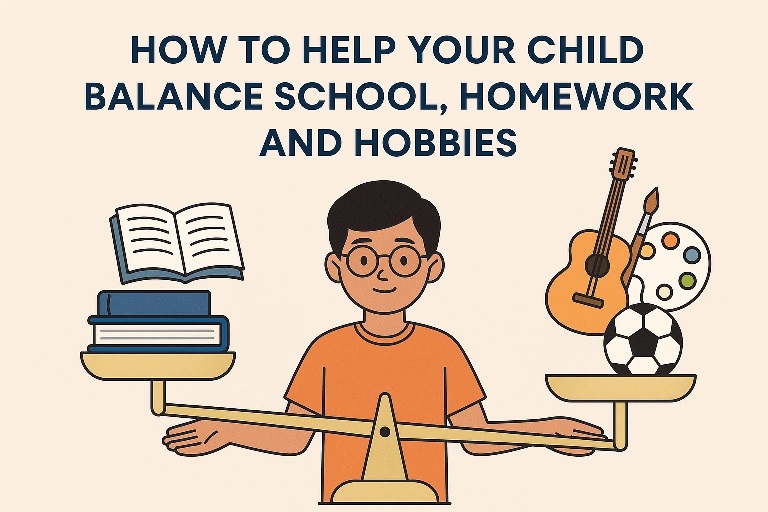
Many parents want their children to excel in academics while also enjoying activities that build confidence, creativity, and social skills. However, balancing school, homework, and hobbies can be challenging. Between classroom learning, assignments, exams, sports, music, and family time, children often feel overwhelmed.
A healthy balance is important because it helps students perform better in studies while also supporting their emotional and physical well-being. With the right approach, parents can help children stay organized, reduce stress, and enjoy a more fulfilling learning experience.
Rising Stress in School Children – Causes, Symptoms, and How Parents Can Help
Why Balance Matters for Children
Academic success is important, but children also need time to develop interests beyond textbooks. Research shows that participation in extracurricular activities can improve time management, teamwork, communication, and problem-solving skills. According to studies published by the United States Department of Education, students involved in structured extracurricular activities often demonstrate better academic performance and higher levels of school engagement.
When children spend all their time studying, they may experience burnout, fatigue, and a decline in motivation. On the other hand, excessive focus on hobbies without proper study habits can affect academic progress. The goal is to create a balanced routine that supports both learning and personal growth.
The Role of Sleep and Nutrition in Boosting Kids’ Focus
Common Challenges Faced by Families
Overloaded Schedules
Many students attend school for six to eight hours a day and then spend additional time completing homework, attending coaching classes, or preparing for exams. Adding sports, music lessons, or other activities can make schedules difficult to manage.
Lack of Time Management Skills
Children are still learning how to prioritize tasks. Without guidance, they may spend too much time on one activity and neglect others.
Digital Distractions
A report from the Organisation for Economic Co-operation and Development (OECD) found that excessive screen time can negatively affect academic performance and concentration. Smartphones, gaming, and social media often compete for a child’s attention.
Academic Pressure
Parents and students sometimes focus heavily on grades, leaving little room for recreation and relaxation. Continuous pressure can increase stress levels and reduce enthusiasm for learning.
10 Proven Tips to Improve Concentration and Reduce Stress in Students
Signs Your Child May Be Struggling with Balance
Academic Performance Is Declining
Missed assignments, lower grades, or difficulty concentrating may indicate that a child’s schedule has become overwhelming.
Constant Fatigue
Children need adequate sleep to learn effectively. The American Academy of Sleep Medicine recommends 9 to 12 hours of sleep for children aged 6 to 12 and 8 to 10 hours for teenagers.
Reduced Interest in Activities
A child who once enjoyed a hobby but suddenly loses interest may be experiencing stress or exhaustion.
Increased Irritability
Mood changes, frustration, or emotional outbursts can sometimes result from an overloaded routine.
Why Your Child Needs More Outdoor Playtime and Less Screen Time
How Parents Can Create a Healthy Balance
Establish a Daily Routine
A consistent schedule helps children understand when it is time to study, play, and rest. Allocate specific time blocks for schoolwork, hobbies, meals, and sleep.
A predictable routine reduces confusion and helps children develop self-discipline.
Prioritize Important Tasks
Teach children to identify urgent and important activities first. Homework, upcoming tests, and project deadlines should take priority before leisure activities.
Simple to-do lists can help students stay focused and organized.
Limit the Number of Activities
Children do not need to participate in every available program. One or two meaningful hobbies are often more beneficial than a packed schedule.
Allow children to choose activities they genuinely enjoy rather than forcing multiple commitments.
Encourage Quality Study Time
Long study hours do not always produce better results. Focused learning sessions are usually more effective than extended periods of distracted studying.
Many education experts recommend studying in short intervals with brief breaks in between to improve concentration and retention.
How Online Games Affect Your Child’s Brain and Behavior
The Role of Hobbies in Child Development
Building Confidence
Sports, music, dance, art, and other activities provide opportunities for children to achieve goals outside the classroom.
Success in these areas often boosts self-esteem and motivation.
Improving Social Skills
Group activities teach cooperation, communication, leadership, and conflict resolution.
These skills are valuable throughout a child’s academic journey and future career.
Supporting Mental Health
Recreational activities can reduce stress and help children maintain a positive outlook. They provide an outlet for self-expression and relaxation.
How Excessive Screen Time Affects Your Child’s Mind and Body
How Tutors Can Support a Balanced Lifestyle
Many parents worry that additional academic support may consume even more time. However, the right tutor can actually help students manage their workload more efficiently.
Personalized Learning
Private tutoring focuses on a student’s specific strengths and weaknesses, making study sessions more productive.
Better Understanding of Concepts
When children understand topics clearly, they spend less time struggling with homework and revision.
Improved Confidence
Students who receive targeted guidance often become more confident learners and approach schoolwork with less anxiety.
Efficient Exam Preparation
Experienced tutors can create structured study plans that help students prepare effectively without sacrificing hobbies and personal interests.
Why Your Child Struggles to Concentrate – 7 Common Reasons & Solutions
Practical Tips for Parents
Set Realistic Expectations
Every child has unique strengths and learning styles. Avoid comparing your child with others.
Protect Family Time
Shared meals and conversations help strengthen relationships and provide emotional support.
Encourage Independence
Allow children to take responsibility for their schedules and commitments as they grow older.
Monitor Stress Levels
Regularly ask children how they are feeling about school, homework, and activities. Open communication helps identify problems before they become serious.
10 Simple Ways to Improve Your Child’s Communication Skills at Home
Creating Long-Term Success
Balancing school, homework, and hobbies is not about filling every minute of the day. It is about helping children develop healthy habits, manage responsibilities, and enjoy opportunities for personal growth.
Children who learn to balance academics and interests often develop stronger organizational skills, greater confidence, and a healthier attitude toward learning. With support from parents, teachers, and tutors, students can achieve academic goals while still enjoying the activities that make childhood meaningful.
Looking for experienced tutors who can help your child learn effectively while maintaining a balanced lifestyle? Register on IndiaTutor.in to connect directly with qualified tutors for all classes and subjects.
Tutors can also join IndiaTutor.in to showcase their expertise, reach parents worldwide, and grow their online or home tuition opportunities.
Register your Tutor Profile on IndiaTutor.in
About the Author
Nidhi Mehta is the founder of IndiaTutor.in and a professional online educator with over 11 years of teaching experience. She specializes in tutoring Classes 1 to 6 across core academic subjects, with a strong focus on concept clarity and foundational skill-building. Her teaching approach is based on personalized, one-to-one learning that helps students develop long-term academic confidence and understanding.
Visit her profile Visit About Us Page
Share your Feedback or Review – Contact Us
Tutors, Register your Tutor profile
Career Tutors, Get Personalized Tutor Branding Services
Do you Own a Tuition Center? List it here
Are you a Parent or Student? Share your Tutor Requirement


