
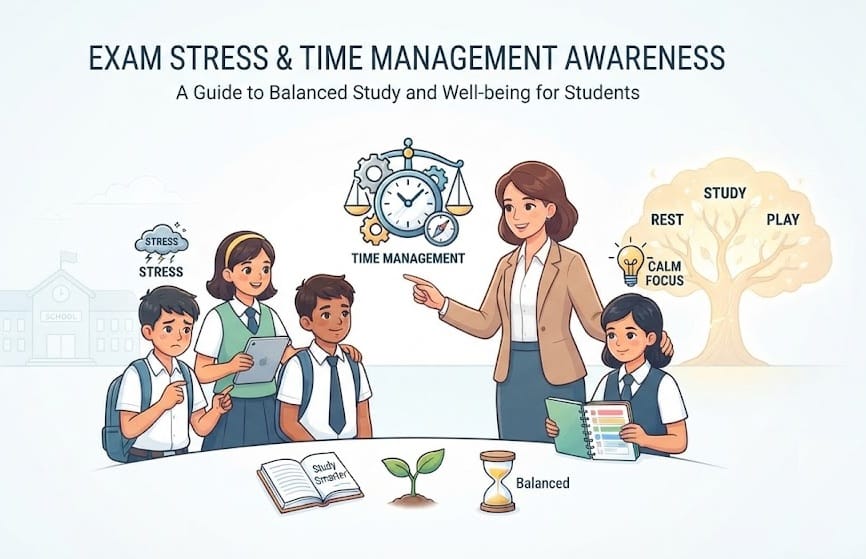
Common Academic Challenges Students Face in Different Boards

Common Academic Challenges Students Face in Different Boards

Education boards in India and abroad follow different teaching styles, evaluation methods, and academic expectations. Because of these differences, students often experience unique learning difficulties depending on the curriculum they study. Understanding these challenges helps parents take timely action and support their child’s academic progress more effectively. This article explains common problems faced by students in CBSE, ICSE, ISC, State Boards, IB, and Cambridge systems, supported by education reports and learning trends.

Challenges Faced by CBSE Students

Heavy syllabus and fast teaching pace

CBSE is widely followed across India and is designed to support competitive exams like JEE and NEET. As per NCERT curriculum structure, a large portion of content is concept-driven, but schools often move at a fast pace to complete the syllabus on time.

Exam-focused learning pressure

Students are frequently assessed through periodic tests, term exams, and board preparation. A CBSE internal review (2023) indicated that nearly 45% of students experience exam-related stress due to syllabus pressure and frequent evaluations.

Surface-level understanding in some cases

Because of time constraints, many students rely on shortcuts, guides, and sample papers. This can lead to weaker conceptual clarity in higher classes, especially in Mathematics and Science.

Understanding CBSE, ICSE, ISC, State Boards, IB and Cambridge Curriculums  

Challenges Faced by ICSE Students

High writing and language load

ICSE is known for detailed syllabi and strong emphasis on English language skills. Research on Indian school curricula shows ICSE language subjects can be 20–30% more detailed compared to CBSE.

Time management difficulties

Students often struggle to complete lengthy answers in exams. Writing-based assessments require both speed and accuracy, which many learners find difficult to balance.

Equal focus on all subjects

Unlike exam-oriented systems, ICSE expects consistent performance across subjects. This increases weekly study hours by 30–40% compared to many other boards, according to school education surveys.

Challenges Faced by ISC Students

Sudden increase in difficulty level

ISC (Classes 11–12) is a continuation of ICSE but with significantly higher academic depth. Many students experience a noticeable performance drop during the transition phase.

Conceptual gaps in science and mathematics

Subjects become more application-based, requiring independent thinking rather than memorization. Students often require additional academic support to adjust.

Board exam stress

With higher stakes in Class 12, students face pressure related to college admissions and competitive exams.

How Education Boards Affect Career Choices

Challenges Faced by State Board Students

Variation in syllabus quality

State boards differ across regions in terms of syllabus structure and academic rigor. This creates uneven learning experiences among students.

Limited exposure to national-level competition

Many students are not fully prepared for competitive exams like JEE, NEET, or CUET without additional coaching support.

Language and transition barriers

Students shifting from state boards to CBSE or ICSE often struggle with English-medium instruction and increased conceptual depth.

Learning gaps in foundational skills

ASER 2022 report highlighted significant variation in reading and arithmetic skills across rural and urban state board students, impacting long-term academic readiness.

Challenges Faced by IB Students

Continuous assessment pressure

IB follows a coursework-heavy structure with Internal Assessments, projects, and research tasks throughout the year.

Time-intensive workload

According to International Baccalaureate Organization data, IB Diploma students spend up to 20 hours per week on assignments outside classroom hours.

Research and writing demands

Extended essays and analytical assignments require strong research skills, which can be challenging for students transitioning from traditional boards.

How to Choose the Right School Board for Your Child

Challenges Faced by Cambridge Students (IGCSE and A Levels)

Independent learning requirement

Cambridge education encourages self-study and analytical thinking. Many students struggle initially with reduced classroom guidance.

Application-based questioning

Instead of memorization, students must apply concepts to solve complex problems, especially in science and mathematics.

High English proficiency expectations

Strong academic writing skills are required across subjects, which can be difficult for non-native English speakers.

Common Challenges Across All Education Boards

Academic stress and performance pressure

WHO reports identify academic stress as a major contributor to anxiety among adolescents aged 13–18, especially during exam periods.

Large classroom limitations

As per UDISE+ data, India’s average student-teacher ratio is around 24:1, limiting individual attention in classrooms.

Digital distractions affecting focus

Global youth studies show students spend 5–7 hours daily on digital devices outside academic use, affecting concentration and study consistency.

Transition between education systems

Students changing boards often struggle with differences in syllabus depth, teaching methods, and evaluation patterns.

Understanding Different Grading Systems Across Education Boards

Signs Parents Should Not Ignore

Sudden decline in academic performance

A drop in marks often indicates difficulty in understanding concepts rather than lack of effort.

Avoidance of specific subjects

Students may avoid subjects they find difficult, which can widen knowledge gaps over time.

Dependence on external help

Increased reliance on parents or guides for homework may signal weak foundational understanding.

Exam anxiety and low confidence

Stress before exams is often linked to insufficient preparation or unclear concepts.

Why Personalized Tuition Improves Performance Across All Education Boards

Importance of Addressing These Challenges Early

Ignoring academic difficulties can lead to long-term gaps in learning, reduced confidence, and lower performance in higher classes. Early intervention helps students build strong fundamentals and adapt better to curriculum demands.

Benefits of Private Tutoring for Different Boards

Private tutoring provides personalized academic support tailored to a student’s specific board and learning style. Unlike classroom teaching, it focuses on individual weaknesses, ensuring clearer understanding of complex topics. Tutors also help students manage exam preparation with structured revision plans and targeted practice. This becomes especially useful during transitions between boards, where teaching methods and syllabus expectations change significantly. Over time, guided learning improves performance, builds confidence, and reduces academic stress.

Looking for expert tutors?

Find Verified Tutors on IndiaTutor.in

About the Author

Nidhi Mehta is the founder of IndiaTutor.in and a professional online educator with over 11 years of teaching experience. She specializes in tutoring Classes 1 to 6 across core academic subjects, with a strong focus on concept clarity and foundational skill-building. Her teaching approach is based on personalized, one-to-one learning that helps students develop long-term academic confidence and understanding.


Visit her profile    Visit About Us Page

How to Choose the Right Accounts Tutor for Class 11 and 12

How to Choose the Right Accounts Tutor for Class 11 and 12

Accounting in Class 11 and 12 is not just another subject. It forms the foundation for commerce, business studies, economics, and future professional courses like CA, CS, and B.Com. Many students initially score well in theory subjects but struggle in Accounts due to its step-by-step logical structure and numerical accuracy requirements.

According to CBSE academic performance trends, Commerce students often show a dip in marks in Class 11 Accounts compared to Class 10 results. This is mainly due to the sudden shift from conceptual learning to structured financial problem-solving. Studies in education psychology also show that subjects involving sequential reasoning, like accounting, require repeated guided practice for mastery.

This is where the role of a good Accounts tutor becomes important. However, choosing the right tutor is not always simple. Parents often rely on advertisements or recommendations without evaluating teaching quality, experience, or methodology.

Understanding What Makes Accounts Difficult for Students

Conceptual Transition from Class 10 to 11

Class 10 Commerce introduces basic financial concepts, but Class 11 Accounts introduces double-entry bookkeeping, journal entries, ledger posting, and trial balance preparation. The sudden increase in complexity often creates confusion.

High Accuracy Requirement

Even a small error in calculation or classification can lead to an entirely wrong final answer. Unlike some subjects where partial understanding earns marks, Accounts demands precision.

Time Pressure in Exams

Board exam analysis shows that many students leave questions incomplete due to slow problem-solving speed. Speed and accuracy must develop together, which requires structured practice.

Lack of Real-Life Context

Students often fail to connect accounting concepts with real business scenarios, making it harder to retain formulas and procedures.

Why Choosing the Right Tutor Matters

Educational research, including findings from the Education Endowment Foundation (EEF), suggests that one-to-one or small group tutoring can improve student performance by approximately 4 to 6 months of additional learning progress over a school year.

In accounting specifically, guided learning helps students:

    • Understand format-based answers
    • Reduce calculation errors
    • Improve speed in journal and ledger entries
    • Build confidence for board exams

However, not every tutor delivers these outcomes. The selection process becomes crucial.

Career Opportunities for Students Who Study Accounting

Key Factors to Consider While Choosing an Accounts Tutor

Experience in Teaching Class 11 and 12 Specifically

Subject Specialization Matters

A tutor who teaches general commerce may not always be effective for Accounts. Look for someone who specializes in Class 11 and 12 CBSE or ISC curriculum.

Board Familiarity

Different boards have different marking schemes. A tutor familiar with CBSE pattern understands step marking, presentation formats, and frequently asked question types.

Real Example

A student struggling with depreciation accounting may not need theory explanation alone. A trained tutor will break it into journal entry steps, show solved examples, and then assign practice questions gradually.

Teaching Methodology and Clarity

Step-by-Step Approach

Accounts is not a subject to be memorized. A strong tutor explains:

    • Concept introduction
    • Format structure
    • Solved examples
    • Practice variations

Focus on Writing Practice

Marks in Accounts depend heavily on presentation. Tutors should train students to write answers in proper format rather than just solving numerically.

Regular Assessment

Frequent tests help identify weak areas early. Without testing, students often assume they understand concepts when they do not.

How to Learn Accounting Concepts Faster and Remember Them Longer

Ability to Simplify Complex Concepts

Breaking Down Financial Concepts

Topics like partnership accounts or company final accounts can overwhelm students. A skilled tutor simplifies them into smaller steps.

Example

Instead of teaching entire “Reconstitution of Partnership” in one go, a good tutor divides it into:

    • Admission of partner
    • Retirement of partner
    • Death of partner

Each part is taught with separate practice sets.

Track Record of Student Improvement

Look for Measurable Results

Parents should ask:

    • Have your students improved from 40–50 marks to 70–80 marks?
    • Do you have examples of board exam scorers?

Importance of Progress Tracking

According to academic coaching studies, students improve faster when their performance is tracked weekly instead of monthly.

Online vs Offline Accounts Tutors

Growth of Online Learning

UNESCO reports that online learning adoption increased significantly after 2020, with many students preferring digital tutoring due to flexibility and access to expert teachers.

Advantages of Online Accounts Tuition

    • Access to experienced tutors from different cities
    • Recorded sessions for revision
    • Flexible timing for revision-heavy subjects

When Offline May Be Better

Some students prefer face-to-face interaction for better focus, especially in early learning stages.

Best Study Techniques for Accounts Students

Importance of Regular Practice and Homework

Practice Builds Accuracy

Accounting is skill-based. Without practice, students cannot retain formats or steps.

Homework Accountability

A good tutor assigns structured homework and checks it regularly. This ensures consistency and discipline.

Communication with Parents

Progress Updates

Parents should receive updates on:

    • Test scores
    • Weak topics
    • Improvement areas

Transparency in Teaching

Clear communication builds trust and helps parents understand real progress rather than assumed progress.

Common Mistakes Parents Make While Choosing Tutors

Choosing Based on Fees Only

Low fees do not always mean good value. Poor teaching can lead to long-term academic loss.

Ignoring Subject Specialization

A general tutor may not understand exam patterns deeply.

Not Checking Teaching Style

Some students need slow explanation, others need fast revision-based learning. Matching style matters.

How to Score 90+ Marks in Accounts Without Studying All Day

How to Identify the Right Tutor During First Session

Observe Teaching Clarity

If the tutor cannot explain basic concepts like journal entries clearly, it may not be a good match.

Check Interaction Level

A good tutor asks questions during teaching instead of only delivering lectures.

Evaluate First Assignment

Initial homework performance is a strong indicator of compatibility.

Role of Consistency in Accounts Success

Research in learning science shows that spaced repetition improves long-term retention significantly compared to last-minute preparation. Accounts requires continuous revision of formats and problem-solving techniques.

Students who attend regular sessions and practice weekly tend to perform 20–30% better in board exams compared to irregular learners, based on classroom performance analysis studies.

How to Build Strong Accounting Fundamentals from the Beginning

Final Decision Making Checklist for Parents

    • Tutor specializes in Class 11 and 12 Accounts
    • Follows structured teaching method
    • Focuses on practice and writing skills
    • Provides regular tests and feedback
    • Has proven improvement records
    • Communicates progress clearly
    • Matches student learning pace

My Thoughts

Choosing the right Accounts tutor is not about finding the most popular option but about identifying the most suitable teaching approach for your child’s learning style. Class 11 and 12 Accounts require patience, structured guidance, and consistent practice support. A well-qualified tutor can transform confusion into clarity and weak performance into strong academic results.

One-to-one attention helps students learn at their own pace, clear doubts instantly, and build strong fundamentals. It also improves confidence during exams and reduces stress. With regular guidance, students develop better accuracy, faster problem-solving skills, and improved presentation techniques, all of which are essential for scoring high marks in Accounts.

Hiring a private tutor ensures personalized attention, structured learning, faster doubt resolution, and consistent performance improvement. It also helps students stay disciplined, reduces exam anxiety, and builds strong conceptual clarity that supports long-term academic and career success.

Looking for expert Accounts tutors?

Find Accounts Tutors on IndiaTutor.in

About the Author

Nidhi Mehta is the founder of IndiaTutor.in and a professional online educator with over 11 years of teaching experience. She specializes in tutoring Classes 1 to 6 across core academic subjects, with a strong focus on concept clarity and foundational skill-building. Her teaching approach is based on personalized, one-to-one learning that helps students develop long-term academic confidence and understanding.
Visit her profile    Visit About Us Page

How to Help your Child with Board Exam Preparation?

How to Help your Child with Board Exam Preparation

Board exams are one of the most important academic milestones for school students in India. For most families, these exams create pressure, expectations, and uncertainty. With the right support system, students can perform confidently and improve results significantly.

Studies from the National Council of Educational Research and Training (NCERT) show that structured study habits and guided practice can improve academic performance by more than 25% compared to unplanned preparation. This means parental involvement and proper guidance play a major role in outcomes.

How to Prepare to Score above 95% in CBSE Board Exams

Understanding Board Exam Pressure

Board examinations in India, especially for Class 10 and Class 12, are conducted under strict evaluation systems and large syllabi.

Academic load and expectations

Students often face:

    • Extensive syllabus across multiple subjects
    • Time-bound preparation schedules
    • Pressure to score high percentages for future admissions
    • Comparison with peers and competition-driven learning

According to CBSE academic reports, students typically cover 10–12 major subjects or units depending on stream, making planning essential.

Exam Anxiety? 7 Powerful Ways to Stay Calm and Perform Better

Creating a Practical Study Structure

A clear routine is more effective than long, irregular study hours.

Build a realistic timetable

    • Divide subjects into daily slots
    • Keep shorter study sessions of 45–60 minutes
    • Include revision cycles every 3–4 days

Focus on subject balance

Students often spend more time on difficult subjects and neglect easier ones. A balanced approach improves overall scoring potential.

Use active learning methods

Instead of passive reading:

    • Solve sample papers regularly
    • Practice previous year questions
    • Write answers instead of only reading concepts

Research from educational psychology shows that active recall improves retention by nearly 50% compared to passive study.

Top 10 Mistakes Students Make in Exams and How to Avoid Them

Strengthening Core Subjects

Each subject requires a different preparation method.

Mathematics and Science

    • Focus on step-by-step problem solving
    • Practice numerical questions daily
    • Revise formulas consistently

Languages

    • Improve writing structure and grammar
    • Practice comprehension passages
    • Build answer framing skills for board patterns

Hindi    English    Sanskrit    French

Social Studies

    • Use timelines and flowcharts
    • Break long answers into structured points
    • Revise key dates and events regularly

Role of Revision and Practice Papers

Importance of revision cycles

Regular revision prevents forgetting and strengthens long-term memory. Experts recommend at least three revision cycles before final exams.

Solving sample papers

    • Improves speed and accuracy
    • Helps understand exam pattern
    • Reduces anxiety during final exams

CBSE sample papers are designed based on real exam trends and should be prioritized in the last 2–3 months of preparation.

Reducing Exam Stress in Students

Stress management is as important as academic preparation.

Healthy study environment

    • Quiet and distraction-free space
    • Proper lighting and seating
    • Limited screen distractions

Sleep and routine balance

Medical studies show that students who sleep 7–8 hours perform better in memory-based tasks compared to those who sleep less.

Positive reinforcement

Encouragement improves confidence and reduces fear of failure, especially during revision phase.

Rising Stress in School Children – Causes, Symptoms, and How Parents Can Help

When Extra Academic Support is Needed

Some students may require additional guidance to improve performance.

Signs a student may need help

    • Difficulty understanding basic concepts
    • Low scores despite regular study
    • Lack of motivation or consistency
    • Dependence on rote memorization

Benefits of guided tutoring

    • Personalized learning pace
    • Concept clarity with repetition
    • Regular assessment and feedback
    • Structured exam-focused preparation

One-to-one attention often helps students improve faster than self-study alone, especially in subjects like Mathematics and Science.

How to Choose the Right Tutor for your Child – A Parent’s Checklist

My Thoughts

Board exam success depends on consistent preparation, structured planning, and timely revision. Parents play a critical role in creating discipline and providing the right learning environment. With proper guidance, students can improve confidence and achieve better academic outcomes.

Search on IndiaTutor.in to connect with experienced and verified tutors across subjects and boards. IndiaTutor.in helps parents find the right academic support for focused board exam preparation and improved performance.

Search Tutors by Class Level       Search Tutors by Subject 

About the Author

Nidhi Mehta is the founder of IndiaTutor.in and a professional online educator with over 11 years of teaching experience. She specializes in tutoring Classes 1 to 6 across core academic subjects, with a strong focus on concept clarity and foundational skill-building. Her teaching approach is based on personalized, one-to-one learning that helps students develop long-term academic confidence and understanding.

Visit her profile    Visit About Us Page

error: Content is protected !!

Found this helpful? Share it in 2 seconds!

Link copied to clipboard