
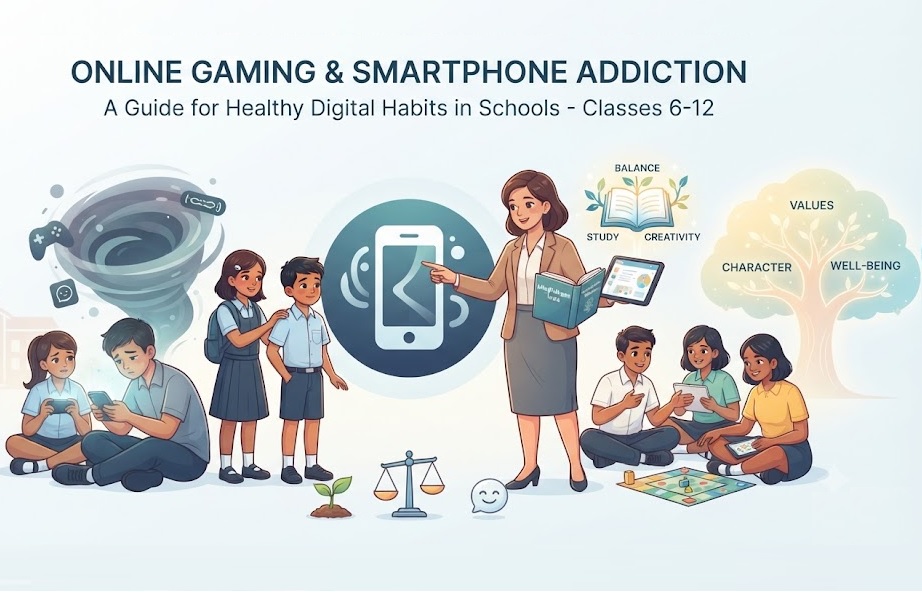
Online Gaming & Smartphone Addiction

Online Gaming & Smartphone Addiction

Technology has changed the way we learn, play, and connect with friends. Smartphones and online games can be fun, educational, and entertaining. They help us stay in touch with family, learn new skills, solve puzzles, and even improve creativity.

But what happens when “just five more minutes” turns into several hours every day?

For many students, excessive gaming and smartphone use can affect studies, sleep, health, friendships, and happiness. The good news is that with the right habits, you can enjoy technology without letting it control your life.

This guide explains everything Class 6 to 12 students, parents, and teachers should know about online gaming and smartphone addiction.

What Is Online Gaming & Smartphone Addiction?

Online gaming or smartphone addiction doesn’t mean you simply enjoy using your phone.

It becomes a problem when you:

    • Cannot stop playing or scrolling.
    • Feel restless or angry without your phone.
    • Ignore homework and studies.
    • Stay awake late every night.
    • Spend less time with family and friends.
    • Think about games or social media all day.

Technology should be a tool that helps you—not something that controls your daily life.

Why Are Online Games So Addictive?

Game developers spend years designing games that keep players interested.

Many games include:

    • Daily rewards
    • Bonus points
    • New levels
    • Special events
    • Leaderboards
    • Unlockable characters
    • Achievement badges
    • Surprise rewards
    • Multiplayer competitions

These features make players want to come back again and again.

That doesn’t mean games are “bad.” It simply means you need to know when to stop.

Why Smartphones Are Hard to Put Down

Smartphones constantly compete for your attention.

Every notification, message, like, or video encourages you to check your phone “just once.”

Soon:

One minute becomes ten.

Ten minutes become an hour.

Before you realize it, half the evening is gone.

Signs of Smartphone or Gaming Addiction

Ask yourself honestly.

Do you:

    • Check your phone immediately after waking up?
    • Spend several hours gaming every day?
    • Feel upset when someone asks you to stop?
    • Skip homework because of games?
    • Lose track of time while scrolling?
    • Think about games even during class?
    • Use your phone during meals?
    • Stay awake late using your phone?

If you answered “Yes” to several questions, it may be time to improve your digital habits.

How Too Much Screen Time Affects Your Health

Eye Problems

Looking at screens for long periods can cause:

    • Dry eyes
    • Blurred vision
    • Eye strain
    • Headaches

Following the 20-20-20 rule can help.

Every 20 minutes, look at something about 20 feet away for 20 seconds.

Poor Sleep

Using phones before bedtime is one of the biggest causes of poor sleep among teenagers.

The bright light from screens can make it harder for your brain to prepare for sleep.

Poor sleep can lead to:

    • Tiredness
    • Poor memory
    • Difficulty concentrating
    • Irritability
    • Lower academic performance

Less Physical Activity

Many students spend hours sitting while gaming.

This means:

    • Less exercise
    • Weight gain
    • Poor posture
    • Neck pain
    • Back pain

Even 30–60 minutes of outdoor play every day can make a big difference.

How Gaming Affects Your Brain

Your brain loves rewards.

Whenever you win a game, unlock a level, or receive points, your brain feels excited.

This is one reason games are so enjoyable.

However, spending too much time chasing these rewards may make it harder to enjoy everyday activities like reading, sports, or family time.

Balance is important.

Effects on Studies

Students who spend excessive time gaming often experience:

    • Poor concentration
    • Incomplete homework
    • Last-minute studying
    • Lower grades
    • Less interest in reading
    • Reduced classroom participation

Remember:

Every hour spent wisely today builds your future tomorrow.

Effects on Mental Health

Excessive smartphone use may increase feelings of:

    • Stress
    • Anxiety
    • Loneliness
    • Irritability
    • Mood swings

Social media can also make students compare themselves with others, leading to lower self-confidence.

Always remember:

People usually share only their best moments online—not their everyday struggles.

Effects on Friendships

Online friends can be enjoyable.

But real-life friendships are different.

Talking face-to-face, playing sports together, laughing, and helping each other create stronger and healthier relationships.

Don’t let screens replace real conversations.

Online Safety Every Student Must Know

Not everyone online is who they claim to be.

Never:

    • Share your home address.
    • Share passwords.
    • Share OTPs.
    • Share school details.
    • Send personal photos to strangers.
    • Meet online friends without informing your parents.

If someone makes you uncomfortable online, block them and tell a trusted adult immediately.

Beware of In-Game Purchases

Many games encourage players to buy:

    • Coins
    • Gems
    • Skins
    • Battle passes
    • Loot boxes
    • Power-ups

These small purchases can quickly become expensive.

Always ask your parents before spending money online.

What Does Science Say?

Research has found that excessive recreational screen time is linked with poorer sleep, reduced physical activity, and difficulties with attention in many children and teenagers.

The World Health Organization (WHO) also recognizes Gaming Disorder as a health condition when gaming becomes so excessive that it causes significant problems in daily life. This applies to a small number of people but highlights the importance of maintaining healthy gaming habits.

How Much Screen Time Is Healthy?

There isn’t one perfect number that suits everyone.

Instead, ask yourself:

    • Am I finishing my homework?
    • Am I sleeping well?
    • Am I exercising?
    • Am I spending time with family?
    • Am I enjoying hobbies beyond my phone?

If the answer is “Yes,” your digital life is likely in good balance.

Healthy Digital Habits Every Student Should Follow

Finish Important Work First

Complete homework before gaming.

It feels much better to play after your responsibilities are finished.

Create Screen-Free Time

Keep your phone away:

    • During meals
    • During study time
    • Before bedtime
    • During family conversations

Small habits make a big difference.

Enjoy Offline Activities

Try:

    • Reading
    • Cricket
    • Football
    • Badminton
    • Cycling
    • Drawing
    • Music
    • Dance
    • Gardening
    • Photography

The real world has many adventures waiting for you.

Sleep on Time

Aim for enough sleep every night.

A well-rested brain learns faster, remembers better, and feels happier.


What Should You Do If a Friend Is Addicted?

Don’t laugh or tease them.

Instead:

    • Talk kindly.
    • Invite them to play outside.
    • Encourage healthy habits.
    • Tell a trusted teacher or parent if you’re worried.

Sometimes a caring friend can make all the difference.

Tips for Parents

Parents can help by:

    • Setting reasonable screen-time rules.
    • Being good role models.
    • Encouraging outdoor games.
    • Having regular family conversations.
    • Keeping phones away during meals.
    • Avoiding punishment-only approaches.
    • Appreciating healthy digital habits.

Support works better than constant criticism.

Tips for Teachers

Teachers can help students by:

    • Discussing digital well-being in class.
    • Encouraging sports and extracurricular activities.
    • Teaching cyber safety.
    • Recognizing warning signs early.
    • Working closely with parents.
    • Creating awareness without fear.

Schools play an important role in helping students develop responsible digital habits.

Frequently Asked Questions (FAQs)

Is online gaming always bad?

No. Many games improve problem-solving, teamwork, creativity, and strategic thinking. Problems arise only when gaming begins affecting studies, sleep, health, or relationships.

How do I know if I use my phone too much?

If you cannot stop using it, neglect important responsibilities, or feel anxious without it, it’s time to reassess your habits.

Can smartphone addiction be reduced?

Yes. Setting time limits, keeping phones away during study and sleep, spending time outdoors, and enjoying offline hobbies can all help.

Should parents ban gaming completely?

Usually no. A balanced approach with clear rules, open communication, and age-appropriate limits is more effective than a complete ban.

My Thoughts

Technology is one of the greatest inventions of our time. It helps us learn, explore, communicate, and create. But like any powerful tool, it should be used wisely.

Your phone is meant to help you achieve your dreams—not distract you from them.

So the next time you pick up your phone, ask yourself one simple question:

“Am I using my phone… or is my phone using me?”

Remember this simple message:

Play games. Learn new things. Stay connected. But never let a screen become more important than your health, family, friends, and future.

Related Topics

Bullying & Cyberbullying

Smoking, Vaping, Alcohol & Drugs

Mental Health, Anxiety & Depression

Internet Safety & Social Media Safety

Self-Esteem, Confidence & Body Image

Exam Stress & Time Management

Peer Pressure

Respect, Kindness & Inclusion

Managing Anger & Emotions

About the Author

Nidhi Mehta is the founder of IndiaTutor.in and a professional online educator with over 11 years of teaching experience. She specializes in tutoring Classes 1 to 6 across core academic subjects, with a strong focus on concept clarity and foundational skill-building. Her teaching approach is based on personalized, one-to-one learning that helps students develop long-term academic confidence and understanding.
Visit her profile    Visit About Us Page

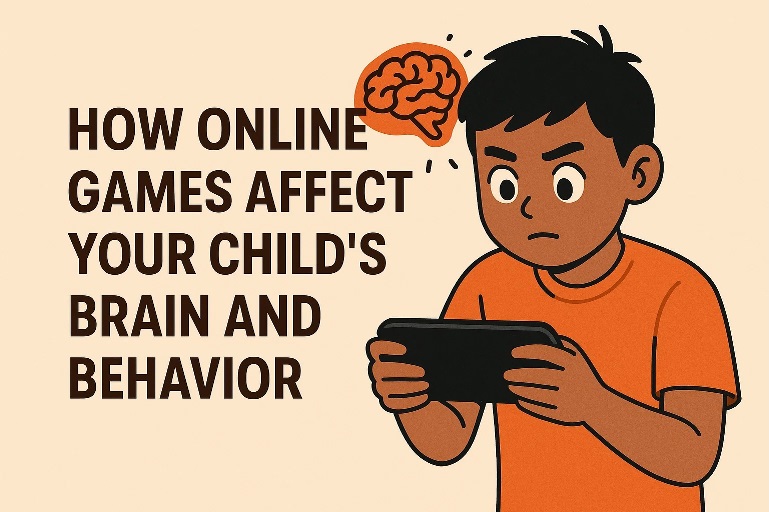
How Online Games Affect Your Child’s Brain and Behavior

How Online Games Affect Your Child’s Brain and Behavior

Online gaming has become a regular part of childhood. From multiplayer adventures and sports simulations to puzzle challenges and strategy games, children today have access to thousands of games on smartphones, tablets, computers, and gaming consoles.

Many parents wonder whether online games are helping their children learn new skills or causing problems that may affect their studies, behavior, and overall development. The truth lies somewhere in between. The impact of gaming depends on factors such as the type of games played, the amount of screen time, and how well gaming is balanced with other activities.

This guide explores how online games influence a child’s brain and behavior, helping parents make informed decisions.

How Online Gaming Has Changed Childhood

Unlike traditional games played outdoors, online gaming offers instant entertainment, social interaction, rewards, and challenges. According to industry reports, billions of people worldwide play video games, with children and teenagers representing a significant portion of users.

Many games are designed to keep players engaged for extended periods through levels, achievements, points, virtual rewards, and competitive rankings. While these features can be enjoyable, they also affect how the brain responds to stimulation and rewards.

How Much Screen Time Is Too Much for Kids? Expert Guidelines for Parents

How Online Games Affect the Brain

Improved Problem-Solving Skills

Many strategy and puzzle-based games require players to analyze situations, make decisions, and develop solutions quickly.

Children who play such games may improve:

    • Critical thinking
    • Decision-making abilities
    • Strategic planning
    • Pattern recognition
    • Logical reasoning

Educational researchers have found that certain games can strengthen cognitive skills when played in moderation.

Faster Information Processing

Action-based games often require quick reactions to changing situations.

Studies suggest that moderate gaming can improve:

    • Hand-eye coordination
    • Visual attention
    • Reaction speed
    • Spatial awareness

These skills can be useful in everyday activities and certain academic tasks.

Increased Dopamine Activity

Gaming activates the brain’s reward system by releasing dopamine, a chemical associated with pleasure and motivation.

Every time a child wins a level, earns a reward, or achieves a goal, the brain experiences a sense of accomplishment. While this can be motivating, excessive exposure may lead some children to seek constant stimulation and instant gratification.

Impact on Attention Span

Fast-paced games constantly present new challenges, sounds, visuals, and rewards.

When children spend many hours playing highly stimulating games, some may find classroom learning or homework less engaging because these activities provide slower rewards.

Research suggests that excessive gaming can contribute to difficulties with concentration and sustained attention in some children.

How Excessive Screen Time Affects Your Child’s Mind and Body

How Online Games Affect Behavior

Positive Social Interaction

Many online games allow players to communicate and cooperate with others.

Children may develop:

    • Teamwork skills
    • Communication abilities
    • Leadership qualities
    • Cooperation and collaboration

For some children, gaming communities can provide social connections and opportunities to make friends.

Increased Frustration and Aggression

Competitive gaming environments can sometimes lead to frustration, anger, or emotional outbursts.

Children may become upset when:

    • Losing matches
    • Facing repeated failures
    • Experiencing online bullying
    • Dealing with toxic player behavior

Parents should monitor how games influence emotional responses and discuss healthy ways to handle disappointment.

Reduced Interest in Other Activities

When gaming becomes the primary source of entertainment, children may gradually spend less time on:

    • Reading
    • Physical exercise
    • Family interaction
    • Creative hobbies
    • Academic activities

Maintaining balance is essential for healthy development.

Why Your Child Needs More Outdoor Playtime and Less Screen Time

The Effects of Excessive Gaming

Sleep Problems

Children who play games late into the evening often experience sleep disruption.

The blue light emitted by screens can interfere with melatonin production, making it harder to fall asleep. Poor sleep can affect memory, concentration, mood, and academic performance.

Academic Challenges

Several studies have found links between excessive recreational screen time and lower academic achievement.

This does not mean gaming automatically causes poor grades. However, when gaming replaces study time, homework, revision, and reading, academic performance may suffer.

Reduced Physical Activity

Children who spend many hours sitting and gaming are generally less physically active.

Lack of movement can contribute to:

    • Weight gain
    • Poor fitness
    • Reduced stamina
    • Increased health risks over time

Regular exercise remains important for both physical and mental well-being.

The Rise of Couch Potato Kids – How to Get Them Active Again

Warning Signs Parents Should Watch For

Gaming May Be Becoming a Problem If Your Child:

Shows Irritability When Unable to Play

Strong emotional reactions when gaming is restricted may indicate unhealthy dependence.

Neglects School Responsibilities

Missed assignments, declining grades, or reduced interest in learning can be warning signs.

Loses Interest in Friends and Family

Excessive gaming may lead to social withdrawal from real-world relationships.

Frequently Sacrifices Sleep

Staying awake late to continue gaming can affect health and academic performance.

Constantly Thinks About Gaming

Children may become preoccupied with games even when participating in other activities.

How to Help Kids Reduce Screen Time Without Arguments

How Parents Can Create Healthy Gaming Habits

Set Clear Time Limits

Establish daily or weekly gaming schedules that fit around schoolwork, physical activity, and family time.

Choose Age-Appropriate Games

Review game ratings and content before allowing children to play.

Encourage Variety

Balance gaming with reading, sports, creative hobbies, and social activities.

Keep Gaming Devices in Shared Spaces

Monitoring becomes easier when gaming occurs in common family areas rather than behind closed doors.

Talk About Online Safety

Teach children about privacy, cyberbullying, and responsible online behavior.

Can Online Games Be Educational?

Yes. Many games can support learning when selected carefully.

Educational and strategy-based games may help children develop:

    • Mathematical thinking
    • Problem-solving abilities
    • Creativity
    • Memory skills
    • Language development

The key is choosing quality content and maintaining reasonable limits.

Gaming vs. Studies – How to Bring Back the Balance?

Finding the Right Balance

Online games are neither entirely good nor entirely bad. Their impact depends largely on how they are used.

Moderate gaming can support cognitive development, coordination, and social interaction. However, excessive play may affect sleep, concentration, behavior, and academic progress.

Parents should focus on balance rather than complete restriction. Open communication, healthy routines, and active involvement in a child’s digital life can help ensure gaming remains a positive experience.

Children thrive when technology, learning, physical activity, and social interaction work together rather than compete for attention.

Looking for experienced tutors who can help your child stay focused, improve academic performance, and build strong study habits? Visit IndiaTutor.in to connect directly with qualified tutors for all classes and subjects.

Tutors can also register on IndiaTutor.in to showcase their expertise, receive direct enquiries from parents and students, and grow their tuition practice without paying commissions.

Register your Tutor Profile on IndiaTutor.in

About the Author

Nidhi Mehta is the founder of IndiaTutor.in and a professional online educator with over 11 years of teaching experience. She specializes in tutoring Classes 1 to 6 across core academic subjects, with a strong focus on concept clarity and foundational skill-building. Her teaching approach is based on personalized, one-to-one learning that helps students develop long-term academic confidence and understanding.

Visit her profile    Visit About Us Page

error: Content is protected !!

Found this helpful? Share it in 2 seconds!

Link copied to clipboard