

Why Learning English Early Helps Kids in Global Opportunities

Why Learning English Early Helps Kids in Global Opportunities

Why Learning English Early Helps Kids in Global Opportunities

English has become one of the most important skills for children growing up in today’s connected world. Whether a student dreams of studying abroad, working with international companies, accessing quality educational resources, or communicating with people from different countries, a strong foundation in English can open many doors.

Parents often wonder when children should start learning English. Research suggests that early exposure helps children develop better language skills, confidence, and communication abilities. As global opportunities continue to expand, learning English from a young age can provide long-term advantages in education, careers, and personal growth.

Why English Matters in a Globalized World

The world is more connected than ever before. Students regularly access online classes, educational videos, digital libraries, and international learning platforms. A significant portion of this content is available in English.

According to estimates from the British Council, English is spoken by more than 1.5 billion people worldwide, making it one of the most widely used languages for communication, business, education, and technology.

Children who develop strong English skills early often find it easier to participate in global learning environments and interact with people from different cultural backgrounds.

How Early Language Learning Benefits Children

Better Language Absorption

Young children have a remarkable ability to absorb languages naturally. During the early years, the brain is highly adaptable and can process sounds, vocabulary, and grammar more efficiently.

Children exposed to English at a younger age often develop better pronunciation and listening skills compared to those who begin much later.

Stronger Communication Skills

Learning English is not only about vocabulary and grammar. It also improves overall communication abilities.

Children learn how to express ideas clearly, participate in discussions, ask questions confidently, and present their thoughts effectively. These skills are valuable throughout school and later in professional life.

Improved Confidence

Students who are comfortable communicating in English often feel more confident in classrooms, competitions, interviews, and social interactions.

Confidence gained through language proficiency can positively influence academic performance and participation in extracurricular activities.

English Opens Access to Better Educational Resources

Learning Beyond Textbooks

Many of the world’s most popular educational websites, online courses, research materials, and learning videos are available in English.

Students with strong language skills can explore topics independently and access information that may not be available in their native language.

Easier Participation in International Programs

Many international academic competitions, exchange programs, scholarship opportunities, and summer schools require English proficiency.

Students who start learning early are often better prepared to take advantage of these opportunities when they become available.

Better Performance in Higher Education

Several leading universities around the world use English as the primary language of instruction.

Strong language skills help students understand course materials, write assignments, conduct research, and communicate effectively with professors and peers.

The Role of English in Future Careers

Growing Demand Across Industries

English is widely used in sectors such as technology, healthcare, finance, engineering, hospitality, aviation, marketing, and international trade.

Many multinational organizations prefer candidates who can communicate effectively in English, especially when working with global teams and clients.

Increased Employment Opportunities

According to various workforce studies, English proficiency is often associated with better employment prospects and access to higher-paying roles in many countries.

As remote work continues to grow, professionals are increasingly collaborating with colleagues and clients from different parts of the world. Effective communication has become a valuable workplace skill.

Entrepreneurship and Business Growth

Young learners who develop strong communication abilities can later use those skills in entrepreneurship, freelancing, consulting, and business management.

English helps business owners connect with international customers, suppliers, and partners more easily.

How English Supports Digital Learning

Access to Online Knowledge

A large percentage of online educational content is published in English. Students with good language skills can benefit from tutorials, webinars, educational apps, and global learning communities.

Technology and Innovation

Most programming resources, software documentation, technology forums, and technical learning materials are written in English.

Children interested in science, coding, artificial intelligence, or engineering can gain an advantage by becoming comfortable with the language early.

Effective Ways to Help Children Learn English

Encourage Daily Reading

Reading storybooks, age-appropriate articles, and educational content helps children build vocabulary and comprehension skills gradually.

Create Opportunities for Conversation

Regular conversations allow children to practice speaking naturally and improve fluency over time.

Use Interactive Learning Methods

Educational games, storytelling activities, language exercises, and guided discussions can make learning more enjoyable and effective.

Seek Personalized Guidance

Every child learns differently. Some students may need additional support to improve grammar, pronunciation, writing, or conversational skills.

Qualified English tutors can identify learning gaps and create customized lessons that match a student’s pace and goals.

Why Parents Are Choosing English Tutors

Many parents recognize the importance of strong communication skills and seek expert guidance to help their children succeed.

An experienced English tutor can:

Build a strong language foundation

Improve reading, writing, listening, and speaking skills

Increase confidence in communication

Prepare students for school examinations and competitive assessments

Provide individual attention and structured learning plans

With consistent support, students can develop skills that benefit them throughout their academic and professional journeys.

My Thoughts

Learning English early is an investment in a child’s future. Strong language skills help students access better educational resources, communicate confidently, participate in international opportunities, and prepare for a rapidly changing global workforce.

As the world becomes increasingly interconnected, English continues to play a vital role in education, technology, business, and career development. Starting early gives children more time to build proficiency and gain confidence that can serve them for years to come.

Looking for experienced English tutors for your child? Explore qualified online and home tutors on IndiaTutor.in and connect directly with educators who match your learning needs.

English Tutors

Are you an English tutor? Register on IndiaTutor.in to showcase your expertise, receive direct enquiries from parents and students, and grow your tutoring career without paying commissions.

Register as Tutor

About the Author

Nidhi Mehta is the founder of IndiaTutor.in and a professional online educator with over 11 years of teaching experience. She specializes in tutoring Classes 1 to 6 across core academic subjects, with a strong focus on concept clarity and foundational skill-building. Her teaching approach is based on personalized, one-to-one learning that helps students develop long-term academic confidence and understanding.


Visit her profile    Visit About Us Page

The Rise of Couch Potato Kids – How to Get Them Active Again

The Rise of Couch Potato Kids – How to Get Them Active Again

Children today have access to more technology than any previous generation. Smartphones, tablets, gaming consoles, streaming platforms, and social media have transformed how young people spend their free time. While technology offers many benefits, it has also contributed to a growing concern among parents, teachers, and health experts: the rise of sedentary lifestyles among children.

Many youngsters now spend hours sitting indoors, often choosing screens over sports, outdoor play, or physical recreation. As a result, parents are increasingly searching for practical ways to encourage healthier habits and restore balance in their children’s daily routines.

How Excessive Screen Time Affects Your Child’s Mind and Body

What Is a Couch Potato Kid?

A “couch potato kid” is a child who spends most of their leisure time engaged in inactive activities such as watching videos, scrolling on mobile devices, playing video games, or using computers for extended periods.

Physical movement becomes limited, and opportunities for exercise, outdoor exploration, and social interaction often decrease. Over time, this pattern can affect a child’s overall development.

Why Are Children Becoming Less Active?

Several factors have contributed to this shift in behavior.

Increased Screen Exposure

Digital entertainment is available around the clock. Many children can instantly access games, videos, and social platforms from multiple devices within the home.

Research shows that excessive screen use often replaces time that could otherwise be spent playing, exercising, or interacting with friends.

Academic Pressure

Students frequently spend long hours attending classes, completing homework, preparing for examinations, and participating in additional coaching sessions. By the end of the day, many prefer passive activities that require little effort.

Limited Outdoor Spaces

Urbanization has reduced access to safe playgrounds and open areas in many neighborhoods. Concerns about traffic, safety, and pollution may also discourage outdoor activities.

Changing Family Routines

Busy schedules often leave limited time for family walks, sports, or recreational outings. As a result, screens become an easy option for entertainment and convenience.

Why Your Child Needs More Outdoor Playtime and Less Screen Time

The Numbers Parents Should Know

The scale of physical inactivity among young people is significant.

According to the World Health Organization, around 80% of adolescents worldwide do not achieve recommended levels of physical activity. Physical inactivity has become one of the leading risk factors affecting long-term health.

WHO also notes that sedentary behavior is increasing globally because of greater reliance on screens for education, recreation, and everyday activities.

Studies have linked excessive screen exposure with reduced physical activity, poorer sleep quality, attention difficulties, and other developmental concerns in children.

How Much Screen Time Is Too Much for Kids? Expert Guidelines for Parents

How Inactivity Affects Child Development

Physical activity is not just about fitness. It plays an important role in many areas of growth.

Physical Health

Regular movement helps strengthen bones and muscles, supports healthy growth, improves cardiovascular fitness, and assists with maintaining a healthy body weight.

When activity levels decline, children may become more vulnerable to lifestyle-related health problems later in life.

Mental Well-Being

Exercise contributes positively to mood, confidence, emotional regulation, and overall psychological health. Children who move regularly often report feeling more energetic and motivated.

Academic Performance

Active children frequently demonstrate better concentration, memory, and cognitive function. Research has found that healthy balances between physical activity, sleep, and screen time are associated with improved learning outcomes.

Social Development

Outdoor games, team sports, and group activities help youngsters learn communication, cooperation, leadership, and problem-solving skills.

How Online Games Affect Your Child’s Brain and Behavior

Signs Your Child May Need More Physical Activity

Parents should pay attention to patterns that may indicate excessive inactivity.

Common Warning Signs

Preference for Screens Over Play

A child consistently chooses devices over outdoor activities or social interaction.

Reduced Energy Levels

Frequent complaints of tiredness despite adequate sleep.

Difficulty Focusing

Poor concentration during studies or daily tasks.

Avoidance of Physical Activities

Reluctance to participate in sports, games, or recreational programs.

Weight and Fitness Concerns

Noticeable decline in stamina, endurance, or overall fitness.

How Web Series and OTT Platforms Are Impacting Your Child’s Mind

Practical Ways to Get Children Moving Again

The good news is that small changes can create lasting results.

Make Activity Fun Rather Than Mandatory

Children respond better when movement feels enjoyable instead of being treated as a punishment or obligation.

Consider activities such as:

    • Cycling
    • Dancing
    • Swimming
    • Skating
    • Badminton
    • Football
    • Cricket
    • Nature walks

Allowing children to choose their preferred activity often increases participation.

Create Daily Movement Goals

Health experts recommend regular physical activity for school-age children. Even simple routines such as evening walks, active games, or family sports sessions can make a meaningful difference.

Introduce Screen-Free Time

Establish periods during the day when devices are put away.

Effective Screen-Free Zones

    • Dining table
    • Family gatherings
    • Outdoor outings
    • One hour before bedtime

Experts recommend focusing on balance rather than completely eliminating technology.

Encourage Outdoor Play

Outdoor environments stimulate curiosity, creativity, and physical development.

Even 30 minutes outside each day can provide valuable benefits for both children and parents.

Lead by Example

Children often imitate adult behavior.

When parents participate in walks, sports, fitness activities, or recreational hobbies, youngsters are more likely to follow.

Enroll Children in Structured Activities

Sports academies, dance programs, martial arts classes, and recreational clubs provide regular opportunities for movement while helping children build confidence and friendships.

How to Help Kids Reduce Screen Time Without Arguments

The Role of Tutors in Promoting Active Lifestyles

Academic success and physical well-being should work together, not compete with one another.

Experienced tutors can encourage balanced schedules by:

    • Promoting effective time management
    • Reducing study-related stress
    • Incorporating short movement breaks during lessons
    • Encouraging healthy routines
    • Supporting student confidence and motivation

Parents increasingly appreciate educators who understand the importance of holistic child development alongside academic achievement.

Building Healthy Habits for the Future

Children do not need to become professional athletes to enjoy the benefits of an active lifestyle. Small, consistent actions often have the greatest impact.

A family walk after dinner, weekend cycling sessions, outdoor games with friends, or participation in sports can gradually replace excessive sitting and screen dependence.

The goal is not to eliminate technology but to create a healthier balance that supports physical health, emotional well-being, academic progress, and social development.

By taking proactive steps today, parents can help children develop habits that benefit them throughout life.

Looking for experienced tutors who understand both academic excellence and student well-being? Register on IndiaTutor.in to connect directly with qualified tutors across subjects and classes.

Tutors can also create a profile on IndiaTutor.in to reach students worldwide, receive direct enquiries, and grow their teaching practice without commission deductions.

About the Author

Nidhi Mehta is the founder of IndiaTutor.in and a professional online educator with over 11 years of teaching experience. She specializes in tutoring Classes 1 to 6 across core academic subjects, with a strong focus on concept clarity and foundational skill-building. Her teaching approach is based on personalized, one-to-one learning that helps students develop long-term academic confidence and understanding.
Visit her profile    Visit About Us Page

Should Kids Watch Web Series? Expert Advice for Parents

Should Kids Watch Web Series Expert Advice for Parents

Web series have become a regular part of family entertainment. From educational shows and animated adventures to teen dramas and fantasy stories, children today have access to more content than any previous generation.

Many parents often ask: Should kids watch web series? Is it good for learning, or does it create problems?

The answer is not a simple yes or no. The impact depends on the child’s age, the type of content being watched, viewing habits, and parental involvement.

This guide explains the benefits, risks, and practical strategies parents can use to help children develop healthy viewing habits.

Why Web Series Are So Popular Among Children

Streaming platforms have changed how children consume content. Unlike traditional television, web series can be watched anytime and anywhere.

Recent media studies show that online video and streaming content dominate children’s screen entertainment worldwide. Research also indicates that a large majority of children watch some form of audio-visual content every week, with streaming services becoming a major source of entertainment.

The popularity of web series comes from:

    • Easy access on multiple devices
    • Engaging storylines
    • Personalized recommendations
    • Attractive visuals and sound effects
    • Availability of content for every age group

While these features make web series entertaining, they also require thoughtful supervision.

How Web Series and OTT Platforms Are Impacting Your Child’s Mind

Benefits of Watching Web Series

Not all screen time is harmful. High-quality content can provide several benefits when consumed in moderation.

Educational Learning Opportunities

Many web series introduce children to:

    • Science concepts
    • History and culture
    • Language development
    • Problem-solving skills
    • Creativity and imagination

Educational programs often present complex topics in a simple and engaging format that children can easily understand.

How Much Screen Time Is Too Much for Kids? Expert Guidelines for Parents

Improved Vocabulary and Communication

Children who watch age-appropriate programs can learn:

    • New words
    • Sentence structures
    • Pronunciation
    • Storytelling techniques

This is especially helpful when parents discuss the content afterward.

Family Bonding

Watching selected shows together creates opportunities for:

    • Meaningful conversations
    • Shared experiences
    • Teaching values
    • Discussing real-life situations

Co-viewing helps parents understand what their children are watching and thinking.

How Excessive Screen Time Affects Your Child’s Mind and Body

Potential Risks Parents Should Know

While web series offer benefits, excessive or unsupervised viewing can create challenges.

Exposure to Inappropriate Content

Many platforms use recommendation algorithms. A child may begin with harmless content but eventually encounter material that is unsuitable for their age.

Experts have raised concerns that children can sometimes be exposed to harmful themes, violence, misinformation, or unhealthy social influences through online content.

Reduced Physical Activity

When screen time replaces outdoor play, children may become less active.

Physical movement is essential for:

    • Healthy growth
    • Motor skills development
    • Better sleep
    • Stronger immunity

A balanced routine remains important.

Impact on Sleep

Watching web series late at night can affect sleep quality.

Fast-paced entertainment and prolonged device use may make it harder for children to relax before bedtime.

Shortened Attention Span

Constant exposure to rapidly changing visuals can make traditional learning activities seem less engaging.

Some parents report difficulty getting children to focus on reading, homework, or offline hobbies after extended screen use.

How to Help Kids Reduce Screen Time Without Arguments

What Research Says About Excessive Screen Time

Studies continue to examine how digital media affects children.

A large analysis involving more than 292,000 children found associations between higher screen use and emotional or behavioral difficulties. Researchers also noted that children experiencing such challenges may turn to screens more often, creating a cycle that becomes difficult to manage.

Another survey found that nearly one in two urban Indian parents reported their children spending three or more hours daily on screens, including video streaming platforms and online entertainment.

These findings do not mean web series are harmful by themselves. They highlight the importance of balance and supervision.

The Rise of Couch Potato Kids – How to Get Them Active Again

How Much Web Series Viewing Is Reasonable?

There is no single rule that fits every family.

Instead of focusing only on the number of hours, parents should consider:

    • Child’s age
    • Content quality
    • School performance
    • Sleep patterns
    • Physical activity levels
    • Social interactions

A child who maintains healthy routines and watches quality content in moderation is less likely to experience negative effects.

Signs That Viewing Habits May Need Attention

Parents should observe whether a child:

    • Becomes irritated when screen time ends
    • Avoids outdoor activities
    • Shows declining academic performance
    • Experiences sleep difficulties
    • Loses interest in hobbies
    • Spends less time interacting with family

These signs may indicate the need for healthier boundaries.

Expert Tips for Parents

Watch Together When Possible

Co-viewing allows parents to:

    • Explain confusing topics
    • Discuss values and behavior
    • Answer questions
    • Encourage critical thinking

Children often learn more when adults participate.

Select Age-Appropriate Content

Review ratings and previews before allowing access.

Choose programs that match:

    • Emotional maturity
    • Learning needs
    • Family values

Create Viewing Rules

Clear expectations help children develop self-control.

Examples include:

    • No screens during meals
    • No devices before bedtime
    • Homework completed first
    • Limited viewing on school days

Consistency is important.

Encourage Offline Activities

Children need experiences beyond screens.

Healthy alternatives include:

    • Reading books
    • Sports and games
    • Art and crafts
    • Music
    • Family outings
    • Creative projects

A balanced lifestyle naturally reduces dependence on digital entertainment.

Rising Stress in School Children – Causes, Symptoms, and How Parents Can Help

Can Web Series Be Educational?

Yes, when selected carefully.

Many high-quality programs teach:

    • Mathematics
    • Science
    • Geography
    • Language skills
    • Social development
    • Emotional intelligence

Parents can turn entertainment into learning by asking questions about what was watched and encouraging discussion.

The Role of Tutors in Building Better Screen Habits

Academic support can play a valuable role in reducing excessive entertainment consumption.

When children are engaged in structured learning activities, they often develop:

    • Better study routines
    • Improved focus
    • Stronger academic confidence
    • More productive use of time

Experienced tutors can also recommend educational content that supports classroom learning rather than distracting from it.

My Thoughts

Kids can watch web series, but moderation and supervision matter. The goal is not to eliminate screens entirely. Instead, parents should focus on content quality, healthy routines, and meaningful engagement.

When used wisely, web series can educate, entertain, and inspire. When left unchecked, excessive viewing may affect learning, sleep, physical activity, and emotional well-being.

The most effective approach is balance—combining digital entertainment with learning, social interaction, outdoor activities, and family time.

Looking for experienced tutors who can help your child stay engaged in learning and build strong academic habits? Register on IndiaTutor.in to connect directly with qualified tutors across subjects and classes.

IndiaTutor.in allows parents to compare tutor profiles, communicate directly, and find the right academic support without paying commissions.

Register your Tutor Profile on IndiaTutor.in

About the Author

Nidhi Mehta is the founder of IndiaTutor.in and a professional online educator with over 11 years of teaching experience. She specializes in tutoring Classes 1 to 6 across core academic subjects, with a strong focus on concept clarity and foundational skill-building. Her teaching approach is based on personalized, one-to-one learning that helps students develop long-term academic confidence and understanding.

Visit her profile    Visit About Us Page

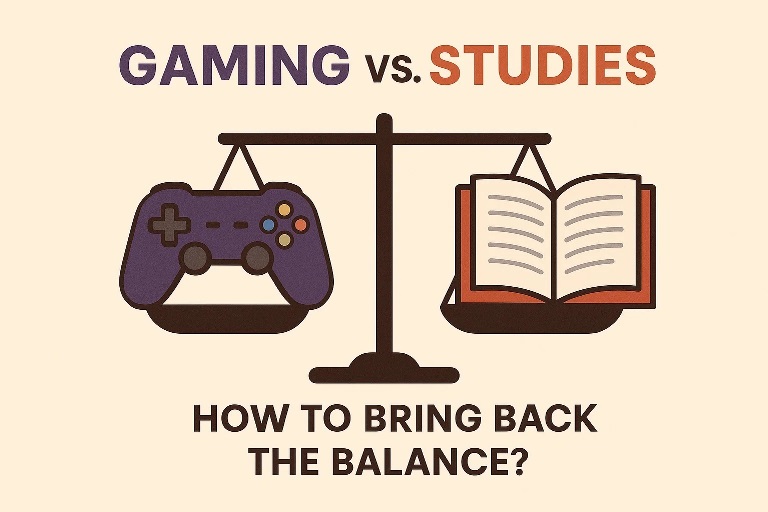
Gaming vs. Studies – How to Bring Back the Balance?

Gaming vs. Studies – How to Bring Back the Balance

Video games have become a regular part of childhood and teenage life. From mobile games and online multiplayer battles to strategy and simulation titles, gaming is now one of the most popular forms of entertainment among students.

For many parents, however, a common concern remains: “How much gaming is too much?” When study hours decrease, homework gets delayed, and exam scores begin to slip, the struggle between gaming and academics often becomes a source of tension at home.

The good news is that gaming and studies do not have to be enemies. The real goal is balance. With the right approach, students can enjoy games while staying focused on learning and academic success.

How Online Games Affect Your Child’s Brain and Behavior

Why Gaming Appeals So Much to Students

Games are designed to be engaging. They provide instant feedback, rewards, achievements, challenges, and social interaction. Unlike school assignments that may take days or weeks to show results, games often offer immediate satisfaction.

Many games also encourage:

    • Strategic thinking
    • Problem-solving
    • Teamwork
    • Decision-making
    • Hand-eye coordination

Research suggests that moderate gaming may support certain cognitive skills and logical reasoning abilities. Some studies have even found improvements in attention and problem-solving among students who play appropriate games in moderation.

The challenge arises when gaming starts replacing essential activities such as studying, sleeping, exercising, and spending time with family.

How to Help Your Child Balance School, Homework, and Hobbies

When Gaming Starts Affecting Academic Performance

Gaming becomes a concern when it begins to interfere with a student’s responsibilities and daily routine.

Common Warning Signs

Parents should watch for:

    • Declining grades
    • Incomplete homework
    • Reduced concentration during lessons
    • Late-night gaming sessions
    • Irritability when asked to stop playing
    • Loss of interest in other activities
    • Poor sleep habits

A large systematic review of academic performance found that video game playing was associated with lower academic outcomes among many children and adolescents, particularly when gaming became excessive.

This does not mean gaming automatically harms learning. The impact often depends on duration, timing, and self-control.

How Much Screen Time Is Too Much for Kids? Expert Guidelines for Parents

The Hidden Cost of Excessive Gaming

Many students believe they can study later after “just one more game.” Unfortunately, gaming sessions often last much longer than planned.

Reduced Study Time

Every hour spent gaming is an hour unavailable for:

    • Revision
    • Practice exercises
    • Reading
    • Project work

Over weeks and months, these missed study opportunities can create learning gaps that become difficult to close.

Sleep Disruption

Sleep plays a critical role in memory formation and learning.

Studies have shown that excessive screen use, especially interactive activities such as gaming, can delay sleep and reduce sleep quality. Poor sleep often leads to lower concentration, weaker retention, and reduced classroom performance.

Difficulty Maintaining Focus

Fast-paced games constantly stimulate the brain. After long gaming sessions, some students find it difficult to switch into slower, focused academic tasks such as reading textbooks or solving mathematics problems.

Research involving hundreds of thousands of children has linked excessive screen exposure with increased emotional and behavioural difficulties.

How Excessive Screen Time Affects Your Child’s Mind and Body

The Numbers Parents Should Know

Gaming has become increasingly common among young people worldwide.

One study involving over 12,000 children and adolescents found that the percentage of students playing video games for three or more hours daily increased significantly over time. Among boys, the figure rose from 16.6% to 25.8%, while among girls it increased from 3.6% to 20.8%.

A recent meta-analysis covering more than 641,000 adolescents highlighted growing concerns about gaming disorder, which is officially recognized by the World Health Organization as a behavioural condition.

These findings do not suggest that all gaming is harmful. They simply highlight the importance of healthy limits and supervision.

How to Help Kids Reduce Screen Time Without Arguments

How Parents Can Bring Back the Balance

Set Clear Daily Limits

Children perform better when expectations are consistent.

Consider creating rules such as:

    • Homework before gaming
    • No gaming during study hours
    • Fixed gaming duration on school days
    • Slightly extended recreational time during weekends

Consistency matters more than strictness.

Focus on Routine Instead of Punishment

Banning games completely often creates resistance.

A structured schedule usually works better:

ActivitySuggested Priority
School WorkFirst
RevisionSecond
Physical ActivityThird
GamingAfter responsibilities are completed

Students are more likely to follow routines they helped create.

Keep Devices Out of Bedrooms at Night

Late-night gaming is one of the biggest causes of sleep disruption.

Charging devices outside the bedroom can help students maintain healthier sleeping patterns and improve next-day concentration.

Encourage Other Interests

Students need activities beyond screens.

Examples include:

    • Sports
    • Music
    • Reading
    • Art
    • Outdoor activities
    • Hobby clubs

A diverse routine naturally reduces dependence on gaming for entertainment.

Why Your Child Needs More Outdoor Playtime and Less Screen Time

How Tutors Can Help

Sometimes the issue is not gaming itself.

Many students turn to games because they feel overwhelmed by schoolwork, struggle with specific subjects, or lack confidence in the classroom.

Identifying Learning Gaps

An experienced tutor can identify:

    • Weak concepts
    • Missing fundamentals
    • Poor study habits
    • Exam preparation issues

When students begin understanding subjects better, academic confidence often improves.

Making Learning More Engaging

Good tutors use:

    • Interactive teaching methods
    • Real-world examples
    • Practice-based learning
    • Goal-oriented study plans

Students who enjoy learning are less likely to avoid studies through excessive gaming.

Creating Accountability

Regular tuition sessions create structure and discipline.

Knowing that someone is monitoring progress encourages students to stay consistent with their academic goals.

The Rise of Couch Potato Kids – How to Get Them Active Again

Helping Students Develop Self-Control

The ultimate objective is not simply reducing gaming hours. It is teaching students how to manage their own time responsibly.

Encourage Goal-Based Rewards

For example:

    • Complete a chapter → 30 minutes of gaming
    • Finish assignments → gaming time earned
    • Achieve weekly targets → additional recreation time

This approach connects responsibility with rewards.

Teach Time Management Early

Students who learn planning skills tend to perform better academically and manage leisure activities more effectively.

Simple tools such as study planners, calendars, and daily task lists can make a significant difference.

My Thoughts

Gaming is not the enemy of education. In moderation, it can be an enjoyable recreational activity and may even support certain cognitive skills. The real challenge arises when gaming begins replacing study time, sleep, physical activity, and healthy routines.

Parents should focus on balance rather than prohibition. Clear expectations, consistent schedules, supportive guidance, and academic assistance when needed can help students enjoy gaming while continuing to thrive in school.

Looking for experienced tutors who can help students stay motivated, improve academic performance, and build effective study habits? Register on IndiaTutor.in to connect directly with qualified tutors across subjects and classes.

Tutors can also create their profiles on IndiaTutor.in to reach students and parents searching for trusted academic support without paying commissions.

Register your Tutor Profile on IndiaTutor.in

About the Author

Nidhi Mehta is the founder of IndiaTutor.in and a professional online educator with over 11 years of teaching experience. She specializes in tutoring Classes 1 to 6 across core academic subjects, with a strong focus on concept clarity and foundational skill-building. Her teaching approach is based on personalized, one-to-one learning that helps students develop long-term academic confidence and understanding.
Visit her profile    Visit About Us Page

How Much Screen Time Is Too Much for Kids? Expert Guidelines for Parents

How Much Screen Time Is Too Much for Kids Expert Guidelines for Parents

Digital devices have become a part of everyday life. Children use smartphones, tablets, laptops, televisions, and gaming consoles for learning, entertainment, communication, and hobbies. While technology offers many benefits, excessive screen exposure can affect a child’s physical health, sleep, learning habits, and emotional well-being.

Many parents wonder where to draw the line. How much screen time is healthy? When does it become excessive? What do experts recommend?

This guide explains current recommendations, potential risks, and practical strategies to help families create healthy screen habits.

How Excessive Screen Time Affects Your Child’s Mind and Body

Why Screen Time Matters

Screen time refers to the amount of time spent using devices with digital screens, including televisions, smartphones, tablets, computers, and gaming systems.

Research shows that moderate and purposeful use of technology can support education, creativity, and communication. However, excessive use may reduce time available for physical activity, face-to-face interaction, sleep, reading, and other important developmental activities.

The key concern is not only how much time children spend on screens but also what they are doing during that time.

Expert Screen Time Guidelines by Age

Children Under 2 Years

Health experts generally recommend avoiding screen media for children younger than 18 months, except for video calls with family members.

At this age, children learn best through direct interaction with parents, caregivers, and their surroundings.

Ages 2 to 5 Years

Experts recommend limiting recreational screen use to approximately one hour per day of high-quality content.

Parents should watch together whenever possible to help children understand and apply what they are seeing.

Ages 6 to 12 Years

There is no universal hourly limit, but experts advise maintaining healthy boundaries that allow enough time for:

    • Schoolwork
    • Physical activity
    • Sleep
    • Family interaction
    • Reading and hobbies

Many specialists suggest keeping recreational screen use within one to two hours daily on school days.

Teenagers

Teenagers often require screens for education, research, communication, and skill development. Instead of focusing only on hours, parents should monitor the balance between digital activities and real-world responsibilities.

Healthy routines become more important than strict time limits.

Why Your Child Needs More Outdoor Playtime and Less Screen Time

Signs Your Child May Be Getting Too Much Screen Time

Sleep Problems

Children who use screens before bedtime often find it harder to fall asleep. The blue light emitted by screens can interfere with the body’s natural sleep cycle.

Declining Academic Performance

Excessive gaming, social media browsing, or video consumption may reduce concentration and study time.

Reduced Physical Activity

According to global health recommendations, school-age children should get at least 60 minutes of moderate to vigorous physical activity daily. Excessive device use can contribute to a sedentary lifestyle.

Mood Changes

Children who spend long periods online may become more irritable, anxious, or frustrated when devices are unavailable.

Less Interest in Offline Activities

A child who gradually loses interest in sports, outdoor play, reading, creative hobbies, or family interactions may be relying too heavily on screens for entertainment.

How Web Series and OTT Platforms Are Impacting Your Child’s Mind

The Difference Between Productive and Passive Screen Time

Not all screen time has the same impact.

Productive Screen Time

Examples include:

    • Online tutoring sessions
    • Educational videos
    • Coding activities
    • Language learning apps
    • Research for school projects
    • Creative design or art tools

These activities actively engage the brain and often contribute to learning.

Passive Screen Time

Examples include:

    • Endless scrolling
    • Random video consumption
    • Excessive social media browsing
    • Watching content without interaction

Passive usage tends to provide fewer educational benefits and can quickly consume large amounts of time.

How Online Games Affect Your Child’s Brain and Behavior

How Screen Time Affects Learning

Technology can support education when used correctly. Many students successfully use digital platforms for homework, virtual classes, and skill development.

However, studies have found that constant digital distractions can affect attention span and reduce learning efficiency.

Frequent notifications, multitasking, and switching between apps may make it harder for students to focus on complex academic tasks.

For this reason, educators often recommend structured study sessions without unnecessary digital interruptions.

How to Help Kids Reduce Screen Time Without Arguments

Practical Tips for Parents

Create Device-Free Zones

Keep screens away from dining tables and bedrooms whenever possible.

These spaces encourage conversation, better sleep habits, and family interaction.

Set Consistent Daily Limits

Children respond better when rules are predictable and applied consistently.

Establish clear expectations for weekdays, weekends, homework time, and recreation.

Encourage Offline Activities

Support activities such as:

    • Reading
    • Sports
    • Music
    • Art
    • Outdoor games
    • Family outings

A balanced schedule naturally reduces dependence on devices.

Be a Positive Role Model

Children often imitate adult behavior. Parents who maintain healthy technology habits make it easier for children to do the same.

Prioritize Educational Use

When screen time is necessary, choose activities that support learning, creativity, and skill development.

The Rise of Couch Potato Kids – How to Get Them Active Again

When Should Parents Be Concerned?

Parents may want to seek guidance if screen use begins to:

    • Interfere with sleep regularly
    • Affect school performance
    • Create frequent family conflicts
    • Replace social interaction
    • Cause emotional distress when devices are unavailable

Early intervention is often more effective than waiting until habits become deeply established.

The Role of Tutors in Supporting Healthy Learning Habits

Many parents struggle with balancing academic expectations and screen exposure. A qualified tutor can help students use technology more productively by providing structured lessons, guided learning, and accountability.

Instead of spending hours on unproductive digital activities, students can focus on meaningful educational sessions that improve understanding, confidence, and academic performance.

My Thoughts

There is no single screen-time rule that works for every child. Age, educational needs, personality, and daily routines all play a role. The goal is not to eliminate technology but to ensure it supports learning and development rather than replacing important real-world experiences.

Parents who focus on balance, quality content, healthy routines, and open communication are more likely to help children develop responsible digital habits that last a lifetime.

Looking for experienced tutors who can help your child learn effectively and make productive use of technology? Explore qualified tutors across subjects and classes on IndiaTutor.in.

Are you a tutor? Register on IndiaTutor.in to showcase your expertise, connect directly with parents, and grow your online or home tuition opportunities without paying commissions.

Register your Tutor Profile on IndiaTutor.in

About the Author

Nidhi Mehta is the founder of IndiaTutor.in and a professional online educator with over 11 years of teaching experience. She specializes in tutoring Classes 1 to 6 across core academic subjects, with a strong focus on concept clarity and foundational skill-building. Her teaching approach is based on personalized, one-to-one learning that helps students develop long-term academic confidence and understanding.
Visit her profile    Visit About Us Page

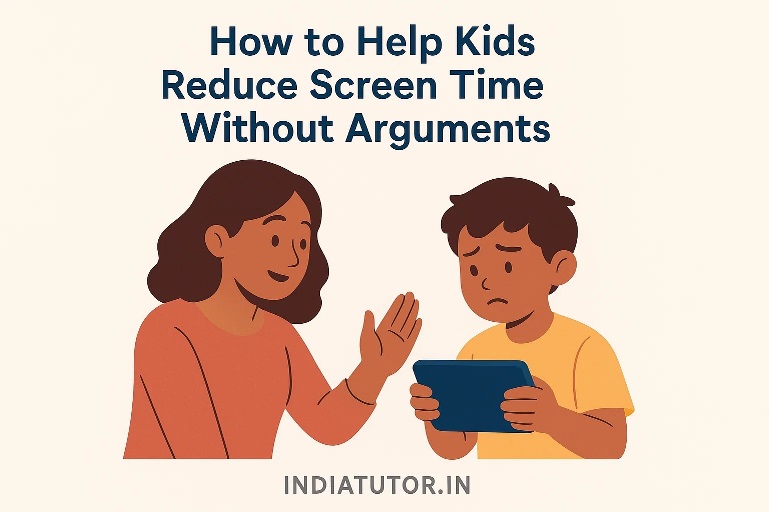
How to Help Kids Reduce Screen Time Without Arguments

How to Help Kids Reduce Screen Time Without Arguments

In today’s digital world, screens are everywhere. Smartphones, tablets, laptops, televisions, and gaming devices have become a regular part of daily life. While technology offers educational and entertainment benefits, many parents struggle with one common challenge: how to reduce screen time without turning every conversation into an argument.

If asking your child to put away a device often leads to complaints, negotiations, or frustration, you are not alone. The good news is that reducing screen use does not have to involve strict punishments or constant conflict. Small changes, clear expectations, and positive alternatives can make a significant difference.

How Much Screen Time Is Too Much for Kids? Expert Guidelines for Parents

Why Screen Time Has Become a Concern

Children today spend more time on digital devices than ever before. Research shows that children aged 8–10 spend an average of around 6 hours per day on screens, while teenagers often exceed 8 hours daily. Excessive screen exposure has been linked to reduced physical activity, sleep difficulties, lower academic performance, and attention-related challenges.

A recent review of Indian children under five years old found an average daily screen time of approximately 2.2 hours, which exceeds recommended limits for that age group.

The goal is not to eliminate technology completely. Instead, parents should focus on creating a healthy balance between online and offline activities.

How Excessive Screen Time Affects Your Child’s Mind and Body

Understanding Why Children Resist

Before introducing new rules, it helps to understand why children push back.

Screens provide instant entertainment, rewards, and stimulation. Games, videos, and social media are designed to capture attention. When children are suddenly asked to stop, they may feel disappointed or frustrated.

Instead of viewing resistance as disobedience, consider it a natural reaction to losing access to something enjoyable. This shift in perspective can help parents respond calmly and effectively.

Why Your Child Needs More Outdoor Playtime and Less Screen Time

Set Expectations Before Problems Begin

One of the biggest mistakes parents make is introducing limits only when they become frustrated.

Create Clear Family Rules

Children respond better when expectations are predictable.

Examples include:

    • No devices during meals.
    • Homework before recreational screen use.
    • No screens one hour before bedtime.
    • Screen-free family time in the evening.

When rules are established in advance, children are less likely to see them as sudden punishments. Experts consistently recommend creating structured boundaries around device use.

How to Help Your Child Balance School, Homework, and Hobbies

Replace, Don’t Just Remove

Many screen-time battles occur because parents take something away without offering an alternative.

Make Offline Activities Easy and Attractive

Children need engaging options that compete with digital entertainment.

Consider:

    • Board games
    • Arts and crafts
    • Sports and outdoor play
    • Reading challenges
    • Music lessons
    • Building projects
    • Cooking activities

When interesting alternatives are readily available, children naturally spend less time on devices.

Encourage Skill-Based Hobbies

Activities that create a sense of achievement often hold attention longer.

Examples include:

    • Drawing
    • Chess
    • Coding
    • Dance
    • Photography
    • Creative writing
    • Learning a musical instrument

These hobbies help children develop confidence while reducing dependence on screens.

Gaming vs. Studies – How to Bring Back the Balance?

Use a Gradual Reduction Strategy

Sudden restrictions often trigger resistance.

Reduce Usage Step by Step

Instead of cutting screen time dramatically overnight, make gradual adjustments.

For example:

    • Week 1: Reduce by 15 minutes daily.
    • Week 2: Reduce by another 15 minutes.
    • Week 3: Introduce additional screen-free activities.

Small changes feel less threatening and are easier for children to accept.

The Rise of Couch Potato Kids – How to Get Them Active Again

Become a Role Model

Children notice what parents do more than what parents say.

If adults frequently check phones during meals, conversations, or family activities, children receive mixed messages.

Create Family Screen-Free Moments

Consider introducing:

    • Device-free dinners
    • Family walks
    • Weekend outings
    • Reading time together

Research and parenting experts consistently highlight parental behavior as one of the strongest influences on children’s digital habits.

Avoid Using Screens as a Reward

Many families accidentally increase screen appeal by using it as a prize.

Statements such as:

    • “Finish your homework and you can use the tablet.”
    • “Behave properly and you can watch videos.”

can make screen time seem more valuable than other activities.

Instead, reward children with experiences such as:

    • Extra playtime
    • Family outings
    • Special activities
    • Choosing a weekend game

Create Screen-Free Zones

Certain areas of the home should encourage conversation, relaxation, and family interaction.

Bedrooms

Keeping devices out of bedrooms can improve sleep quality and reduce late-night usage. Studies have shown that excessive screen exposure, especially before bedtime, can interfere with healthy sleep patterns.

Dining Areas

Meals provide valuable opportunities for family discussions and relationship building.

A simple rule such as “No phones at the table” can strengthen communication and reduce unnecessary device use.

Focus on Content Quality

Not all screen time is equal.

Ask Better Questions

Instead of only asking:

“How long were you online?”

Ask:

    • What did you learn today?
    • What game are you playing?
    • What video did you watch?
    • What did you enjoy about it?

Research suggests that the quality and context of screen use matter significantly alongside total screen time. Educational and interactive content is generally more beneficial than passive scrolling.

Involve Children in Decision-Making

Children are more likely to cooperate when they feel heard.

Create a Family Technology Agreement

Discuss:

    • Daily limits
    • Homework priorities
    • Bedtime rules
    • Weekend allowances

Allow children to contribute ideas and suggestions.

When rules are developed together, they often face less resistance.

Use Tutors and Structured Learning Activities

One reason children spend excessive time on screens is boredom.

Academic enrichment can provide a productive alternative.

How a Tutor Can Help

A qualified tutor can:

    • Build confidence in challenging subjects
    • Create a structured after-school routine
    • Encourage productive learning habits
    • Reduce unproductive device use
    • Improve academic performance

For many families, personalized guidance gives children a meaningful way to spend time while supporting educational growth.

Common Mistakes Parents Should Avoid

Constant Negotiation

Repeatedly debating limits weakens consistency.

Unrealistic Rules

Extremely strict restrictions are difficult to maintain.

Using Devices as Babysitters

Occasional use is understandable, but relying heavily on screens can make reduction efforts more difficult later.

Focusing Only on Restrictions

Children respond better when families create positive alternatives instead of simply removing devices.

The Real Goal Is Balance

Technology is an important part of modern life. Children need digital skills for education, communication, and future careers. The objective is not to eliminate screens but to help children develop healthy habits.

A balanced routine includes learning, physical activity, family interaction, hobbies, adequate sleep, and responsible technology use. When parents focus on consistency, communication, and positive alternatives, screen-time battles often become far less frequent.

Children are more likely to embrace healthy habits when they feel supported rather than controlled.

Looking for academic support and productive learning opportunities for your child? Explore experienced tutors across subjects and classes on IndiaTutor.in.

Are you a tutor? Register on IndiaTutor.in to showcase your expertise, connect directly with students and parents, and grow your tutoring career without paying commissions.

Register your Tutor Profile on IndiaTutor.in

About the Author

Nidhi Mehta is the founder of IndiaTutor.in and a professional online educator with over 11 years of teaching experience. She specializes in tutoring Classes 1 to 6 across core academic subjects, with a strong focus on concept clarity and foundational skill-building. Her teaching approach is based on personalized, one-to-one learning that helps students develop long-term academic confidence and understanding.

Visit her profile    Visit About Us Page

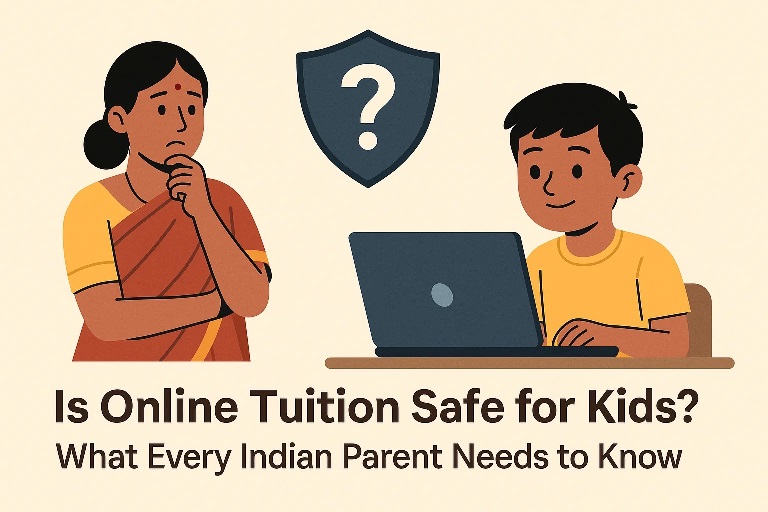
Is Online Tuition Safe for Kids? What Every Indian Parent Needs to Know

Is Online Tuition Safe for Kids - What Every Indian Parent Needs to Know

Online learning has become a normal part of education in India. From school classes to private tutoring, students now spend more time on screens than ever before. But many parents still ask a key question: is online tuition safe for kids?

This article explains safety aspects, real concerns, and practical steps parents can take before choosing digital learning support for their children.

Growth of Online Education in India

The demand for digital learning has increased rapidly in recent years.

According to industry reports:

    • India’s online education market is expected to reach over $10 billion by 2025
    • More than 75 million students are now engaged in some form of online learning
    • Post-pandemic, over 60% of urban parents have tried online tuition at least once

This shift shows that online tutoring is no longer experimental. It has become a mainstream option for academic support across school levels.

Online Vs Home Tuition – What is better for your child’s learning

Is Online Tuition Safe for Children?

Online tuition is generally safe when proper systems are followed. However, safety depends on three important factors: platform, tutor, and supervision.

Unlike traditional classrooms, digital learning introduces new risks such as screen exposure, unknown tutors, and online communication. At the same time, it also provides better monitoring options for parents.

Key Safety Concerns Parents Should Understand

Unverified Tutors

One of the biggest risks is connecting with tutors who have not been properly verified. Without background checks, there is limited assurance about qualifications or teaching experience.

Online Privacy Risks

Children may be exposed to unsafe sharing of personal information if platforms do not follow strict privacy controls.

Excess Screen Time

Health experts recommend that school-age children should not exceed 2–3 hours of recreational screen time per day. Long tuition sessions may increase eye strain and reduce physical activity.

Distraction and Lack of Focus

Without structured environments, students may lose attention easily during online sessions, affecting learning outcomes.

How Excessive Screen Time Affects Your Child’s Mind and Body

How Parents Can Ensure Safe Online Tuition

Choose Verified Tutor Platforms

Always select platforms that check tutor identity, qualifications, and teaching background. Verified profiles reduce risk significantly.

Monitor Initial Sessions

Parents should attend or observe early classes to understand teaching style and interaction quality.

Check Communication Boundaries

Ensure that communication between tutor and student remains strictly academic and happens through controlled channels.

Review Teaching Methodology

Effective tutors use structured lesson plans, worksheets, and regular assessments instead of informal or unplanned teaching.

Use Screen Safety Settings

Devices should have parental controls enabled, and children should access classes in shared or visible spaces whenever possible.

How Online Tuition Helps Kids Build Confidence and Score Better

Benefits of Online Tuition When Done Safely

When properly managed, online tuition offers several advantages:

    • Access to experienced tutors from different locations
    • Flexible scheduling based on student routine
    • Personalized one-on-one attention
    • Recorded sessions for revision support
    • Wider subject availability compared to local options

Research from global education studies shows that personalized online tutoring can improve student performance by up to 30–40% when compared to self-study alone.

When Parents Should Consider Online Tuition

Online learning support becomes useful when:

    • A child struggles to keep up with school curriculum
    • Exam performance is inconsistent
    • Personalized attention is missing in classroom teaching
    • Students need help in specific subjects like Mathematics or Science

How to Choose the Right Tutor for your Child – A Parent’s Checklist

My Thoughts

Online tuition is neither completely risk-free nor unsafe by default. Its effectiveness depends on how carefully parents choose tutors and monitor learning behavior. With proper precautions, it can become a powerful academic support system for students across India.

Search IndiaTutor.in to connect with verified tutors for all subjects and classes across India. Find trusted teaching support, compare profiles, and connect directly with experienced educators for safe and effective learning.

Search Tutors by Class Level       Search Tutors by Subject 

About the Author

Nidhi Mehta is the founder of IndiaTutor.in and a professional online educator with over 11 years of teaching experience. She specializes in tutoring Classes 1 to 6 across core academic subjects, with a strong focus on concept clarity and foundational skill-building. Her teaching approach is based on personalized, one-to-one learning that helps students develop long-term academic confidence and understanding.

Visit her profile    Visit About Us Page

error: Content is protected !!

Found this helpful? Share it in 2 seconds!

Link copied to clipboard