

How to Build a High-Converting Online Tutor Profile That Gets Enquiries

How to Build a High-Converting Online Tutor Profile That Gets Enquiries

Finding students online is no longer just about being a qualified teacher. Parents and students have thousands of tutors to choose from, and your online profile is often the first impression they have of you. A well-written, complete, and trustworthy tutor profile can significantly improve your chances of receiving genuine enquiries.

Whether you teach school subjects, competitive exams, languages, music, coding, or any other skill, your profile should answer one important question: Why should a parent choose you over hundreds of other tutors?

This guide explains how to create an online tutor profile that attracts attention, builds trust, and encourages parents to contact you.

Why Your Tutor Profile Matters

According to research by the [“organization”,”Nielsen Norman Group”,”User experience research organization”], visitors typically spend only a few seconds scanning a webpage before deciding whether to continue reading. This means your tutor profile needs to communicate value quickly and clearly.

A complete profile helps parents understand:

    • What subjects you teach
    • Which classes and boards you cover
    • Your qualifications and teaching experience
    • Your teaching style
    • Whether you are the right tutor for their child

Parents usually compare several tutors before making contact. A professional profile can make that decision much easier.

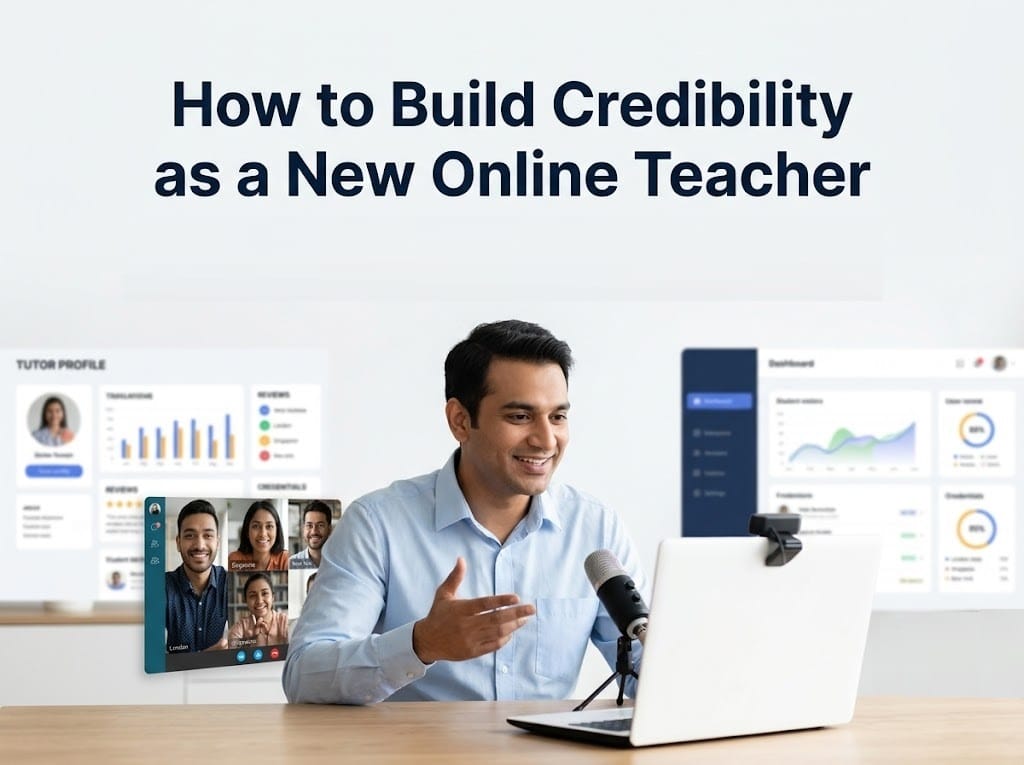
How to Build Credibility as a New Online Teacher

What Makes a Tutor Profile High-Converting?

A high-converting profile is one that encourages visitors to take the next step, whether that is sending an enquiry, making a phone call, or requesting a trial class.

Several factors influence this decision.

A Clear and Informative Title

Your title should immediately explain what you teach.

Instead of writing:

“Experienced Teacher”

Write something more specific such as:

“Online Mathematics Tutor for CBSE Class 6–12”

or

“English Language Tutor for School Students and Adults”

A descriptive title also helps search engines understand your page, improving your chances of appearing in relevant search results.

Write an Honest Introduction

The first paragraph should briefly introduce yourself.

Include information such as:

    • Your teaching experience
    • Subjects taught
    • Classes or age groups
    • Teaching mode
    • What students can expect

Keep it natural and easy to understand.

For example:

“I have been teaching Mathematics for more than 10 years and conduct personalised online classes for students from Class 6 to 12 across CBSE, ICSE, State Boards, and international curricula. My lessons focus on concept clarity, regular practice, and confidence building.”

Parents appreciate clarity more than exaggerated claims.

Highlight Your Qualifications

Qualifications establish credibility.

Mention relevant degrees, certifications, teacher training, or professional experience.

Examples include:

    • B.Ed.
    • M.Sc. Mathematics
    • M.A. English
    • IIT Graduate
    • Certified Language Trainer
    • Former School Teacher

If you have specialised training in online teaching or educational technology, include that as well.

Explain Your Teaching Experience

Experience is more than the number of years you have taught.

Describe:

    • Subjects handled
    • Boards covered
    • Student age groups
    • Online teaching experience
    • Exam preparation experience

For example, instead of writing:

“10 years experience.”

Write:

“I have taught over 500 students from CBSE, ICSE, IGCSE, IB, and State Boards, helping learners improve conceptual understanding and examination performance.”

Specific information builds confidence.

Simple Online Teaching Setup for Tutors at Home

Describe Your Teaching Method

Parents want to know how you teach.

Explain your approach in simple language.

You may mention:

Personalised Learning

Every student learns differently. Explain how you adapt lessons according to the student’s pace and strengths.

Concept-Based Teaching

Many parents prefer tutors who focus on understanding rather than memorisation.

Mention how you simplify difficult topics using examples, diagrams, activities, or real-life situations.

Regular Assessments

Weekly tests, assignments, revision sessions, and progress reports reassure parents that learning is being monitored.

Doubt Support

Mention whether students can ask questions outside class hours or receive additional revision support before examinations.

Mention Boards, Curriculum, and Subjects Clearly

Avoid making parents search for basic information.

Create a clear list of:

    • Subjects
    • Classes
    • Boards
    • Competitive exams
    • Languages

For example:

    • Mathematics
    • Science
    • English
    • CBSE
    • ICSE
    • State Boards
    • IGCSE
    • IB
    • Olympiads
    • JEE Foundation

This also improves keyword relevance for search engines.

Best Strategies for Student Enquiries for Online Tutors

Add a Professional Profile Photograph

A profile photo creates trust.

Research published by the [“organization”,”Baymard Institute”,”E-commerce usability research organization”] has consistently shown that trust signals strongly influence user decisions online. While tutors are different from online stores, the same principle applies: genuine identity builds confidence.

Choose a recent photograph that is:

    • Clear
    • Well-lit
    • Professionally dressed
    • Friendly
    • Looking towards the camera

Avoid group photographs, selfies, heavy filters, or distracting backgrounds.

Showcase Your Achievements

Achievements provide social proof.

You may include:

    • Student success stories
    • Board examination results
    • Olympiad winners
    • Scholarship selections
    • Years of teaching
    • Awards
    • School or institutional recognition

Use factual information.

Instead of saying:

“My students always score excellent marks.”

Write:

“Several of my students have scored above 90% in CBSE board examinations.”

Specific statements are more believable.

Include Keywords Naturally

Many parents search online using phrases like:

    • Online Maths Tutor
    • CBSE Science Teacher
    • English Tutor Near Me
    • Online Tuition for Class 10
    • Physics Tutor for NEET Foundation

Use these naturally throughout your profile.

Avoid repeating the same keyword multiple times. Search engines today reward useful and natural writing rather than keyword stuffing.

According to [“company”,”Google”,”Search engine company”], content created primarily for people generally performs better than content written only for search engines.

Keep Your Information Updated

An outdated profile may discourage enquiries.

Review your profile regularly.

Update:

    • Experience
    • Qualifications
    • New subjects
    • New boards
    • Student achievements
    • Availability
    • Teaching methods

Fresh content also helps search engines recognise that your page remains active.

What Makes a Tutor Profile Stand Out in Online Searches

Build Trust Through Transparency

Parents appreciate honesty.

Clearly mention:

    • Teaching mode
    • Available timings
    • Languages spoken
    • Areas of expertise
    • Trial class availability
    • Years of experience

If you specialise in helping weak students, gifted learners, or examination preparation, explain that clearly.

Trust often leads to enquiries.

Write in Simple Language

Avoid educational jargon.

Parents from different educational backgrounds should easily understand your profile.

Instead of using complicated terminology, write naturally.

Simple writing increases readability and keeps visitors engaged for longer.

Common Mistakes That Reduce Enquiries

Many tutors unknowingly make small mistakes that discourage parents.

Incomplete Information

Missing qualifications, subjects, or experience create uncertainty.

Very Short Profiles

One or two sentences rarely provide enough information for parents to make a decision.

Grammar and Spelling Errors

Poor writing may affect credibility.

Review your profile carefully before publishing.

Overusing Promotional Claims

Avoid phrases such as:

    • Best tutor in India
    • Guaranteed 100% marks
    • Number one teacher

Parents generally trust factual information more than exaggerated promises.

Poor Profile Images

Blurry or casual photographs reduce professionalism.

Think Like a Parent

Before publishing your profile, ask yourself these questions.

Does the profile clearly explain what I teach?

Does it show why I am qualified?

Does it explain how I teach?

Does it answer common parent questions?

Does it build confidence?

If the answer is yes, your profile is already stronger than many tutor profiles available online.

Small Improvements Can Make a Big Difference

You do not need to rewrite your entire profile every month.

Even small updates can improve performance.

Examples include:

    • Adding a recent achievement
    • Updating experience
    • Improving your introduction
    • Uploading a better photograph
    • Including additional subjects
    • Mentioning new teaching tools

These improvements make your profile more informative and useful.

My Thoughts

A high-converting tutor profile is built on trust, clarity, and relevance. Parents are not simply looking for qualifications; they are looking for a teacher who understands their child’s learning needs and communicates professionalism from the very first interaction. By presenting accurate information, explaining your teaching approach, highlighting your experience, and keeping your profile updated, you make it easier for families to choose you with confidence.

If you are looking to expand your reach and connect directly with students across India and abroad, listing your profile on IndiaTutor.in can help increase your online visibility. Your profile becomes easier for parents to discover through search, allowing them to contact you directly without intermediary commissions. With affordable listing plans, nationwide exposure, and a platform dedicated exclusively to tutors, IndiaTutor.in offers a practical way to grow your teaching career and reach more genuine student enquiries.

Want to Teach Students in India and Abroad?

Register your Tutor Profile on IndiaTutor.in

About the Author

Nidhi Mehta is the founder of IndiaTutor.in and a professional online educator with over 11 years of teaching experience. She specializes in tutoring Classes 1 to 6 across core academic subjects, with a strong focus on concept clarity and foundational skill-building. Her teaching approach is based on personalized, one-to-one learning that helps students develop long-term academic confidence and understanding.


Visit her profile    Visit About Us Page

What Makes a Tutor Profile Stand Out in Online Searches

What Makes a Tutor Profile Stand Out in Online Searches

Every day, thousands of parents and students search online for tutors who can help them improve their academic performance. Whether they need a Mathematics teacher for Class 10, an English tutor for spoken English, or an online coding instructor, their search usually begins on Google or a tutoring platform.

The challenge is that many tutors have similar qualifications, teach the same subjects, and offer online classes. So why do some tutor profiles receive regular enquiries while others are rarely noticed?

The answer is not always experience alone. A well-presented tutor profile that clearly communicates expertise, trust, and value is far more likely to attract attention. Small improvements can make a significant difference in how often your profile appears in searches and whether parents decide to contact you.

This guide explains what makes a tutor profile stand out in online searches and how you can improve your chances of connecting with students in India and abroad.

Why Your Tutor Profile Matters

Your tutor profile is often the first impression parents have of you. Before they schedule a demo class or ask about fees, they want to know whether you are the right teacher for their child.

Research consistently shows that people form first impressions within seconds of viewing an online profile. A clear, informative, and professional profile helps build confidence before any conversation begins.

A tutor profile should answer the questions parents naturally have:

    • What subjects do you teach?
    • Which classes and boards do you cover?
    • How much experience do you have?
    • What makes your teaching style effective?
    • How can they contact you?

If parents cannot quickly find these answers, they may continue searching elsewhere.

How to Build Credibility as a New Online Teacher

Use a Clear and Specific Profile Title

Tell Parents Exactly What You Teach

Your profile title is one of the first things search engines and visitors notice.

Instead of writing:

“Experienced Tutor”

Write something more descriptive such as:

    • Online Mathematics Tutor for Class 6–12
    • CBSE Science Teacher with 10 Years of Experience
    • English Tutor for IELTS and Spoken English
    • Online Physics Tutor for NEET and JEE Aspirants

Specific titles help both search engines and parents understand your expertise immediately.

Write a Helpful Introduction

Explain How You Help Students

Many tutors simply list qualifications. While qualifications are important, parents also want to understand how you teach.

Instead of writing only:

“M.Sc. Mathematics with 12 years of experience.”

Add information such as:

“I help students strengthen concepts through regular practice, step-by-step explanations, and personalised lesson plans that build confidence before examinations.”

This gives parents a better understanding of your teaching approach.

Include Complete Teaching Information

Avoid Leaving Important Sections Empty

An incomplete profile creates uncertainty.

Include details such as:

    • Subjects taught
    • Classes covered
    • School boards
    • Competitive examinations
    • Teaching mode
    • Languages spoken
    • Years of experience
    • Qualifications
    • Teaching location
    • Online availability

Complete profiles generally perform better because they answer more search queries and provide useful information to parents.

Simple Online Teaching Setup for Tutors at Home

Choose a Professional Profile Photograph

A Good Photograph Builds Trust

Parents often feel more comfortable contacting tutors who use a genuine, professional photograph.

A suitable profile picture should:

    • Show your face clearly
    • Have good lighting
    • Use a simple background
    • Be recent
    • Reflect a professional appearance

Avoid heavily edited images, group photographs, or pictures where your face is difficult to recognise.

Explain Your Teaching Method

Every Tutor Has a Different Approach

Parents are interested in how you teach, not just what you teach.

You may explain:

    • How you assess student strengths and weaknesses
    • Whether you provide personalised study plans
    • How you conduct doubt-clearing sessions
    • How homework and revision are managed
    • Whether progress reports are shared with parents

The more clearly you describe your teaching process, the easier it becomes for parents to imagine learning with you.

Add Relevant Keywords Naturally

Help Search Engines Understand Your Profile

Search engines match tutor profiles with user searches.

Include phrases that parents actually search for, such as:

    • Online Maths Tutor
    • CBSE Tutor
    • ICSE Science Teacher
    • Home Tutor in Delhi
    • English Speaking Tutor
    • NEET Biology Teacher
    • Class 10 Mathematics Tutor
    • Online Tuition Classes

Use these naturally throughout your profile instead of repeating them excessively.

Search engines reward useful content written for people rather than pages overloaded with keywords.

Highlight Your Experience with Results

Share Achievements That Matter

Parents appreciate measurable outcomes whenever possible.

For example:

    • Students improved from 60% to 85%.
    • Helped over 300 students prepare for board examinations.
    • More than 12 years of teaching experience.
    • Successfully guided students in competitive entrance exams.

Real achievements make your profile more credible.

Keep Information Updated

An Active Profile Appears More Reliable

Many tutors forget to update their profiles after creating them.

Review your profile regularly.

Update:

    • New qualifications
    • Additional subjects
    • Recent achievements
    • Teaching experience
    • Class availability
    • Online teaching schedules

Fresh information reflects your current expertise and helps parents make informed decisions.

Best Strategies for Student Enquiries for Online Tutors

Build Trust Through Transparency

Parents Appreciate Honest Information

Avoid making unrealistic claims such as:

    • Guaranteed 100% marks
    • Assured rank
    • Instant improvement

Instead, explain your teaching philosophy honestly.

Parents value sincerity more than exaggerated promises.

Trust is often the deciding factor when selecting a tutor.

Make Your Profile Easy to Read

Good Formatting Improves User Experience

Most parents scan profiles quickly.

Short paragraphs, meaningful headings, and organised information make your profile easier to understand.

Avoid writing one long block of text.

A well-structured profile encourages visitors to spend more time reading.

Mention Online Teaching Experience

Online Learning Continues to Grow

According to industry reports, the global online tutoring market continues to expand rapidly as more families choose flexible learning options from home.

If you teach online, mention:

    • Platforms you use
    • Digital whiteboard experience
    • Interactive teaching methods
    • Screen sharing
    • Recorded sessions if available
    • Assignment management

These details reassure parents that online classes will be organised and effective.

How to Build a High-Converting Online Tutor Profile That Gets Enquiries

Demonstrate Subject Expertise

Show Depth Instead of General Statements

Instead of writing:

“I teach Science.”

Be more specific.

For example:

“I teach Physics, Chemistry, and Biology for Classes 8–12 across CBSE, ICSE, State Boards, and foundation courses.”

Specific information improves visibility for targeted searches.

Include the Right Subjects and Boards

Parents often search using combinations such as:

    • CBSE Class 12 Chemistry Tutor
    • IGCSE Mathematics Teacher
    • ICSE English Tutor
    • Online Hindi Teacher
    • Accountancy Tutor for Commerce Students

Mention every relevant subject, curriculum, and examination that you teach.

This helps search engines match your profile with more specific searches.

Avoid Common Tutor Profile Mistakes

Small Errors Can Reduce Enquiries

Some common mistakes include:

    • Incomplete profiles
    • Poor quality photographs
    • Spelling mistakes
    • Outdated information
    • Generic descriptions
    • Missing teaching experience
    • No mention of online classes
    • Lack of subject-specific details

Correcting these simple issues can improve both visibility and parent confidence.

Why Search Visibility Matters

Every day, parents search online before choosing a tutor. If your profile is informative, complete, and professionally presented, it has a much better chance of appearing in relevant searches and encouraging enquiries.

Search engines aim to display useful pages that answer users’ questions. A tutor profile that clearly explains your qualifications, subjects, teaching style, and experience provides exactly the kind of information parents are looking for.

Improving your profile is not about using complicated techniques. It is about presenting accurate information in a way that is easy for both search engines and families to understand.

Grow Your Tutoring Career with IndiaTutor.in

Creating a strong tutor profile is one of the most effective ways to increase your online visibility and connect with students who are actively looking for tuition. IndiaTutor.in allows tutors to showcase their qualifications, teaching experience, subjects, boards, and teaching methods in a professional format that parents can easily explore.

Unlike commission-based marketplaces, IndiaTutor.in enables direct communication between tutors and parents. Your profile remains accessible to families searching for reliable tutors across India as well as students seeking online classes from anywhere in the world. A well-crafted profile on IndiaTutor.in can help you build credibility, improve your online presence, and create more opportunities to grow your tutoring career.

Want to Teach Students in India and Abroad?

Register your Tutor Profile on IndiaTutor.in

About the Author

Nidhi Mehta is the founder of IndiaTutor.in and a professional online educator with over 11 years of teaching experience. She specializes in tutoring Classes 1 to 6 across core academic subjects, with a strong focus on concept clarity and foundational skill-building. Her teaching approach is based on personalized, one-to-one learning that helps students develop long-term academic confidence and understanding.
Visit her profile    Visit About Us Page

Best Strategies for Student Enquiries for Online Tutors

Best Strategies for Student Enquiries for Online Tutors

Finding students is one of the biggest challenges for online tutors. Many talented teachers have excellent subject knowledge and years of experience, yet they receive very few enquiries. In most cases, the problem is not teaching ability. It is visibility, trust, and how easily parents can discover and contact the tutor.

The online tutoring market has grown rapidly over the last few years. According to industry reports by Grand View Research and Global Market Insights, the global online tutoring market is expected to reach well over USD 20 billion during the coming years as more families choose flexible learning options. At the same time, competition among tutors has also increased. Parents now have hundreds of profiles to compare before making a decision.

The good news is that tutors who focus on the right strategies can consistently increase enquiries without spending large amounts on advertising. This guide explains practical methods that help tutors improve visibility, build credibility, and attract students from India as well as other countries.

Understand What Parents Look For

Before improving your profile or marketing your services, it is important to understand how parents choose a tutor.

Several education surveys show that parents usually compare multiple tutors before making contact. They commonly look for:

    • Relevant teaching experience
    • Subjects and classes taught
    • Board expertise such as CBSE, ICSE, IGCSE or State Boards
    • Qualifications
    • Teaching approach
    • Student-friendly communication
    • Flexible class timings
    • Clear contact information
    • Positive reviews or testimonials

Parents want confidence that a tutor can help their child achieve better academic results. Every part of your online presence should answer these questions quickly.

How to Build Credibility as a New Online Teacher

Create a Complete Tutor Profile

Your tutor profile is often your first introduction to parents.

An incomplete profile creates uncertainty and reduces the chances of receiving enquiries.

Include Complete Information

A professional tutor profile should clearly mention:

    • Subjects taught
    • Classes covered
    • Curriculum or boards
    • Years of teaching experience
    • Educational qualifications
    • Languages spoken
    • Teaching mode
    • Location
    • Online teaching availability

The more useful information parents find, the more likely they are to contact you.

Write a Personal Introduction

Instead of simply listing qualifications, explain how you teach.

For example:

“I help Class 10 CBSE students improve Mathematics through concept-based learning, regular practice papers, and personalised doubt-solving sessions.”

This tells parents exactly what they can expect.

Build Trust Before Parents Contact You

Trust plays a major role in online tutoring.

According to consumer research published by BrightLocal, most people read reviews before contacting a service provider. While tutoring is different from local businesses, the same principle applies.

Add Testimonials

If previous students or parents have appreciated your teaching, include short testimonials with permission.

Real feedback increases confidence and demonstrates your teaching effectiveness.

Use a Professional Photograph

A clear, friendly, high-quality profile photograph creates a positive first impression.

Avoid:

    • Group photographs
    • Casual selfies
    • Blurry images
    • Heavy filters

Professional presentation improves credibility.

Simple Online Teaching Setup for Tutors at Home

Improve Your Google Visibility

Many parents begin their search by typing phrases like:

    • Online Maths tutor for Class 10
    • CBSE Science tutor online
    • English tutor near me
    • Online tuition for Class 8

If your profile contains these natural keywords, search engines can better understand your expertise.

Use Relevant Keywords Naturally

Instead of repeating the same phrase many times, include variations such as:

    • Online Mathematics Tutor
    • CBSE Maths Teacher
    • Algebra Tutor
    • Class 9 Mathematics
    • Board Exam Preparation
    • Online Tuition Classes

Natural writing performs better than keyword stuffing.

Specialise Instead of Teaching Everything

Many tutors try to teach every subject and every class.

Parents usually prefer specialists.

For example:

Instead of saying:

“I teach all subjects.”

A stronger profile would say:

“Online Science Tutor for Classes 6–10 specialising in CBSE and ICSE.”

A focused profile appears more credible and easier to understand.

Publish Helpful Educational Content

Parents trust teachers who regularly share useful knowledge.

Simple educational content can include:

Blog Articles

Topics like:

    • How to prepare for board exams
    • Common mistakes in Mathematics
    • Study timetable for Class 10
    • Science revision tips

Short Videos

Educational videos demonstrate your teaching style.

Even two-minute explanation videos help parents evaluate communication skills before making contact.

Social Media Posts

Consistent educational posts increase visibility over time and help build authority.

What Makes a Tutor Profile Stand Out in Online Searches

Respond Quickly to Enquiries

Fast responses improve conversion rates.

Studies across multiple industries consistently show that quick responses significantly increase the chances of converting enquiries into customers.

When a parent contacts multiple tutors, the first professional reply often receives greater attention.

Your first response should include:

    • Greeting
    • Subject confirmation
    • Class level
    • Available timings
    • Fee structure if appropriate
    • Invitation for a demo class

Clear communication creates confidence.

Offer a Trial Session

Many parents prefer experiencing a tutor’s teaching style before making a long-term commitment.

A well-planned demonstration class allows you to:

    • Understand the student’s learning level
    • Explain your teaching approach
    • Build rapport
    • Answer parent questions

A positive first class often leads to long-term enrolment.

Keep Your Profile Updated

Outdated information discourages enquiries.

Review your profile regularly.

Update:

    • New qualifications
    • Additional subjects
    • Recent achievements
    • Teaching experience
    • Student success stories
    • Availability

Fresh profiles appear more active and reliable.

Focus on One Clear Teaching Niche

A tutor who clearly defines their expertise attracts more relevant enquiries.

Examples include:

Academic Subjects

    • Mathematics
    • Science
    • English
    • Physics
    • Chemistry
    • Biology

Competitive Exams

    • JEE Foundation
    • NEET Foundation
    • Olympiads
    • NTSE

International Curriculum

    • IGCSE
    • IB
    • Cambridge

Parents searching for specific expertise find specialist tutors more easily.

Improve Communication Skills

Parents appreciate tutors who communicate clearly and professionally.

Simple improvements include:

Use Easy Language

Avoid complicated educational terminology.

Explain concepts in a way parents immediately understand.

Maintain Professional Tone

Be polite, respectful and prompt in every conversation.

Professional communication builds trust even before classes begin.

How to Build a High-Converting Online Tutor Profile That Gets Enquiries

Encourage Referrals

Satisfied parents are one of the best sources of new enquiries.

After achieving positive results, politely ask parents whether they know someone looking for a tutor.

Word-of-mouth recommendations often produce highly motivated students.

Be Consistent

Many tutors stop promoting themselves after a few weeks.

Online visibility grows gradually.

Small weekly improvements make a significant difference over time.

Examples include:

    • Updating your tutor profile
    • Publishing one educational article
    • Uploading one teaching video
    • Sharing study tips
    • Collecting testimonials
    • Improving profile descriptions

Consistency creates long-term visibility.

Use a Dedicated Tutor Listing Platform

A professional tutor listing platform allows parents to discover tutors based on subjects, location, curriculum and teaching mode.

Unlike social media posts that disappear quickly, a tutor profile remains searchable throughout the year.

A well-optimised listing increases opportunities to receive enquiries from families actively searching for tuition.

Track What Works

Do not rely on guesswork.

Monitor:

Profile Views

Higher profile views indicate improved visibility.

Student Enquiries

Track how many enquiries arrive each month.

Conversion Rate

Measure how many enquiries become regular students.

Small improvements in each stage lead to steady business growth.

Common Mistakes That Reduce Student Enquiries

Many tutors unknowingly reduce their chances of getting enquiries.

Common mistakes include:

    • Incomplete profiles
    • Poor quality photographs
    • Very little information about teaching style
    • No testimonials
    • Slow responses
    • Outdated contact details
    • Teaching every subject without a clear speciality
    • No online presence outside one platform

Avoiding these mistakes immediately strengthens your profile.

My Thoughts

Receiving regular student enquiries is not about luck. It is the result of building trust, improving visibility, communicating professionally and making it easy for parents to understand your expertise. Every improvement, whether updating your profile, sharing useful educational content or responding promptly, increases your chances of connecting with the right students.

If you want to expand your reach, attract parents searching for qualified tutors, and build a stronger online presence, registering on IndiaTutor.in is a smart step. Your tutor profile can showcase your experience, subjects, qualifications and teaching approach in one professional place. With direct parent enquiries, zero commission on tuition fees, affordable listing plans and visibility across India and internationally, IndiaTutor.in helps tutors grow their teaching career with confidence.

Want to Teach Students in India and Abroad?

Register your Tutor Profile on IndiaTutor.in

About the Author

Nidhi Mehta is the founder of IndiaTutor.in and a professional online educator with over 11 years of teaching experience. She specializes in tutoring Classes 1 to 6 across core academic subjects, with a strong focus on concept clarity and foundational skill-building. Her teaching approach is based on personalized, one-to-one learning that helps students develop long-term academic confidence and understanding.
Visit her profile    Visit About Us Page

How to Build Credibility as a New Online Teacher

How to Build Credibility as a New Online Teacher

Starting your journey as an online teacher can feel challenging. One of the biggest concerns for new tutors is earning the trust of parents and students. Many believe they need years of experience, hundreds of reviews, or a large social media following before they can attract students. In reality, credibility is built through consistency, professionalism, and a strong online presence.

Today, online tutoring has become one of the fastest-growing education sectors. According to industry reports, the global online tutoring market is expected to exceed USD 20 billion by the end of the decade, driven by increasing demand for flexible, personalized learning. As more families search online for tutors, they compare profiles, qualifications, teaching methods, and communication before making a decision.

The good news is that you do not have to be a celebrity teacher to succeed. By following a few practical steps, you can establish trust and increase your chances of receiving genuine student enquiries.

Why Credibility Matters in Online Tutoring

Parents invest both time and money in their child’s education. Before they contact a tutor, they want reassurance that the teacher is knowledgeable, reliable, and committed to helping students learn.

A credible tutor is more likely to:

    • Receive more profile views.
    • Get higher enquiry rates.
    • Build long-term student relationships.
    • Receive referrals from satisfied families.
    • Charge better fees over time.

Research by educational technology platforms consistently shows that parents often compare multiple tutors before making a decision. A well-presented tutor profile can influence that choice even before the first conversation takes place.

Simple Online Teaching Setup for Tutors at Home

Build a Complete Professional Tutor Profile

Your tutor profile is often the first impression parents have of you. An incomplete or poorly written profile can reduce confidence, even if you are an excellent teacher.

Include Essential Information

Your profile should clearly mention:

    • Subjects you teach.
    • Classes and boards you cover.
    • Educational qualifications.
    • Teaching experience, including offline teaching if applicable.
    • Languages you speak.
    • Teaching mode and availability.

Avoid leaving important sections blank. A complete profile appears more trustworthy and answers common questions before parents even contact you.

Write a Clear Introduction

Introduce yourself naturally. Explain what you teach, who you teach, and how you help students improve.

Instead of writing:

“I am passionate about teaching.”

Try something more specific:

“I help Class 8–12 students strengthen Mathematics concepts through step-by-step explanations, regular practice, and personalised doubt-solving sessions.”

Specific information creates confidence.

Use a Professional Profile Photograph

A good photograph increases trust instantly.

Choose a recent, high-quality photo with:

    • Good lighting.
    • A simple background.
    • Professional attire.
    • A friendly smile.
    • Clear visibility of your face.

Avoid group photographs, heavily edited images, vacation pictures, or images with distracting backgrounds.

Parents are more comfortable contacting tutors who present themselves professionally.

Best Strategies for Student Enquiries for Online Tutors

Highlight Your Qualifications Honestly

Many new tutors underestimate the value of their education.

If you have recently completed graduation, postgraduate studies, or professional certifications, mention them clearly.

Do not exaggerate your experience.

Parents appreciate honesty. A qualified new teacher who communicates openly often builds stronger trust than someone making unrealistic claims.

Explain Your Teaching Method

Every tutor teaches differently.

Help parents understand your approach by describing:

Lesson Planning

Explain how you organise each class.

For example:

    • Concept explanation.
    • Practice questions.
    • Doubt clearing.
    • Homework discussion.
    • Progress review.

Personalised Learning

Students learn at different speeds.

Mention how you adapt lessons according to:

    • Individual strengths.
    • Learning pace.
    • School curriculum.
    • Examination goals.

Parents value tutors who understand that every child is different.

Offer a Trial Class

A trial class helps both tutor and student determine whether the teaching style is suitable.

Many successful online tutors use trial sessions to demonstrate:

    • Subject knowledge.
    • Communication skills.
    • Classroom interaction.
    • Teaching techniques.

A positive first experience often leads to regular classes.

Improve Your Communication Skills

Good communication builds confidence quickly.

Respond to enquiries politely and promptly.

During conversations:

    • Listen carefully.
    • Answer questions honestly.
    • Explain your teaching process clearly.
    • Avoid making unrealistic promises.

Parents appreciate transparency far more than exaggerated claims.

What Makes a Tutor Profile Stand Out in Online Searches

Build Social Proof Gradually

One of the biggest challenges for new tutors is having no reviews.

This is completely normal.

Request Genuine Feedback

After teaching a few students, politely ask parents for honest feedback.

Authentic testimonials become valuable trust signals for future enquiries.

Showcase Student Progress

Instead of making broad claims like “Best tutor,” describe measurable improvements whenever possible.

For example:

    • Better classroom confidence.
    • Improved homework completion.
    • Higher test scores.
    • Better conceptual understanding.

Specific outcomes are more believable than generic statements.

Continue Learning as a Teacher

Parents appreciate tutors who continue improving their skills.

You can strengthen your profile by learning about:

    • New teaching techniques.
    • Online classroom management.
    • Digital whiteboard tools.
    • Assessment methods.
    • Student engagement strategies.

Continuous learning demonstrates professionalism and commitment.

Maintain Consistency

Credibility is not built in one week.

It grows through consistent actions.

Always:

    • Start classes on time.
    • Prepare lessons in advance.
    • Keep promises.
    • Respond professionally.
    • Communicate respectfully.

Students and parents remember reliable teachers.

Develop a Strong Online Presence

Today, many parents search online before contacting a tutor.

If they cannot find reliable information about you, they may choose another teacher.

Your online presence may include:

    • A detailed tutor profile.
    • Educational content.
    • Subject expertise.
    • Professional contact information.
    • Updated qualifications.

The easier you are to find online, the greater your chances of receiving enquiries.

How to Build a High-Converting Online Tutor Profile That Gets Enquiries

Avoid Common Mistakes New Tutors Make

Claiming Too Much Experience

Parents usually recognise exaggerated claims quickly.

Be honest about your background.

Using Poor Quality Profiles

Incomplete profiles reduce trust.

Invest time in presenting yourself professionally.

Ignoring Parent Questions

Every enquiry deserves a timely and respectful response.

Even if a parent does not enrol immediately, a positive interaction can lead to future referrals.

Focusing Only on Price

Competing only on low fees is rarely a long-term strategy.

Instead, demonstrate value through quality teaching, preparation, and student support.

Build Authority by Sharing Knowledge

You do not need thousands of followers to establish expertise.

Share useful educational content such as:

Study Tips

Provide practical advice for students preparing for exams.

Subject Explanations

Simplify difficult concepts.

Exam Preparation Guidance

Offer revision strategies, time management tips, and common mistakes to avoid.

Helpful content demonstrates your knowledge before parents even contact you.

Stay Organised

Professional tutors stay organised.

Maintain records of:

    • Student attendance.
    • Homework.
    • Test performance.
    • Parent communication.
    • Lesson plans.

Organisation reflects professionalism and improves the learning experience.

Be Patient with Your Growth

Every successful tutor started with their first student.

Building credibility takes time.

Some tutors receive enquiries within weeks, while others gradually build their reputation over several months.

The important thing is to remain visible, improve continuously, and provide excellent learning experiences to every student.

Trust grows one class at a time.

My Thoughts

Credibility is earned through honesty, preparation, consistency, and genuine care for students. Parents are looking for teachers who communicate clearly, teach effectively, and remain committed to helping children succeed. You do not need years of experience to become a trusted online tutor. A professional profile, strong teaching practices, and a willingness to keep learning can help you build a reputation that grows with every student you teach.

If you want more parents to discover your teaching services, creating a professional tutor profile on IndiaTutor.in is a smart first step. Your profile helps improve your online visibility, allows parents to contact you directly without commissions, and showcases your qualifications, subjects, and teaching experience in one trusted place. Whether you teach students in India or abroad, IndiaTutor.in gives you an affordable way to build credibility and connect with families actively looking for qualified online tutors.

Want to Teach Students in India and Abroad?

Register your Tutor Profile on IndiaTutor.in

About the Author

Nidhi Mehta is the founder of IndiaTutor.in and a professional online educator with over 11 years of teaching experience. She specializes in tutoring Classes 1 to 6 across core academic subjects, with a strong focus on concept clarity and foundational skill-building. Her teaching approach is based on personalized, one-to-one learning that helps students develop long-term academic confidence and understanding.

Visit her profile    Visit About Us Page

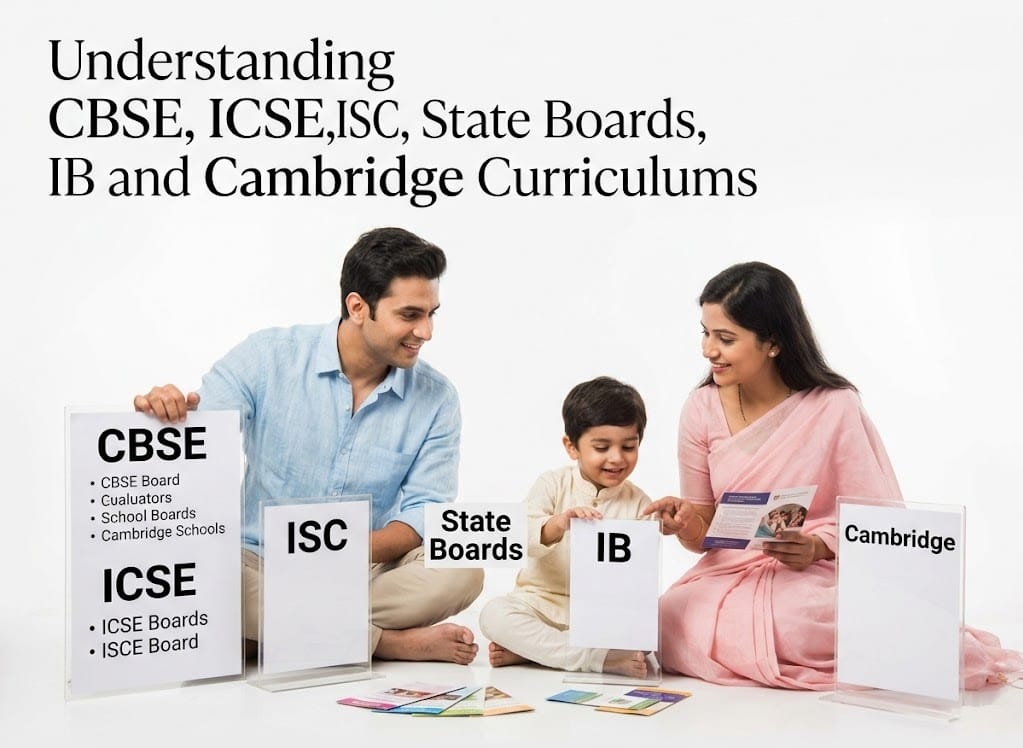
Understanding CBSE, ICSE, ISC, State Boards, IB and Cambridge Curriculums

Understanding CBSE, ICSE, ISC, State Boards, IB and Cambridge Curriculums

Choosing the right school curriculum is one of the most important decisions parents make for their child’s education. Every curriculum follows a different teaching approach, assessment style, and learning philosophy. While all aim to build knowledge and skills, they prepare students in different ways for higher education and future careers.

In India, the most common school curriculums include CBSE, ICSE, ISC, State Boards, the International Baccalaureate (IB), and Cambridge. Understanding how each one works can help parents select the best fit for their child’s learning style, academic goals, and future plans.

According to the Ministry of Education, India has more than 1.5 million schools serving over 250 million students, making it one of the world’s largest education systems. Students today have more curriculum choices than ever before, making informed decisions increasingly important.

How Education Boards Affect Career Choices

Why Understanding Different School Curriculums Matters

Every child learns differently. Some students enjoy structured learning, while others perform better through projects, research, discussions, and practical activities. The curriculum influences:

    • Subjects offered
    • Teaching methods
    • Examination pattern
    • Grading system
    • Homework expectations
    • Critical thinking development
    • College and career opportunities

Choosing the right curriculum is not about finding the “best” one. It is about finding the one that best matches a student’s strengths, interests, and long-term goals.

What is CBSE?

The Central Board of Secondary Education (CBSE) is one of India’s largest national education boards. Thousands of schools across India and many international schools abroad follow the CBSE curriculum.

Key Features of CBSE

    • Uniform curriculum across affiliated schools
    • Strong emphasis on Mathematics and Science
    • NCERT textbooks form the academic foundation
    • Regular syllabus updates
    • Focus on conceptual understanding
    • Widely accepted across Indian colleges and universities

Who Benefits Most from CBSE?

CBSE is often preferred by families whose children may relocate frequently because the curriculum remains consistent across affiliated schools.

It is also a popular choice for students preparing for competitive examinations such as engineering and medical entrance tests because these exams are largely based on NCERT concepts.

What is ICSE?

The Indian Certificate of Secondary Education (ICSE) is conducted by the Council for the Indian School Certificate Examinations (CISCE).

ICSE is known for its balanced curriculum that gives equal importance to languages, sciences, mathematics, social sciences, arts, and practical learning.

Key Features of ICSE

    • Strong focus on English language skills
    • Detailed subject content
    • Project work and internal assessments
    • Application-based learning
    • Broad subject choices

Students often develop strong communication, analytical thinking, and writing skills through the ICSE curriculum.

What is ISC?

The Indian School Certificate (ISC) is the senior secondary curriculum offered by CISCE for Classes 11 and 12.

Key Features of ISC

    • Flexible subject combinations
    • In-depth academic content
    • Strong emphasis on analytical writing
    • Extensive practical and project work
    • Preparation for university education

Students can choose combinations across Science, Commerce, Humanities, and other disciplines depending on their career aspirations.

How to Choose the Right School Board for Your Child

Understanding State Boards

Every Indian state has its own education board designed according to regional educational priorities and state-level requirements.

Examples include boards in Maharashtra, Tamil Nadu, Karnataka, Uttar Pradesh, Rajasthan, Gujarat, West Bengal, Kerala, Punjab, and many other states.

Key Features of State Boards

    • Regional language options
    • Affordable education
    • Curriculum aligned with state universities
    • Focus on local history and culture
    • State-level examination system

Many students successfully qualify for engineering, medical, civil services, and government examinations after studying in State Board schools.

The curriculum and assessment methods may vary from one state to another.

What is the International Baccalaureate (IB)?

The International Baccalaureate (IB) is an internationally recognized education framework followed by schools in more than 160 countries.

Rather than emphasizing memorization, IB encourages students to become independent thinkers, researchers, and effective communicators.

Main IB Programmes

Primary Years Programme (PYP)

Designed for younger learners with inquiry-based education.

Middle Years Programme (MYP)

Encourages interdisciplinary learning and practical application.

Diploma Programme (DP)

A rigorous programme for students aged 16 to 19 that is widely respected by universities worldwide.

Key Features of IB

    • Inquiry-based learning
    • Research projects
    • International perspective
    • Creativity, Activity and Service (CAS)
    • Critical thinking
    • Independent learning

Many universities around the world value the research and analytical skills developed through the IB Diploma Programme.

Common Academic Challenges Students Face in Different Boards

What is Cambridge Curriculum?

The Cambridge curriculum is developed by Cambridge Assessment International Education and is followed by schools in more than 160 countries.

It provides a flexible learning pathway from primary education through advanced secondary education.

Cambridge Learning Stages

Cambridge Primary

Builds strong foundations in literacy, numeracy, and science.

Cambridge Lower Secondary

Develops subject knowledge and problem-solving skills.

Cambridge IGCSE

Typically taken by students aged 14 to 16, Cambridge IGCSE is one of the world’s most recognized international qualifications.

Students can choose from a wide range of subjects according to their interests.

Cambridge International AS & A Level

These advanced qualifications prepare students for university education across the world.

Key Features of Cambridge

    • Flexible subject selection
    • Global recognition
    • Conceptual learning
    • Practical assessments
    • Research-based assignments
    • Development of independent learning skills

Cambridge qualifications are accepted by universities in many countries.

Understanding Different Grading Systems Across Education Boards

Comparing the Major School Curriculums

Learning Style

CBSE focuses on conceptual clarity.

ICSE provides detailed subject knowledge.

ISC promotes deeper academic understanding.

State Boards vary depending on the state.

IB emphasizes inquiry and research.

Cambridge encourages flexible and application-oriented learning.

Assessment

CBSE combines theory with competency-based questions.

ICSE includes written examinations along with project work.

ISC places strong emphasis on analytical writing and practical assessments.

State Boards follow their respective examination systems.

IB evaluates students using coursework, projects, presentations, and examinations.

Cambridge uses a combination of written papers, coursework, and practical assessments depending on the subject.

Best for Higher Education

All these curriculums provide pathways to higher education.

The right choice depends on where a student intends to study and the learning environment that suits them best.

Students aiming for Indian competitive examinations often find CBSE helpful because of its alignment with NCERT.

Students planning to study overseas may benefit from IB or Cambridge qualifications, as these are widely recognized internationally.

Which Curriculum is the Hardest?

There is no universally hardest curriculum.

Difficulty depends on several factors:

    • Learning style
    • Interest in subjects
    • Quality of teaching
    • Study habits
    • Time management
    • Academic support

A curriculum that challenges one student may be ideal for another.

Why Personalized Tuition Improves Performance Across All Education Boards

Common Misconceptions

Higher Fees Mean Better Education

School quality depends on teaching standards, student support, and learning environment, not only on curriculum or fees.

One Curriculum Guarantees Success

Academic success depends on consistent effort, curiosity, discipline, and guidance rather than the curriculum alone.

Students Cannot Switch Curriculums

Many students successfully transition between curriculums with proper planning and academic support.

How Parents Can Choose the Right Curriculum

Before selecting a curriculum, consider:

    • Your child’s interests
    • Learning preferences
    • Future career plans
    • College aspirations
    • Language comfort
    • School teaching quality
    • Availability of academic support

Visiting schools, interacting with teachers, and understanding the curriculum structure can help parents make a confident decision.

Frequently Asked Questions

Which curriculum is best for engineering and medical entrance exams?

Many students preparing for national competitive examinations prefer CBSE because of its close alignment with NCERT textbooks.

Is ICSE better than CBSE?

Neither is universally better. Both have different strengths and suit different learners.

Is IB accepted in India?

Yes. Universities across India and around the world recognize IB qualifications, subject to their admission requirements.

Is Cambridge accepted by Indian universities?

Yes. Cambridge qualifications are accepted by many Indian universities as well as institutions across the globe, provided students meet the respective eligibility criteria.

Can students move from one curriculum to another?

Yes. Many schools admit transfer students, although some additional academic preparation may be required depending on syllabus differences.

My Thoughts

Every curriculum offers valuable learning opportunities. The best choice depends on a student’s goals, interests, strengths, and preferred learning style. Rather than searching for the “perfect” board, focus on finding a school and curriculum that encourage curiosity, confidence, and consistent academic growth.

No matter which curriculum a student follows, there may be times when extra academic support becomes valuable. A private tutor provides individual attention, explains difficult concepts at the student’s pace, strengthens confidence, and fills learning gaps that may not be addressed in a busy classroom. Personalised tuition also helps students prepare effectively for school assessments, board examinations, and competitive tests while developing better study habits and independent learning skills.

Find Verified Tutors on IndiaTutor.in

About the Author

Nidhi Mehta is the founder of IndiaTutor.in and a professional online educator with over 11 years of teaching experience. She specializes in tutoring Classes 1 to 6 across core academic subjects, with a strong focus on concept clarity and foundational skill-building. Her teaching approach is based on personalized, one-to-one learning that helps students develop long-term academic confidence and understanding.

Visit her profile    Visit About Us Page

How to Build Strong Fundamentals in Physics

How to Build Strong Fundamentals in Physics

Physics is often considered one of the most challenging subjects in school. Many students struggle with formulas, numerical problems, derivations, and complex concepts. However, the difficulty usually does not come from Physics itself. It often arises when students try to memorize answers without understanding the basic principles behind them.

Strong fundamentals make Physics easier, more enjoyable, and far less stressful. Whether you are studying in Class 9, 10, 11, or 12, developing a solid foundation can improve your grades, boost confidence, and prepare you for competitive examinations such as JEE, NEET, and Olympiads.

Why Fundamentals Matter in Physics

Physics is a subject where one concept builds upon another. If a student does not fully understand motion, it becomes difficult to learn force. Without understanding force, topics such as work, energy, momentum, and rotational mechanics become harder.

Research published in educational journals consistently shows that students who focus on conceptual understanding perform better in problem-solving tasks than those who rely only on memorization. Studies also suggest that active learning techniques can improve academic performance by up to 20% compared to passive study methods.

A strong foundation helps students:

    • Understand new topics more quickly
    • Solve numerical problems accurately
    • Retain concepts for longer periods
    • Perform better in examinations
    • Reduce dependence on rote learning

Why Good Students Suddenly Start Scoring Low in Physics

Common Reasons Students Develop Weak Basics

Before improving fundamentals, it is important to identify the reasons behind weak understanding.

Learning Formulas Without Understanding

Many students memorize equations without knowing what each variable represents. This creates confusion when applying formulas in unfamiliar situations.

Skipping Earlier Concepts

Physics follows a logical sequence. Missing one chapter can create gaps that affect future learning.

Lack of Practice

Reading theory alone is not enough. Physics requires regular application through problem-solving.

Fear of Mathematics

Physics and Mathematics are closely connected. Difficulty with algebra, graphs, ratios, and basic calculations often affects performance in Physics.

Start with Understanding Concepts

The first step towards strong fundamentals is understanding the idea behind every topic.

Ask “Why” Instead of “What”

Instead of memorizing definitions, try to understand the reason behind them.

For example:

A student can memorize that an object falls due to gravity. However, understanding how gravitational force acts on objects creates deeper learning.

Whenever you learn a new concept, ask:

    • Why does this happen?
    • What causes this effect?
    • How is it used in real life?

This habit develops scientific thinking and improves retention.

Connect Physics to Everyday Life

Physics is everywhere around us.

Examples include:

    • Seat belts demonstrate inertia.
    • Fans illustrate rotational motion.
    • Mobile phones use electromagnetic waves.
    • Pressure cookers work because of pressure and temperature relationships.

Relating concepts to daily experiences makes learning more meaningful.

How to Improve Physics Problem-Solving Skills

Build a Strong Mathematical Foundation

Many Physics problems require calculations.

Focus on Basic Mathematics Skills

Students should become comfortable with:

    • Fractions
    • Percentages
    • Algebra
    • Ratios and proportions
    • Scientific notation
    • Graph interpretation

For example, understanding speed requires confidence in division and unit conversion.

Practice Unit Conversion

Unit conversion is one of the most overlooked skills in Physics.

Examples include:

    • Kilometers to meters
    • Hours to seconds
    • Grams to kilograms

Regular practice reduces mistakes in numerical questions.

Master One Topic Before Moving Ahead

Many learners rush through chapters to complete the syllabus quickly.

This approach often creates confusion later.

Create a Sequential Learning Plan

Study topics in logical order.

For example:

Motion → Force → Work and Energy → Momentum

Each chapter builds on previous knowledge.

Use the 80 Percent Rule

Before starting a new chapter, ensure you understand at least 80 percent of the current topic.

This improves long-term learning and reduces revision time.

Physics Formulas Every Student Must Know

Develop Strong Problem-Solving Skills

Physics is not just about reading. It is about applying knowledge.

Solve Questions Daily

Educational psychologists often emphasize the importance of deliberate practice.

Even solving five to ten problems daily can significantly improve performance over time.

Follow a Structured Method

Whenever solving a numerical question:

Step 1: Read Carefully

Identify what information is given.

Step 2: Write Known Values

List all available data clearly.

Step 3: Identify the Required Quantity

Understand what needs to be calculated.

Step 4: Select the Appropriate Formula

Choose the equation that connects known and unknown values.

Step 5: Calculate Systematically

Avoid skipping steps.

This process reduces careless mistakes and improves accuracy.

How Parents Can Help Children Improve in Physics

Learn Physics Visually

Many concepts become easier when seen rather than memorized.

Draw Diagrams

Diagrams help students understand:

    • Forces
    • Electric circuits
    • Light rays
    • Motion

Visual representation improves comprehension and recall.

Use Graphs Frequently

Graphs play an important role in Physics.

Students should learn to interpret:

    • Distance-time graphs
    • Velocity-time graphs
    • Force-displacement graphs

Understanding graphical relationships often simplifies complex problems.

Focus on Understanding Formulas

Formulas should not be treated as isolated equations.

Learn Their Meaning

For example:

Speed = Distance ÷ Time

Understanding the relationship between distance and time is more valuable than simply memorizing the formula.

Know the Units

Every formula involves units.

Checking units often helps identify errors during calculations.

This technique is commonly used by scientists and engineers.

Make Effective Notes

Well-organized notes improve revision and retention.

Create Concept Summaries

After completing a topic, write:

    • Key definitions
    • Important formulas
    • Common mistakes
    • Real-world examples

Use Your Own Words

Writing explanations in your own language improves understanding.

Research in cognitive science shows that self-explanation enhances learning and memory formation.

Revise Regularly

One of the biggest reasons students forget Physics is irregular revision.

Follow a Revision Schedule

A simple revision pattern can be:

    • Review within 24 hours
    • Revise after one week
    • Revisit after one month

This method strengthens memory and reduces forgetting.

Practice Old Questions

Previous year papers reveal common question patterns and important concepts.

They also improve exam confidence.

Learn from Mistakes

Mistakes are valuable learning opportunities.

Maintain an Error Notebook

Whenever you make a mistake:

    • Write the question
    • Identify the reason
    • Record the correct method

Over time, this notebook becomes a powerful revision tool.

Analyze Wrong Answers

Ask yourself:

    • Was it a concept mistake?
    • Was it a calculation error?
    • Was it due to misunderstanding the question?

This approach helps prevent repetition of similar errors.

Questions Parents Should Ask Before Hiring a Physics Tutor

Strengthen Conceptual Learning Through Experiments

Physics is an experimental science.

Perform Simple Activities at Home

Examples include:

    • Observing pendulum motion
    • Measuring shadows during the day
    • Exploring reflection using mirrors
    • Investigating magnets

Hands-on learning improves understanding and develops curiosity.

Participate in School Laboratory Sessions

Practical activities connect theory with observation and make concepts easier to remember.

Build Consistency Instead of Studying for Long Hours

Many students believe success comes from studying for several hours continuously.

In reality, consistency matters more.

Study Physics Daily

Even 30 to 45 focused minutes each day can produce better results than studying only before examinations.

Set Small Goals

Examples include:

    • Complete ten numerical questions
    • Revise one concept
    • Learn two formulas

Small achievements create momentum and build confidence.

Develop a Growth Mindset

Students often say, “I am not good at Physics.”

This belief can become a barrier to progress.

Scientific research on learning shows that intelligence and skills improve through effort, practice, and effective strategies.

Every expert physicist was once a beginner.

Improvement comes from persistence, curiosity, and regular practice.

My Thoughts

Building strong fundamentals in Physics is not about memorizing hundreds of formulas or solving difficult questions immediately. It starts with understanding concepts, strengthening mathematical skills, practicing regularly, and connecting theory with real-life experiences. Small daily efforts can create remarkable improvements over time.

Students who receive personalized guidance often progress faster because their doubts are addressed immediately and study plans are tailored to their learning style. A private Physics tutor can identify weak areas, explain difficult concepts in simpler ways, and provide focused practice. One-to-one support also helps build confidence, improve problem-solving abilities, and achieve better academic results in school and competitive examinations.

Looking for expert Physics tutors?

Find Physics Tutors on IndiaTutor.in

About the Author

Nidhi Mehta is the founder of IndiaTutor.in and a professional online educator with over 11 years of teaching experience. She specializes in tutoring Classes 1 to 6 across core academic subjects, with a strong focus on concept clarity and foundational skill-building. Her teaching approach is based on personalized, one-to-one learning that helps students develop long-term academic confidence and understanding.

Visit her profile    Visit About Us Page

Last-Minute Exam Preparation Tips from Expert Tutors

IndiaTutor

Exam season often brings pressure for both students and parents. Many learners feel they have “less time and more syllabus,” especially in the final days before papers begin. According to multiple education performance studies, students who follow structured revision in the last 7–10 days can improve recall and accuracy by up to 20–30% compared to unplanned studying.

Expert tutors emphasize that last-minute preparation is not about learning everything again, but about smart revision, prioritizing important topics, and improving confidence.

Top 10 Mistakes Students Make in Exams and How to Avoid Them

Focus on High-Weightage Topics First

One of the most effective strategies recommended by experienced tutors is to identify chapters that carry more marks.

In most school board patterns such as CBSE, around 60–70% of the paper is usually formed from core chapters and frequently repeated question types. Students should first revise:

    • Formula-based chapters
    • Repeated question patterns from previous years
    • Concept-heavy but scoring topics

This approach ensures better return on limited time investment.

The Role of Sleep and Nutrition in Boosting Kids’ Focus

Use Active Recall Instead of Passive Reading

Simply reading notes repeatedly is one of the least effective revision methods in the final days. Research in learning science shows that active recall improves retention by nearly 50% compared to passive revision.

Students should practice:

    • Writing answers without looking at notes
    • Solving previous question papers
    • Testing themselves using flashcards or short quizzes

This builds memory strength and improves exam performance under pressure.

10 Proven Tips to Improve Concentration and Reduce Stress in Students

Practice Previous Year Question Papers

Solving past papers is a proven technique used by top-performing students.

Board exam analysis shows that up to 30–40% of questions are either repeated in similar format or based on previous patterns. Practicing these papers helps students understand:

    • Question structure
    • Time allocation per section
    • Commonly repeated concepts

Experts suggest solving at least 3–5 full papers in exam-like conditions before the actual exam.

How to Improve Concentration and Focus While Studying

Improve Time Management During Revision

Last-minute preparation is not about long hours, but about structured hours.

Tutors recommend dividing revision into focused blocks:

    • 45–60 minutes study sessions
    • 10–15 minutes short breaks
    • Prioritizing difficult subjects in the first half of the day

Studies show that attention span reduces significantly after 90 minutes of continuous study, so breaks help maintain efficiency and focus.

10 Smart Ways Students Can Use AI to Score Higher in Exams

Strengthen Formula Revision and Quick Notes

Subjects like Mathematics and Science rely heavily on formulas and definitions. In the final days, students should avoid learning new topics and instead focus on:

    • Formula sheets
    • Short summary notes
    • Important diagrams and charts

Research indicates that visual and summarized revision improves recall speed during exams by nearly 35%.

How to Use AI for Notes, Summaries & Revision Faster Than Ever

Avoid Common Last-Minute Mistakes

Expert tutors often notice that students lose marks due to avoidable errors rather than lack of knowledge.

Common mistakes include:

    • Starting new chapters too late
    • Ignoring sleep and rest
    • Overloading revision without practice
    • Stress-driven studying without breaks

Maintaining a balanced routine is as important as studying itself.

How to Prepare to Score above 95% in CBSE Board Exams

Stay Calm and Maintain Exam Readiness

Psychological readiness plays a major role in performance. Studies in educational psychology show that moderate stress can improve focus, but excessive anxiety reduces accuracy and recall.

Students should ensure:

    • Proper sleep of 6–8 hours
    • Light revision before exam day
    • Avoiding last-minute comparisons with peers

Confidence built through revision practice is often the key difference in final scores.

Exam Anxiety? 7 Powerful Ways to Stay Calm and Perform Better

Final Preparation Strategy That Works

In the last 2–3 days before exams, students should follow a simple plan:

    • Revise important formulas and key concepts
    • Solve 1–2 sample papers
    • Focus only on strong and moderate topics
    • Avoid unnecessary new learning

This ensures clarity, speed, and better retention during the exam.

Search on indiatutor.in to connect with qualified tutors who can guide students with personalized learning plans, concept clarity, and structured preparation strategies. IndiaTutor.in helps students find trusted tutors for competitive exam success with direct communication and flexible learning support.

Search Tutors by Subject     Search Tutors by Class Level 

About the Author

Nidhi Mehta is the founder of IndiaTutor.in and a professional online educator with over 11 years of teaching experience. She specializes in tutoring Classes 1 to 6 across core academic subjects, with a strong focus on concept clarity and foundational skill-building. Her teaching approach is based on personalized, one-to-one learning that helps students develop long-term academic confidence and understanding.

Visit her profile    Visit About Us Page

Why Smart Parents Choose Verified Tutors Instead of Random Ads

IndiaTutor

Finding the right tutor can have a lasting impact on a child’s academic progress, confidence, and study habits. Today, parents are exposed to thousands of advertisements on social media, classifieds, messaging groups, and local listing platforms. While these ads may promise excellent results, many families are becoming more cautious about whom they trust with their child’s education.

This is why an increasing number of parents prefer verified tutors over unknown individuals found through random advertisements.

What Is a Verified Tutor?

A verified tutor is an educator whose profile, qualifications, teaching experience, and identity have been reviewed before being listed on a tutoring platform.

Verification may include:

    • Educational qualifications
    • Teaching experience
    • Subject expertise
    • Professional profile information
    • Identity verification
    • References or student feedback

This additional layer of transparency helps parents make informed decisions.

Why Random Tutor Ads Can Be Risky

Limited Background Information

Many advertisements provide only a name, phone number, and a few claims about experience. Parents often have no reliable way to confirm whether the information is accurate.

Without proper verification, it becomes difficult to evaluate:

    • Academic qualifications
    • Teaching skills
    • Experience level
    • Subject specialization
    • Track record with students

No Standardized Information

One tutor may highlight qualifications while another focuses on fees. This makes meaningful comparison difficult.

Parents frequently spend hours contacting multiple tutors simply to gather basic information before making a decision.

Higher Chances of Mismatched Expectations

A tutor may be excellent at a subject but may not be suitable for a particular learning style, age group, curriculum, or academic goal.

When information is incomplete, finding the right fit becomes largely a matter of guesswork.

Why Verification Matters More Than Ever

Parents Are Investing More in Academic Support

A recent government survey found that approximately 33% of Indian students receive some form of private coaching or tutoring support outside regular school hours. This demonstrates how important supplementary learning has become for modern families.

As investment in education grows, parents naturally want greater confidence in their tutor selection process.

Quality Tutoring Produces Measurable Results

Research analyzing dozens of tutoring programs found that tutoring consistently delivers significant improvements in student learning outcomes. The study identified tutoring as one of the most effective educational interventions available.

However, results depend heavily on tutor quality, experience, and the ability to personalize instruction.

Benefits of Choosing a Verified Tutor

Better Trust and Transparency

Verified profiles provide parents with detailed information before making contact.

This often includes:

    • Subjects taught
    • Academic background
    • Years of experience
    • Teaching approach
    • Student levels served
    • Mode of instruction

Transparency helps families make decisions with greater confidence.

Easier Comparison

Instead of relying on marketing claims, parents can compare tutors using consistent information.

This makes it easier to shortlist professionals based on actual requirements rather than promotional messages.

Improved Learning Experience

Students learn differently. Some need concept clarity, while others require exam preparation, homework support, or confidence building.

Research shows that personalized tutoring can substantially improve academic performance because instruction is adapted to individual needs.

Greater Accountability

When tutors maintain professional profiles, they are more likely to present accurate information and maintain educational standards.

Accountability creates a better experience for both students and parents.

Why Trusted Tutor Platforms Are the Future of Tuition Jobs

What Smart Parents Look for Before Hiring a Tutor

Subject Expertise

Strong subject knowledge remains the foundation of effective teaching.

Parents should look for tutors who specialize in the subjects their child needs help with.

Relevant Experience

Teaching a Class 3 student requires different skills than preparing a Class 12 student for board examinations.

Experience with the appropriate age group matters.

Communication Skills

The best educators simplify complex concepts and create a comfortable learning environment.

Students are more likely to ask questions when they feel understood and supported.

Consistency

Regular sessions, progress tracking, and structured lesson planning often contribute to better outcomes.

Professional Profile

A detailed tutor profile demonstrates seriousness and commitment to teaching.

10 Things Indian Parents Must Ask Before Hiring an Online Tutor

How Online Tutor Directories Are Changing Parent Decisions

Modern parents increasingly prefer platforms that allow them to:

This approach saves time and reduces uncertainty.

Instead of responding to random advertisements, families can make decisions based on verified information and specific learning needs.

Why Verification Also Benefits Tutors

Builds Credibility

A verified profile helps tutors showcase their qualifications and teaching experience professionally.

Increases Visibility

Parents searching for subject-specific support are more likely to contact tutors with complete profiles.

Creates Trust Faster

Trust is often the deciding factor when parents choose between multiple educators offering similar services.

Verification helps establish that trust from the beginning.

The Future of Tutor Selection

Education is becoming increasingly personalized. Parents no longer choose tutors solely based on proximity or advertisements. They want transparency, qualifications, experience, and confidence in their decision.

Verified tutor profiles make that process easier, safer, and more effective.

As awareness grows, the shift from random advertisements to trusted tutor directories is likely to continue.

Best Online Teacher Platforms in India – What Every Parent Should Know

My Thoughts

Choosing a tutor is one of the most important educational decisions a parent can make. Verified tutors provide greater transparency, stronger credibility, and a more informed selection process. For families seeking academic support, verification offers peace of mind before the first lesson even begins.

Parents can explore verified tutor profiles on IndiaTutor.in and connect directly with educators who match their child’s academic needs. Tutors can register on IndiaTutor.in to showcase their expertise, increase visibility, and receive direct enquiries from students and parents without paying commissions.

Register your Tutor Profile on IndiaTutor.in

About the Author

Nidhi Mehta is the founder of IndiaTutor.in and a professional online educator with over 11 years of teaching experience. She specializes in tutoring Classes 1 to 6 across core academic subjects, with a strong focus on concept clarity and foundational skill-building. Her teaching approach is based on personalized, one-to-one learning that helps students develop long-term academic confidence and understanding.

Visit her profile    Visit About Us Page

How Online Tuition Helps Kids Build Confidence and Score Better

How Online Tuition Helps Kids Build Confidence and Score Better

Many students struggle in school not because they lack intelligence, but because they lack clarity, practice, and confidence. With changing learning patterns, online tuition has become a practical support system for students across subjects, especially in Mathematics, Science, and English.

Parents today are actively looking for structured guidance that improves performance while keeping learning comfortable. Online tutoring is filling that gap effectively.

What Makes Online Tuition Different

Online tuition is not just video learning. It is real-time teaching where students interact with a tutor, ask questions, and solve problems step by step.

One-to-One Attention Improves Understanding

In traditional classrooms, one teacher often handles 30 to 60 students. According to UNESCO education reports, large class sizes reduce individual attention time to under 2 minutes per student per class.

Online tuition changes this by offering focused attention, allowing tutors to identify weak areas quickly and adjust teaching methods accordingly.

Flexible Learning Environment

Students learn better when they feel relaxed. Home-based learning removes pressure from peer comparison and classroom hesitation. A study by Research Institute of America found that online learning increases retention rates by 25% to 60% compared to traditional classroom learning.

5 Reasons Online Tutoring Works Better Than Coaching Classes

How Online Tuition Builds Confidence in Students

Confidence is directly linked to clarity. When concepts become easy, hesitation reduces automatically.

Safe Space to Ask Questions

Many children avoid asking doubts in school due to fear of judgment. Online sessions provide a private learning environment where students feel more comfortable asking repeated questions.

Step-by-Step Concept Clarity

Tutors break complex topics into smaller parts. For example, in algebra or geometry, each step is explained slowly until the student fully understands. This reduces confusion and improves self-belief.

Regular Practice and Feedback

Frequent practice sessions help students track improvement. Immediate correction of mistakes ensures they do not repeat errors in exams.

Top 10 benefits of hiring a private tutor for your child

Impact on Academic Performance

Better understanding leads to better marks. Consistent online tuition shows measurable academic improvement over time.

Improved Test Scores

Studies on digital learning platforms show that students receiving regular tutoring can improve scores by 12% to 30% within one academic term, depending on consistency and subject difficulty.

Better Time Management

Students learn structured problem-solving methods. This helps them complete exam papers faster and with fewer mistakes.

Strong Exam Preparation

Tutors guide students with important topics, question patterns, and revision techniques. This targeted approach reduces unnecessary study load.

Why Parents Prefer Online Tuition Today

Parents are shifting towards online tutoring due to convenience, transparency, and results.

Easy Access to Qualified Tutors

Students can connect with experienced teachers from different cities without geographical limitations.

Progress Tracking

Parents can monitor improvement through regular feedback and performance discussions.

Cost-Effective Learning

Online tuition often reduces travel and infrastructure costs, making it more affordable than many offline coaching options.

Why Indian parents are choosing online tutors over Coaching Centers in India 

Role of Online Tuition in Long-Term Learning

Online learning is not only about exams. It builds discipline, consistency, and independent thinking.

Students gradually develop problem-solving skills, which are useful in higher education and competitive exams.

Subjects like Mathematics become less intimidating when taught with patience and structured methods.

How to Choose the Right Tutor for your Child – A Parent’s Checklist

My Thoughts

Online tuition has become a reliable support system for students who need clarity, confidence, and consistent academic improvement. With the right guidance, children not only score better but also develop a positive attitude toward learning.

Search IndiaTutor.in today to connect with experienced tutors across subjects and classes. Discover verified profiles, direct communication, and personalized learning support designed for better results.

Search Tutors by Class Level       Search Tutors by Subject 

About the Author

Nidhi Mehta is the founder of IndiaTutor.in and a professional online educator with over 11 years of teaching experience. She specializes in tutoring Classes 1 to 6 across core academic subjects, with a strong focus on concept clarity and foundational skill-building. Her teaching approach is based on personalized, one-to-one learning that helps students develop long-term academic confidence and understanding.

Visit her profile    Visit About Us Page

Is Online Tuition Safe for Kids? What Every Indian Parent Needs to Know

Is Online Tuition Safe for Kids - What Every Indian Parent Needs to Know

Online learning has become a normal part of education in India. From school classes to private tutoring, students now spend more time on screens than ever before. But many parents still ask a key question: is online tuition safe for kids?

This article explains safety aspects, real concerns, and practical steps parents can take before choosing digital learning support for their children.

Growth of Online Education in India

The demand for digital learning has increased rapidly in recent years.

According to industry reports:

    • India’s online education market is expected to reach over $10 billion by 2025
    • More than 75 million students are now engaged in some form of online learning
    • Post-pandemic, over 60% of urban parents have tried online tuition at least once

This shift shows that online tutoring is no longer experimental. It has become a mainstream option for academic support across school levels.

Online Vs Home Tuition – What is better for your child’s learning

Is Online Tuition Safe for Children?

Online tuition is generally safe when proper systems are followed. However, safety depends on three important factors: platform, tutor, and supervision.

Unlike traditional classrooms, digital learning introduces new risks such as screen exposure, unknown tutors, and online communication. At the same time, it also provides better monitoring options for parents.

Key Safety Concerns Parents Should Understand

Unverified Tutors

One of the biggest risks is connecting with tutors who have not been properly verified. Without background checks, there is limited assurance about qualifications or teaching experience.

Online Privacy Risks

Children may be exposed to unsafe sharing of personal information if platforms do not follow strict privacy controls.

Excess Screen Time

Health experts recommend that school-age children should not exceed 2–3 hours of recreational screen time per day. Long tuition sessions may increase eye strain and reduce physical activity.

Distraction and Lack of Focus

Without structured environments, students may lose attention easily during online sessions, affecting learning outcomes.

How Excessive Screen Time Affects Your Child’s Mind and Body

How Parents Can Ensure Safe Online Tuition

Choose Verified Tutor Platforms

Always select platforms that check tutor identity, qualifications, and teaching background. Verified profiles reduce risk significantly.

Monitor Initial Sessions

Parents should attend or observe early classes to understand teaching style and interaction quality.

Check Communication Boundaries

Ensure that communication between tutor and student remains strictly academic and happens through controlled channels.

Review Teaching Methodology

Effective tutors use structured lesson plans, worksheets, and regular assessments instead of informal or unplanned teaching.

Use Screen Safety Settings

Devices should have parental controls enabled, and children should access classes in shared or visible spaces whenever possible.

How Online Tuition Helps Kids Build Confidence and Score Better

Benefits of Online Tuition When Done Safely

When properly managed, online tuition offers several advantages:

    • Access to experienced tutors from different locations
    • Flexible scheduling based on student routine
    • Personalized one-on-one attention
    • Recorded sessions for revision support
    • Wider subject availability compared to local options

Research from global education studies shows that personalized online tutoring can improve student performance by up to 30–40% when compared to self-study alone.

When Parents Should Consider Online Tuition

Online learning support becomes useful when:

    • A child struggles to keep up with school curriculum
    • Exam performance is inconsistent
    • Personalized attention is missing in classroom teaching
    • Students need help in specific subjects like Mathematics or Science

How to Choose the Right Tutor for your Child – A Parent’s Checklist

My Thoughts

Online tuition is neither completely risk-free nor unsafe by default. Its effectiveness depends on how carefully parents choose tutors and monitor learning behavior. With proper precautions, it can become a powerful academic support system for students across India.

Search IndiaTutor.in to connect with verified tutors for all subjects and classes across India. Find trusted teaching support, compare profiles, and connect directly with experienced educators for safe and effective learning.

Search Tutors by Class Level       Search Tutors by Subject 

About the Author

Nidhi Mehta is the founder of IndiaTutor.in and a professional online educator with over 11 years of teaching experience. She specializes in tutoring Classes 1 to 6 across core academic subjects, with a strong focus on concept clarity and foundational skill-building. Her teaching approach is based on personalized, one-to-one learning that helps students develop long-term academic confidence and understanding.

Visit her profile    Visit About Us Page

error: Content is protected !!

Found this helpful? Share it in 2 seconds!

Link copied to clipboard